Plunged as we are in everyday reality, we often fail to notice our emotions and feelings; we take them for granted and do not realize that they are there for a specific reason. If this happens with matters of the soul, what then can we expect of those which accompany the body? Undoubtedly, as we put them to one side and give them little attention, they become invisible. It was for this reason that this show by Mauricio Alejo (Mexico, 1969) spurred the curiosity of the spectator.
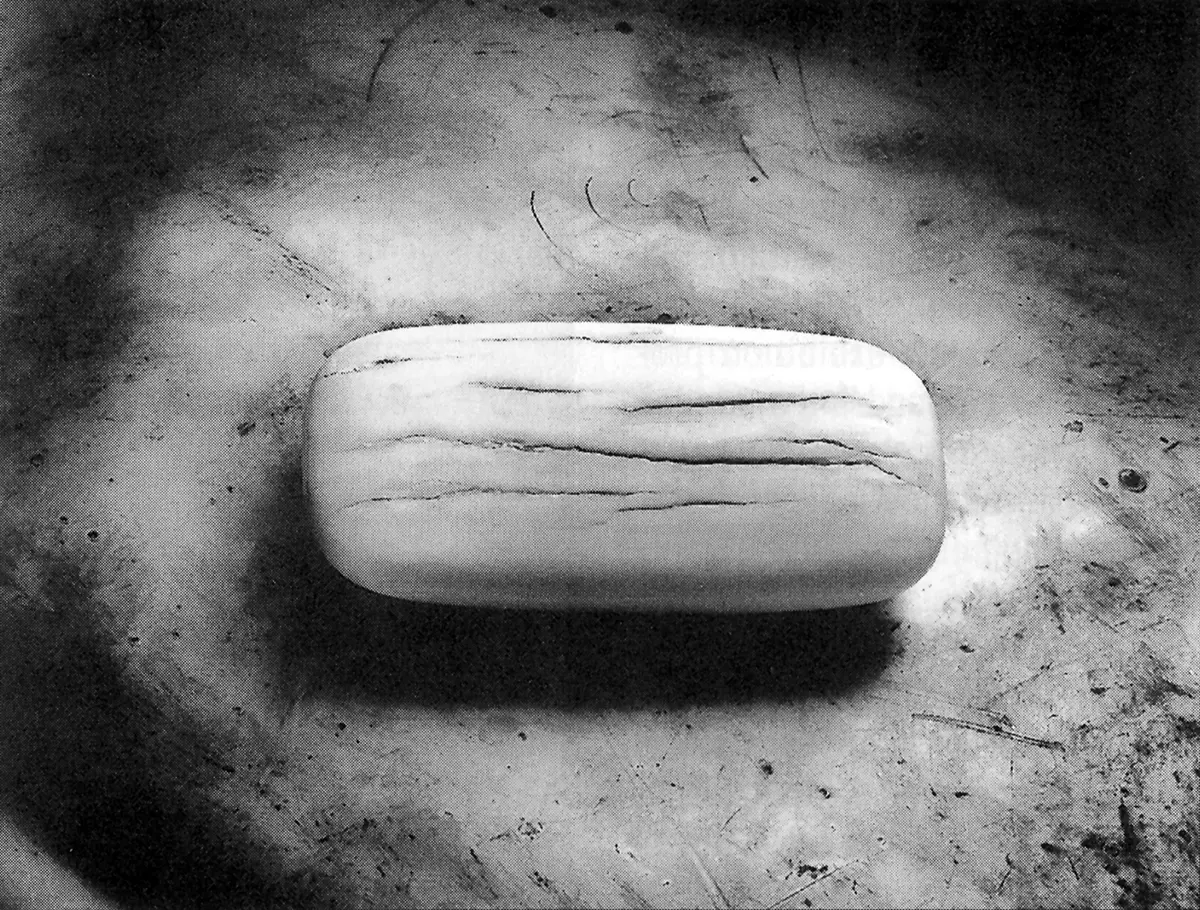
Alejo presented a series of large format photographs -black and white and in color- where the main theme referred to everyday objects, which we use, which have a life of their own and which we hardly notice. By looking at them in the work of this artist and seeing them out of their usual context, we seem to perceive them in a completely foreign way, as if we were looking for the first time. The pieces included in this show, titled Foreign Objects, were made between 1996 and 1999: the objects are presented in a foreground, against tired backgrounds which reveal the passage of time and neutralize the space, suggesting the uncertainty of finding such an ordinary object transformed through the work of the photographer. Like a scientist using a microscope, Alejo photographs these ordinary bodies, isolating them from their natural habitat and transforming them into objects of scrutiny. Salt cellars, a piece of soap, a pencil sharpener, and plastic bottles are stripped of any ontological value; here the premise that "the good (the useful) is beautiful" has no currency. The elements chosen by the photographer simply are and exist as such.
It is worth noting that the result of the images produced by Alejo is obtained in the take. The photography results in the photograph itself. Nothing is resolved in the dark room, the negative enters the printing processes (silver on gelatine, or chromogen printing) cleanly. In some pieces showing plastic bottles or containers, Alejo uses a green colored filter to produce the desired effect. The artist's recurrent obsession with cubic and rectangular forms is complemented by a tendency toward the representation of textures in his backgrounds. These, whether created or found by the artist, highlight the volume of the objects and neutralize time and space, in an interplay between the positive and the negative. Alejo's photographs encourage the spectator to plunge into the meaning of everyday life and to pay attention to these foreign objects which once they are owned by somebody enter a world of oblivion, from which they can be recovered only through the photographic memory.
ANA ELENA MALLET