During the months of June and July, the Casa de la Moneda of the Banco de la Republica was the venue of the second edition of the Johnnie Walker program in the arts. The exhibition also included works that had awarded prizes in Brazil, Chile, Mexico, and Peru. This time the members of the selection jury for Colombia were Carlos Arturo Fernández, a teacher in art history at the University of Antioquia, who was also a jury member in the last edition; Natalia Gutiérrez, an art teacher at the University of the Andes in Bogota, art critic and ArtNexus collaborator; Jaime Cerón, artist and Director of Plastic Arts at the District Institute of Culture and Tourism of Bogota; Jaime Jaramillo, curator, and cultural promoter, and the Colombian artist Óscar Muñoz. The criteria on which the jury based its selection were set forth by three of the members in articles published in the catalog which accompanied the show, and which pointed out, in critical and aesthetic terms, certain aspects relating to contemporary art. Thus, in discussing this show, where the curatorial process was undertaken by five persons I should like to refer above all to some of the theoretical premises established by the curators.
The jury members, aware of the difficulties involved in the convocation format, opted for a curatorial approach which, according to Jaime Cerón, "tried to offer a complex view of the contemporary situation of Colombian art, by examing it from a socio-cultural perspective."1 Thus the 14 artists selected from a group of 60 explored the possibilities of a variety of media and provided a heterogeneous panorama which when examined carefully, revealed a variety of views of the image of the uncertain and labyrinth-like world of the present. A world characterized by a "constant questioning of our place at every moment," a world which is no longer "certain and clear", where "absolute affirmations have disappeared and given way to open-ended questions"2, as Carlos Arturo Fernández pointed out.
In the view of Natalia Gutiérrez, contemporary works can be seen as "a station, a point of intersection between various references made by artists; their lives, the knowledge they have of artworks, the images of culture, their private everyday experiences, the news". An encounter that "materializes in space, in works which are very different from one another."3 Furthermore, is linked to the "psycho-physiological space, which has at least six dimensions. It establishes a relationship with sensorial perception, with thoughts constantly in movement, so that the contemporary spectator" above all (makes use of) not only sight but sound, heat, cold, that is, the entire body.
According to Carlos Arturo Fernández, in the art of the twentieth century, "each artist develops their own personal poetics and establishes their own rules, without any other path being considered as an absolute model. The perspective of the old teleological horizon which guaranteed a relatively sure path has now disappeared; now each step and each turn is, at the same time, definitive and insignificant, justified always –and only– by the process itself."
These observations are relevant and useful, but in the same way, as a result of these conditions, there remains the disquieting possibility that today everything is valid, an argument which plunges us into a "paralyzing state of indiscrimination," as Hal Foster points out in a phrase quoted by Jaime Cerón. Cerón says that the "show does not offer a pluralist. The common denominator of the group of artists selected is, to a greater or lesser extent, their encounter with human experiences which are not directly related to the universe which art has dominated through its historically identified conventions. Furthermore, their works reflect a concern with problems of perception that make up the experience that art produces, implying the creation of situations rather than works as such."
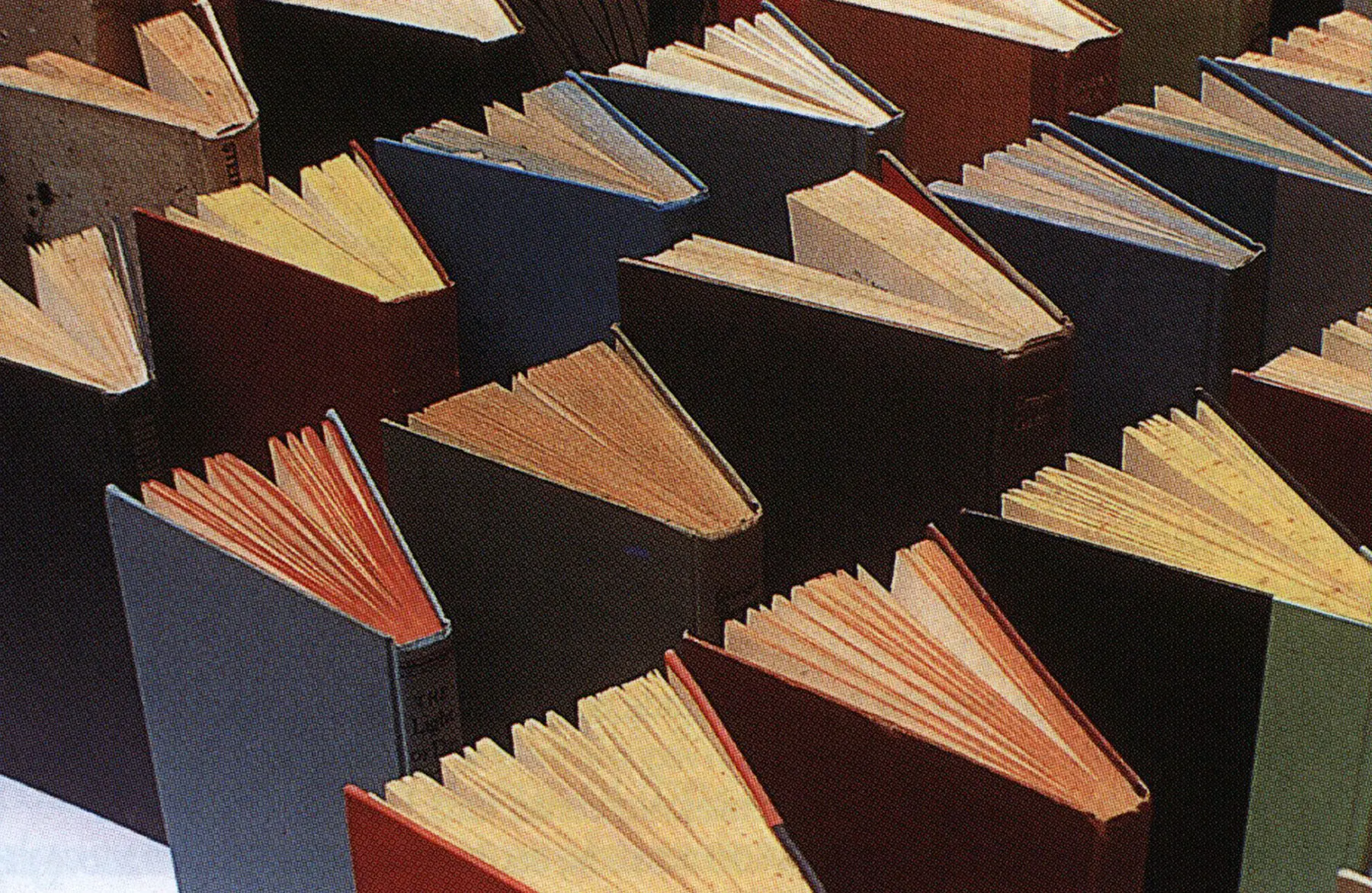
This group includes artists with a body of recognized work, such as Danilo Dueñas, José Alejandro Restrepo, José Antonio Suárez, Luis Roldán, Juan Fernando Herrán, Beltrán Obregón, Rolf Abderhalden, and Ana Claudia Múnera. The first of these presented an installation with paintings titled Preserved Space II, one of the most interesting pieces in the show. Once, when speaking of his work, Dueñas said that art is related to the physical space surrounding us so that the dimensions and materials themselves become primordial elements in the way they behave. With his use of vocabulary inherited from abstract art, his works frequently evoke the geometry of Malevich and Mondrian and reflect an interest in surfaces, whether polished or rough and the irregularities of wood. This might seem to link him to informalism, but unlike the artists of that movement, Dueñas' work escapes the dualism of the two dimensions. "His installation", as Jaime Cerón notes, "is proposed as an expanded form of painting". The work offers a journey in which the body and the spectator's "mobile perception", as he moves through the installation, appropriate a space constructed with wooden walls and assembled and painted objects placed on the walls. The visit ends with a wooden table on which there are a number of hardback books in English, the pastel-toned pages of which evoke an enigmatic and ordered sense of chromatic configuration.
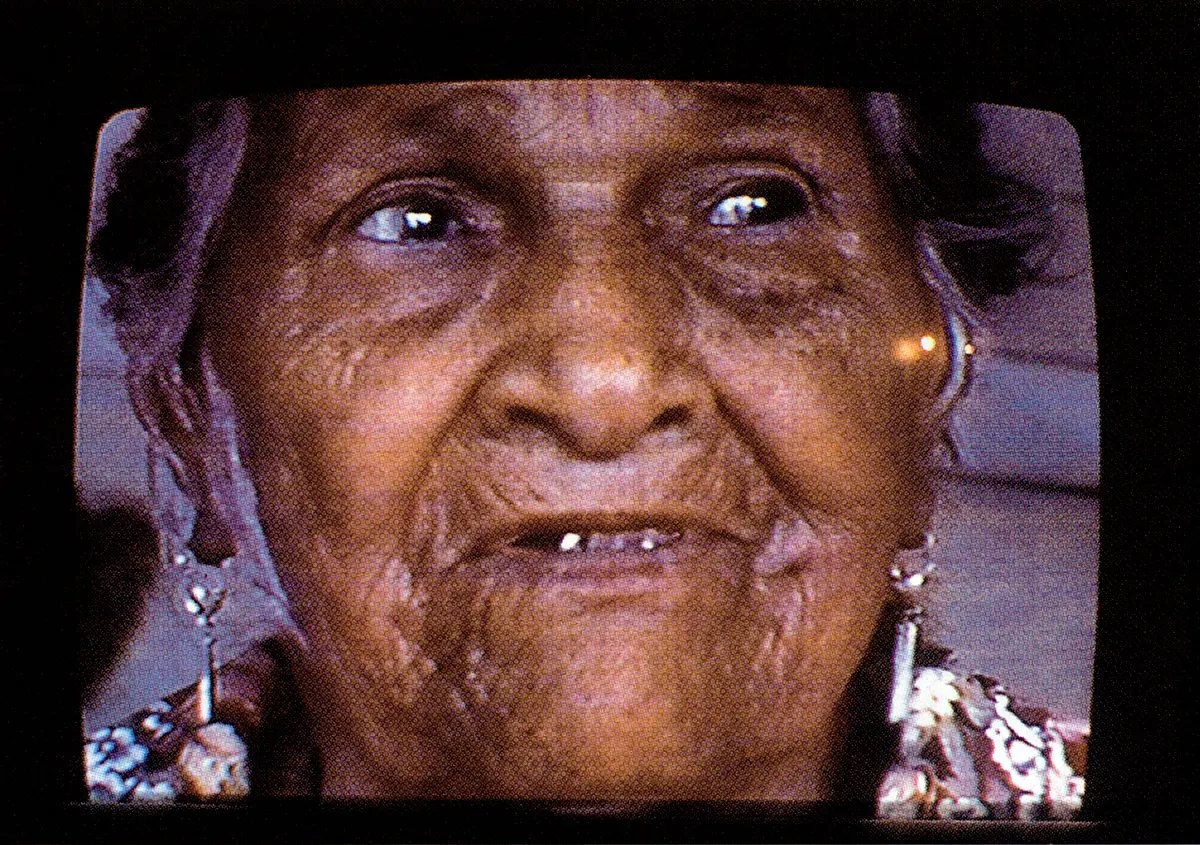
José Alejandro Restrepo4 is one of the pioneering artists in Colombia in the field of video installation art. He has a long-standing interest in the exploration of video language and in its possibilities of combining sound and image, two elements that have become essential in his artistic proposals. On this occasion, Restrepo, an indefatigable traveler through the geography of his country, with its history and customs, used the funeral songs of the Chocó in a work titled Death Song, a video installation composed of two images, one of them appearing directly on the television screen, showing the face of an old woman, and the other, a rower, projected on an elongated format. The work was characterized by its impressive sense of understanding and the visual and sound expansion achieved through the transformation of the televised image by such techniques as the use of close-ups, which fragmented the face of the woman, and the handling of sound to produce a repetitive and primitive song, a funeral chant with all the strength and sadness of the music from the Chocó region of Colombia, which is mainly inhabited by blacks.
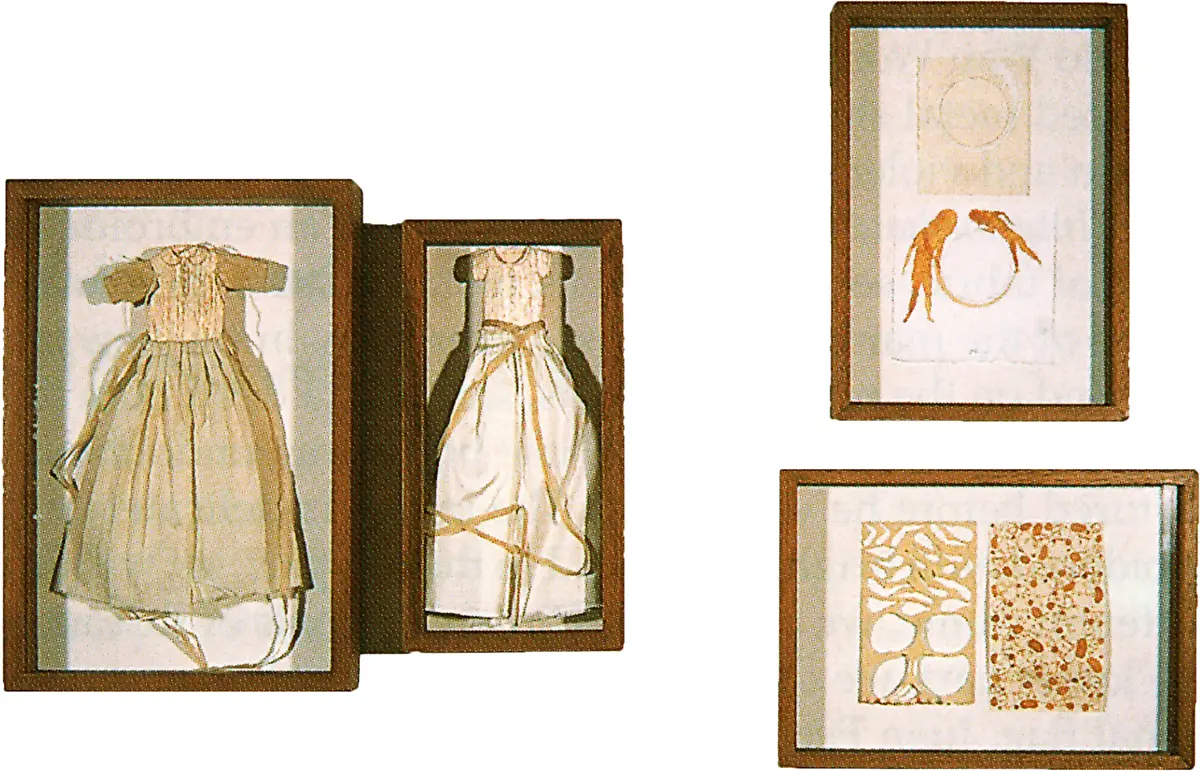
Jose Antonio Suárez5 is one of the most important contemporary draughtsmen and print-makers in Colombia. For this show, he presented an untitled work, made up of 28 pieces of various sizes, which retained the small format characteristic of his production. The pieces make use of collage and drawing, reflecting his interest in incisive and meticulous work, in which the graphic elements —dots and lines— reveal the presence of a patient hand. On this occasion Suárez carved on a piece of balsa wood the folds of a girl's dress; he used a tea bag for drawing the image of a deer, with fine pins fixed to it; patiently and with millimetric precision, he perforated a small piece of paper. Jaime Cerón commented on the intimate nature which we always associate with the work of Suárez. However, despite the referentiality of his pieces, "the notes, diaries, and drawings which we all kept in our school books, his works tend to displace the focus of the artist's intimate journal towards that of any person who attempts to construct the possible meaningful relations that make up what we understand as everyday life." These images, in which the artist frequently refers delicacy, sensitivity, and humor to the climate of violence in which we are living, seem to be part of our intimate, subjective, and individual appropriations, where we all recognize ourselves.
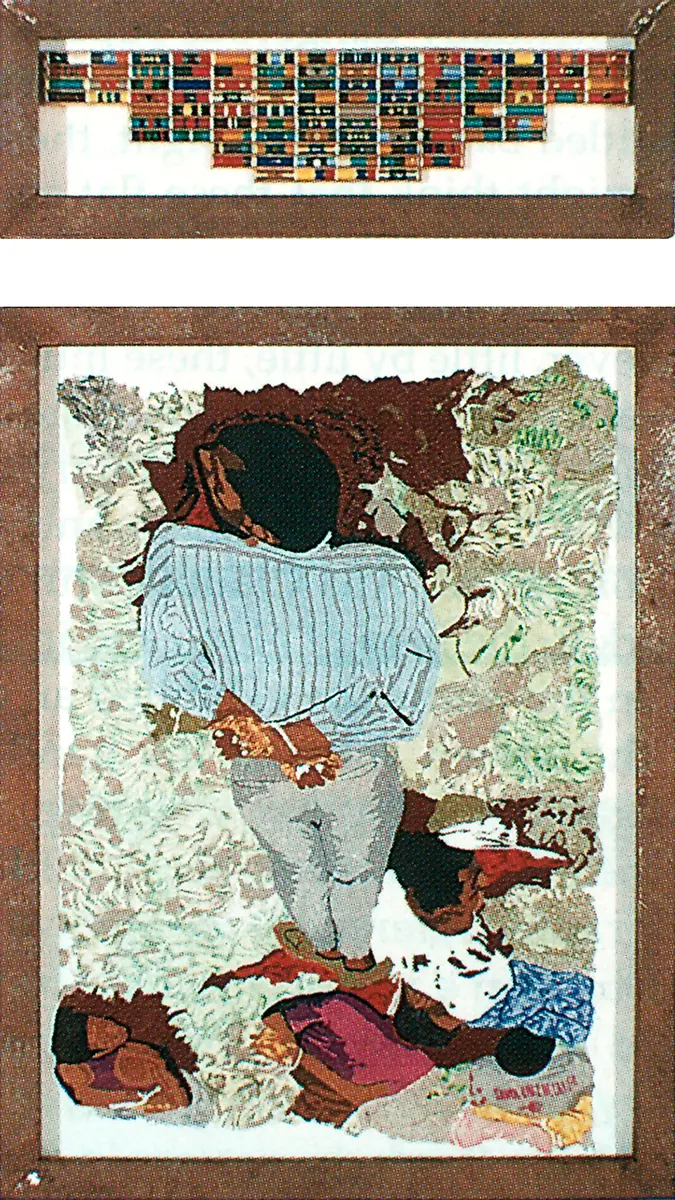
Pablo Wan Wong has from the time of his first objects in oxidized metal shown his special sensitivity to the themes of pain and violence. For this exhibition, as in the show titled Intermediate Generation, he presented an embroidered piece of fabric, set within a thick metallic frame. The image is one of the many which we see every day in the newspapers and on the news broadcasts, showing a dead man tied by the hands and feet and whose body was undoubtedly tortured before he was killed. The image is delicately embroidered with bright colors and in the top part, set within a different frame, we can see the ordered spools of thread; in the lower part, we can recognize the three colors of our national flag. Juan Fernando Herrán6 proposed a powerful image with a sculpture installation, titled Hal IV, made up of seven pieces of metal, wood, asbestos, and glass, which looked like the huts of some enormous and ferocious guard dogs. The work, which was strongly lit, was placed in a central position and seemed to warn the spectator that he was in an area of strict and potentially dangerous supervision. Luis Fernando Roldán7 presented a work made up of three elongated paintings, titled Bands. At first sight, the spectator caught unawares might think that these flat-colored paintings were an exploration of the theory of color or a reflection from the present on the water lilies of Monet, or the reality of painting. However, little by little, these multi-colored stains begin to reveal the design of the camouflage dress used by the army, the guerrillas, and the paramilitary organizations —three groups that are dividing the country into dangerous "bands" of contention. Ana Claudia Múnera is another artist whose work in the field of video and installation art is well-known. In this show she exhibited an enormous Wedding Gown: the screen showed the hand of a woman who is indefatigably sewing her wedding gown which extends beyond the image on the screen and fills the room with white. Photographic references are always used as a basis for Beltrán Obregón's pictorial work, but this time the artist presented a set of aerial photographs titled Looking up to the Sky, in which we can perceive various features of the yards in women's prisons. The photographs were mounted on wood and carefully arranged on the wall so that when seen from a distance, they looked like some cubist construction.
For this occasion, Rolf Abderhalden elaborated a video installation titled The Others in Silence, in which visuality and the relations between body and place, are given special attention.
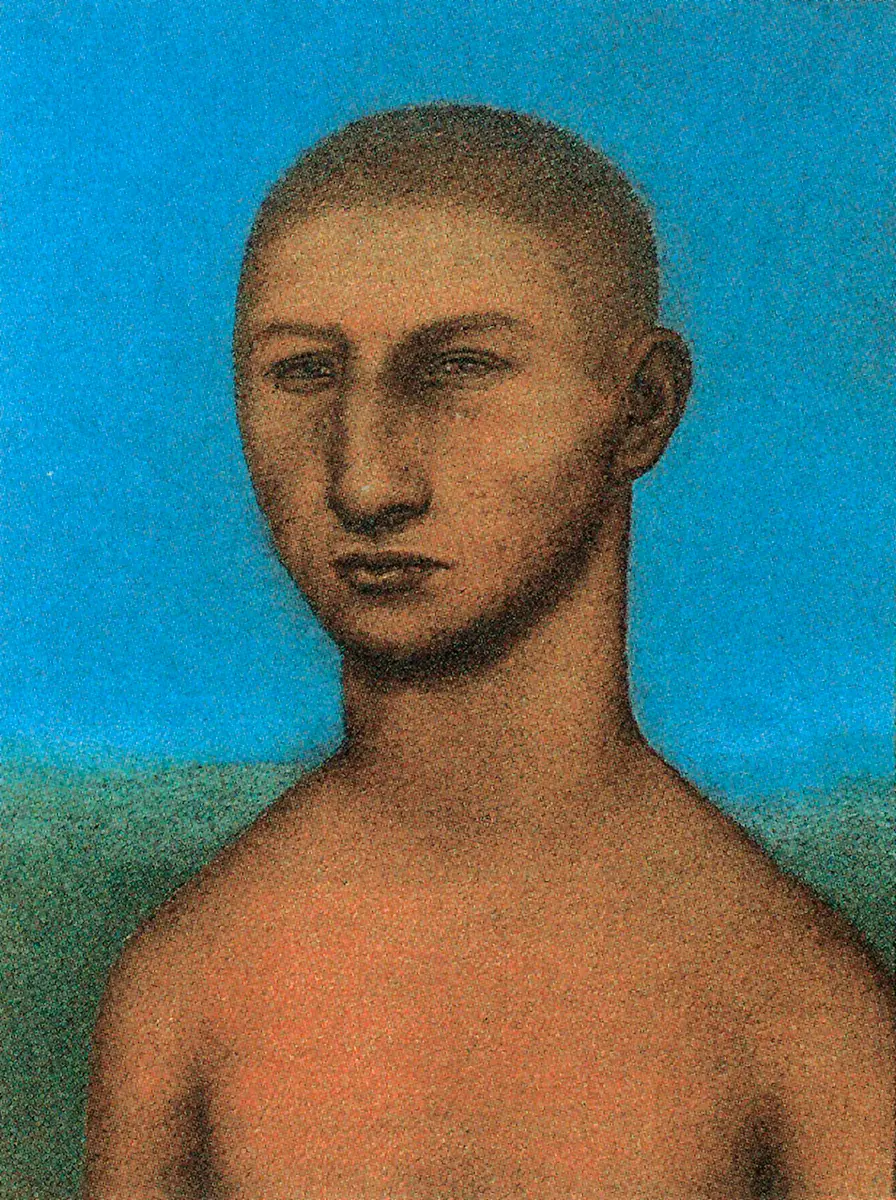
Other rather younger artists in this group, and have a different kind of sensibility, although these artists have already established a name for themselves, their work is of a relatively recent date. Many of them have participated in the National Salons as well as in events organized by the District Planetarium, an institution that for a long time has been organizing interesting exhibitions focusing on young artists in our country. Among them, was Jorge González, whose exhibit was made up of six portraits done in pastel on paper —a work which had already been seen at the Vlth edition of the Bogota Art Biennial in the MAM. Jaime Cerón commented on the inclusion of this work as follows: "In some cases, we have included works previously shown in other exhibitions, in order to call attention to the contemporary habit of discarding an image once it has been seen." In this way, these portraits appeared in a different context, portraits with their Renaissance-like gaze in which the face is set against the landscape, faces of ordinary people whose features are far from the classical ideal. Wilson Díaz presented a group of paintings and photographs dealing with urban themes, which at times had sentimental connotations —a couple who seem to live in a terribly conventional apartment; others were more prosaic— a young man vomiting, or images which were combined with external views of different places in the city (Ghost City). Humberto Junca showed a work titled Manualidad, which referred to the work of children's readers, where the impeccable finish was used as a means of highlighting the manual nature of artistic production. José Gabriel Calderón and Adriana Arenas participated in video works. The first presented a documentary video in which various marginalized figures narrated —in a raw and spontaneous manner— experiences from their lives, while Arenas produced a video installation in which a large image showed in close up the process of manufacturing candies, to the sound of vallenato music, with the words being translated in English on screens.
The works awarded prizes by the jury, made up of Pablo Herkenhoff, an art critic and independent curator, and chief curator of the XXIVth São Paulo Biennial, Osvaldo Sánchez, an art critic and independent curator, Director of the Carillo Gil Museum of Art in Mexico City, and Ana Sokoloff, a specialist in Latin American painting at Christie's New York —went to Danilo Dueñas, José Alejandro Restrepo, and Jorge González.
Points of Intersection, unlike the previous edition, Red, did not place any bets on painting or on any unifying color. On the contrary, it embraced a variety of media and languages and pointed the way toward complex art. Its criteria, already noted, were set forth in a serious manner. In conclusion, the exhibition offered alternatives, dealt with problems, and proposed many "intersections", all of which will serve as starting points for future debate.
NOTES
1. Jaime Cerón, "Cruces sobre puntos," in the exhibition catalogue, Puntos de cruce.
2. Carlos Arturo Fernández, "Punto de Cruce: Arte y Realidad," in Puntos de cruce. op.cit.
3. Natalia Gutiérrez, "La percepcion," in Puntos de cruce, op.cit.
4. Cf. Natalia Gutiérrez, “José Alejandro Restrepo’, in Arte en Colombia Intemacional, No. 73.
5. Cf. Natalia Gutiérrez, “José Antonio Suárez", in Arte en Colombia Intemacional, No. 70.
6. Cf. Ivonne Pini, “Juan Fernando Herrán”, in ArtNexus, No. 26.
7. Cf. Natalia Gutiérrez, “Luis Fernando Roldán”, in ArtNexus, No. 32.
MARTA RODRÍGUEZ
Professor at the Faculty of Arts, National University of Colombia.