There is no room for art Here is a work by Antonio Caro on display in the exhibition titled Art and Violence in Colombia since 1948, organized by the Museum of Modern Art of Bogota. It consisted of an intensely black notice, drawn with the letters so close to one another that there is no room for any white space between them. The sentence is relevant because, in the situation of violence in which the country is plunged, the question arises of what happens to art. The sensation created by this exhibition is that art is being gagged and silenced by the ideological climate in which we live. In other words, violence is also becoming a process of psychological extermination. This extermination is not only the result of the horror of physical violence but of many other factors. For example, the multiplying effect of subjecting children to all kinds of violence effected without the uttering of a single word, education, and the images emanating from the mass media, which teach us to look in only one way, and which give a shape to violence, to say nothing of other aspects which are even more painful and decisive in determining our behavior.
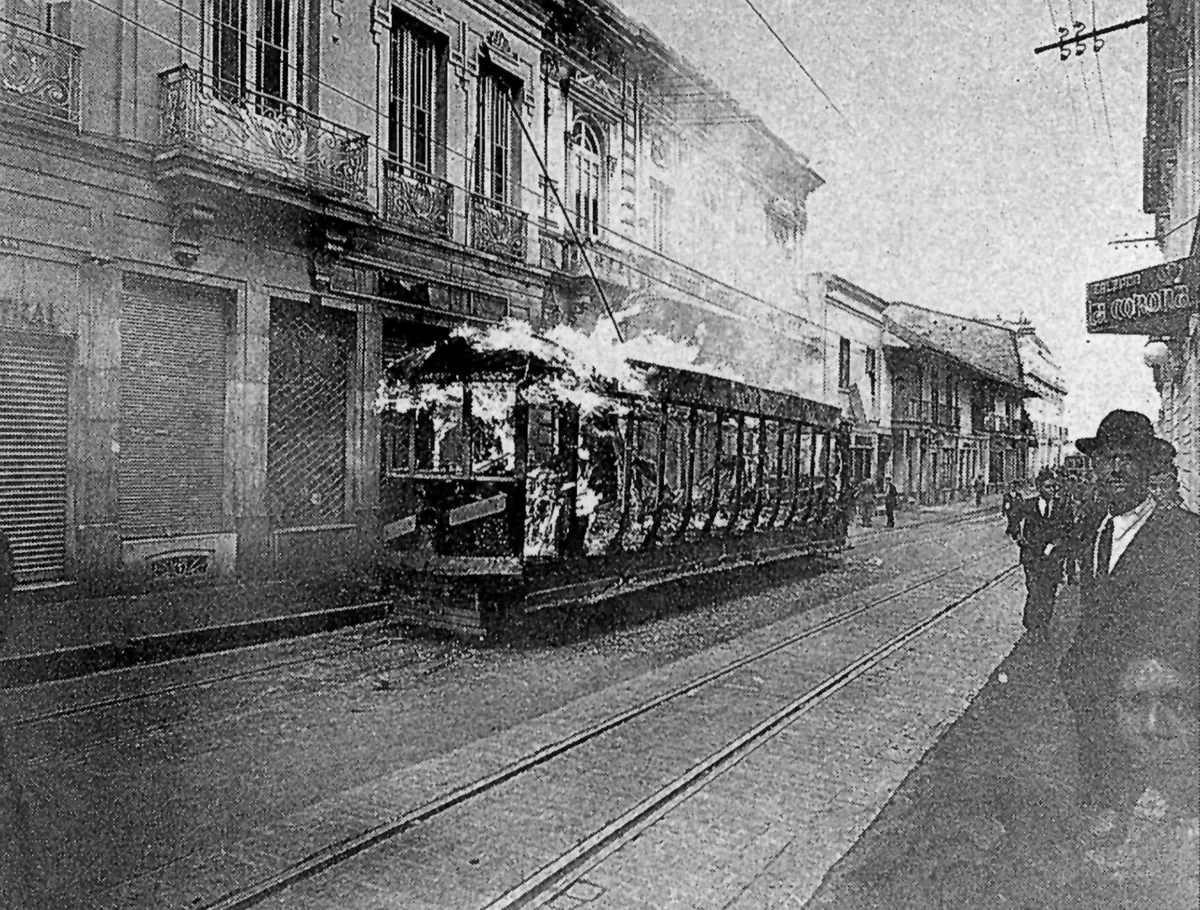
The process is furthered by certain so-called artists who confuse a dead person with death and pain with blood, and by curatorial processes like those used in this exhibition that ingenuously hides, and almost exterminated, alternative modes of thought by establishing visual chaos, in the name of some exhaustive history—as if the historian cannot take sides and prefer more impactful images, because they give a form to pain and violence, with all their paradoxes. This exhibition was curated in such a manner that it helped stifle the very life of the images by using them to illustrate such categories as "Tortures", "The mutilation of bodies", "Massacres", and "From self-defense groups to the guerrillas". The montage of the works, arranged side by side, as in the letters without any space between them by Antonio Caro, further heightened this impression. It was an exhibition conceived like a collector's album, a bourgeois fair of violent, mostly strident images, which drowned those that tried to find some more intimate meaning based on an expression of human solidarity. Who in this visual chaos could see the body of an abandoned dog by Jose Antonio Suárez, or perceive the sense of absence in the dead collection of T-shirts by Doris Salcedo? Almost nobody, since the montage was indiscriminate and only collaborated with the theme of making art into a spectacle. The formula was one of "more is more"—a formula applauded and described as "interesting" by some of the communication media.

It is worth noting in this connection certain remarks about images of violence on television, which can help us ask about the meaning of artistic images-a question which seems to lie at the heart of the piece by Caro. For example, Hernán Montenegro1 questions the use itself of the expression "communication media" as communication is a two-way process, a relationship between two parties actively exchanging ideas and emotions through language. The mass communication media, therefore, are merely information media, because the so-called communication takes place in only one direction. The reader of a newspaper or magazine, and in particular, the television viewer, are all passive figures. So when the communication media believe that they are a reflection of society, this is probably not the case, since there is no real communication.
What is therefore the function of an artistic image? An image that in some way involves the viewer, who ceases to be silent or passive as a result. An image that "affects" us without any external stridency; an image that may have little sensationalist content, that probably does not seem to be very "interesting" to the mass media, but which is constructed by means of profound tensions; an image which remains in the mind and which gradually stirs our conscience and hitherto dormant feelings. An image which above all stimulates our sense of solidarity, our interest in the little details of life as reflected in human gestures. An image that gives real meaning to this pain and which is quite different from the stereotyped explanations of violence and pain offered up by the mass media.
The thesis put forward by Montenegro in the aforementioned article is that the mass media are not a reflection of the world in which we live, but at least with regard to violence, distortion, and "over-representation" vis-à-vis real life. Violence in real life contains two elements: emotion and excitement which makes it attractive as a spectacle for many, and the element of horror and rejection, guilt and identification a twofold relationship between the victim and the author of the violence-felt by any human being, both before and after the act of violence. Both elements are present in real life, but on television, the images are edited so that only the first appears, the act in itself, violence as spectacle.
One of the reasons, according to Montenegro, is that the mass media need to produce an impact, a need related to the thirst for profit and power. The television viewer is merely a passive voyeur who does not participate in anything of what he sees. And the obvious question is: does the artist do anything differently?
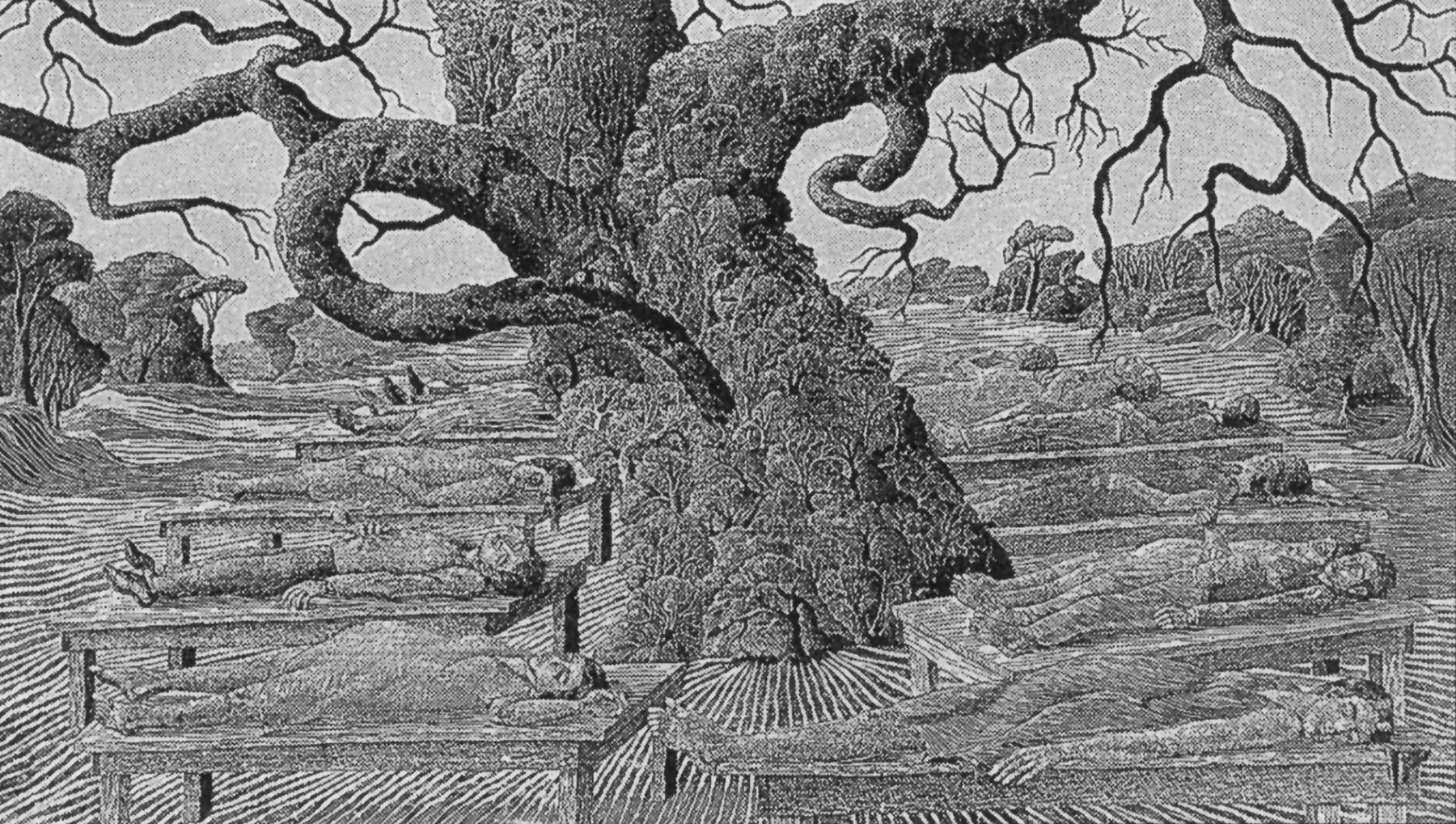
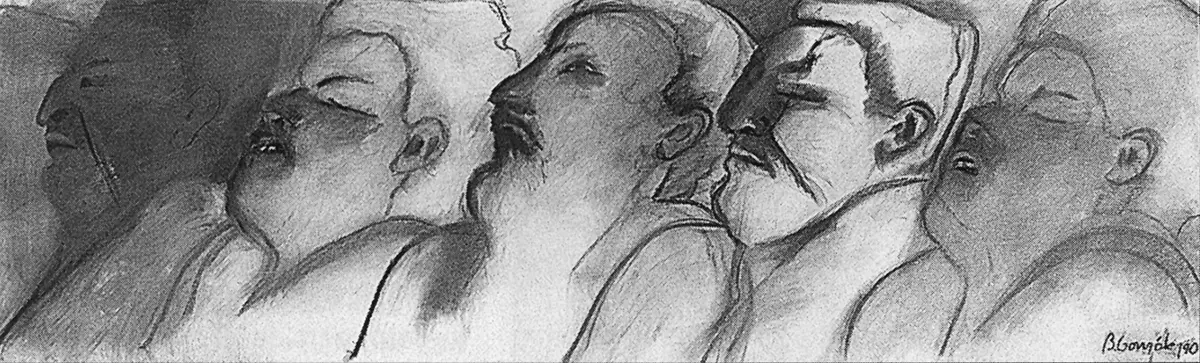
In this way, the "news" does not deal with physical absence, the absence of the word, the violence caused by a lack of affection or physical contact; the violence resulting from an ever-growing silence, in which identification with the assassin or the violator is the only way of covering up the horror, thus repeating the mistreatment. It is here that the artistic image has things to say because it is both a witness and protagonist in social and family rituals and can raise questions in terms of compassion. It can propose a sufficiently volatile image of those who have disappeared which can only appear with a breath, as in the works of Óscar Muñoz. Or in the form of a twisted tree, a spectator of death, as in the prints of Rengifo. It can slowly embroider an image from a newspaper so that it is not thrown into the garbage, ensuring that it remains fixed in our conscience, as in the works of Pablo Van Wong. Or it can create mute portraits of protagonists from our recent history, as in the work of Beatriz González, because the image does not try to explain, but instead is an inexhaustible invitation to make our own deductions.2 But these and other images need to be given a space in which they can be seen and interpreted. They must not be surrounded by gratuitous games played with violence. It is unacceptable that the images of others should be used to depict a theme that fixes the meaning for the spectator in terms of a dead sign, without bringing into play other ideas, including tenderness, repentance, pain, and perversion. There is a deeper and more painful level than mere classification based on the categories of political violence, in the sense of accepting the ideology within which we live.
Equally "political" is that ideological universe without words and without images. Almost all acts of violence occur between persons linked together by some kind of bond of affection.3 To suffer the destructive effects of violence and the abandonment of someone close to us and then to conclude that this is a sign of the evilness or sickness of the other, thus giving a definitive form to the bonds of affection which for most people provide a network of psychological support in the relations with their fellow human beings. The exhibition, therefore, left an enormous void. Because violence can also be discovered through the process of self-analysis which most Colombian artists have not even begun to explore and which a curatorial approach based on linear principles has done nothing to elucidate. Over and over again in our country, we have seen that the most destructive kind of violence, the violence that is the most permanent in time, is the violence between people who share specific territories or ideologies. In the microcosmos of the family, between parents, brothers, and sisters, between groups that work in the same area, and between peoples and communities nurtured within the same culture. "Here there is no room for art!" Antonio Caro is right because art has not addressed these problems, and the voices of those few who have asked questions have been drowned by the visual chaos of the mass media promoted by ideology and which in this case the Museum, I would like to think ingeniously has institutionalized, making the silence and the blindness even greater.
NOTES
1. Montenegro, H., Coddou, F, and other authors, Violertcia en sus distintos ámbitos de expresión, Ediciones Dolmen, Santiago de Chile, 1997.
2. S. Sontag, On Photography.
3. Montenegro, H., Ibid.
NATALIA GUTIÉRREZ