
The appropriation of styles, the use of mannerisms, the inclusion of kitsch, the "quotation" as an element of aesthetic discourse, and a fascination with the simulacrum that sees the world as an enormous theater; are some of the principles of postmodernist art theory reflected in the work of Agustín Bejarano, recently on view at the Nina Menocal Gallery.
The first of the three series which made up the show provided the overall title: Landscape and Still Life. Bajarano takes up these genres and develops various aspects in an attempt to rework the classic nineteenth-century compositions. But rather than attempting to capture the realistic style of such painting at the end of the last century, Bejarano plunges himself into an aesthetic search for themes and elements which enable him to explore the frontiers of contemporaneity. In the final analysis, everything is valid in the avant-garde: however, the difference between what remains and what disappears will always lie with the treatment. In Bejarano's case, the result is a clear pictorial triumph.
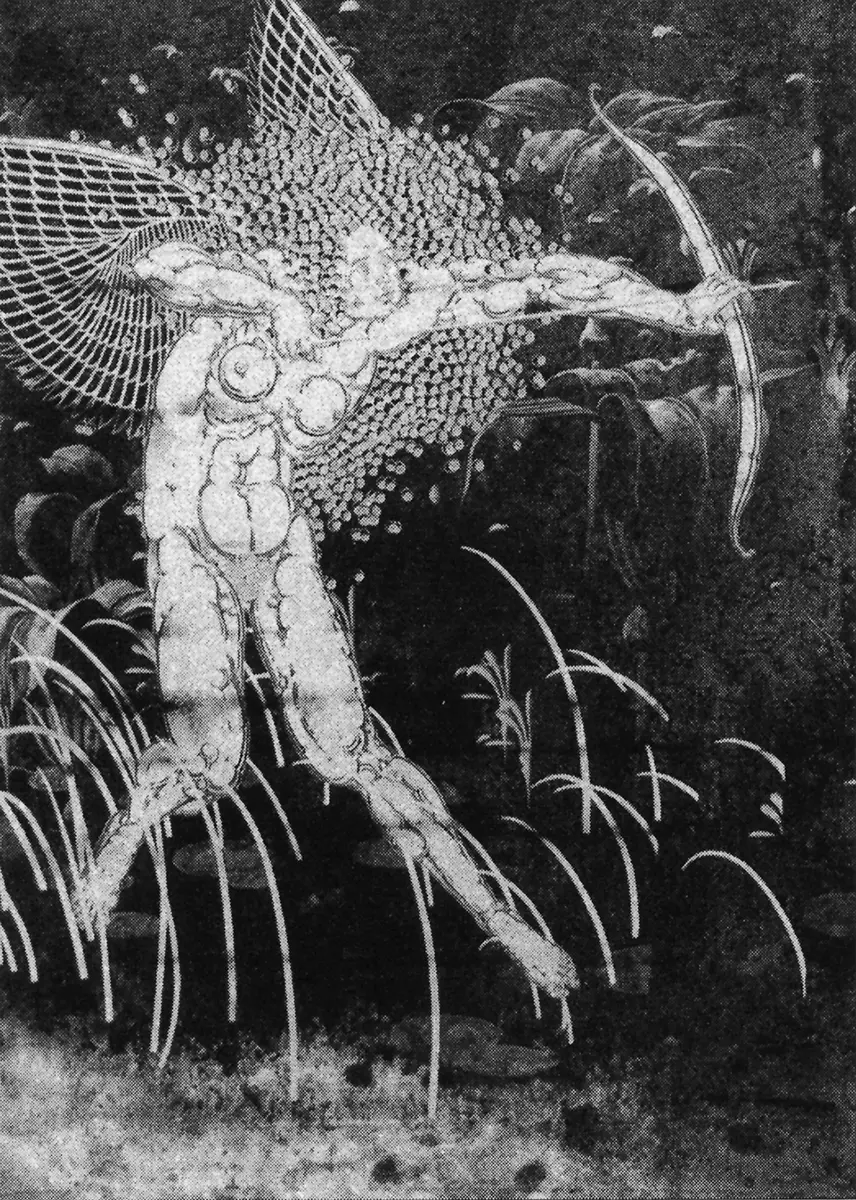
Hunting, the second series, comprises large format works in acrylic on canvas. Angels, more of this world than the next, are the protagonists. These asexual figures, whose bodily limbs seem to be almost mechanically assembled and connected to their joints, have both female and masculine characteristics. Taken from myth and legend, these angelical figures make us think of both Cupid and St. Sebastian, with their traditional attributes.
Bejarano's exquisite technique as a printmaker contributes to the solidity of aesthetic composition and the perfect plastic resolution of the works.
In the last series, titled The Coquettes, Bejarano presents a number of medium-size acetate plate prints.
Female characters oscillating between pain and sensuality fill the fantastic universe that the artist develops in these prints. With their clear physical mutilations, these women, who seem to have come from some story by the Marquis de Sade, represent the violence of the contemporary world, and yet they still remain desirable to the spectator's eye. With clear references, both historical and literary, Bejarano’s nymphs awaken perverse desires in the spectator, while at the same time retaining a magical aura that gives them an unreal innocence rooted in perversion and sadomasochism.
ANA ELENA MALLET