
Dolores Zinny and Juan Ignacio Madaigan intervene in spaces to pose questions to the spectator. Their works are not immediately identifiable as artistic projects, or even identifiable at all, as in the case of an installation they did in 1994 in a square in the city of Rosario, Argentina. On that occasion, the artists placed various containers of garbage in military fashion, in an allusion to the polemical story of the official complex which housed them.
Similarly, their work titled Offside, currently on view at the New Museum of Contemporary Art in New York, is also a subtle form of questioning.
The work, which consists of a large wooden and nylon structure located in the area of the staircases between the floors of the Museum, acquires a phantasmagoric presence that pretends at not to be seen. The work calls attention to those places-the corners, Bachelard would say-which exist in some way in our memory, but of which we are not usually conscious. The artists are here using a space in the New Museum which is architecturally abstruse and difficult for installation work. The project is resolved by means of a strategy common to all their works: beginning with an existing space, modifying it, and in the process calling attention to it.
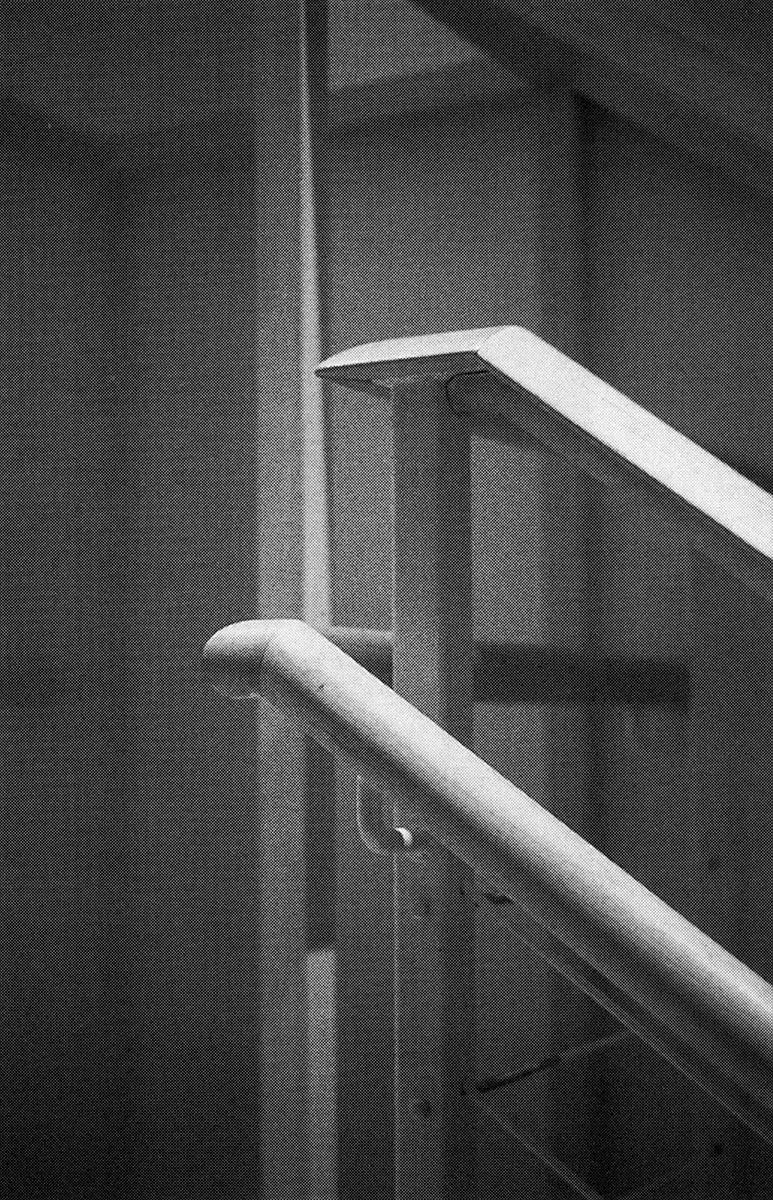
In Offside, there is an attempt to grasp a space that by its nature is transitory (since this is the stairwell of the museum). The architectural structure of the installation transforms the place, delimiting it and occupying it, although the occupation is relative since within the structure itself there is nothing, only air. The scaffolding-perfect but unusable-fulfills the simple function of occupation. An unresolved intervention in a transitory space, and therefore more of a question than a statement. The transformation of a space into a gallery, as well as the nuanced modifications of the latter, create a sensation of slight disconcertion on the part of the spectator as the artists play around with our common expectation that a gallery should be the container of work, rather than actually being transformed into "the" work itself, as in the case of Gordon Matta- Clark's sections of walls and floors.
However, unlike Matta-Clark, the works of Zinny and Maidagan are characterized by the unusual perceptive process of being briefly unnoticed and then eventually emerging, with the spectator becoming increasingly conscious of the surroundings in which they are placed. A game of hide and seek in the staircase: the work is "offside" because it both slips away visually and challenges the rules imposed by a specific space.
This constant exploration of space (in an attempt to resignify, alter, correct, increase or reduce it) seems to be based on Zinny and Madaigan's systematic refusal to accept what is given-a tendency present in all their projects-a methodical doubting which is designed to reveal gaps or flaws in a specific structure that can be seen in physical terms but which we can interpret in a social or philosophical manner. Viewed in this way, the intervention of space is no other than a legitimate defense vis-a-vis the architectures (both mental and physical) that limit, define and determine us as persons. Zinny and Maidagan hide in order to reveal a space, and not just a space but a system. Furthermore, the careful selection of materials allows the work to communicate a feeling of ethereal presence, the theatrical scaffolding which Gongora used as a metaphor to describe dreams ("the author of representations/in its theater on the wind mounted..."). It also encourages reflection on this unresolved space, this transitory limbo of the staircases which can be seen as the representation of the frontier between any dichotomy.
PABLO HELGUERA