
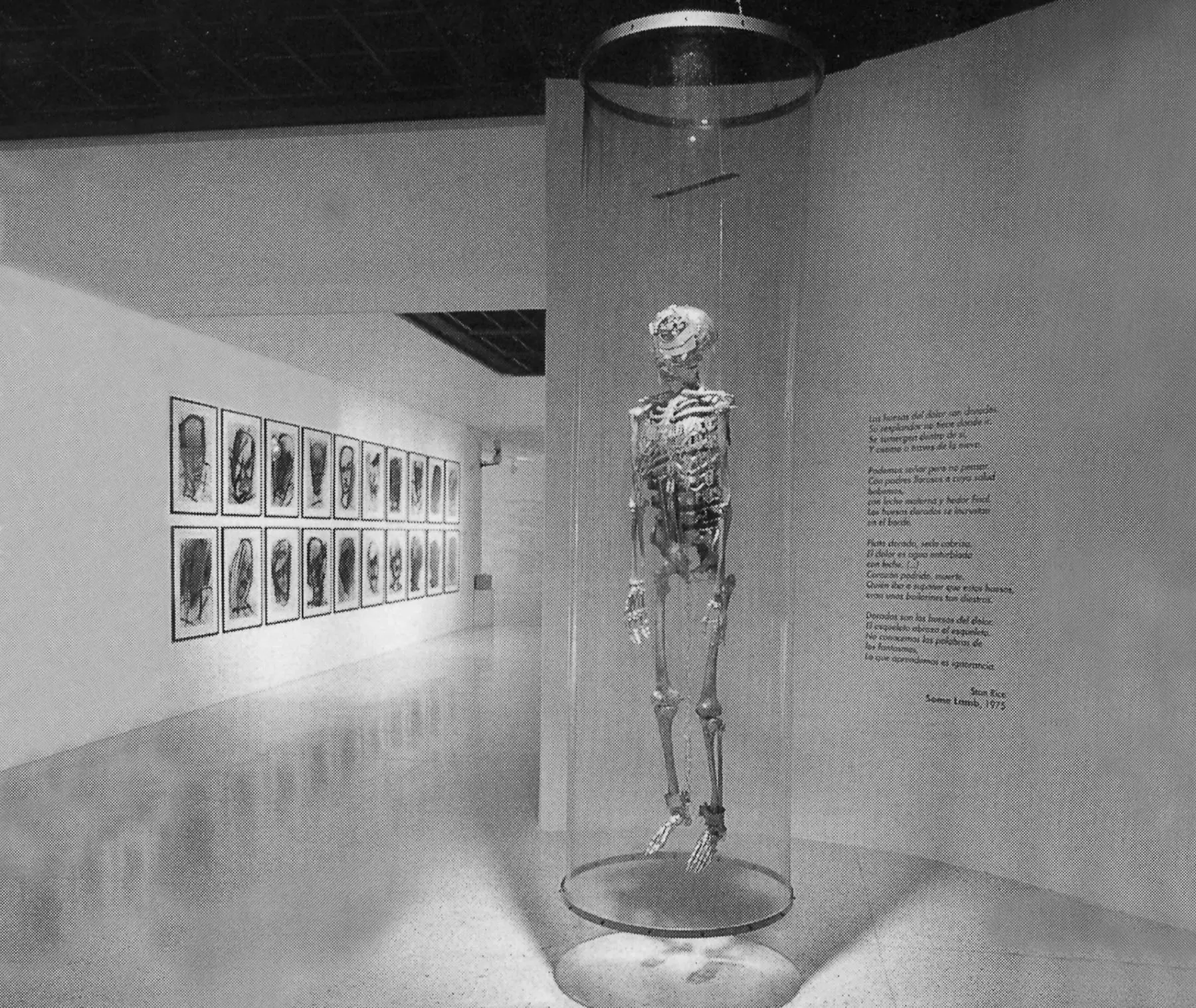
Last October the Sofía Ímber Museum of Contemporary Art of Caracas inaugurated the Fourth Pirelli Salon of Young Artists. Beyond the question of aesthetics, this edition of the Salon raised problems of a sociological and communicative kind; it looked at changes in the ways of perception of audiences and the boom in an audio-visual culture that has replaced the idea of contemplation with the concept of participation. For this reason, it is difficult to make any critical assessment of the proposals presented, and even more difficult to reach any verdict about their artistic quality. Rather than artifacts to be seen, the works became environments to be experienced, plunging the spectator into a veritable sensorial excitement involving the sense of touch, sound, and image. Perhaps this is the reason for the resistance by certain specialists to such discourses, which rely on a good dose of anecdote that in some cases reminds us of the intrigues of soap operas or of what we read in the newspapers.
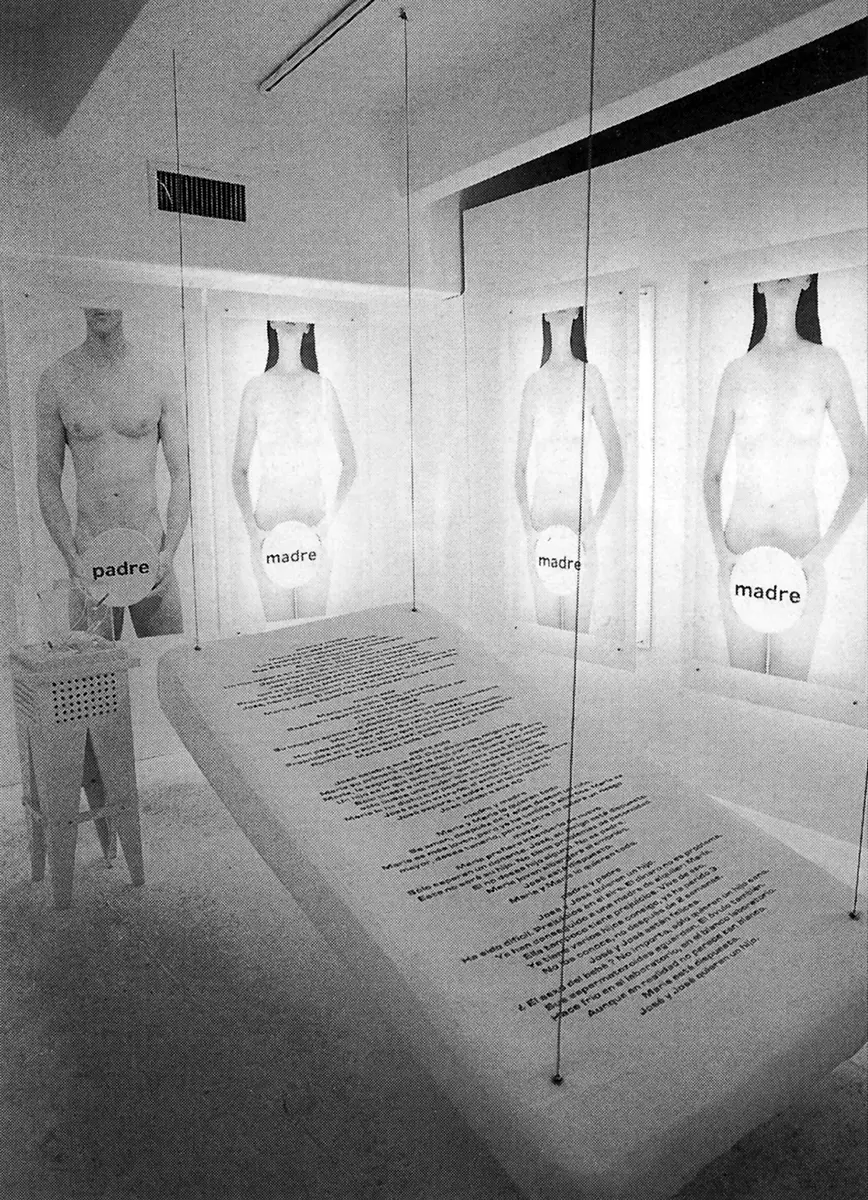
Even so, there was an undeniable harmony evident between most of the projects and the expectations of the public, particularly the younger visitors who willingly accepted the interactive potential of these works. Not only have the practices of artistic creation been modified, but the patterns of reception by the public have also changed, with an increasingly active exchange and complicity between contemporary art and people, as in the work titled Latricon, an interactive narrative, a mouse-operated CD-ROM presented by Isabel Ron-Pedrique.
What is new and different in these proposals is their use of communication supports linked to the mass media culture, including video clips, comic strips, and the world of advertising. Special mention must be made here of the works Tattoo, an installation with a chair and tattoos, by Eduardo Molina; Berta, video animation by Enrique Enríquez; and Desires at the bus stop, an allegorical installation of popular urban art done on bus windows, by Mónica Montañez.
The curatorial team, made up of Luis Ángel Duque, Ana Anquilina Azcárate, and María Luz Cárdenas, established a number of concepts for classifying the works: models of the body, models of intimacy and inner perception, social patterns, spatial spheres, and games. Although this intricate classification raised the question of the symbolic complexity of current culture, at the same time it attributed contents not always explicitly present in the works on show. The curatorial idea in this case exacerbated a so-called self-awareness of the end-of-the-millennium crisis when in fact, the works are the most evident expression of the latter.
The ludic element emphasized by the curators and participating artists was a marked feature of the Salon. However, it was accompanied by a nostalgic and distant kind of pathos, as though the real magic of games had been lost. An example was the installation of a slot machine, titled Lucky Lady, by Roberto Mosquera. In other words, there was an almost morbid fascination with tragic elements, with a focus on violence and the sordid aspects of contemporary society, as in And I who loved her so much by Mariana Rondón, Dragging Guilt by Carlos Villegas, and Net Content 27g by Anaisa Castillo.
Despite the labyrinth of corridors and cubicles full of projections and light effects that predominated at the Salon, there was some space for painting, generally of an expressionist kind, that simultaneously engaged in a debate with the problems of subjectivity and the pictorial support itself, in the face of the threat posed by the uninterrupted procession of audio-visual images. This was the case with Man is the Wolf of Man by Blanca Haddad, the series of the Revelations by Juan Araújo, and Holiday by Clemente Martínez. The presence of these works, contrasting as they did with the techno-spectacle, introduced a climate of greater moderation and respect for the pluralism of genres and disciplines existing side by side in contemporary art.
FÉLIX SUAZO