
"Sometimes making nothing leads to something" Francis Alÿs
As a header for this text, I have appropriated the generic title used by Francis Alÿs for what has become the fundamental idea of his work: his walks. He presents the postcards, images, and descriptions derived from his walks as hypotheses; that is, not as testimonies of something that has been done, but rather as propositions that need to be proved. In this sense, Alÿs brings us face to face with a body of work that is not so much experimental as experiential; it must be lived and interpreted subjectively, and it can therefore never offer a univocal or definitive solution. Thus, any encounter with his work can only aspire to outline as a sort of essay, as one attempt among all the possibilities in order to resolve said hypotheses.
In this sense, we are dealing with a highly generous work, a rare breed in recent artistic production, especially the kind of work that is most concerned with clarity and content control. The challenge set forth by his work is precisely a process that no longer simply takes place before our eyes, but rather invites us to construct it ourselves.
From this perspective, the concept of the walk is quite suggestive as a discursive axis through which he weaves and relates the rest of his experiences.
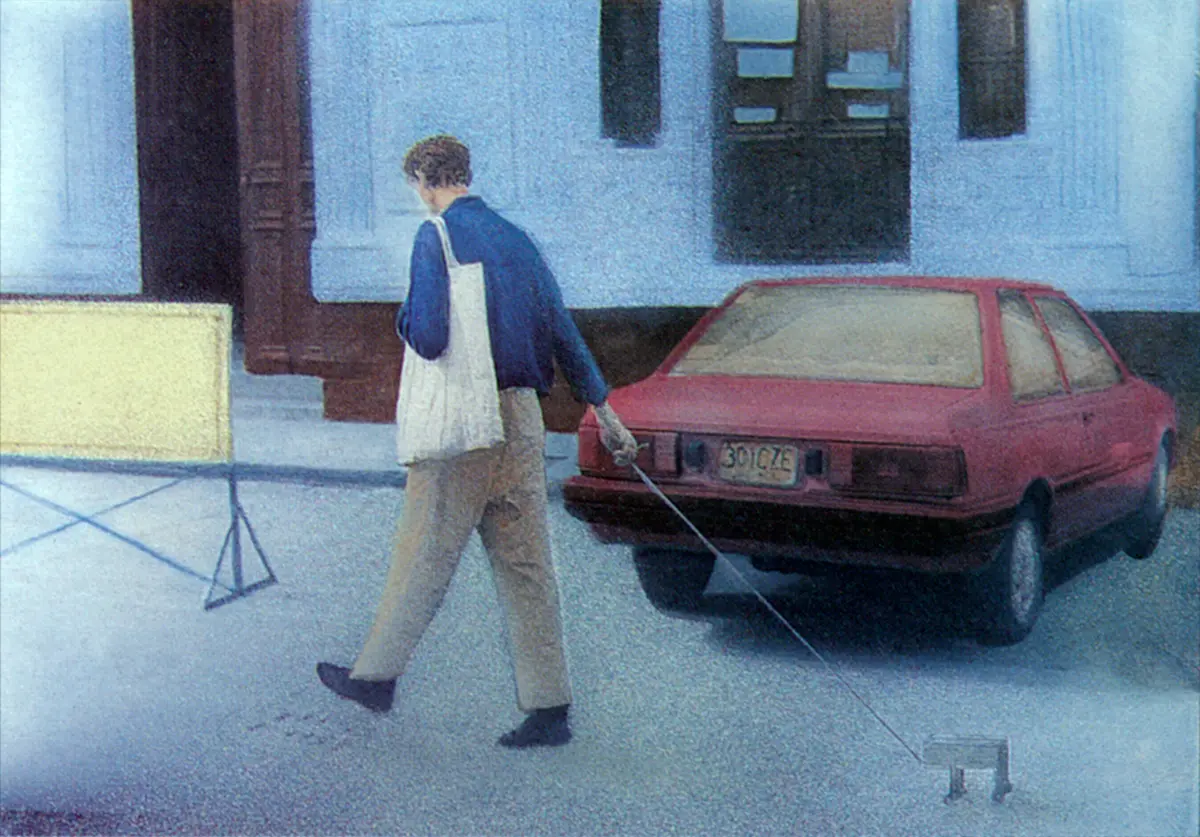
In spite of the imminent presence of the walks in the development of his work —including before, during, and after the more sculptural objects with which Alÿs has confronted us— they are rarely given the prominence that, as a conceptual proposal, they seem to have here. I imagine that this is due, in part, to their very nature: to walk, by definition, means to pass, to transit, an essentially temporal and ungraspable act, as well as highly personal and subjective: how to speak of a road that I have not walked? In spite of the risks inherent in the attempt, I believe that this condition of transition is Alÿs's fundamental proposal. And from this perspective, we may recover objects that on other occasions have been, if not ignored, at least barely elaborated. His walks are generally only referred to in passing (and this expression is felicitous), as experiences through which the artist produces objects that, in turn, will circulate around the art world: paintings, postcards, and anecdotes known and stored in the collective memory of those in the know, and which will finally become the object of speculation in the market.
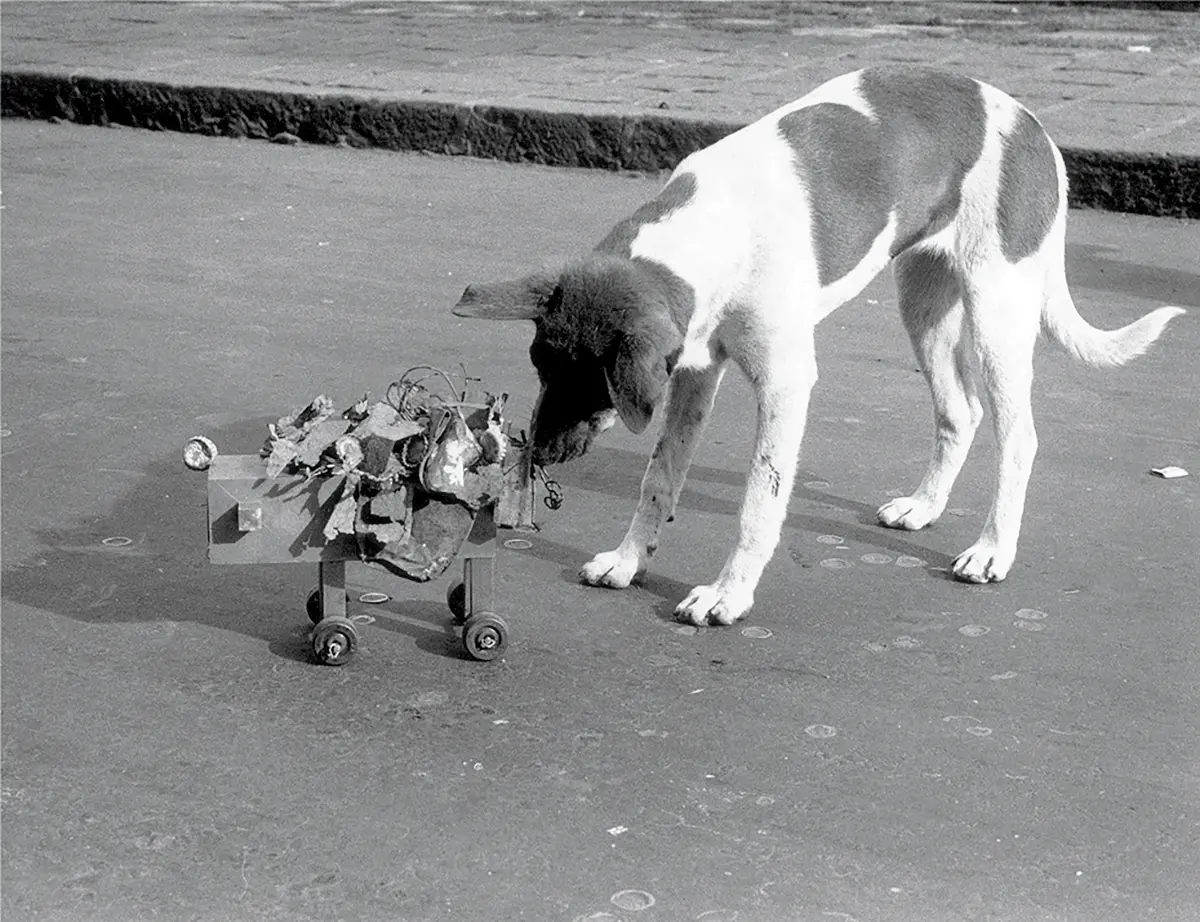
From this perspective, the concept of circulation lies at the heart of all his proposals. The artist circulates and so do his works which, in this passage, are posited as the place of the passing, which is the non-place by definition. In any case, it is a question of empty containers in which Alÿs has tried to capture the untrappable: the passage of time itself. I dare say that Alÿs's project is fundamentally literary, that is, predominantly temporal and not spatial; what's more, it is a readerly text that must be constructed by us in our very act of reading. In this sense, the sculptural nature of his pieces must be thought metaphorically in that it privileges the processual and places it in relation to proposals like the social sculpture of Joseph Beuys, the living sculpture of Gilbert & George, or even the linguistic sculptures of Concrete poetry, for example.
In such a sketch, Alÿs seems much more interested in the circulation of images than in that of objects, and with that, he calls into question one important aspect of the artistic institution based on the compilation, classification, and commercialization of that series of objects that have been defined as works of art. In this context, Alÿs's coin is an ever-evanescent, untrappable, and slippery image.
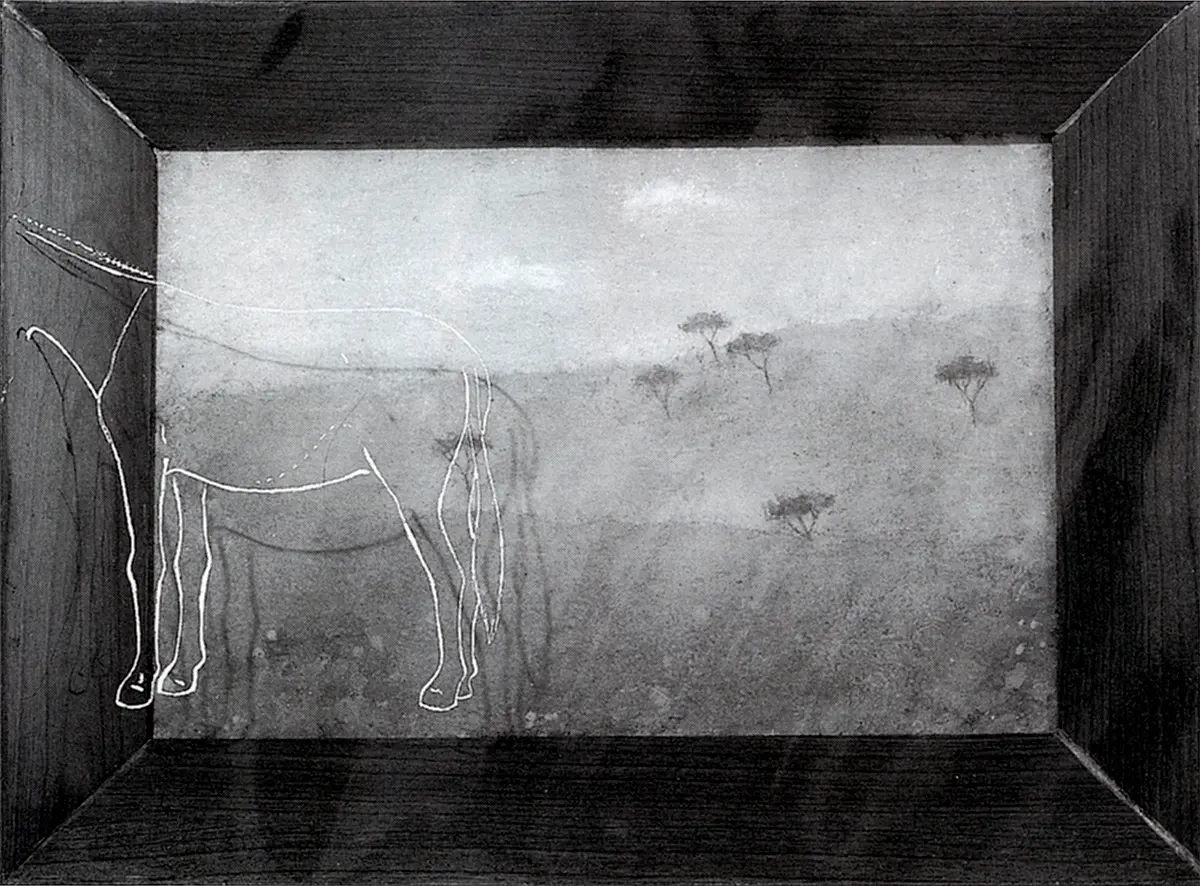
That type of translucent veil that hangs suspended between the material support and the viewer is precisely what travels through the technologies of reproduction and diffusion. This condition of transitoriness thus crosses all his production, from the walks to his more recent experiments with animation, even passing through what is probably his best-known work: the series of collaborations with sign-makers in Mexico City's downtown area.
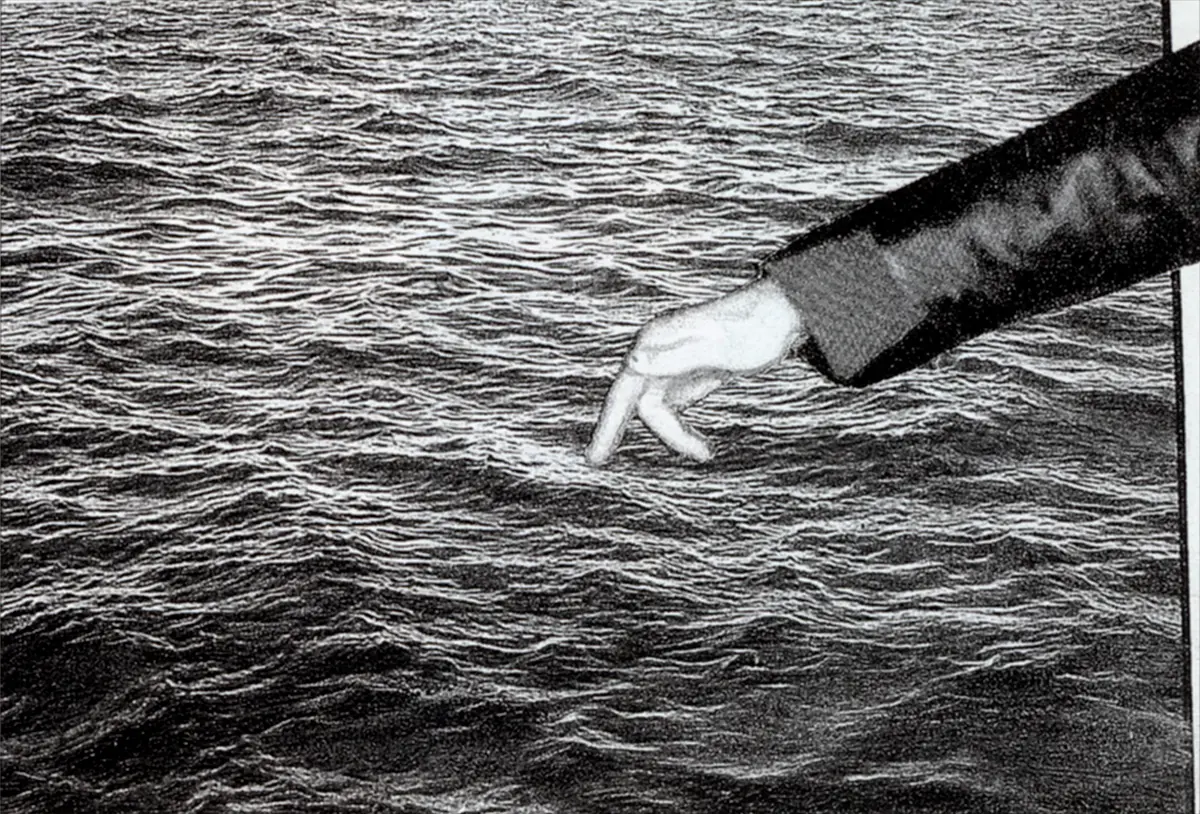
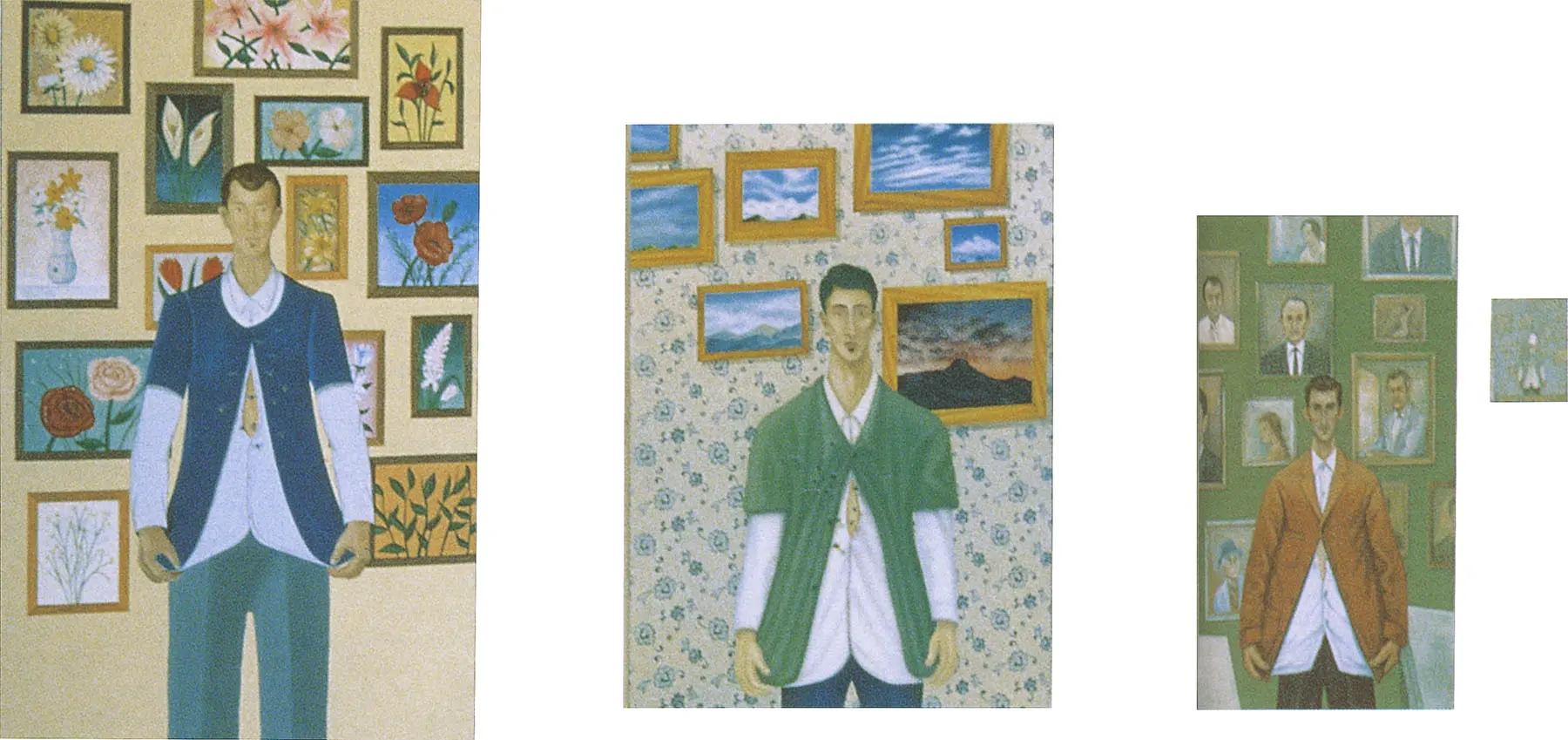
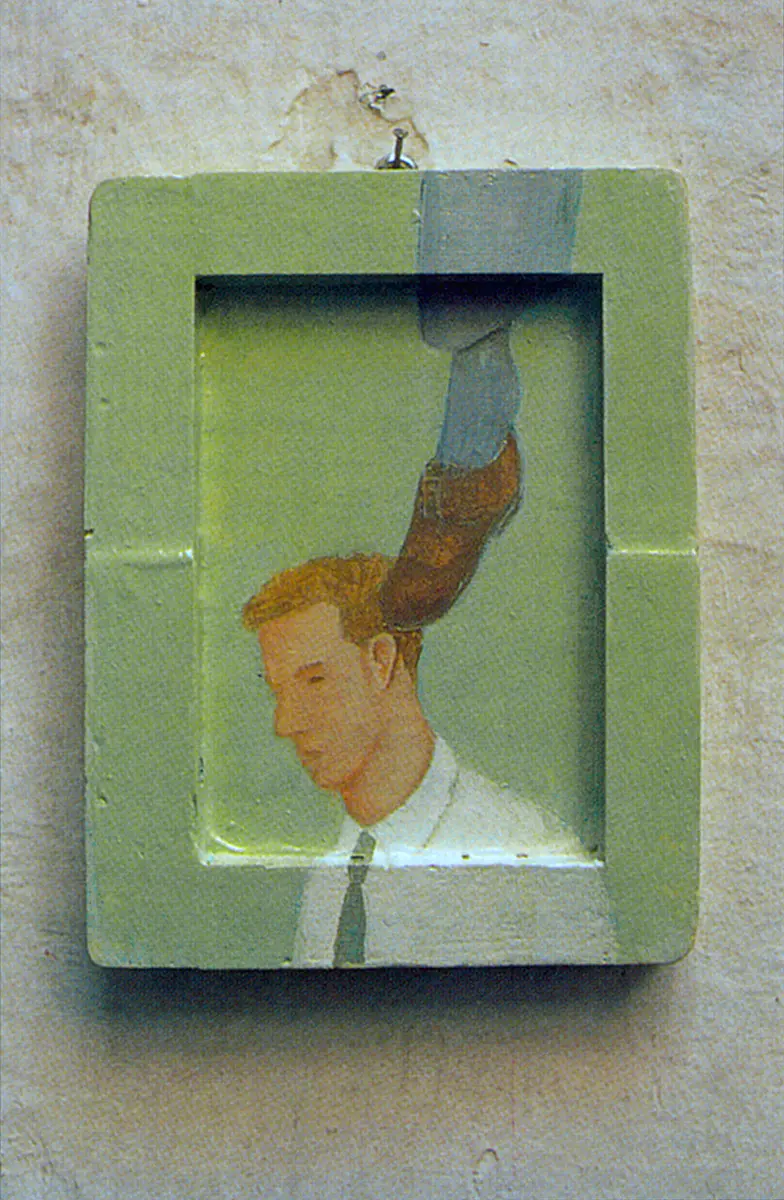
Immediately, and in conjunction with his magnetic walks (The collector, 1992, and Magnetic Shoes, 1994), he began his intense collaboration with the sign-makers in what Alÿs set forth, first and foremost, as a factory of images (Self-portraits, commissioned by Juan Garcia, Emilio Rivera, and Enrique Huerta, and S/t [commissioned by E. Rivera], both from 1995). This series, which begins with a small sketch by Alÿs from which the sign-makers began to make different-sized copies that later served as models for new sketches, has been widely praised for its ability to unmask and to call into question the entire apparatus of contemporary art that is held up by the principles of originality, authenticity, and authorship. But if we read these collaborations as fundamentally allegorical pieces, in the sense that Walter Benjamin gave the term, they then appear as objects whose meaning is always already displaced, deferred. Just like the Mona Lisa, through repetition, the object ends up diluted in the image that now bears the aura. In this context, the debate over the authenticity of the pieces is no longer fitting. In his frequently cited essay on the work of art in the age of mechanical reproduction, Walter Benjamin proposes that the aura of the original work is lost in its reproduction. This loss need not necessarily be considered negative, in that it opens a new dimension for the reception of works of art, going halfway to meet the viewer. However, what is radically altered is the quality of the work's presence, which for Benjamin loses authenticity. But we must note that it is precisely the image that gains the historical authenticity lost by the object. That is, the image loses the aura granted by the physical presence of the original material support, but it succeeds as a manipulatable visual reference that can be contrasted with the world of all other known visual references, that is, reproduced and chronicled. This degradation of the object's authority is precisely what Alÿs makes clear, even in his objectual pieces; they are always presented as allegories capable of containing almost any meaning. The object diminishes before the image, including the variables that the image may present in each version (vision).
Such is the premise of a piece like Fabiola (1994), in which Alÿs becomes the eternal hunter of the evanescent image. Which is the authentic Fabiola? Where is Herner's original when confronted with all the true images of Fabiola? Another experiment in this vein is the installation Déjà vu (1996), in which the artist duplicates 15 small pictures that he will later insert at random into the space of the museum's permanent collection, thus provoking a déjà vu that would alter the temporal perception of the viewer during his visit through the exhibition space.
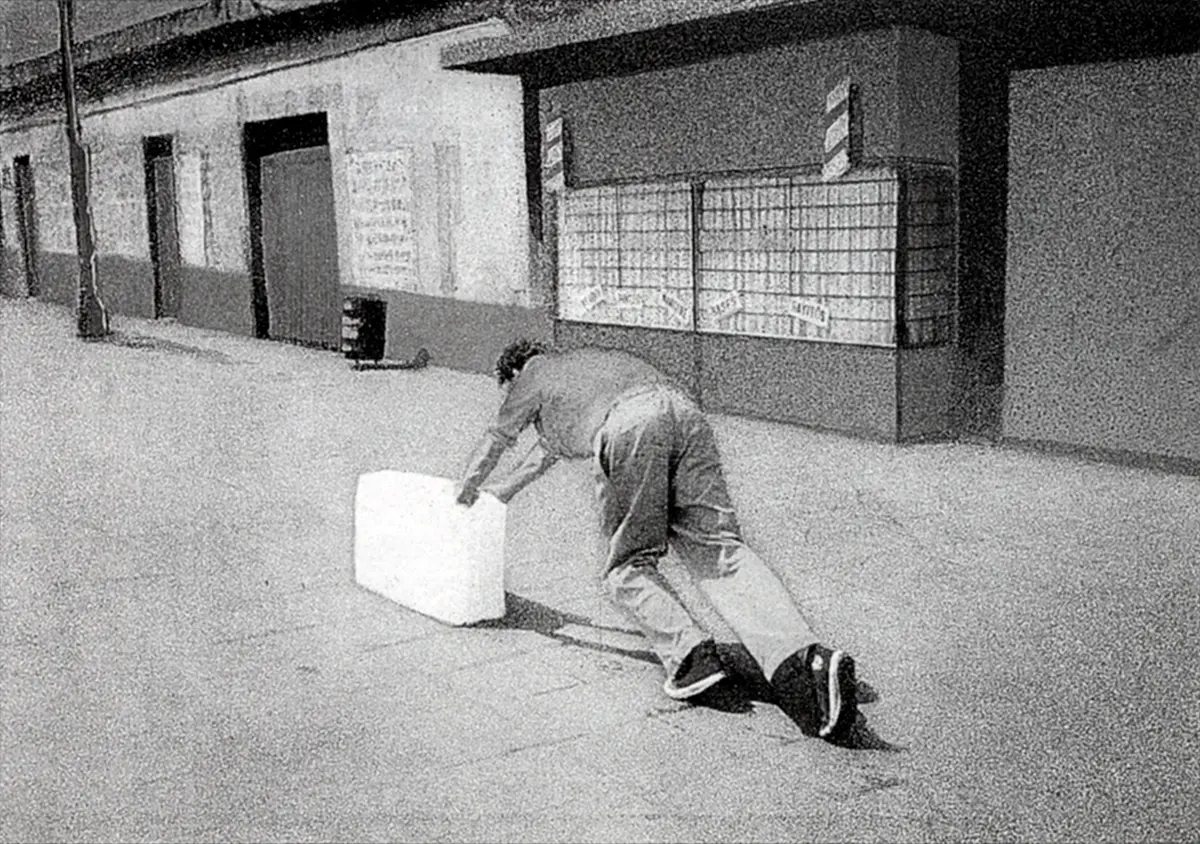
Another relation worth noting between the sign-makers and the walks refers to one of the earliest strategies of advertising: the sandwich board men who, since the nineteenth century, walked city streets bearing signs — manufactured in just the same way as Alÿs's collaborators make them today— that advertise a new product or business. Alÿs himself has reproduced this type of walk. Together with the Magnetic shoes, Alÿs carried some planks on which were glued documents and photographs that he began to pick up until he finished the piece. What are his works about? What could be considered the object of these allegories? Obviously, it is not a question of conceptual thematics grounded in rational discourses. In fact, these are especially poetic works that reinforce their allegorical character. In this case, however, the object of the allegory is never anything external, or rather, it is a matter of allegories of an experience yet to occur: that of the viewer. This is the challenge for a public that will see itself obliged to construct a meaning where, in sensu stricto, there is none; or there was meaning only for Alÿs at the moment in which he carried out one process or another. The meaning of the pieces will always be construction and no longer a reconstruction that derives from the original context of the fragments that naturally constitute the walk.
Alÿs's walks imminently turn to the fin-de-siecle figure of the flâneur that has been recovered by more than one contemporary artist through strategies that have been cataloged as peripatetic or nomadic. Just as Baudelaire composed his poems during his flânerie, Alÿs composed his works on the walk which is really the privileged moment of the non-occurrence. He thus lets us read the statements: "as long as I'm walking: I'm not choosing, I’m not losing, I’m not making, I'm not knowing, I'm not falling, I'm not painting, I'm not hiding, I'm not cheating . . . as long as I'm walking, I will not repeat, I will not remember." The very act of moving spares the subject from compromising with any other action: the walking and the subject are identified Step by step. As he walks through his own neighborhood, Alÿs insistently repeats certain actions with the hope of becoming a character. On another occasion, he participates in the urban space as he travels through it (i.e., he substitutes broken glass for pillows), leaving a sort of trace that only an attentive observer could recognize. In Narcoturismo (Narcotourism, 1996, in collaboration with Laureana Toledo), the artist uses different narcotics to provoke the gap between the walking subject (himself) and the environment in which the action develops, in this case, the city of Copenhagen. What Alÿs achieves is the unfolding of the experience of the walk on two planes: that of the topological map over which the action is carried out physically, and the mental map that is configured according to the particular effect of each drug.
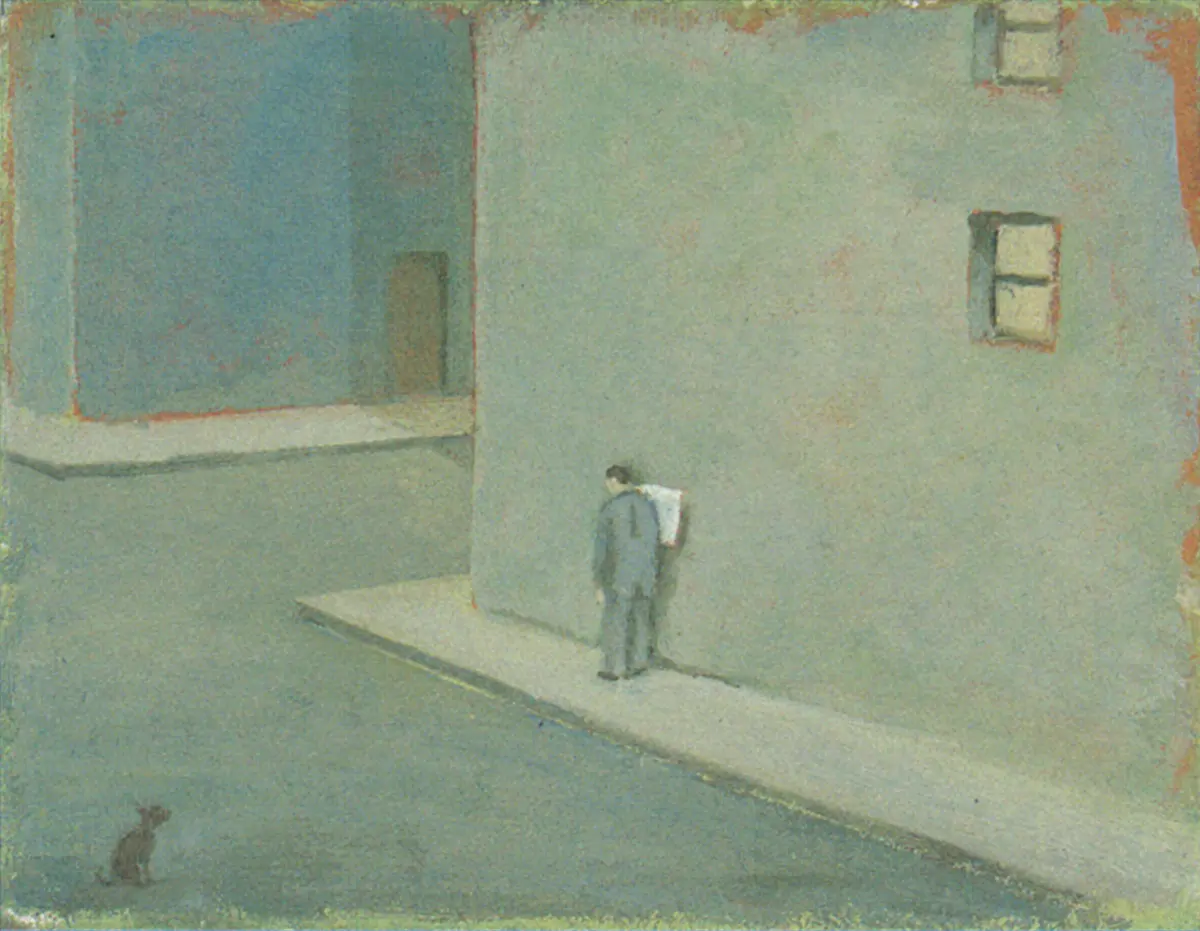
He documents it thus, in the pieces Conforming Narcotourism: For example, in No. l: "Alcohol. Due to certain problems —I can't find any drugs— I decided to initiate the piece with alcohol and local liquors. Difficulty tuning in mentally to my physical state. Internal resistance. I can't quite trust my sight or my reflexes. Clumsiness in walking. Strange events (...)". In No. 3: "Amphetamines. Ambulatory paranoia. Cold feet. Fear of the signals of my own presence. I avoid all contact on the street. While walking, I try not to let any recognizable point out of my sight. (...)". In No. 7: "Ecstasy. Visual glow. Erotic impulses. My shoes move and I feel the impulse to go out. Everything I contemplate moves, not physically, but conceptually. I feel like the epicenter of the world."
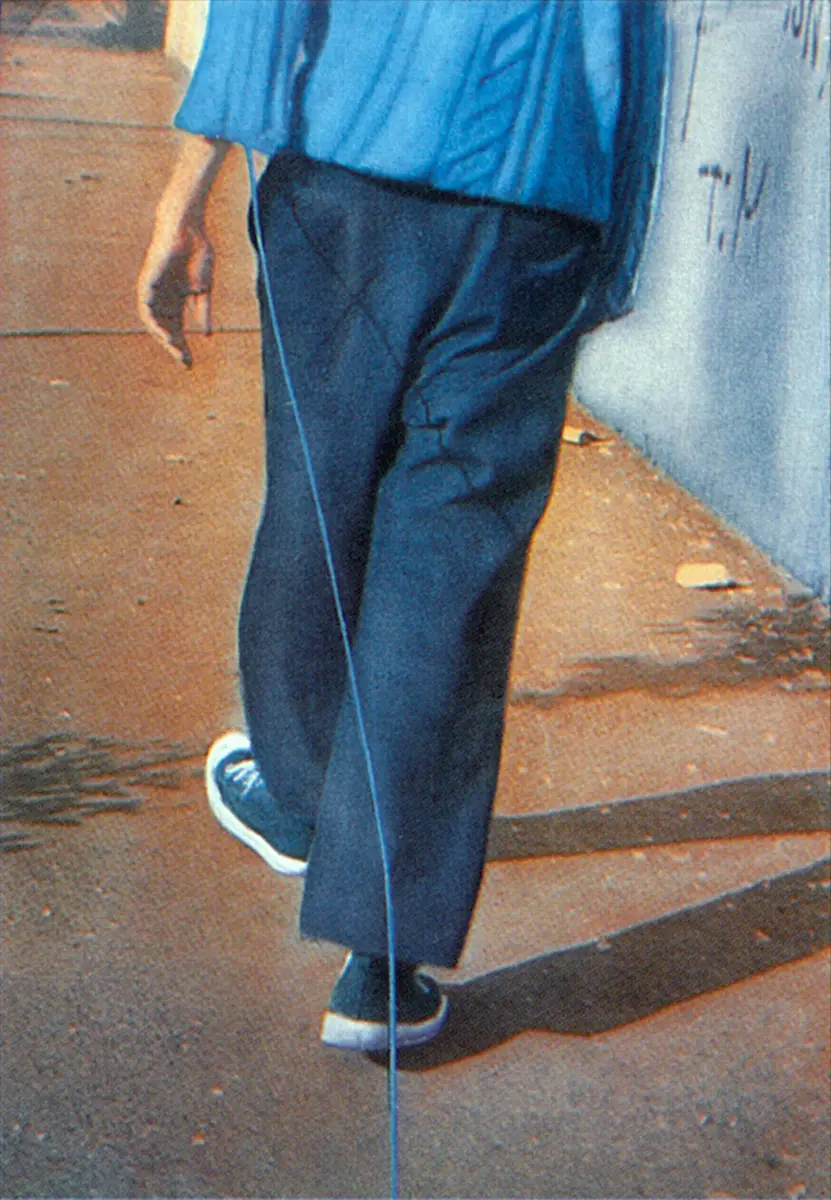
A walk that is especially suggestive as a commentary on the task of the painter that Alÿs overwhelmingly rejects is La gotera (The leak, 1995). In it, the artist goes out of the gallery with a can of paint in his hand. During his trek, he leaves a thin blue thread over every place he passes until, finally, he returns to the gallery and exhibits the empty can on a wall. It is the genre of landscape revisited.
The ephemeral condition of these walks is confronted by the strategies of diffusion that Alÿs has come to propose. Normally, ephemeral art is presented through documentation, almost always photographic, and it is usually poor in comparison with the event that is narrated to us. In this sense, Alÿs seems to remain loyal to the condition of the transitoriness of his pieces. The products generated by the walks (pictures, postcards, sketches) are never the documentation of the action; they do not deal with derivatives, but rather they are autonomous objects, separated from the stroll, that attempt to capture the experience of the journey in another language. Failed objects from the outset, for what material support is capable of containing the time as an experience without becoming a ruin itself? On the contrary, Alÿs's objects may be considered carefully worked and even finished, at least in appearance. And yet, that sensation of incompleteness, of something unresolved, is precisely the one that opens the possibility of personal experience with his work.
It seems to me that the key strategy at the moment of untying this process is, again, its literalness, both its images and its texts. Alÿs has repeatedly offered us his walks in the form of postcards that combine a simple yet not documentary image —barely a fragment of the experience— added to a descriptive text. In the case of the piece that he presented at the last Venice Biennale, Duet (in collaboration with Honoré D'O,1999), Alÿs presents a photograph in which two figures appear, their backs to us, each bearing a piece of a dismantled tuba. Underneath is written the following text: "(moderato) A & B arrive at opposite ends of Venezia. A is carrying the upper part of a tuba helicon, B is carrying the lower part, (andante) A& B wander through the city looking for each other, (crescendo) Upon meeting, A will help B to reassemble the tuba, (vibrato) With one breath B will play a note for as long as he can. A will clap for as long as he can hold his breath."
Just by reading the description of the action, we have not only made this journey in our imagination, but we have also played the roles of A and B, simultaneously, something quite common in the act of reading.
But we have also constructed an entire correlation around the text: the streets through which they have walked, the moment of the encounter, the reactions of the people during the entire process, and even the faces of A and B, whom we only know from behind. And yet, the relation of all that with the photographic image is highly precarious, for in reality, it contributes very little compared with what we have been able to construct in the reading. It is precisely this nearly abysmal gap between image and text that unchains for the reader/viewer the (almost) infinite possibility of relations between both. What Francis Alÿs has basically done is tell us a story that is different each time someone listens to it or repeats it. The loser/The winner (1998) is even more eloquent in this sense. Over the image of a man (we suppose that it is Alÿs himself) who is walking away while his sweater is unraveling, we can read: "Here is a fairy tale for you which is as good as true. What unfolds will give you passion. Castles on hills & also treason. How, from his cape a fatal threat to her window the villain led."
What else are legends made of? In this context, it should not surprise us that his most recent production includes everything from a group of small, very simple animations that prompt a comparison with the fading effect in cinema: that precise and otherwise inapprehensible moment in which one image gives rise to another, generating the illusion of movement. This idea is somehow to be found behind the animations (Cancion para Lupita [Song for Lupita], 1998) that Alÿs has conceived as small pictures in motion, fixed images that attempt to recover this processual sense, as well as in the series of popular songs composed by the artist himself to be interpreted by various street musicians. Both cases try to trap that space that exists between one picture and the next, between written music and heard music, the space that Duchamp named inframince. In this sense, both the animations and the songs may be read as strategies for recovering precisely that imagined and non-objectified quality of the images. A strategy of permanence through tradition and not through resistance.
But let us make no mistake. The transitory quality of Francis Alÿs's work in no way hinders him from throwing himself into the rough paths of the artistic system and into highly paradoxical and problematic forms that, in the best cases, enrich the possible meanings of his works.
In the nineteenth century, the flâneur was not a simple vagabond. On the contrary, the act of walking ended up becoming an occupation. For Benjamin, it was the prototype of a new form of a wage earner who produced poetry (Baudelaire) or who informed or entertained (the sandwich board man). But the sandwich board man himself also became an attraction; the vagabond is also the object of contemplation on his own walks. Francis Alÿs, through various transits, has attempted to become a similar character within his neighborhood —repeating certain actions or healing broken glass with pillows— as well as within the borders of the system of contemporary art: walking under the influence of diverse drugs in Narcoturismo, or traveling from Tijuana to San Diego without crossing the border between Mexico and the United States in The Loop (1997). Among all these journeys we are finally left with the image of an enigmatic Francis Alÿs: great liar or keen poet? Swindler or relentless critic? Judgment must also be transitory.
He gives the voracious system the possibility of manipulating his pictures, videos, and photographs to the point of fetishization. The public will also get their share: postcards, catalogs, and even vinyl records that are highly coveted by those who cannot aspire to own an original Alÿs if one exists. In this sense, the accidental character of a proposal that seems fundamentally essayistic cannot be pushed aside: Alÿs himself states that he became an artist somewhat by accident, but an accident that was largely therapeutic as well as ludic, not only for him but also for the viewer. The piece on the Fabiolas has turned into a hunt shared by Francis' friends and acquaintances who do not hesitate to communicate any findings to him. In the Hipótesis para caminatas (Hypotheses for walks), a ludic sense also emerges that is key for the separation that Alÿs makes between experiences and objects. The walks are completely his, a product of his own physical activity. The series of small pictures, postcards, and retouched photographs that precede or result from the walks always form a part of the hypotheses: they are neither documents nor autonomous objects, but rather proposals, speculations that must yet be experienced by us.
In this sense and in spite of the interpretations that could be read into his work the mise-en-scene of the mythic death of the author, Francis Alÿs is always in his works, but in a privileged fashion: always in silence. Rather than the invalidation of authorship, Alÿs seems to claim the voice of the subject that has taken the word (the image) only to return it to us as it is: equivocal, ambiguous, and waiting to be manipulated, interpreted, and experienced by each one of us.
A song for each of us to sing in our own way.
SOURCES AND REFERENCES
Eduardo Abaroa, “Francis Alÿs y Thomas Glassford en MACO," Curare 9 (1996).
Carlos Basualdo, “Head to Toes: Francis Alÿs’s paths of resistance,” Artforum 37:8 (1999).
Michael Darling, “Francis Alÿs and the Return to Normality,” Frieze 33 (1997).
Serge Gilbaut, “Rodney Graham et Francis Alÿs. Silences, discours et cacophonie: voyages aux centres de la Peripherie," Parachute 87 (1997).
Medina Cuauhtémoc, “Francis Alÿs. Tu subrealismo,” Third Text 38 (1997).
CATALOGS
Francis Alÿs. Walks/Paseos. Museo de Arte Modemo/ INBA/Museo Regional de Guadalajara/INAH. Mexico City, 1997 (texts by Ivo Mesquita, Kurt Hollander, Pablo Vargas Lugo, Bruce W. Ferguson, and Francis Alÿs).
Francis Alÿs. Galeria Camargo Vilaga. Sao Paulo, 1995 (text by Kurt Hollander).
Francis Alÿs. The liar/The copy of the liar. Arena Mexico. Arte Contemporaneo/Galeria Ramis Barquet. Mexico City, 1994 (texts by Thomas McEvilley and Francis Alÿs).
Fabiola. Una investigacion de Francis Alÿs in collaboration with Curare. Mexico City, 1994 (texts by Cuauhtémoc Medina and Francis Alÿs).
Francis Alÿs. Galeria Arte Contemporaneo. Mexico City, 1992 (texts by Cuauhtémoc Medina, Kurt Hollander, and Francis Alÿs).
ISSA MARIA BENITEZ DUEÑAS