
Contemporary art history registers the name of Juan Downey (Chilean,1940-1993) as one of the precursors of video art, along with the Korean artist Nam June Paik. Contrary to popular belief, Downey and Nam June Paik did not meet each other until their respective projects were already at an advanced stage. It is a case of simultaneity since each developed his research unaware that the other was blazing a similar trail. Like Nam June Paik, Downey took up the practice of video toward the end of the sixties, when Sony launched the first household unit onto the market. But from much earlier on, his work had incorporated the idea of technology at the service of communication, specifically destined for the transmission of different types of energy. In this sense, it is not whimsical to speak of Downey as precocious, someone who had a profound anticipatory sensitivity for what would become the practical and theoretical development of contemporary art. Downey possessed a rather extraordinary "connectivity," so to speak.
His ability to link signs of diverse origins and make them work systematically is perhaps one of the most remarkable aspects of his art. One could conceive of his pieces —electronic sculptures, installations, videos, and projects— as systems that connect and produce ideas that, as a group, set up a metasystem aimed at communicative efficiency. It was the artist himself who, at one point, spoke of his conception of video as a "communication utopia." It was a question of communication being an instrument with which to democratize messages, removing them from the influence of transitional mass media which were monopolized until that moment. These were the very libertarian tones of the Avant-Garde spirit, always overly optimistic with respect to the social efficacy of art.
Downey, who could not be as ingenuous as he would have liked, quickly realized that he was pursuing the impossible: video could have done nothing against the inflexible tyranny of economic power. "Now," he said in the eighties, "I no longer intend to change the world with my art, but rather, 1 merely wish to make it more liveable."
But in spite of rational evidence, Downey bore an energy that kept him pushing forward, unchecked, toward the outlined utopia.
There was no limit to his unrestrained imagination or his overwhelming productive capacity. His faith in art was a question that not only passed through the intellect but also constituted the motor of a completely integrated creative apparatus. A creator of artistic machines, Downey's persona was the most sophisticated one of all. Those who knew him and were friends of his in Santiago de Chile, Paris, or New York never ceased to be amazed at the speed and passion with which he thought, lived, and made art. Downey not only was a sensitive type, but was able to integrate intelligently his subjectivity into the discourse of the work. Much more radical still, he constructed himself as an autobiographical model from which to explore cultural connections. Downey's connections point in many directions and are realized on various levels. In the editing of his videos and in the installation of his works, he ties together signs of the past, present, and future icons from different places, ideas of mixed origins into a syntactic complex of culture. But he also connects planes of human existence: organic energy, personal life, society, the physical universe, and metaphysical representations. Each sign has its correlation with other levels of the chain. The artist's persona and his autobiographical development thus come to construct an essential link in the work.
Communicative experience
The beginning of Downey's artistic project can be pinpointed to Paris circa 1963. That is where he mingled with the principal cultivators of kinetic art who exerted a decisive influence on his later work. The machine, as a model of connectivity at the service of the communicative function, already appears in this period, although in an embryonic stage of its development. Downey is familiar with the notions of energy and movement that many artists of the period were exploring. Kinetic art interested him, though he did not yet produce objects or installations, rather he "represented" his elements through painting, drawing, and etchings. It was in the United States toward the end of the sixties when Downey decisively hopped on the track that would run throughout his entire career as an artist, clearly opting for an art of communicative experience. Downey then stated: "I no longer wish to represent energy, but to really produce it." This quick leap from representation to "live" production was conclusive, but it did not mean that he would abandon etching, painting, and drawing.
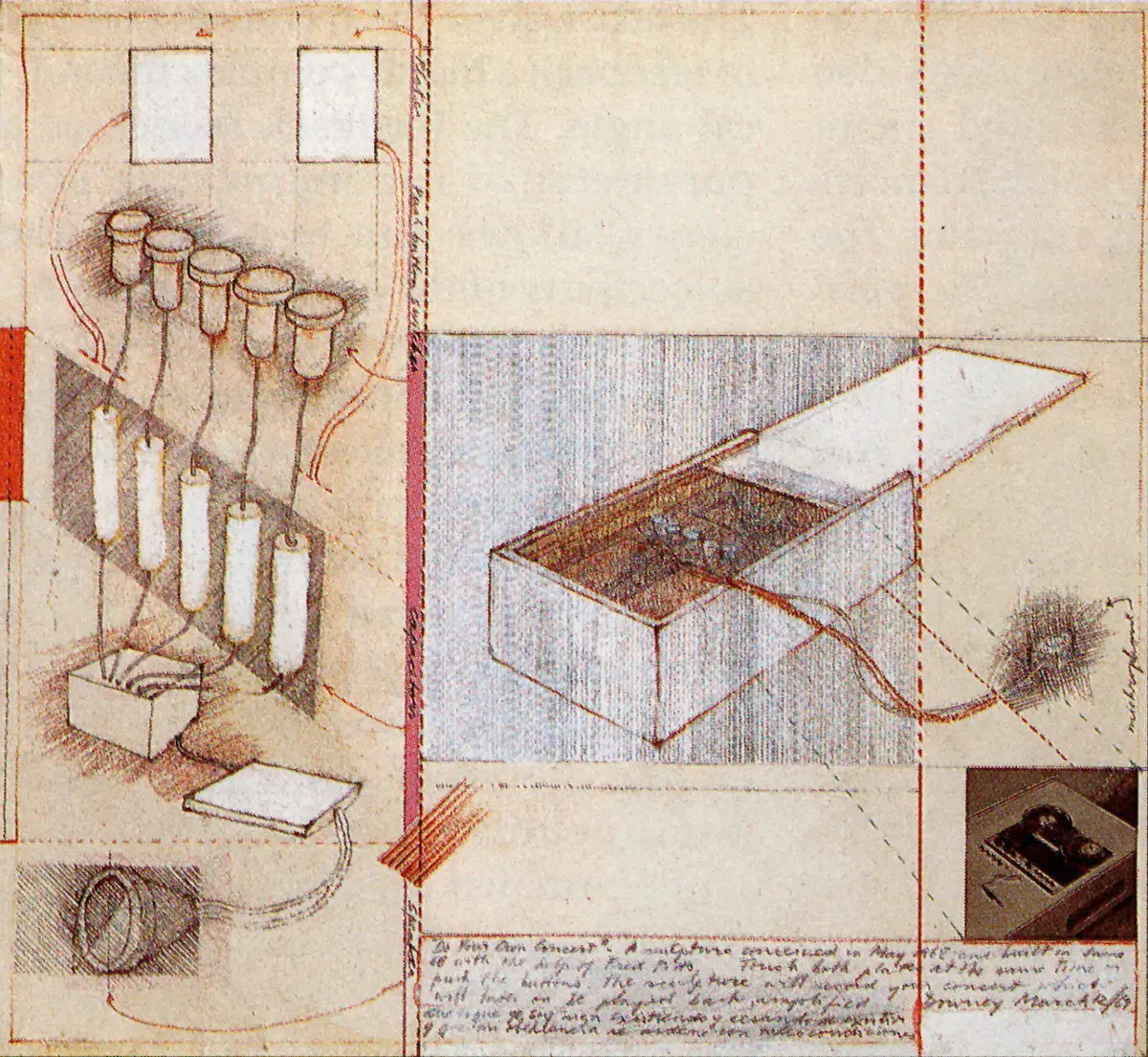
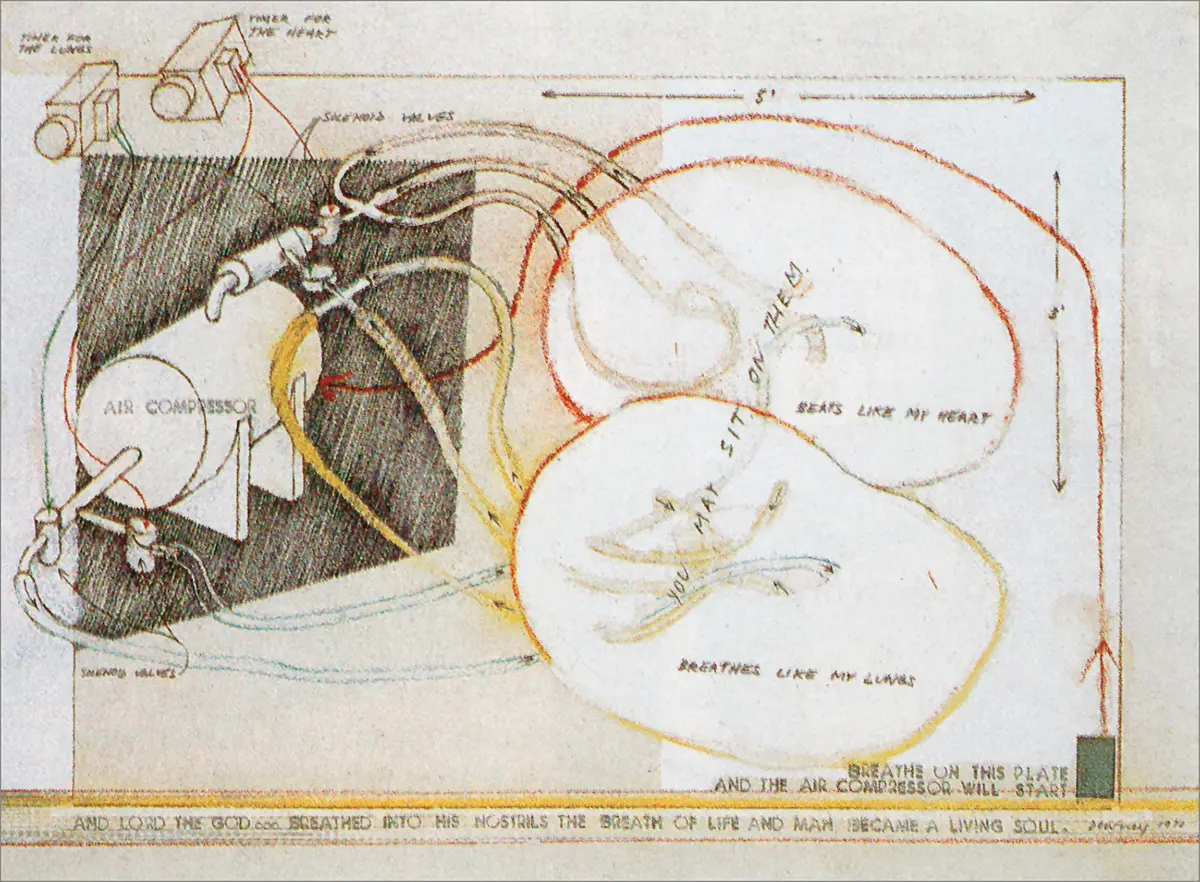
Downey would continue to use these resources in the elaboration of projects that could be summed up in installations and videos, or that could work as autonomous inventions. But Downey's strong work undoubtedly aims at performance and installation, with an ever more sophisticated use of electronic technologies and video. In line with this, Downey's first pieces are sculptures that use electronic circuits as energy transmitters activated by signals from the viewers, now turned into users. They are machines that require the public's active participation, or at least their presence, in order to work. This interactive characteristic would define Downey's work over the following years: "The important thing," he said then, "is not producing objects of art, but rather thinking about what people experience." The questioning of the "object of art," raised by the postminimalists, led him to expand his aesthetic field and to privilege the process over the objectual result. Attentive to the vanguard tendencies, Downey was interested in the perceptive processes, integrated as essential elements of the work.
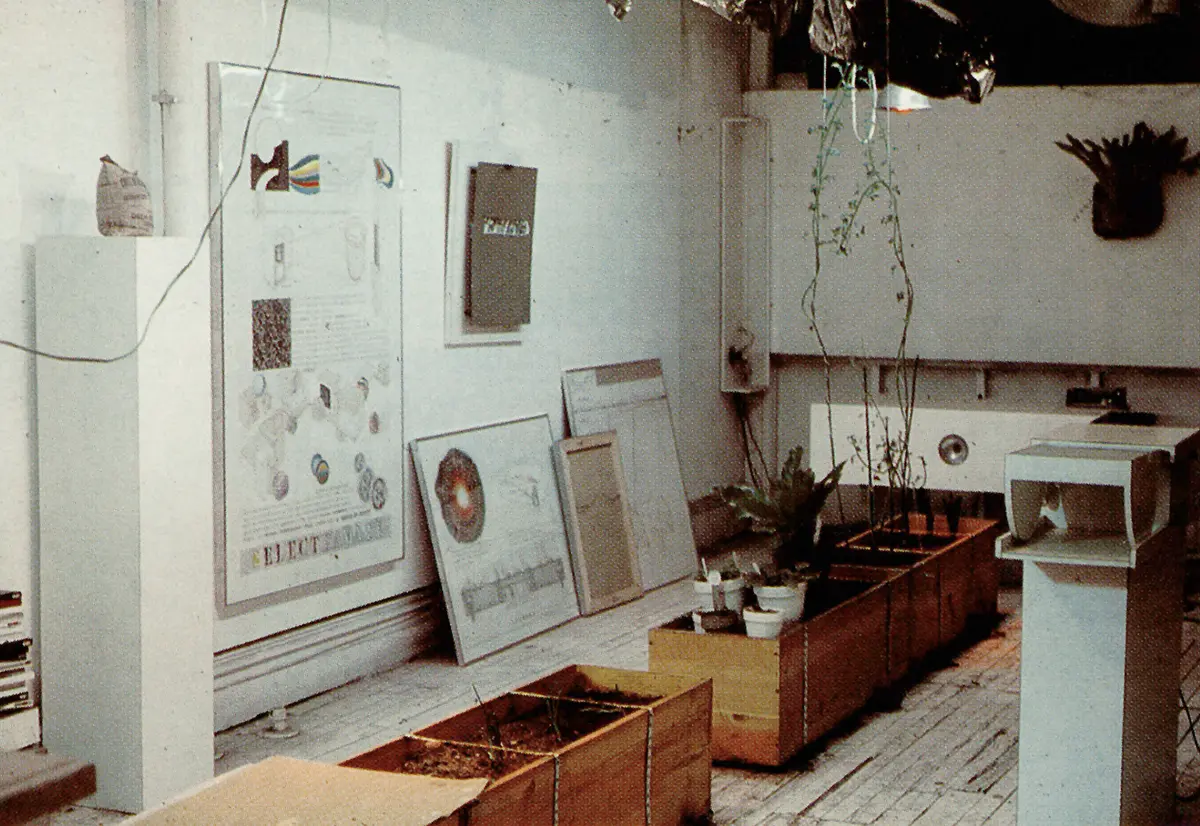
Quickly overcoming technical and formal difficulties, his works have opened up ever more for an investigation into what he calls "invisible energies," visualizing invisible systems of energy transmission. In 1968, when he was 28 years old, Downey showed his unique sculptures in New York's Church Gallery, one of the most active centers in the city for performances and other experimental manifestations of art. The reactions to his art were immediate. His devices were intelligent and, at the same time, extravagant. Although they flaunted impeccable technical and formal rigor, they did not stick to the script, surprising the public with caustic and mischievous humor.
One of the pieces he showed in 1970, titled Pollution Robot, is a box with wheels into which a person could fit. The front part has a mirror at eye level and an orifice at chest level that emits hot air. On the day of the opening, Downey climbed into the box and dedicated the entire inauguration to pursuing the public, spewing a foul-smelling air onto them. In regard to his electronic sculptures, Downey writes: "If given a choice, I would choose total inactivity for my entire life. Nonetheless, I persist in the act of building electronic sculptures for the following reasons: their existence or destruction is irrelevant to the life inside them; they provoke people into playing; they make people aware of the vast quantity of different types of energy in the universe; they are ephemeral."
Energetic feedback
From the expansion of the aesthetic experience in this period, the happening and performance arose as expressive areas more closely tied to life and the body, incorporating the surroundings and contemplating a temporal progression. Parallel to his sculptures, Downey realized a series of actions and happenings between 1967 and 1969 in the framework of his activities with The New Group. This was a group of artists from Washington that tried to continue the tradition of dadaism and surrealism through perfectly useless and absurd artistic acts. Douglas Davis was one of the principal artists and promoters of this movement. From this point on, Downey began to carry out by himself a series of performances in which he incorporated his interest in "invisible energy" and the public's participation, using technologies that were highly sophisticated for the time.
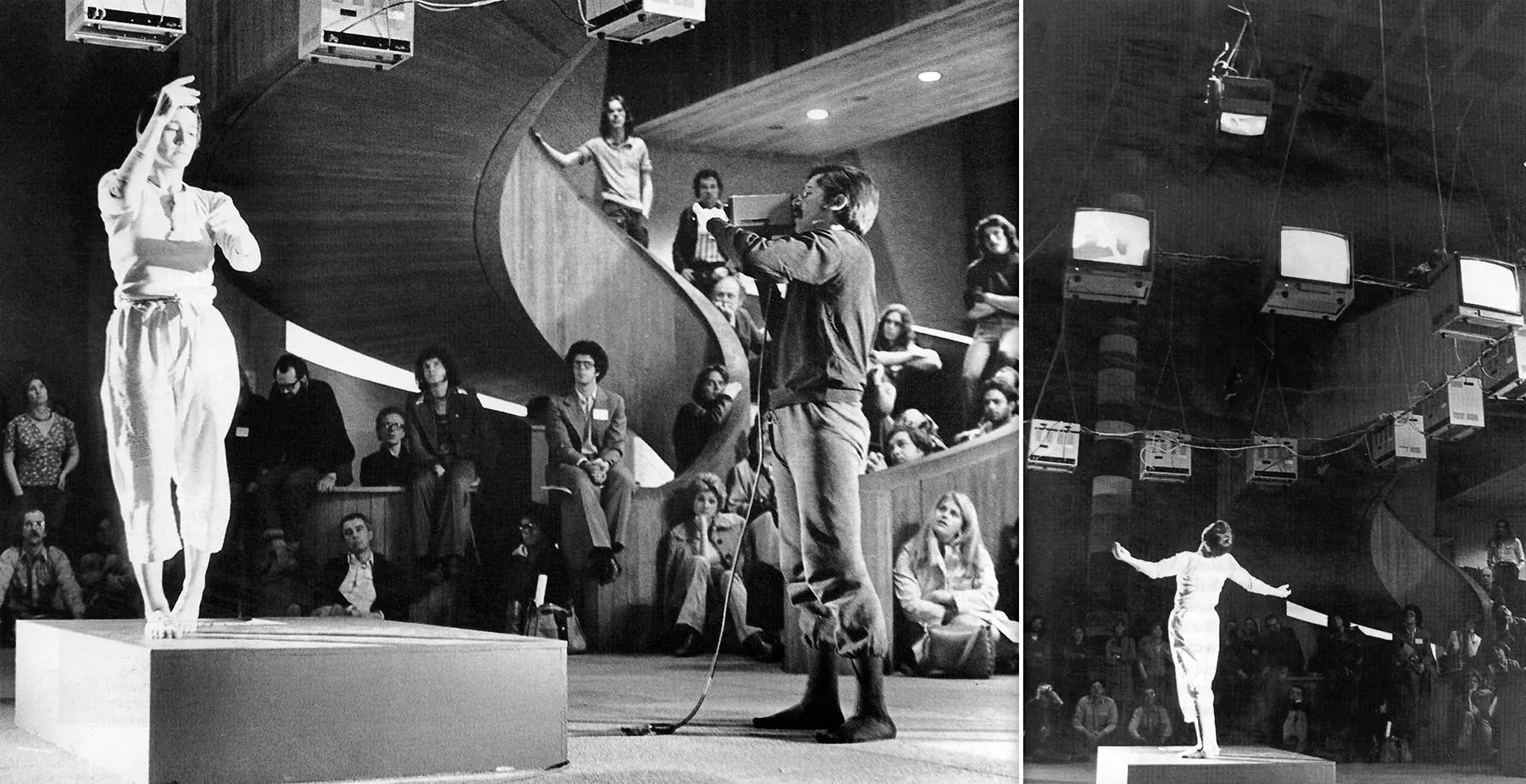
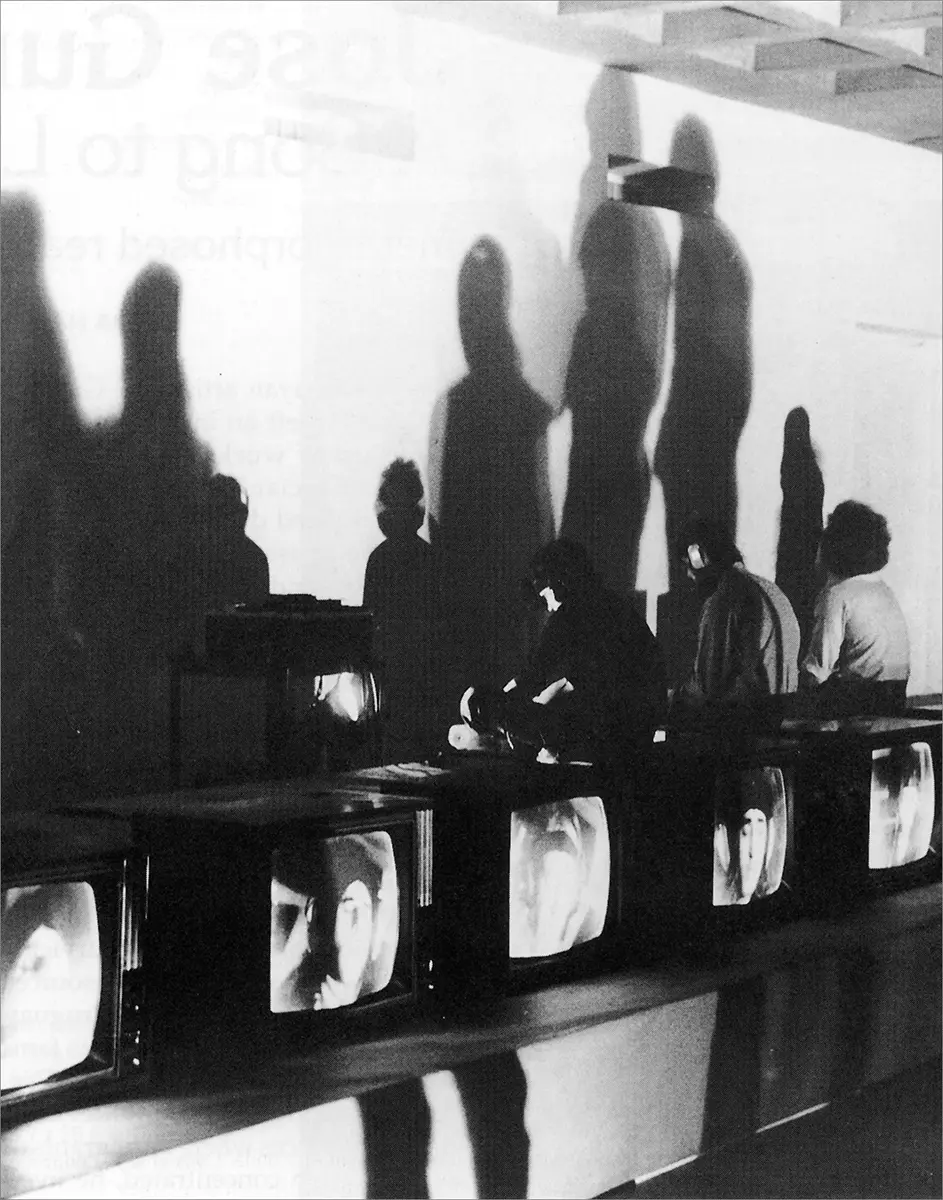
His three most remarkable video performances are Invisible Energy Dictates a Dance Concert (1969-1970), Three-Way Communication by Light (1972), and Plato Now (1973). In Invisible Energy, Downey installs five sensitive mechanisms (Geiger counters, seismographs, walkie-talkies) into different forms of energy (radiation, seismic vibrations, radar waves, radio waves, and airplane radio waves) in five different art-related buildings around the Smithsonian in Washington. The sensory data are transferred to an audiotape, creating a musical piece with five voices. Five dancers, one for each form of energy, carry out a movement when they hear the corresponding form of energy. A video camera connected to a closed-circuit TV records the gestures of the dancers and projects them onto a monitor. The camera also records the public presence and their spontaneous participation in the dance, and thus they become part of the work. Three-Way Communication by Light is also based on the feedback of energy and image, but the idea finds its most successful synthesis in Plato Now, a work that sums up quite well all of the artist's concerns: perception, communication, and awareness. The performance consists of new performers who sit down before a wall to meditate with their backs to the public; they have headphones to isolate them from the noise. Through the headphones, the performers listen to fragments of Plato's dialogues and attempt to convert the alpha waves into electric impulses. At the same time, the shadows of the public are reflected onto the wall before the performers, whose meditating faces are shown to the audience on TV monitors connected to a closed circuit.
"It's fascinating to observe and to become a viewer of the viewers,'' Downey states in light of these works.
The artist gives the technical concept of feedback a highly complex theoretical angle. The feedback model, as a parameter of communicative efficiency, allows him to question the subjectivity of the gaze and to "de-hierarchies" points of view, thus ratifying individual consciences as a part of a democratic collective conscience.
With ever-greater intensity, Downey would focus on work specifically pertaining to video in order to take communicative possibilities to the limit. Two tendencies were outlined among the artists who used video: one documentary and the other more formalist. Downey mixed both into a hybrid that could be called video essay: he captured images of reality, not for the mere pleasure of registering them, but rather bent on transforming them into ideas and making them productive. Applying knowledge of history, anthropology, music, semiology, cybernetics, and ecology, and adding to this erudition very free handling of language, Downey explored new forms of visually composing the picture and of altering the narrative sequence in order to be able to say that which the images alone cannot.
Cultural biography
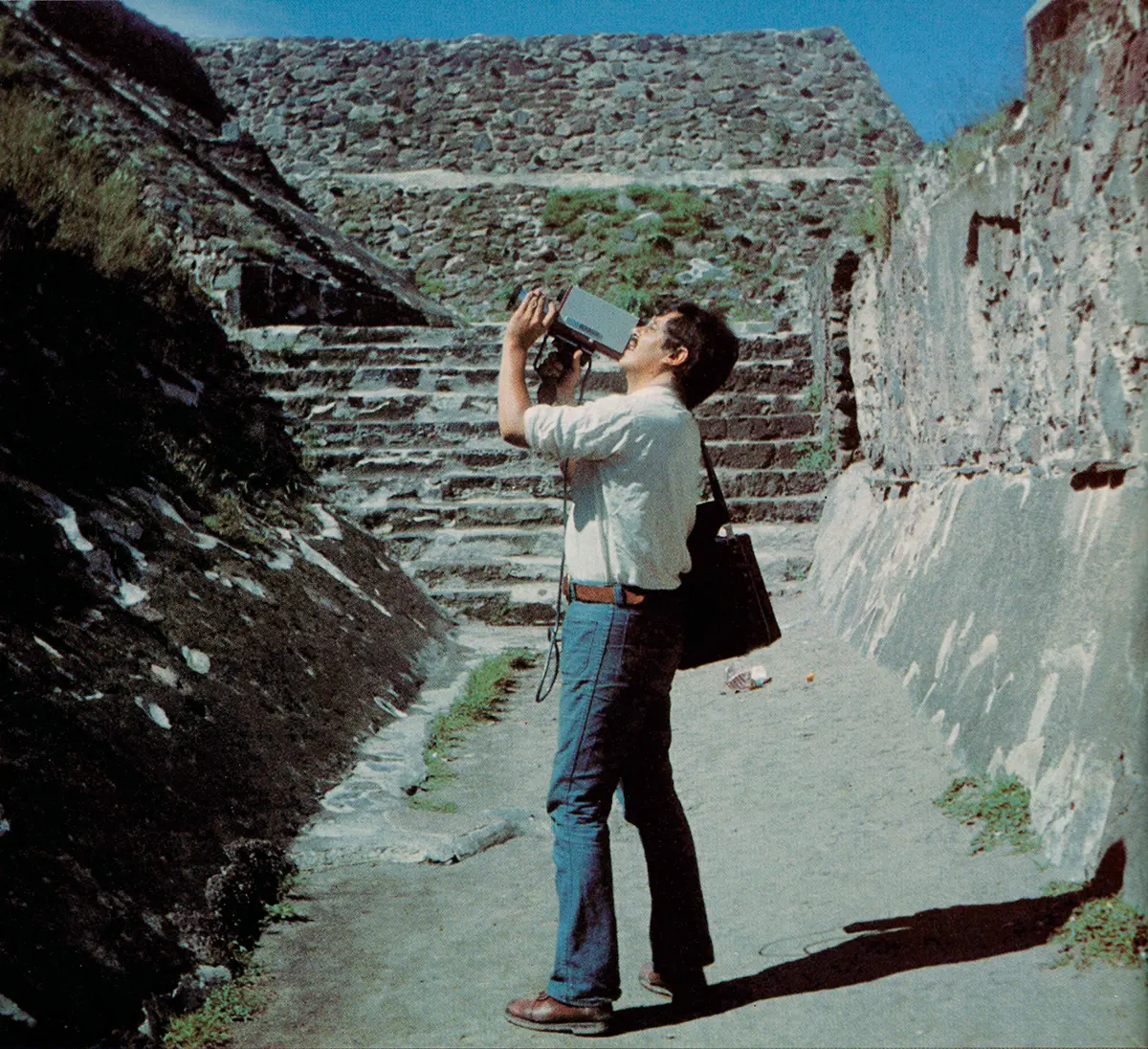
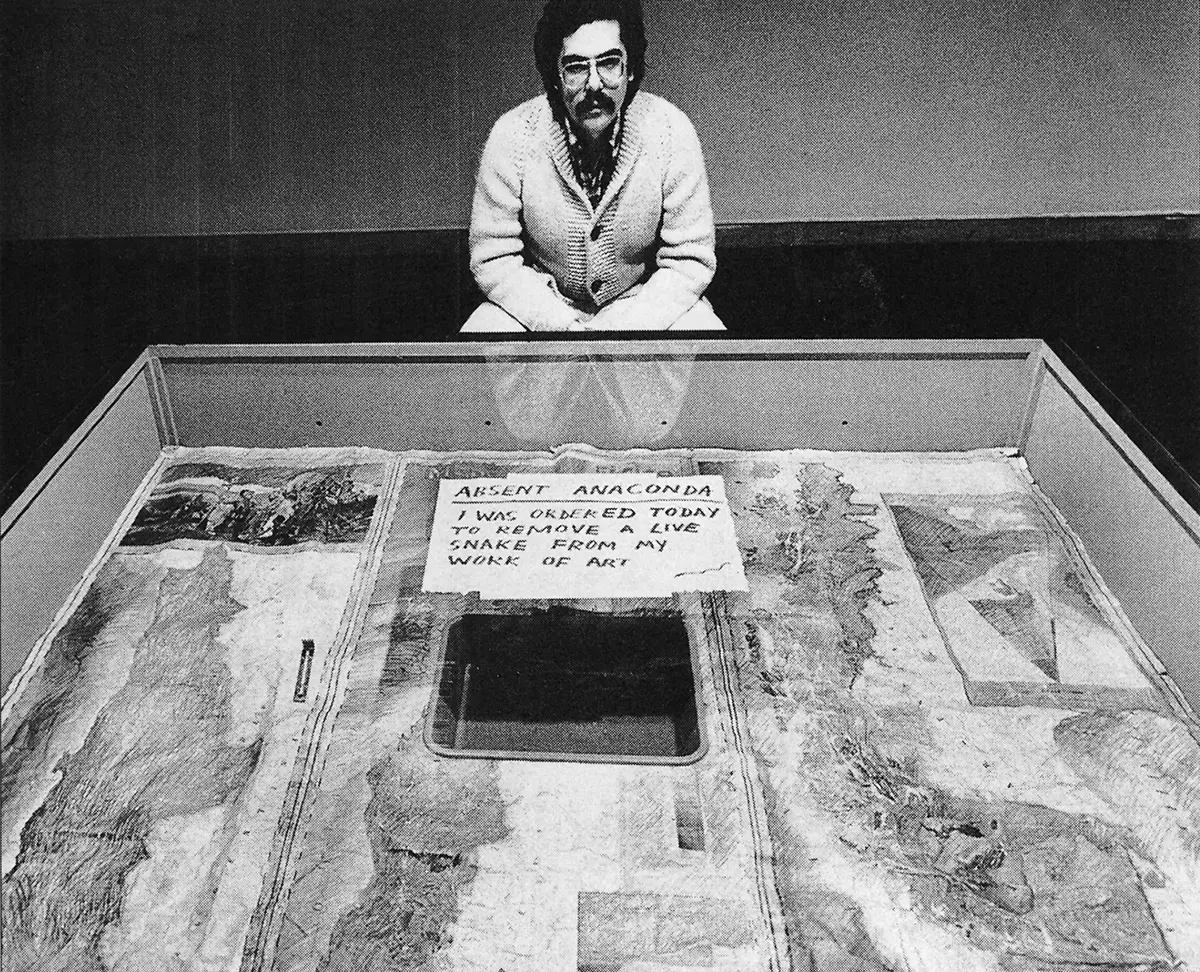
Since 1973, his video work has been articulated around two great series: Video Trans-América and El ojo pensante (The Thinking Eye). Both projects were for him a "dive into the collective unconscious," but in this biographical dredging, Trans-América was the most decisive. It was a documentation of his interactions with diverse cultures from Central and South America that lived at the margin of western patterns. Inspired by Jack Kerouac and films like Easy Rider that pierced deeply into his entire generation, Downey began his existential journey through the most remote places of America. It was a voyage into self-discovery, a radical way of confronting his own cultural contradictions. Downey had left his place of origin at a very early age and, in spite of adapting to life in the United States, the disquiet of the immigrant never ceased to cause him grief. "I decided to use my own culture shock as a method of introspection and relation to the world, and in that process, I felt that it was necessary to return to my roots," he said at the end of the seventies. On his first trip, in the middle of 1973, Downey left for Mexico and Guatemala driving a pickup truck. His exploration was interrupted by the Chilean military coup; but in December of that year, he set off again, this time for Peru and Bolivia. In all of these places, Downey documented his own experiences with the people and the ties they established with his video camera.
But the most decisive trip was the one he made to the Amazon jungles of Venezuela between August 1976 and May 1977. He stayed in the Central Orinoco for two months and in the High Orinoco for seven with the Yanomami, a tribe that left an indelible mark on him. During the first four months of this second stay, he did not record one single tape: he only learned words and interpersonal skills. It was necessary for the Indians to lose their fear of the camera and to become convinced that it wasn't a "soul swallower" as they believed. Downey lent them the equipment and played games with the monitor until one day they said to him: "This is not dangerous, it's simply a mirror." During this period, Downey came to penetrate very deeply into the daily rites of the community and their language codes. He participated in ceremonies, shamanic healings, and mysterious funerals. He even went through a hallucinatory trance, something that few westerners can endure. He was also exposed to the devastation of malaria and found himself on the verge of death. Downey's fever was strong, but flexible enough to survive the threat of these new things.
All of his experiences with the Yanomami were recorded on videos that tell of the ideas and practices of the indigenous culture by comparing them with other cultures. As an architect, Downey took great interest in the shabono, the communal living quarters in the shape of a circle, built with biodegradable materials and adapted to a nomadic life and to the growth of the family. It was the antithesis of the western monument, always condemned to decadence. A series of writings and scripts work with what he called "flexible architecture," which constituted for him the metaphor of a society that was less hierarchized, more integrated, and with greater possibilities of survival. Unlike ethnographic documentaries, Downey did not believe in the objectivity of the register, nor did it interest him. "A documentary is only interesting when it reflects the obsessions of the person who made it," he stated. In his videos of the Yanomami, he integrates objective registers into perceptive subjectivity. Downey mingles with those he registers, including himself in the takes as one more identity and exacerbates the subjective character of the camera's point.
This defense of subjectivity, taken to the territory of visual resources, implies the ability to transmit realities that an optical lens cannot capture. Downey, for example, came to learn that when the shamans are under the effect of the drug, they see an intense purple color around the eyes of the people. In order to reproduce this, he used to edit effects, coloring the trance scenes with a violet tone that the indigenous messengers had reproduced for him with colored pencils.
In his marvelous travel narratives, Downey, who is also a remarkable writer, relates in great detail how the indigenous people buried their dead, then mixed their ashes with a liquid and drank them to the last drop, and afterward licked the stick they had used to stir the potion. All material traces should disappear in order for the person's spirit to ascend freely. When Downey came down with malaria, one of his Yanomami friends told him: "You know that we can only eat the members of our own tribe, but it would be an honor for me to eat you when you die." Downey always told this anecdote, as if it concealed all the mystery of his work. His communication utopia finds a point of maximum radicalness when it is able to break cultural taboos. For this, it was necessary to subject himself to shock, to give up the superiority of the western gaze that comfortably reduces what it does not understand to the category of the "exotic." The erasure of the borders between life and work is, in Downey, a strategy of connectivity aimed at nothing less than global comprehension of the mechanisms that create the norms for our perception of the world.
CATALINA MENA
Lives and works in Santiago de Chile. She publishes articles and art reviews in various magazines and newspapers. She also writes catalog texts for prominent young artists of the Chilean scene.