
The utopia of a democratic, tolerant, and all-inclusive culture is a recent invention. The assimilation of a variety of influences and cultures in the context of a diverse society is a complex phenomenon. The social desire for openness coupled with the "tradition" of change and rupture, characterize modern art more than anything else. The school of Primitivism and the appropriation of elements of African and Polynesian folklore by Picasso and others can be considered the cornerstone of the avant-garde in the arts of our century. During the last decades, innumerable artists have been influenced by ritualistic objects, traditional arts and crafts from all around the world as well as all sorts of handmade artifacts, some of which have even been accepted in the context of modern art as spontaneous expressions of ethnic and outsider art. It is still an object of debate the place and significance that these works have outside of their original cultures. Are they accepted as part of a paternalistic, multicultural attitude toward the unsophisticated, the underdeveloped? Is this a condescending gesture toward Rousseau's mythical Bon sauvage? Are they simply devoured as merchandise and reduced to their decorative value?
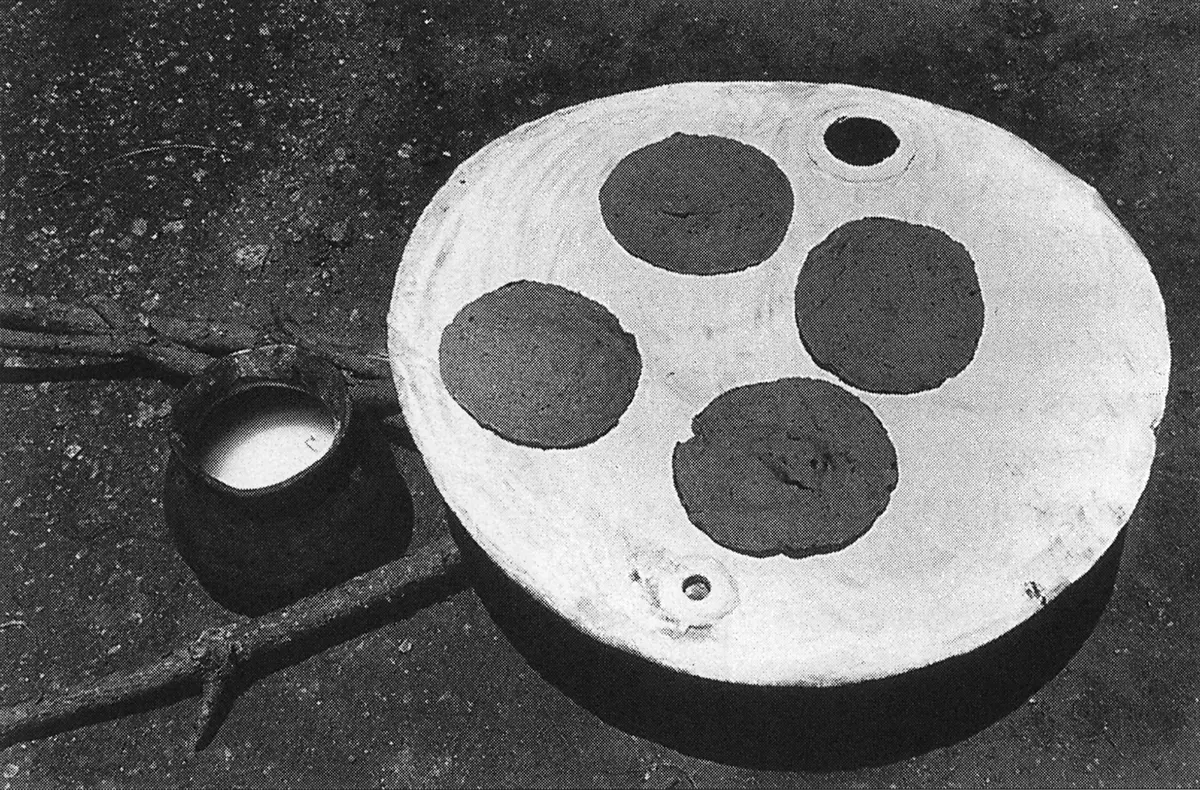
Maruch Sántiz is an interesting case of contemporary cultural cannibalism. Sántiz is a Chamula Indian who was born in 1975 in the village of Cruztón. In 1993, she started participating in the Chiapas Photography Project, a program designed to offer indigenous people access to the tools and material of photography, with the objective to "help them develop skills in the use of cameras, film and darkroom procedures, and to encourage the use of photography for their own purposes," as stated by the artist and nun, Carlota Duarte, creator of the project and director of the Indigenous Photographic Archive.
Sántiz initially collected and recorded the beliefs and advice of her parents, elders, and neighbors in order to preserve them. She used short, intriguing, beautiful, and occasionally powerful passages:
"If a hummingbird passes Whistling in the night, it is a warning that someone is going to become ill. And You should not eat the first tortilla that comes off the griddle or you will become very talkative, saying bad things about other people."
Later she decided to illustrate her texts with photographs, "because everybody can understand images," and she created the series Creencias (Beliefs). Most of Sántiz's images are conceived with surprising formal purity, ingenuity, and austerity. She shows daily scenes, common tools, animals, and people in powerful black-and-white photos through which she explores a magical realm, reminiscent of Marta María Pérez's work and the way she incorporates Cuban Santeria into her photos and installations. Maruch creates brilliant still lives (often with isolated objects), portraits, and landscapes filled with drama and energy. In her photographs, we can identify what looks like abstract compositions, such as Apubil where four tortillas on a shiny Comal, a clay pot, and a couple of branches evoke a painting by Klee. Other photographs seem influenced by Symbolism (like Jach'ubil's stoic comb), Surrealism (the strange chicken legs in Vax Alak) and the whole series seems inspired by Conceptualism. By establishing these
parallels and comparisons with canonical works, we are forced to ask ourselves: to what extent is it legitimate to compare this work created outside of any Western academic tradition to what we consider modern art? We have to remember that Maruch's work has been created in the context of a community obsessed with the protection of its traditions and a reluctance to allow tourists to take pictures of their towns (particularly San Juan Chamula), their religious rites, and themselves.
It is obvious that Maruch had no aspirations of becoming a world-renowned artist, neither did she imagine that her photos would be shown internationally nor would they be the object of heated debates around the nature of art. Sántiz's photographs could be considered anthropological documents but on the other hand, they are not neutral images, instead, they are esthetic artifacts. It is remarkable the absolute absence of political references in the work of an artist who lives very close to the war zone in the southeastern Mexican state of Chiapas. It is also very interesting, and probably symptomatic, that none of the indigenous photographers participating in Carlota Duarte's project have tried to show images of the Zapatista rebellion, instead, they all choose to photograph peaceful images as if they were trying to reaffirm the stability of their universe by freezing it through their photographs. None of them seem eager to question the statu quo.
Almost in the same way that Sántiz's photographs have been appropriated by the art world, the artist, in her effort to preserve her cultural heritage, has transformed her vision of those traditions into her own personal expression.
NAIEF YEHYA