
Venice, São Paulo, Johannesburg, Documenta, Santa Fe, Whitney, Istanbul. The great exhibition centers are like a honeycomb to bees, and they attract us. But frankly, we generally tend to lose control of them. The hegemonic is palpable and distant, whether on account of the disproportionate list of resources, geographic distances, or so many setbacks and stereotypes that the art in our countries must still evaluate and discuss in order that it may unpack its travel bag. But, while this happens, the rise of activities like the Ibero-American Biennial of Lima presents noteworthy peculiarities; not to be valued strictly as a palliative that attenuates our expectations (or ambitions), but rather as an example of a more human scale. Of course, it is absurd to distance ourselves from the mega-biennials, just as it is absurd to think that their great lessons are only for a few. But, ignoring these tiresome models of legitimization, the Ibero-American Biennial of Lima, from this moment on, can be made out as a meeting point, inclusive and accessible for a greater number of spectators from this side of the world.

Today in art, as in everything, we run the risk of becoming subdued by traditional models. But to initiate a biennial with the magnitude of this one is an arduous task, as well as an opportunity to propose new curatorial cartography. In this sense, it must be pointed out that the biennial continues to be marked by the rescue effort of the Centro Histórico of Lima. Since its beginning, it has taken shape as one of the most important movements that are reactivating the cultural life of this important urban center. But, after two experiences, the city, as the leading protagonist, runs the risk of coming up short in a third and future summons. In spite of the meaning of this activity, for the host city, emphasizing this reference grants a setting of disarticulation for the distinct curatorial proposals presented. Since the biennial does not provide a generic theme of reflection and a substantive theoretical framework, the exhibitions run the gamut of an entire panorama of Ibero- American art.
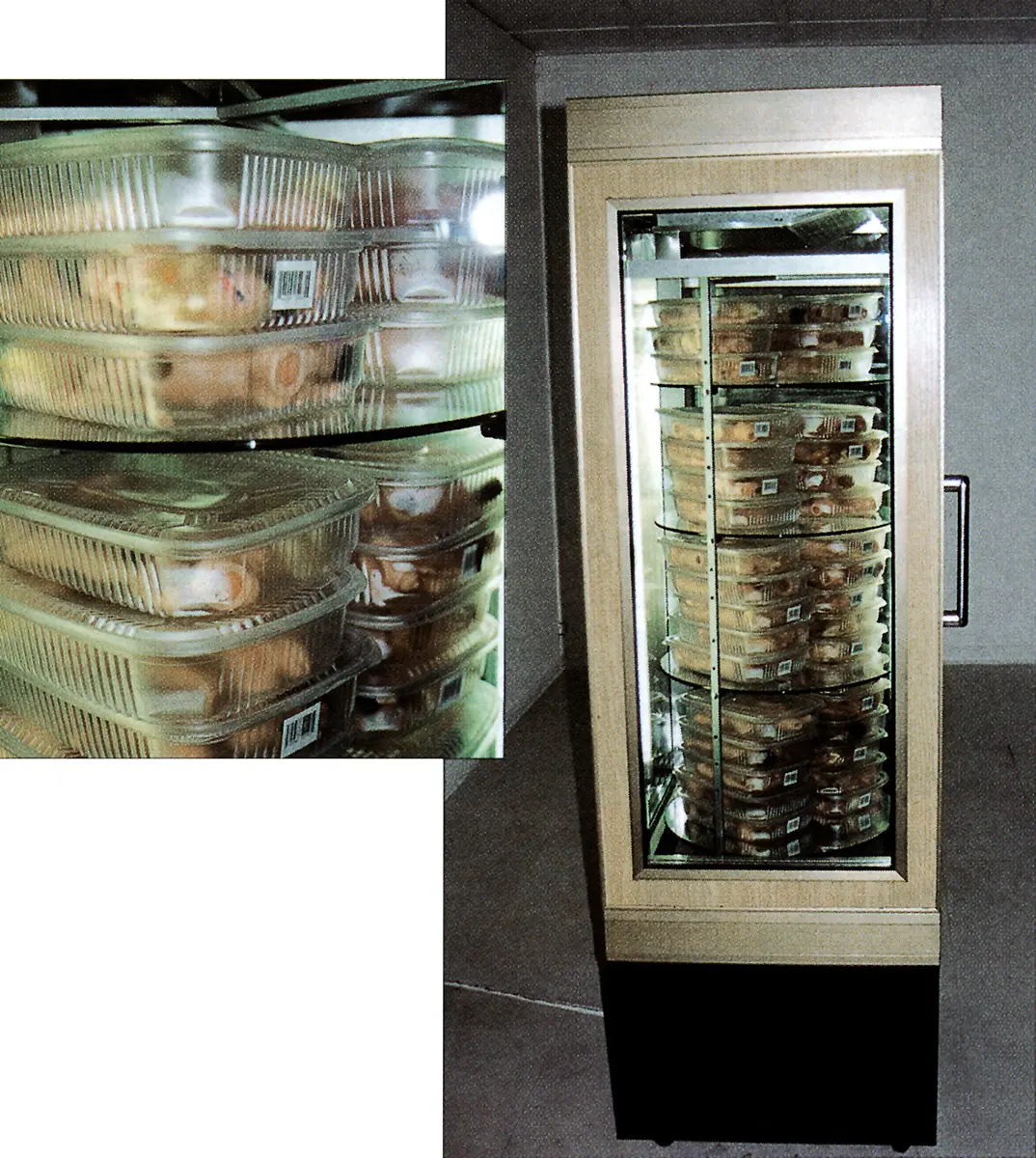
However, the youth of any activity deserves a cautious observation and not an immediate disqualification. And if there are elements to be reconsidered this year, the biennial has earned the presence of intellectuals and curators who are truly interested, such as Dan Cameron and Carlota Álvarez Basso, as well as the presence of works and young, little-known creators, who nonetheless draw us into the art of a near future. Thus, what is fascinating is to begin the visit through the different exhibition areas and to realize the persistence of collective memory, even of the imminent effects of a global culture. The latter occurs in the face of works like those of the Uruguayan artist Florencia Flanagan, through the fragmented bodies of Barbie and Ken arranged on a revolving refrigerator. Or Mario Navarro, a Chilean artist, who unfolds a critical attitude before the postindustrial era. Navarro constructs stories and trivializes violence through the experiences of friends and relatives who made, at his request, pistols out of disposable materials, such as cardboard, plush, cheap metals, and recycled plastics.
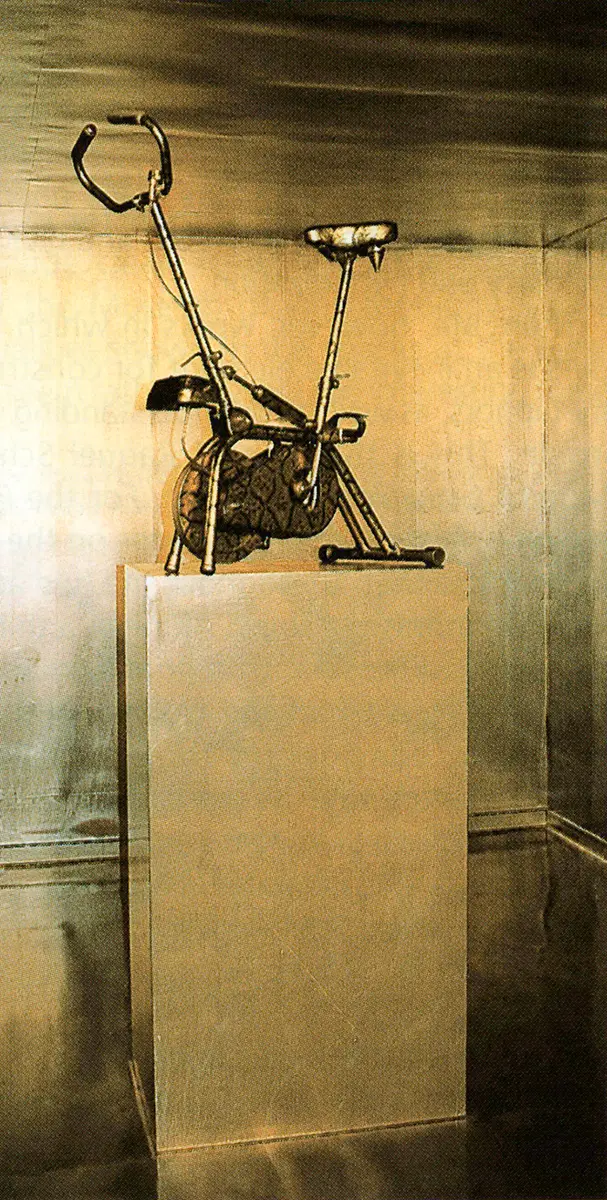
From the same critical and irreverent eye, we can appreciate the work of Darío Escobar. The stationary bicycle of the Guatemalan artist, coated with fake gold and floral motifs that imitate the brocades of the religious imagery from the Colonial period, guides us through the intricate weave of hybrid cultures. Placed at the center of a small room, completely golden and sitting on a pedestal, Darío Escobar's El becerro de oro (The golden calf) approximates an essential object that relives a past of cities colonized by the Catholic Church and, even today, recognize the ingenuity of baroque art. Nevertheless, in this case, the religious reference is applied to an object of secular origin, an aerobics bicycle, which loses its original function in order to become a desirable object. It exhibits its falseness in order to demonstrate the collective need to construct emblems or new idols. And the evidence of its hedonism is the same as flows in a period that excessively consumes images, fast food, videos, and generally useless objects.
One visitor made the observation that the works of Flanagan, Navarro, and Escobar are typical of MTV, which is very true. They belong to the generation of cable and "zapping." Their authors find themselves far from identity-related paranoia and preoccupation with specifying a national context. They probably coincide with the young Spanish writer Ray Loriga, in that art history should be told backward, beginning with Michael Jackson, and ending with Altamira. But their forte is rather the need for contemporary archeology that gets caught up in discussions about all icons of culture at the end and beginning of the millennium. Their works stimulate reflections on the trans phenomena, originating from a culture that is worn out and revived only through immediacy and hybridization.
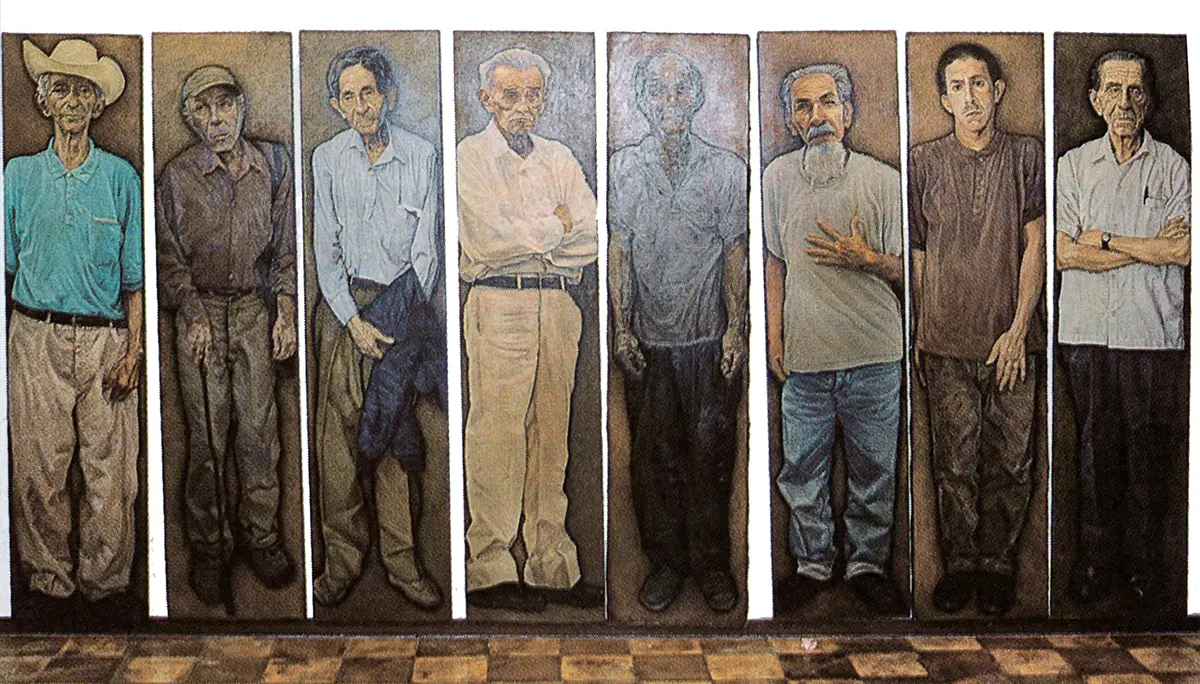
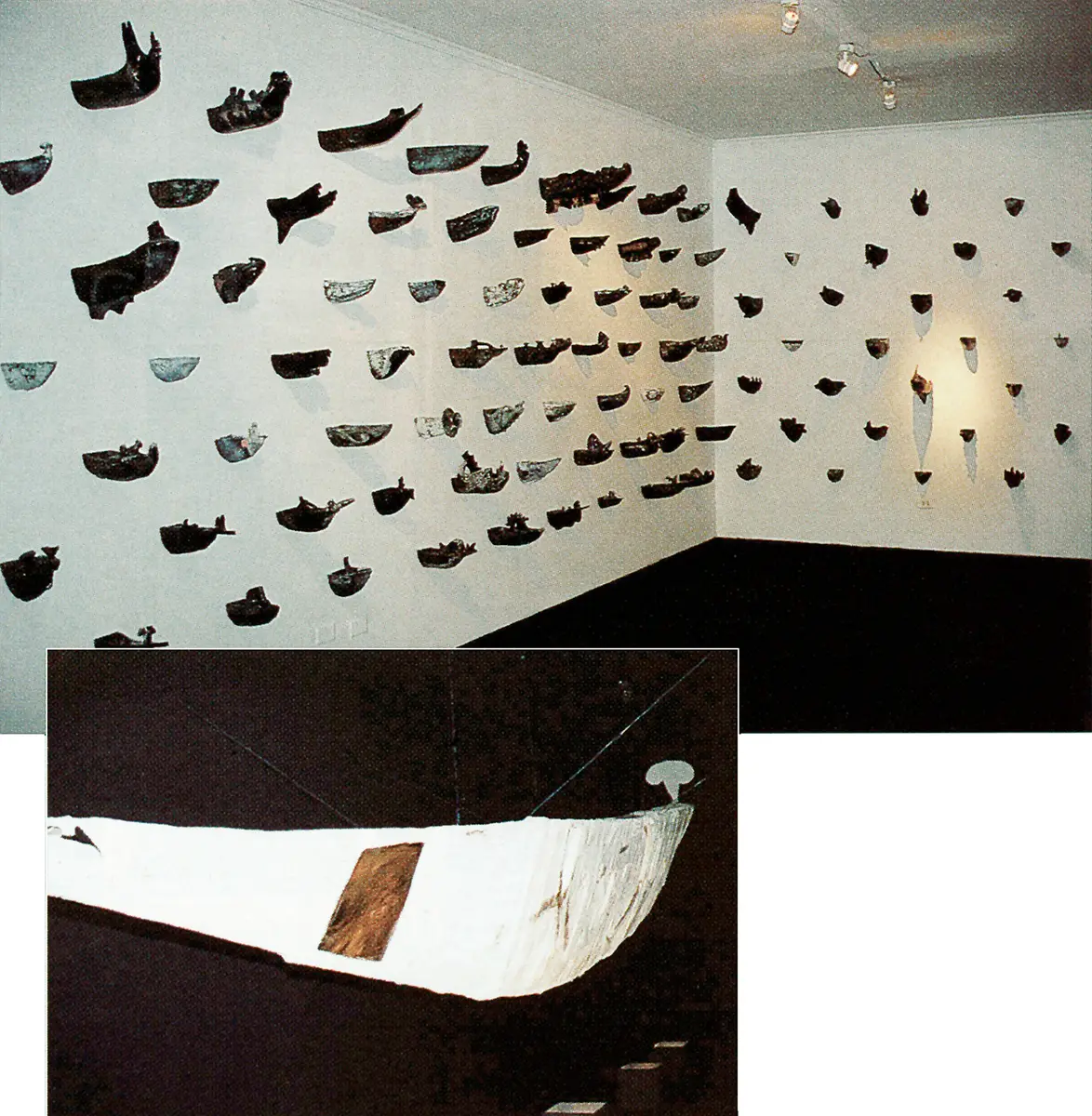
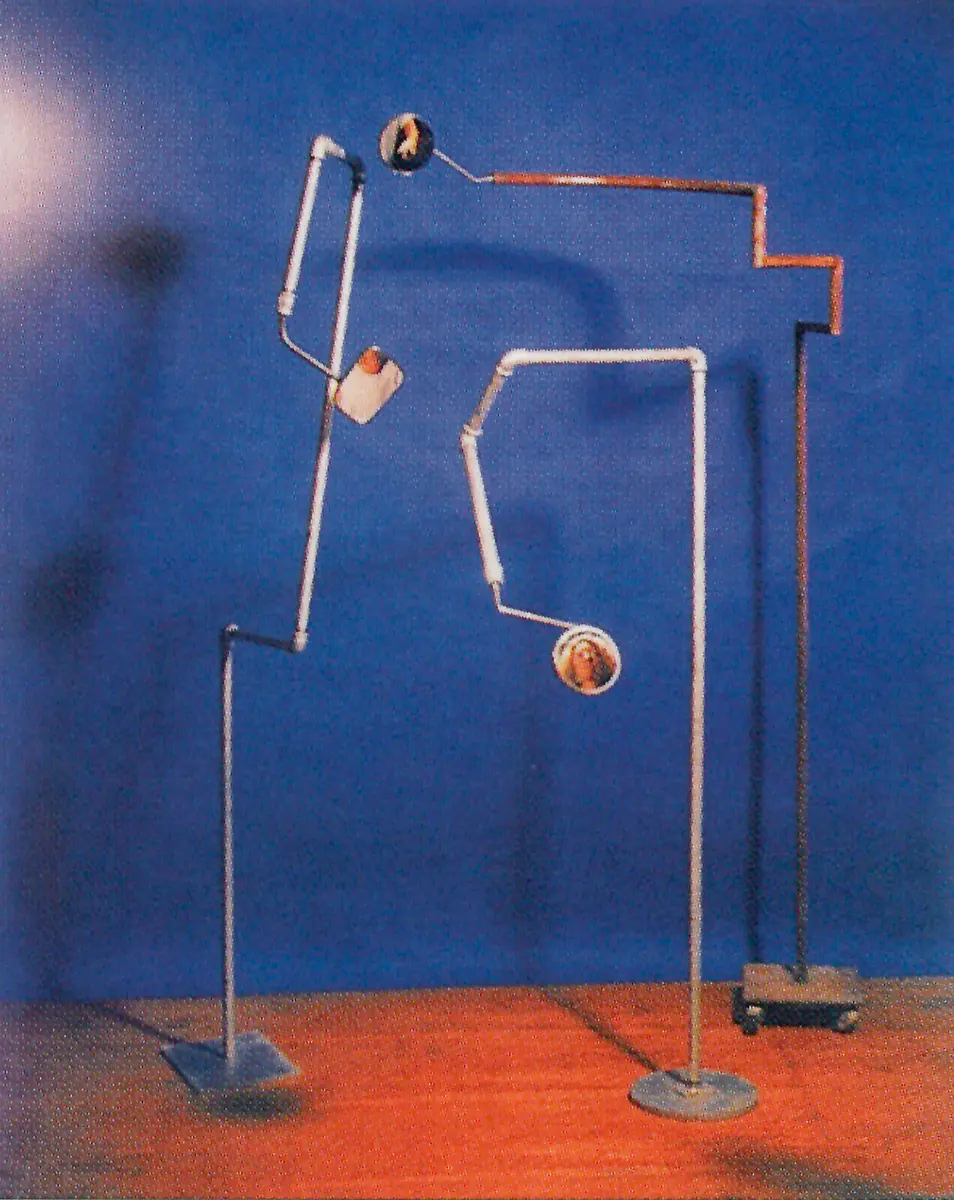
There are, however, works in which the concept of borders is an inevitable element for constructing discourses or metaphors, as well as for understanding what lies deep down inside. This is the case of Raquel Schwartz (Bolivia) and Mónica González (Paraguay). For the Bolivian artist, limits are an obsession that converges on the excessive gathering of boat tips that, throughout the two adjoining halls, stand out like unfinished ships. Alone in a third room surrounded by semi-darkness hangs a phantasmagoric ship. The reference to the work of the Cuban artist Kcho becomes evident, but considering that this piece comes from a landlocked country, the work unfurls a wider reading. It suggests the dimension of the impossible, like the psychological effects on the inhabitants of a country where life develops inland. In González's work, it is possible to verify the existence of a culture shared by countries where life is limited by insecurity, political violence, and delinquency. In her work, it is something that reveals itself step by step. At first, the viewer approaches an intricate structure made with metallic pipes. The dense, obscure atmosphere supplies an aura of secrecy that disappears immediately after we notice the presence of extensions that come out of the structure and support rearview mirrors. But the key contribution is read in the work's title: El guardaespaldas (The bodyguard). This is when the word becomes a protagonist and brings forth all meanings, memories, and associations with the culture of the bodyguard referred to in Spanish as the guarura, el gorilón (the big gorilla), el oreja (the ear), el protector (the protector), la escolta (the escort). These enter noisily in order to surround the central idea and to see in each mirror a cynical and undesirable voyeur. The unexpected, added to our firm and unconscious fears, transform Mónica González's work into a piece that accuses in silence.
The work of the Spanish artist Antoni Abad deserves a paragraph apart. His video installations, masterfully realized and mounted, inevitably confirm the First World's familiarity with technological advances. However, the efficacy of Abad's images centers on the simplicity and clarity of his concepts, which produces the same measure of familiarity for his viewers. Who does not sweat together with Sisifo (Sisyphus)? This work, produced in 1995, is an extraordinary piece where the image of a nude and well-constituted man creates a pulse of forces with his other I projected onto a mirror. Between the real man and his reflection, there exists a titanic struggle to pull "the same cord." But when Brahms's classic lullaby is heard in the background, lentissimo, all effort to reinforce the masculinity and unbreakable spirit of Sisyphus is reduced to a simple child's game.
The most memorable piece is probably Abad's Love Story, present in Lima, and its counterpart in Venice. By way of a zoomorphic gap, it projects an unpredictable sequence of images with a happy end. Hungry rats approach a heart-shaped cake and slowly devour the icing that, as a rather twee decoration, spells the word "love." Confronting our ample disgust for these animals, and stirring it up, Antoni Abad's love story suggests infinite nuances and hilarious conjectures. Something like determining that the power of love is so great that it even whets the rats' appetite... and if it comes in English, even better.
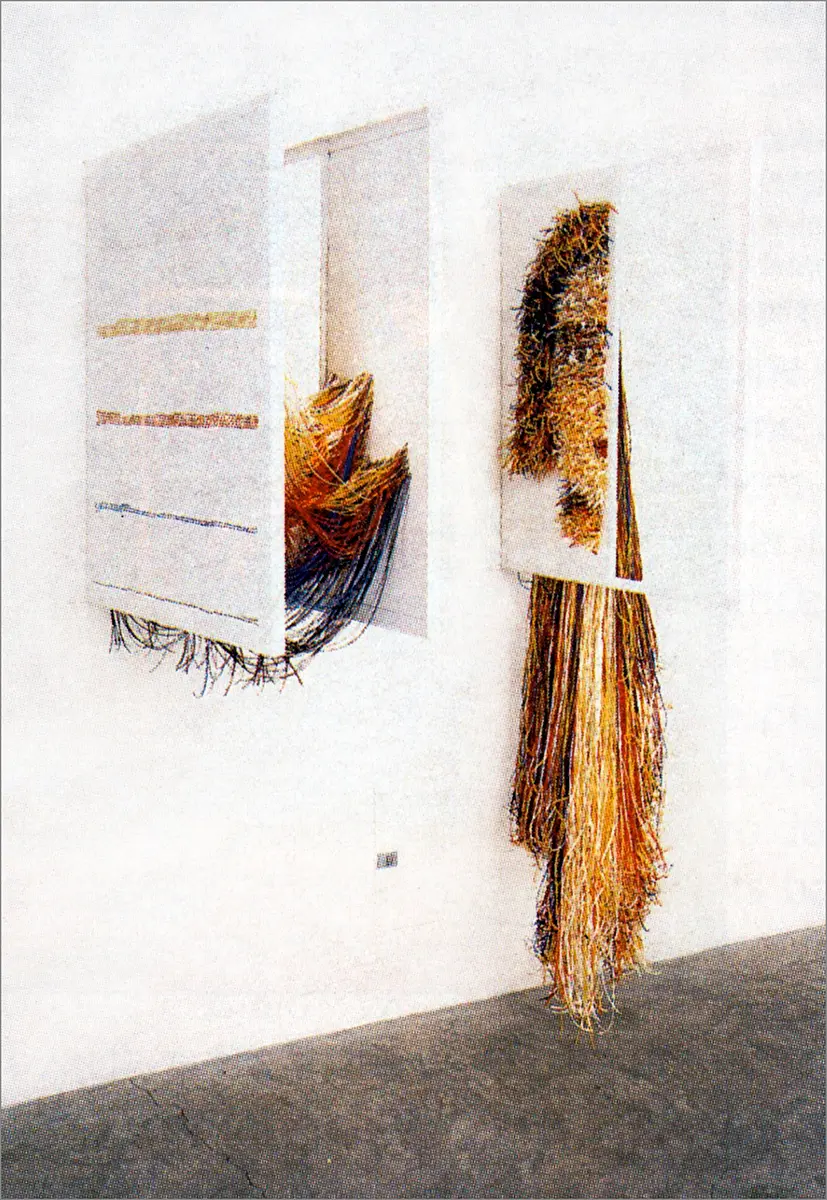
In the course of the biennial, we begin to find similarities that we could explain with the intricate advance of globalization and its effects on culture. Making an effort to evade the complicity of someone who only finds a flat homogenization, it is enriching to detect relations that establish themselves between artists of distant countries and to confirm that similar themes are treated in particular forms. For example, the works of Jorge Velarde (Ecuador) and Mónica Castillo (Mexico) use self-portraits as the backbone of their art. The body is, once more, reconsidered in order to posit philosophical alternatives. However, Velarde, as one of those painters in scarcity these days, favors the discipline of painting along with the use of perspectives, added pieces, and singular formats; the results are fascinating. For her part, the work of Mónica Castillo, known for her persistence in the use of her own face, establishes a place for recording time and articulating the profound reflections on the perception of the I. The work present at the biennial, titled Projections, consists of a white canvas that is literally embroidered with brightly colored nylon threads. It recalls the kits bought for girls to teach them how to embroider by following the instructions. In Mónica Castillo's work, the lesson is how to reconstruct her own face. For, in the words of the curator Rita Eder, Mónica Castillo's work is tied to the way in which we know our own face, to the inability to look at it directly, and to only perceive it through representation, fundamentally through the mirror.
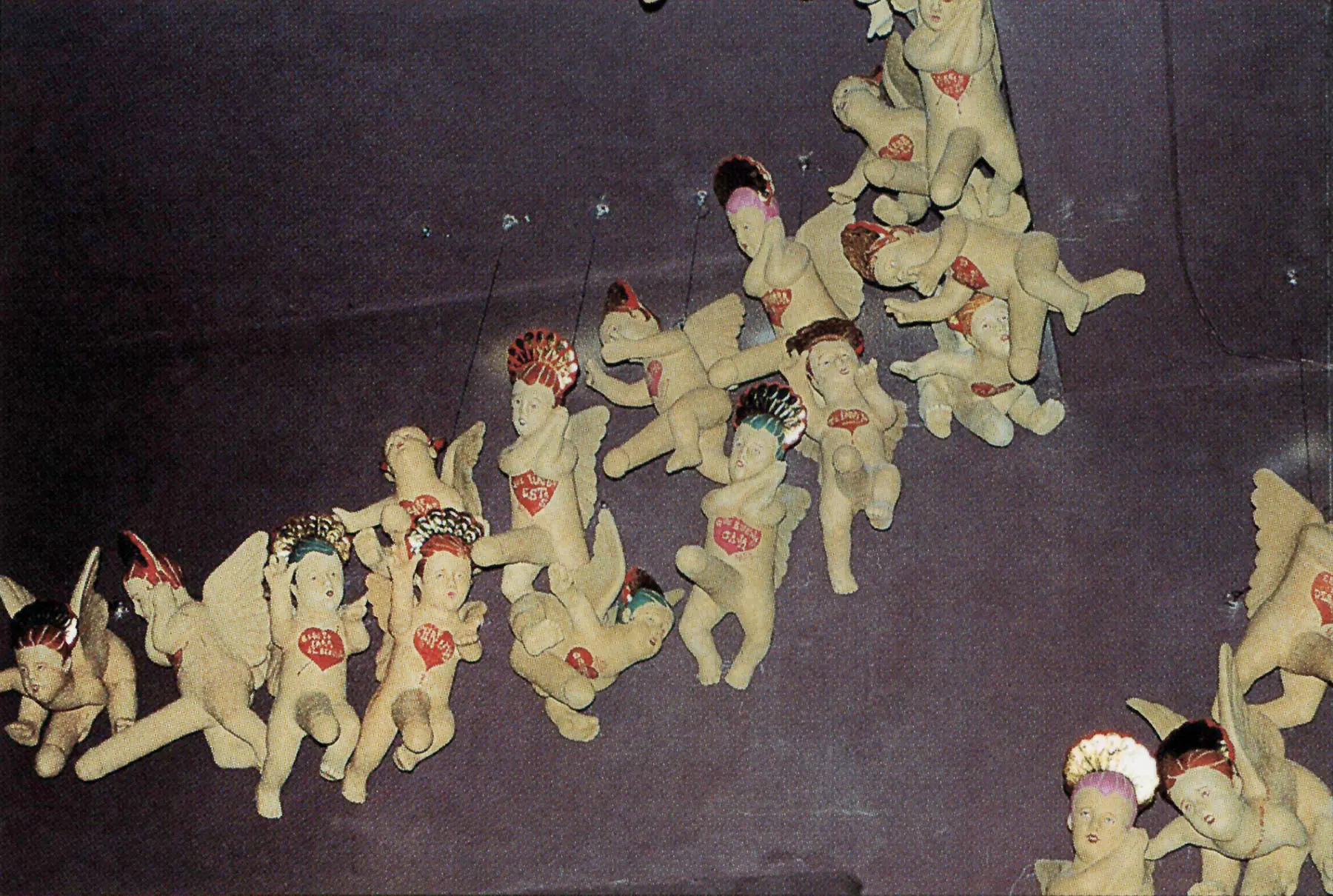
Of the exhibitions that run parallel to the principal body of the biennial, the show Amor Puro (Pure love), by the Peruvian artist Kukuli Velarde, stands out. The critics generally choose to speak about the most intellectualized works, and it is difficult to convince their skepticism with the alternative of humor and the mundane. Kukuli resolves this debate by testing our capacity for surprise and laughing with ourselves. Ingenuity and perversion are combined in Velarde's work, the eroticism that the pre-Columbian Moxica peoples captured in their ceramic, with the Colonial religious tradition of overembellishing the altars with winged beings. Amor puro is integrated by countless angels that, subjected to the heaven of the exhibition hall, surprise us with their placid and innocent expressions, plus the extroversion of their sexuality. If the Bible stories refused to define the gender of angels, Velarde's cherubs unabashedly reveal it to us, through enormous, erect penises.
It is obvious that the young Ibero-American Biennial has energy for a good while. Proposed as a space for artistic encounters, it evokes many possibilities and alternatives. Stripped of the enormity enjoyed by activities around other parts of the planet, the Biennial of Lima is not lacking the big names. I would say that this second edition formulates the possibility of establishing itself as a forum of young spirits. It is doubtless a preview of 2000.
ROSINA CAZALI
Independent curator. She works and lives in Guatemala. Founder of the project La Curanderia.