
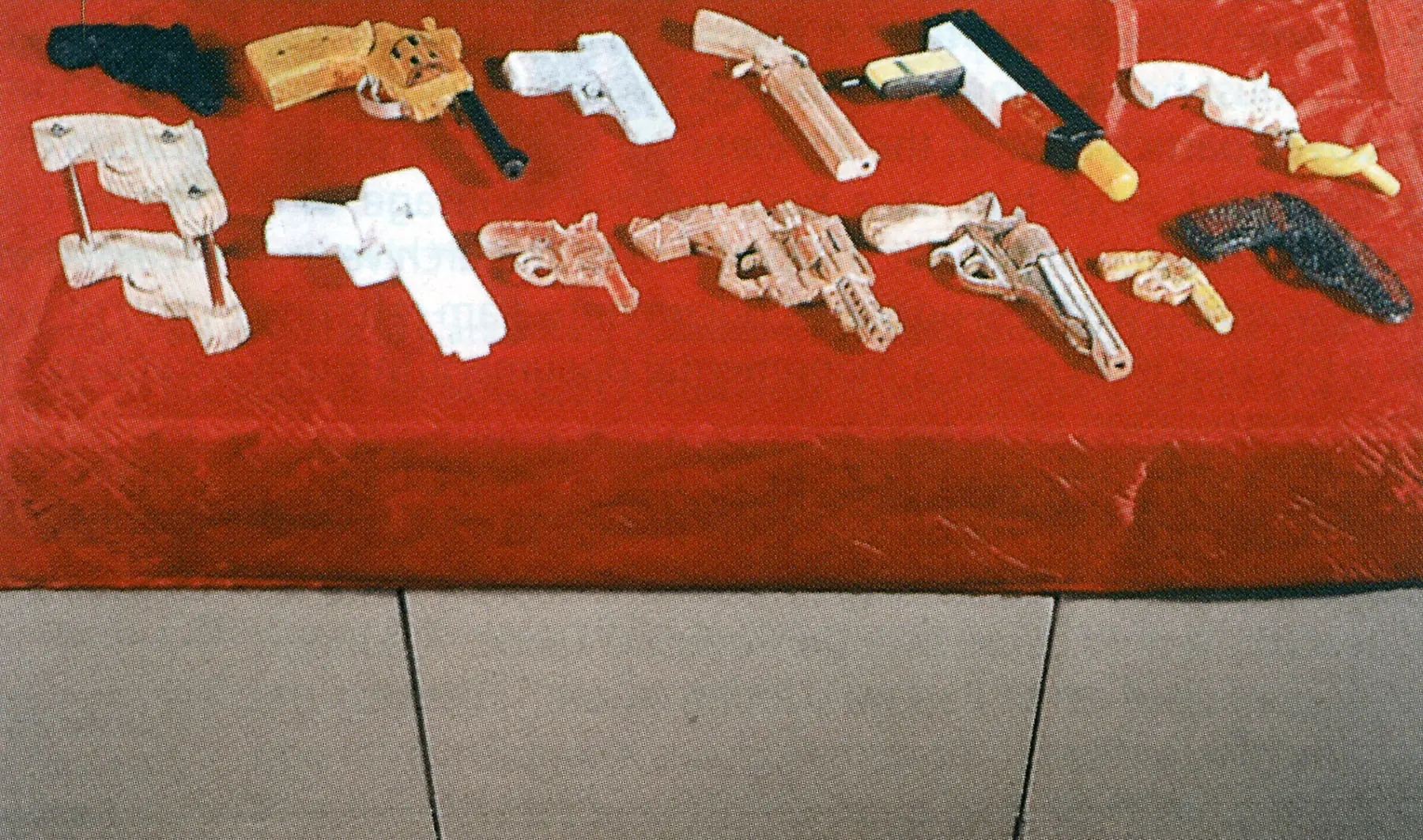
A biennial is, first and foremost, the space of a compromise between art and a city. The 2nd Ibero-American Biennal of Lima assumes this in a paradigmatic way, explicitly manifesting its energizing function as Lima's historical center. But its ultimate goal is to become an energizing illustration of Peruvian plastic space. So, urban recovery and repositioning of works in the Latin American circuit seem to configure two necessary strategies that, at the present juncture, verify the intelligence and sense of opportunity of its organizers, with Luis Lama at the head.
Fitted out in symbolically and architecturally significant large houses in Lima's historical center, the 2nd Biennial has represented a consistent challenge for the museography of contemporary art. Whether in the Casa Nicolás de Ribera or in the Casa XX and passing through Lima's Art Museum, where most of the conversations took place, the tenacious struggle that works of art must establish in a complex environment was made clear. To be sure, the close and present memory of the Museum of Anthropology forced many of the objectual ties shown in the spaces of the biennial to succumb and seem rather lifeless. The interesting thing is that the Elena Izcue exhibition (pre-Columbian art in modern life) in Lima's Art Museum, which coincidentally coincided with the development of the 2nd Biennial, set forth an important formal challenge for the "pictorialities" that presented references to some pre-Columbian determination. In this sense, the cultural environment that the biennial offers are a visual complexity that turns it into a laboratory of high-risk experimentation. There are definitely works that will endure and works that will not endure, that is, works that the city "passes over superficially," because the urban fabric becomes the first unconscious commentary on the pieces. An exceptional situation is added to this. The 2nd Biennial allows for a cut in Lima's plastic production. It is not usual to have the privilege of activities that, with respect to the biennial, reshape the situational reading of Peruvian art.
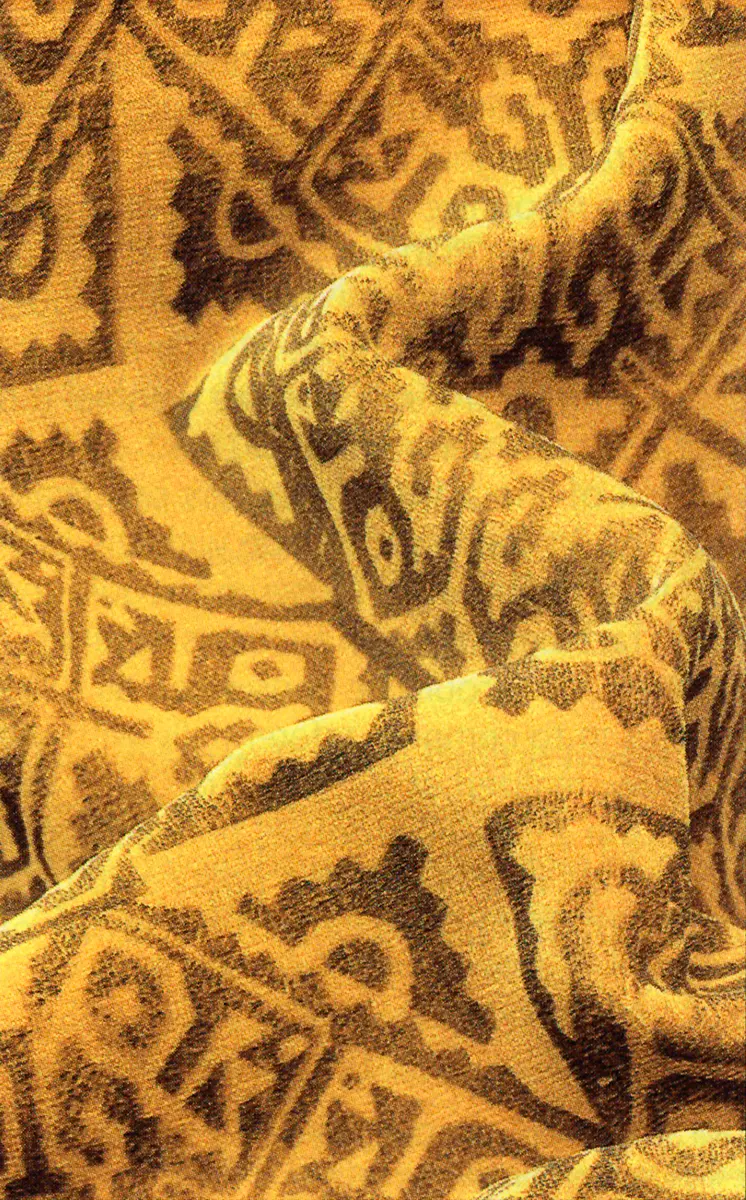
In mentioning the Elena Izcue exhibition, it becomes necessary to specify the current state of a controversy tied to the historiographic recomposition of Peruvian art. That is, why an exhibition of Izcue today? A question that highlights the curatorial action of the Art Museum itself in this period. Above all, a connection is established between the Art Museum, the 2nd Biennial, and a "parallel" exhibition organized in Lima's Casa de Periodistas by Gustavo Buntinx. Each one of these situations may be read from the others, forming a chain of statements, not only of diverse origin and formal purpose but also of a varied institutional consistency. The show Tres décadas de fotografía en Perú (Three decades of photography in Peru), curated by Natalia Majluf and Jorge Villaciorta in the Art Museum toward the end of 1997, must be recognized as the rearguard of Luis Enrique Bedoya's participation in the 2nd Biennial. The found photographs that serve him as a base for the montage of a script visual fiction ponder the problem of the archive in a society armed with the notion of documents. I am referring to a city that is, in itself, a monumental document through the superposition of its layers.
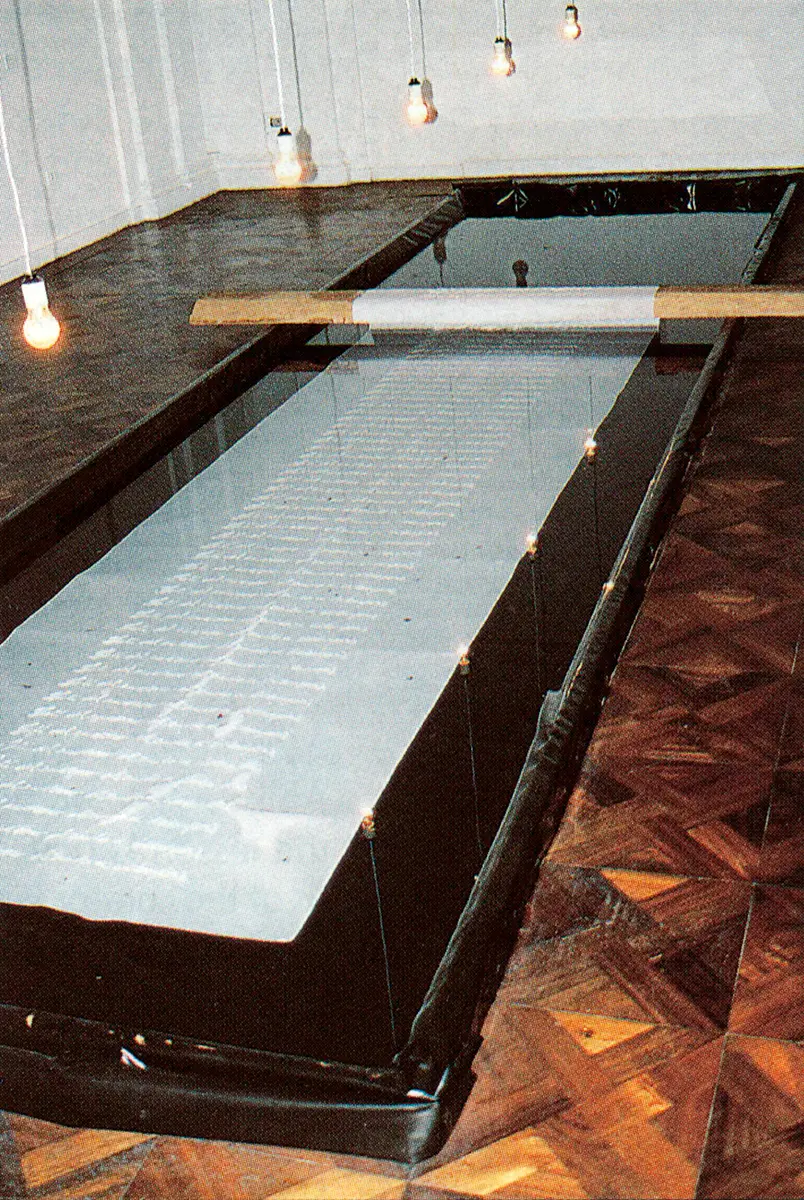
Bedoya's photographs link up to the work of Osvaldo Salerno (Paraguay) through that same terrain. In a large-scale dish that parodies a processing tray, Salerno soaks a sentence repeatedly embroidered over an extensive fabric. Support analogous to that of Bedoya's found photo, in which the handwriting of the footnotes introduces a supplemental sign that makes us think that there is no image possible without the unconscious support of the letter. Salerno soaks the letter that simulates the fissure of a literary text that stems from his own national scope (Roa Bastos), in an analogous way to that used by Florencia Flanagan (Uruguay) when she preserves her orthopedic Barbie molds in a freezer, taken here as the matrix of a discriminatory representation of corporeality. The molds of her missing limbs, just like the embroidered writing, allude to the emptiness of bodies. To emptiness as something missing, but also as an indication of the defect that authorizes them as subjects.
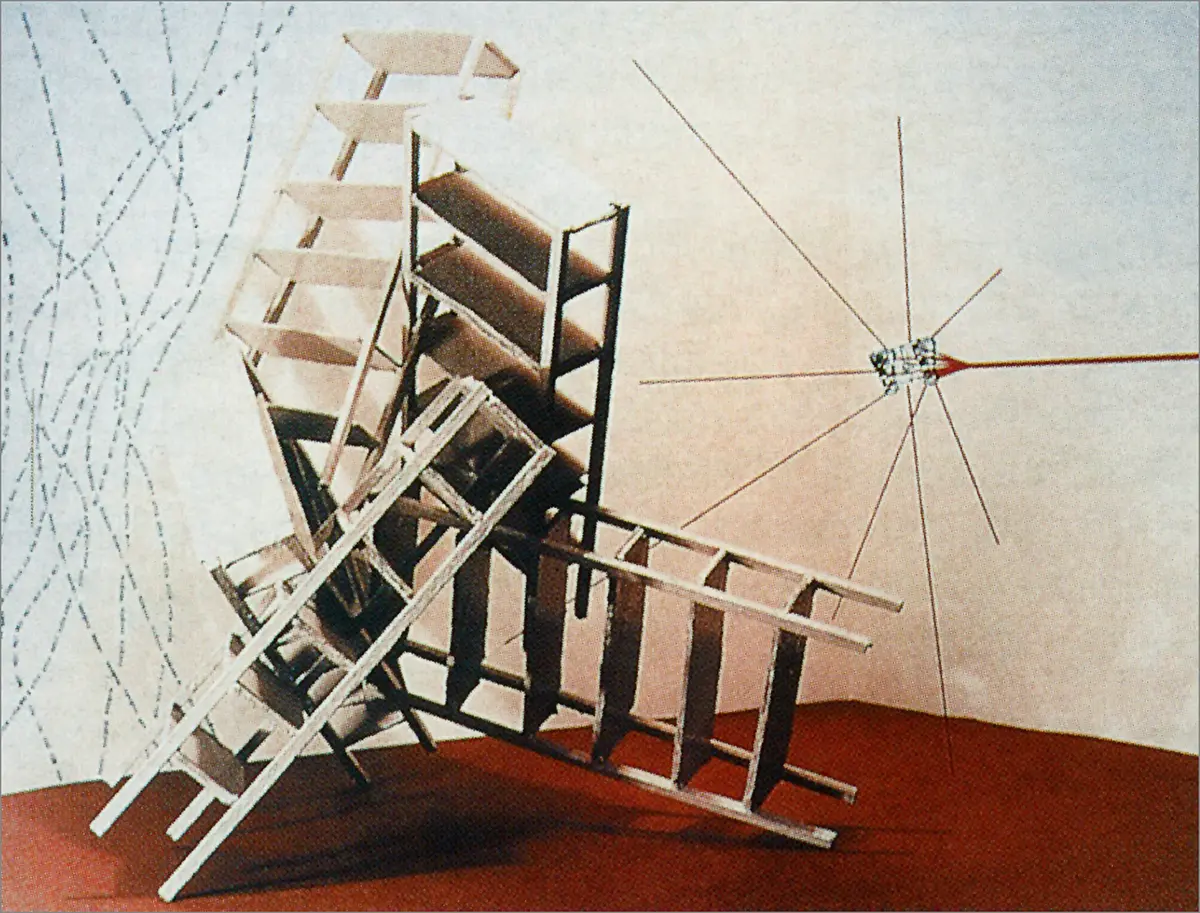
The photographic strategy of the artists previously mentioned, as well as the objectual ties of Mario Navarro (Chile) and José Damasceno (Brazil), signal the most productive coordinates that allow us to recognize the inflections of the 2nd Biennial. At the same time, this diagram of works allows us to measure the pieces of Buntinx's "parallel" show, which would be authorized (the analytical joke is fitting) as an infrastructure of Peruvian art, leaving for the space of the biennial the role of the judicial-political superstructure of art.
The perverse paradox of the artistic situations practically made the opening of the 2nd Biennial coincide with the realization of an auction to benefit the Art Museum's acquisition funds. I mention this fact because the auction's catalog —realized at the Country Club—could be considered as a fiction of works that steps in to compete for referential with the catalog of Buntinx's show, realized at the Country Club's opposite. The catalog of the 2nd Biennial settles between both catalogs as the documental monument of a politico-cultural will that, without a doubt, has placed Lima in the center of artistic attention.
JUSTO PASTOR MELLADO
Art Critic. Director of the School of Art at the Catholic Pontifical University of Santiago de Chile. Independent Curator.