This exhibition entitled Double Space at Apex Art in New York took its name from the editorial term referring to the space between two lines of text.
The title also alludes to the relationship between text and architectural space (whether physical or imaginary), and how these spaces are expressed visually in the work of a number of artists.
Discovering the basis of the relationship between language and architecture has been a matter of ongoing interest to philosophers and writers. It was not by chance that Wittgenstein included among his interests the practice of architecture (albeit a failed one in his case). It is not an easy marriage, since a visual work, which reflects a philosophical or literary formula, may well become just an illustration of the idea—a problematic situation. However, in contrast, this project organized by A.S. Bessa offered a variety of stimulating reflections related to literary and visual theory, with works that referred to themes such as architectural space in writing.
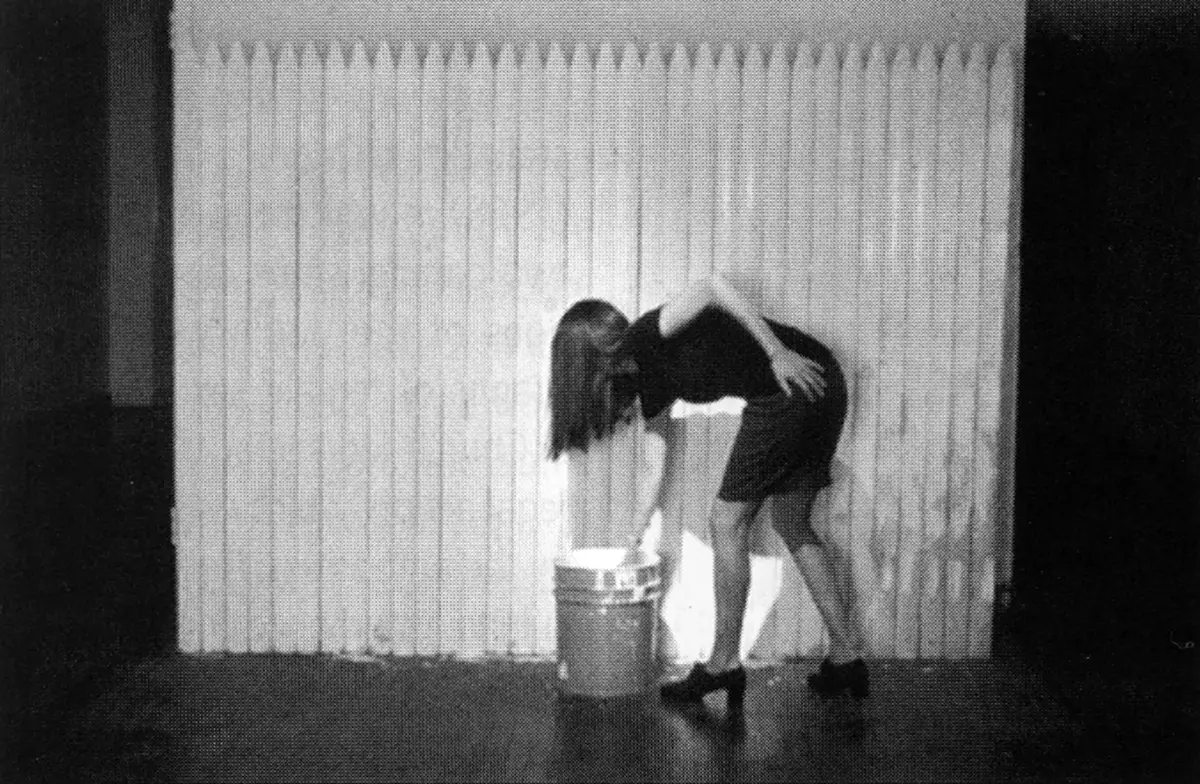
One of the first works in the gallery was a half-painted fence, a part of a project by Devon Dikeou entitled Strong Tendendes, Strange Developments, the Innocence Beguiled. Dikeou uses a famous fragment from Mark Twain’s The Adventures of Tom Sawyer to comment on motivation. In the book, Tom is engaged in the arduous task of painting a fence white; then he realizes that by inviting his friends to paint it and making them think it is the most enjoyable activity imaginable, he can get them to work for him without their noticing it. Sporadically Dikeou invited spectators to paint the fence, and in the process participate in the creation of the work. In each successive show, Dikeou includes photos of the participating public.
The Tom Sawyer idea of entrusting personal work to others also applies to Jorge Pardo. The show included his book Ten People, Ten Books (1994), which documents aspects of the manufacture and design of the project for his house built by LA MOCA. The way in which Pardo’s work blurs the frontiers between design and conceptual art enables Bessa to remind us that any division between practices is only a convention, and perhaps in passing reinforces his declared intention of refuting Hemingway’s statement that literature is architecture, but not interior design. Like Dikeu, Kenneth Goldsmith also transported a literary work from the twentieth century to his own territory, but this time using virtual space. Fidget-Applet documents his movements throughout one day, in the same way that Joyce describes each of the movements and actions of Mr. Bloom in Ulysses. The specificity and flow of the bodily movements and actions are presented in an interactive computer program in which the reader/spectator can select different phrases and sections.
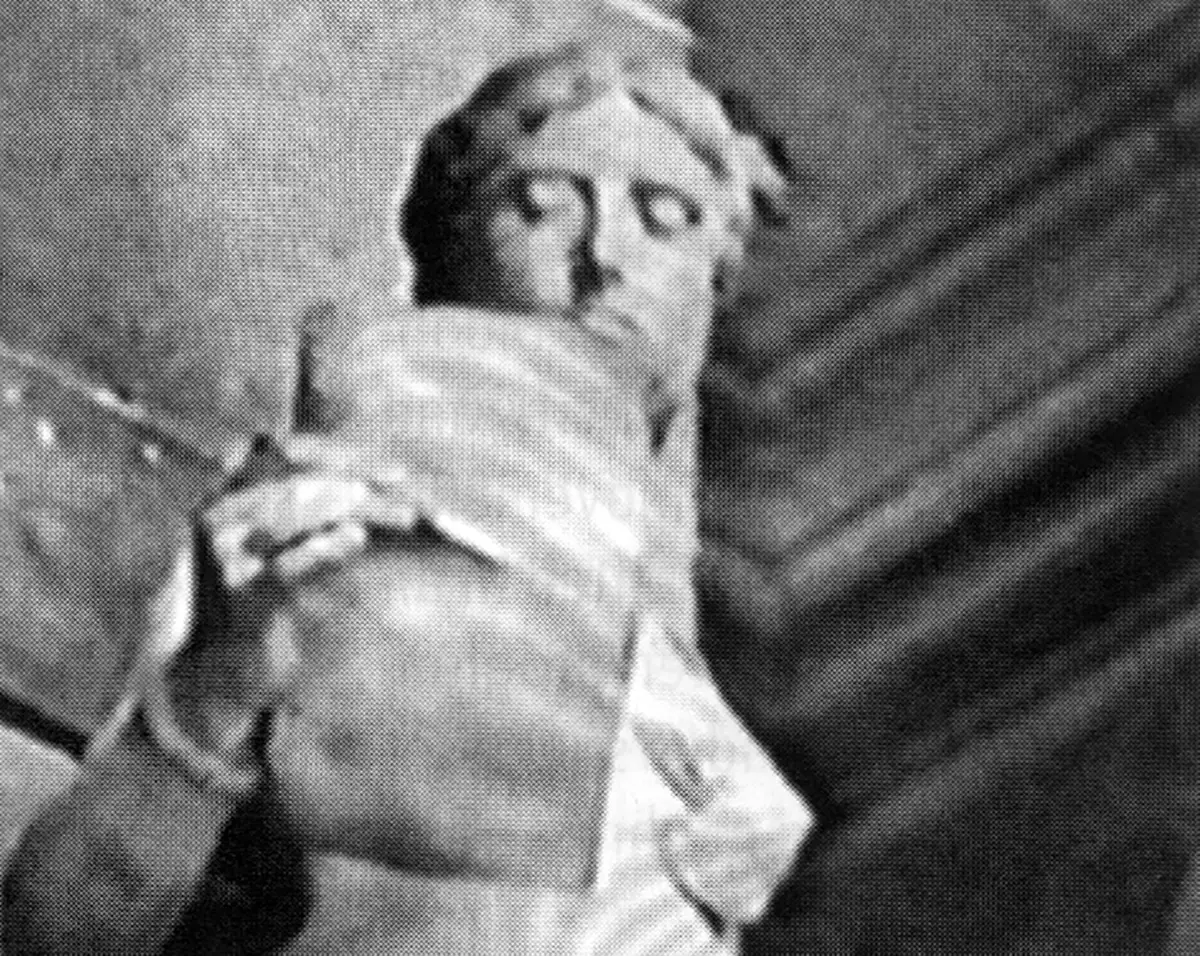
Two historical presences were outstanding in this show, one of which consisted of a kind of tribute: the projection page by page, in slides, of Alain Robbe-Grillet’s novel Jealousy. The other was the documentary Toute Ia mémoire du monde, by Alain Resnais, from 1956, in which the camera explores the nooks and crannies of France’s National Library. (It is worth noting the similarity of interests in memory and architecture between Resnais and Robbe-Grillet was more than just that: in 1961, inspired by the Adolfo Bioy Casares’ novel La invención de Morel Robbe-Grillet wrote the screenplay for Resnais’ film Last Year at Marienbad).
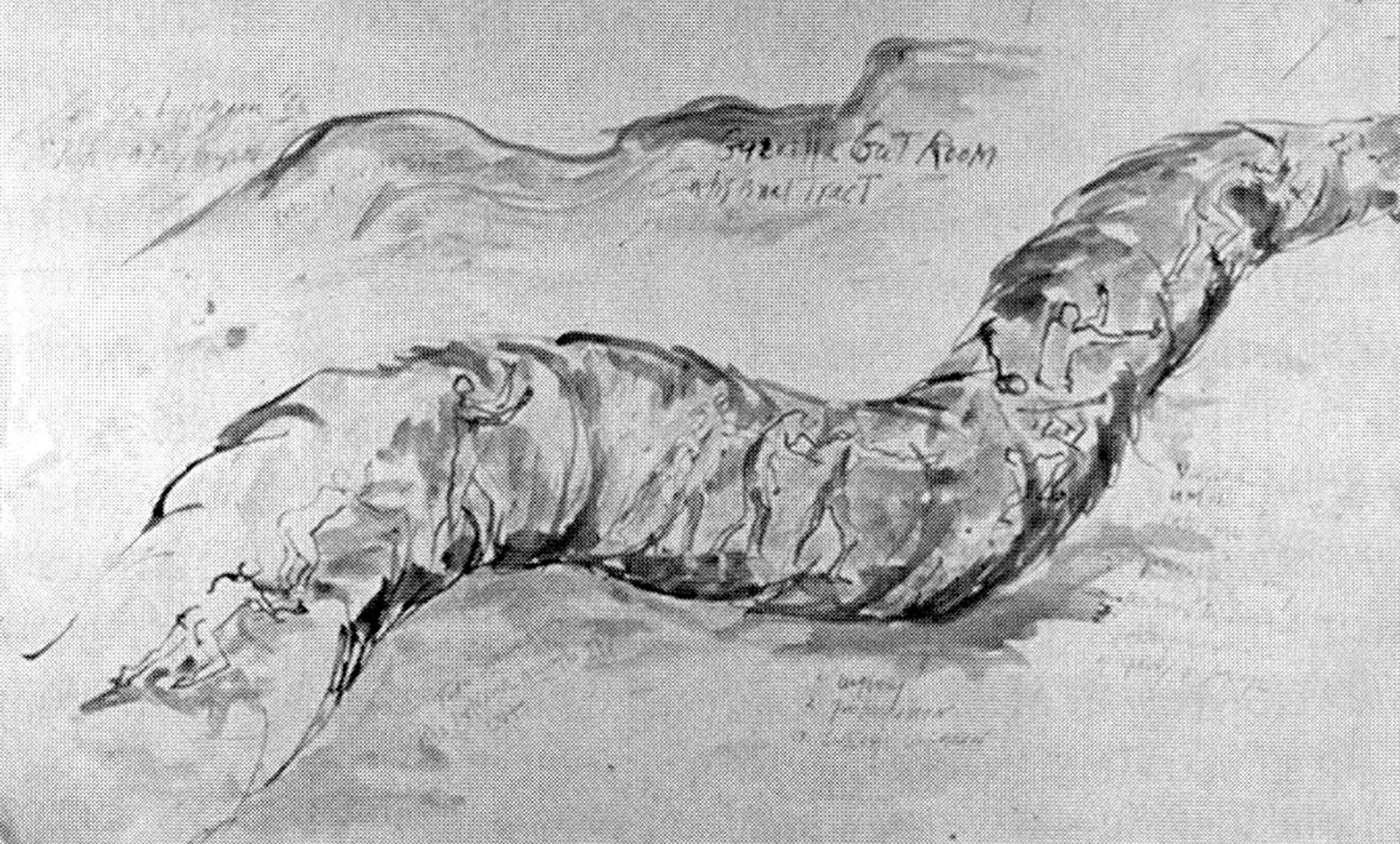
In addition to the visual aspects of the public space, which lodges the memory of words, another dimension— the visual aspects which a word lodges in one’s personal memory—was to be found in the works of Lily Van Der Stokker. Van de Stokker bases her images on the possible visual associations of a single word, and from these associations constructs an image on a wall or in a space. Her sexual references in turn are related to the early drawings of Carolee Schneemann, who in 1966 wrote a text entitled Parts of a Body House. This text, which included a series of drawings, describes a series of architectural spaces that take the forms of different parts of the human body (intestine, heart, sexual organs, etc.).
As a counterpoint to physical representation in space, I.A. Angelmaker’s sound installation described in verbal terms five famous works from the history of art; however, it was up to the listener to identify them on the basis of the textual description of each work in the recording. In this installation, it is in the space of our memory that we must find images.
The exhibition was mounted to ensure a clear and explanatory reading of each of the subjects covered, and there was a virtually natural link between one work and the next, as in a carefully crafted essay.
PABLO HELGUERA