The pain will never disappear from the souls of Venezuelans nor from those who have taken shelter in this land. Even today we gaze with surprise, and incredulity upon the images of a state nearly destroyed in its entirety, the State of Vargas. It is still difficult for us to comprehend. The 15th and 16th of December will be remembered as the fateful moment in which the Great Mountain was linked to the sea. The crazed waters, the rocks in an uncontrollable whirlpool, made up a new geography: Venezuela now had another face.
That same mountain is the one that divides Caracas from the Central Coast: El Ávila, the same one the indigenous peoples called Guaraira Repano. It is the same one whose presence pleases us every day and which has motivated so many artists to paint it.
Today it is destroyed. For those of us from Caracas, it will never be possible to remove ourselves from the mountain or from the coast. The Caribbean has always drenched our skin because to live in Caracas is to live on the Central Coast. Today, La Guaira, Caraballeda, Tanaguarena, Los Corales, Carmen de Uria, and Macuto are all in ruins. An anonymous cemetery of buried towns, of souls too many to count. It is difficult for us to recognize that our very recent past on the Coast is already history, that what we photographed five or six months ago has become a “historical document.” For what we knew no longer exists.
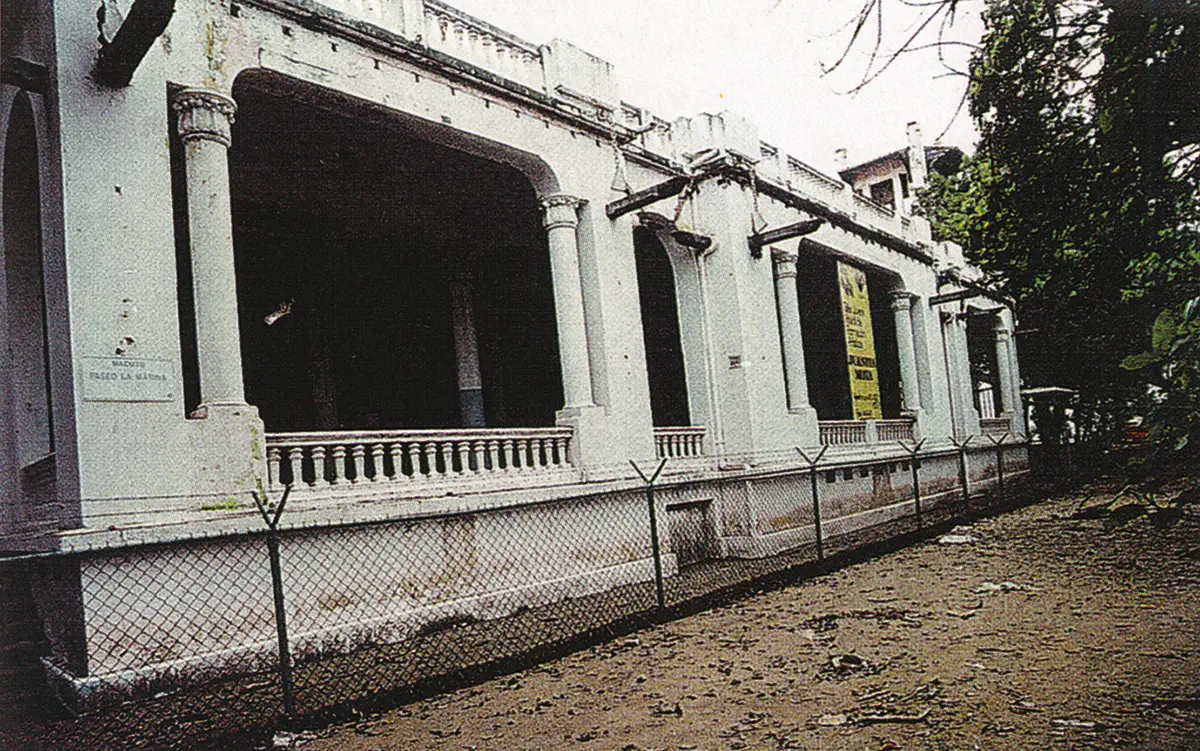
Macuto was the world of Armando Reverón: our most important artist of Venezuelan modern art. His “ranch”, El Castillete, was the sphere of his fantasies, the “sacred” place where painting became ritual, manifesting itself as an inner experience in body and energy. The academic norms with which Reverón was educated in his youth were left behind. In fact, he began to know creative freedom when he participated as a young man in the Circle of Fine Arts, a group of dissident artists of the Academy. But Reverón went even further. He broke all barriers when he abandoned the urban life of Caracas and decided to embrace absolute freedom: as a man and as an artist. In 1918, he settled in Punta de Mulatos with Nicolás Ferdinandov and later met his lifelong companion, Juana Mota. In 1919, he decided to take up residence in Macuto, specifically in the area called Las Quince Letras and he built his first ranch of plaited cane and mud. By 1920 he had already definitively assumed the radical change in his way of life.
From that year on, works like Figura bajo un uvero (Figure under a sea grape, 1919), Parque de Macuto (Park in Macuto, 1921), Paisaje de Macuto (Macuto landscape, 1927), and many others, demonstrate his understanding of atmosphere and light. Actually, Reverón revealed light to us. Without suspecting it, he left us his loving trace in each large beach, in each sea grape. Indeed, to see Macuto was somehow like seeing what Reverón saw.
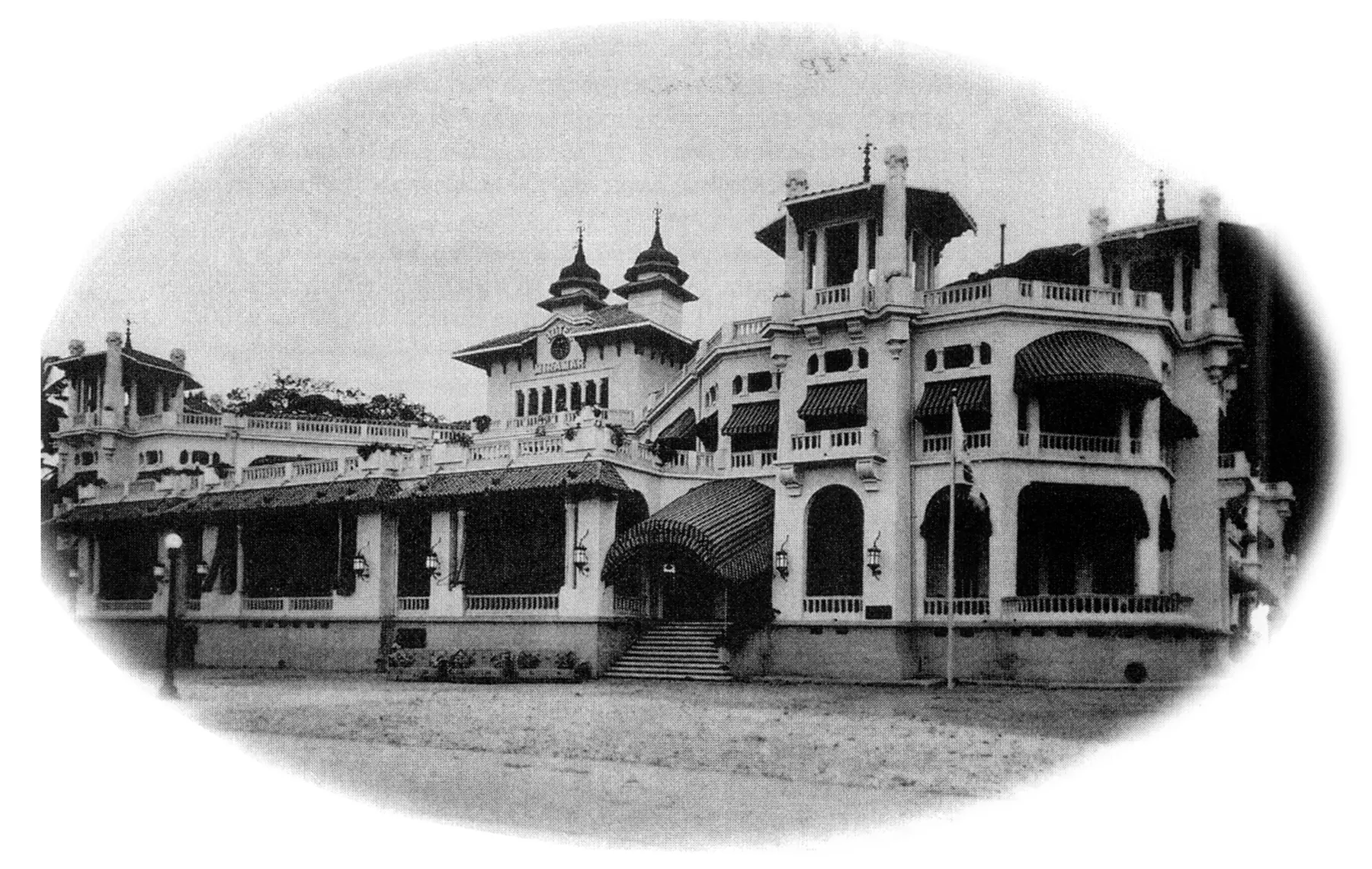
Over the years El Castillete kept growing. Little by little, the artist built “other ranches”—the studio, the kitchen, the basement, the chapel, the bedroom, the pond, and the garden area (a space that the Armando Reverón Museum personnel maintained with special care with plants typical of the Caribbean). El Castillete, officially decreed as a museum in 1964, underwent various transformations throughout its history. In 1966, it was partially destroyed by a fire and was recovered for a new opening in 1971. Several subsequent accidents put its conservation in jeopardy. In 1981, it reopened its doors to the public, and the remodeling was finished in 1992. The annex was built and the museum acquired the category of State Foundation whose first President was Clementina Vaamonde. In 1994, María Elena Huizi assumed the position of President, and Katherine Chacón became the Executive Director. Before the tragedy that took place, the Armando Reverón Museum Foundation was recognized by national and international curators as a unique museum of its kind, not only for its physical structure, Faç3ade of the Miramar Hotel after the final construction lo 1928. From the catalogue The Miramar Hotel: Memory and Emblem of Yesterday’s Macuto, edited by Fundación Museo Armando Reverón, 1998. but also for the spiritual implications that emanated from it, being that it was an institution that was totally integrated into the life of the region’s inhabitants.
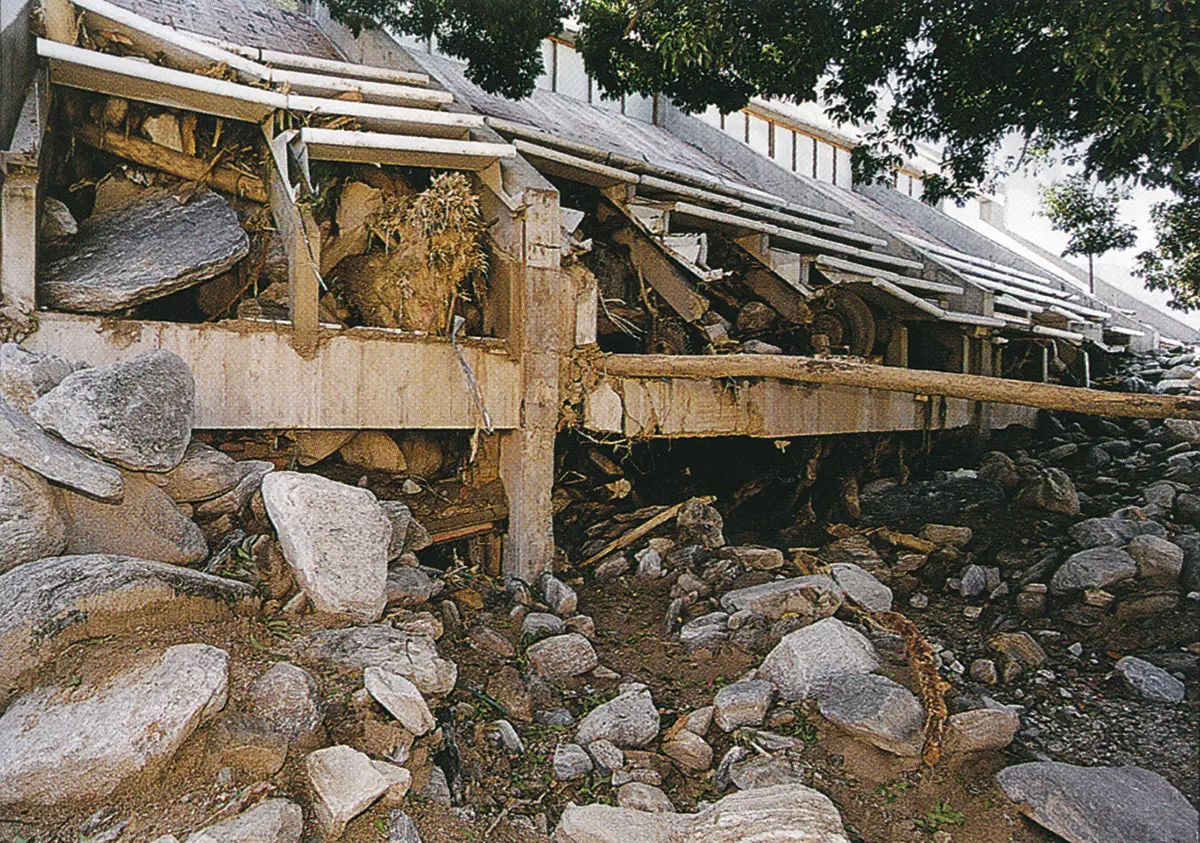
Today, El Castillete does not exist. Even the beaches are not what Reverón painted. As Maria Elena Huizi recently explained to me, it seems that the only landscape that currently comes close to Reverón’s work is the sepia color that dominates this new geography that has taken shape.
Nonetheless, I must stress this emphatically that the Armando Reverón Museum has not died. The power of our artists goes beyond natural tragedies. Fortunately, all of the original works among the paintings and objects—except for one—were safeguarded in the Gallery of National Art Foundation in Caracas. There are numerous photographs and films that continuously revive the artist and the place.
The task of cleaning up will soon begin. The annex has not lost the solidity of its structures. Pertinent analyses will be made to determine the future of this building. Unfortunately, and cynically, it is possible that fourteen works by diverse Venezuelan masters that made up the exhibition, Macuto y su entorno (Macuto and its surroundings), may have been lost. These paintings belonged to several museums and private collectors.
The possible reconstruction or reformulation of this museum will depend on the future decisions contemplated on a government level for the reconstruction of the State of Vargas. El Castillete, in spite of everything, will live on at present as a symbolic space because somehow, once more, Reverón’s spirit is rebelling against the disappearance. We’d like to believe that it’s a question of yet another transformation.
I repeat, the Armando Reverón Museum has not died, because the people connected to it live on, and with them live the projects. Friendly institutions, like the Industrial Bank of Venezuela Foundation and the Gallery of National Art, will soon house important exhibitions that are dedicated to Armando Reverón’s paintings, objects, and even El Castillete. Moreover, there is the Hotel Miramar, an architectural jewel that opened in 1928, whose first owner, General Juan Vicente Gómez, initiated tourism in Macuto, which was highly appreciated in the society of the time. The Armando Reverón Museum Foundation had already made efforts to recover this beautiful building. Part of the building dealt with administrative activities, education, and a projection toward the community. The Hotel Miramar continues to be the Foundation’s project of greatest importance: to be the Cultural Complex required for the State of Vargas.
Everyone in Venezuela—artists, researchers, critics, cultural institutions, art galleries, and many friends—is supporting the Armando Reverón Museum Foundation. Today more than ever we need to count on everyone’s goodwill.
We appreciate ideas and material help, for all types of collaboration are welcome.
Whoever wishes to communicate with the Armando Reverón Museum Foundation may do so directly by writing to Maria Elena Huizi or Katherine Chacón at the following address: Edificio Anexo del Museo de Ciencias, Plaza Morelos, Caracas 1010; e-mail: fmar@cantv.net, fax: (58-2) 576.53.08.
SUSANA BENKO