The screen on which an exhibition such as External Organs is projected is a point of inflection in the cultural net, a platform for launching proposals that have in common the fact that they are a reflection of and are based on, the platforms provided by technologies.
Technology is understood here not only as a complex by-product of the idea of the development of modernity but also, as its etymology indicates tekné, as art or creation.
These technologies are proposed in their two-fold polarity of technology and low technology, configuring a broad spectrum of how the term can be understood in a country like Colombia.
External Organs function like a broad-based network of people working in different spheres with different proposals both within and outside art, ranging from reflections on the home to social considerations, work in robotics, and even work on the Internet.
External Organs was an independent exhibition presented at the Espacios Duales Gallery of the CTT. The show consisted of two differentiated fragments: a series of seven interactive audio-visual installations and a collection of video art, comprising seven pieces of work.
The installations reflected a wide range of genres, including works incorporating video installation, others linked to sculptural discourse, and others difficult to classify, for example with robotics.
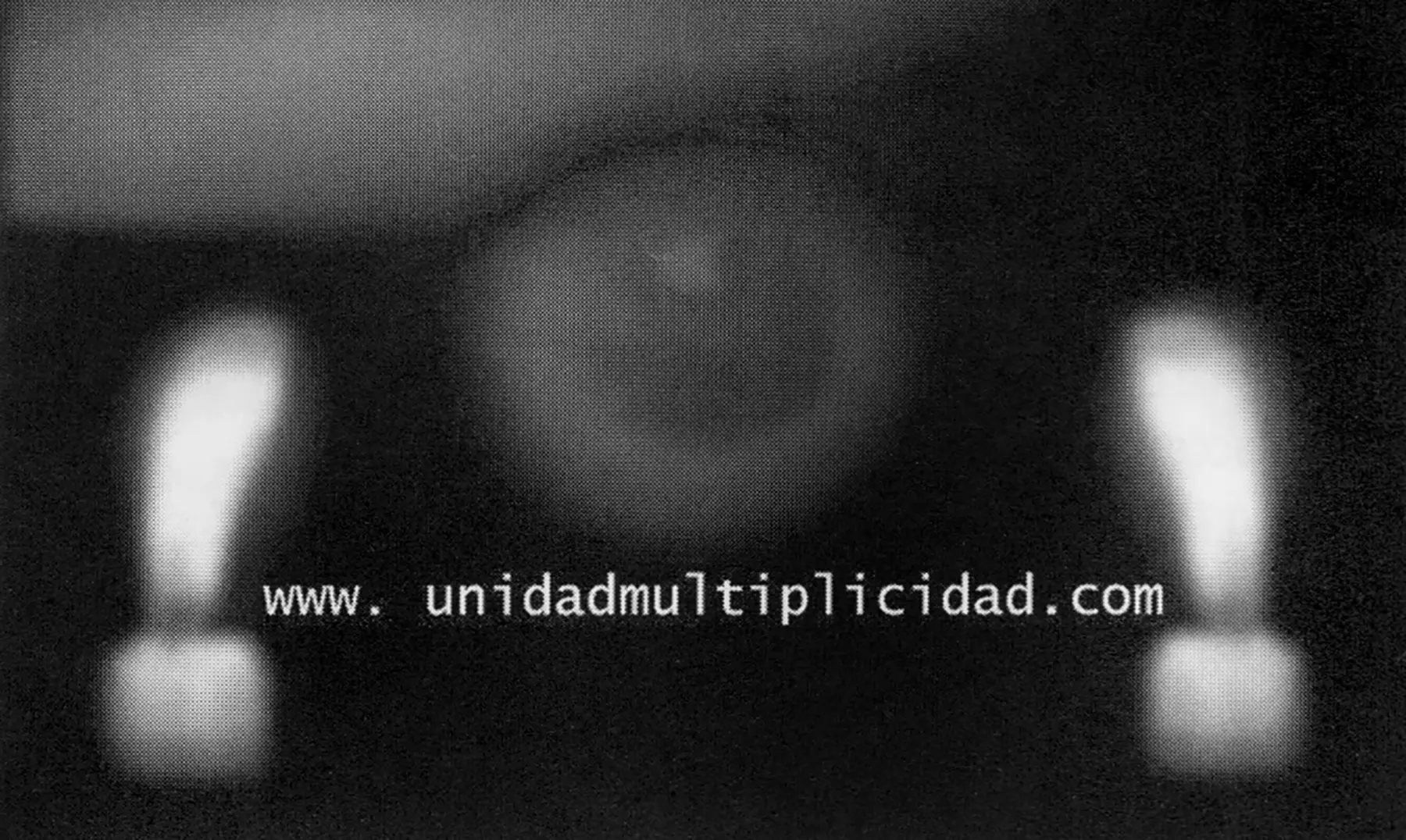
Unidad Multiplicidad (re-ligare re-link) by Andrés Burbano is an inter-media work that operates as a video installation with a touch of interactivity in its articulation with an Internet site. The purpose of the work is to create a critical space on what might be a religion in an age of digital information (www.unidadmultiplicidad .com).
The Anatomy Lesson, by Lorena Monsalve, is a digital impression that slips through the fields of stereoscopic perception, in the search for a re-reading of the pictorial heritage as content and the physical perception linked to this heritage. The work is part of the Repixe(l)s series.
Public Driver, by Daniel Mona and Claudia Salamanca, consists of a system of various electronic circuits controlling a display of text similar to that of public information systems. In this way, the installation questioned precisely the idea of public space related to the public message. The significant displacement of space is directed to the concept of non-place: in this case, the space in question is that of the gallery.
Biological Danger by Patricia Niño, is a robot trash bin that obstinately continues its program of collecting debris. This trash bin that continually demands trash is a work that effectively and playfully evokes the problem of the utility or uselessness of technology; in the final analysis, it is questioned at the deepest levels of the promises of technology.
House Arrest by Humberto Polar, is a video installation with slide projection, built on sculptural support, which, through the contrast between electronic image and photographic image, explores various facets of the gaze, including paranoia. This work constructs its meaning through the relationship between the expression “house arrest”.
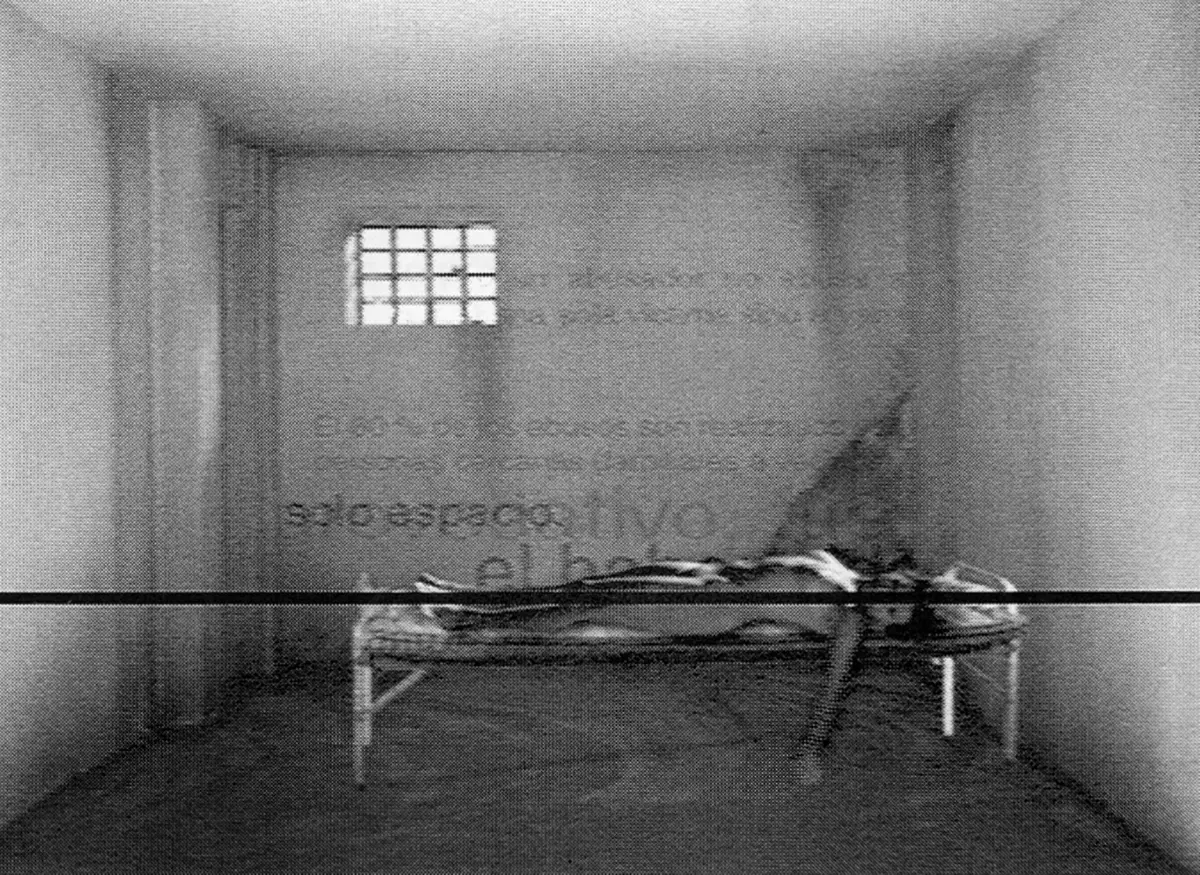
Dark Room/Sector Dulce Abrigo by Bárbara Santos is a video installation that questions the concept of inhabiting the relationship between a violated space and a violated body. It is the metamorphosis of a body expressed through a room where the spectator’s gaze forms the fourth wall.
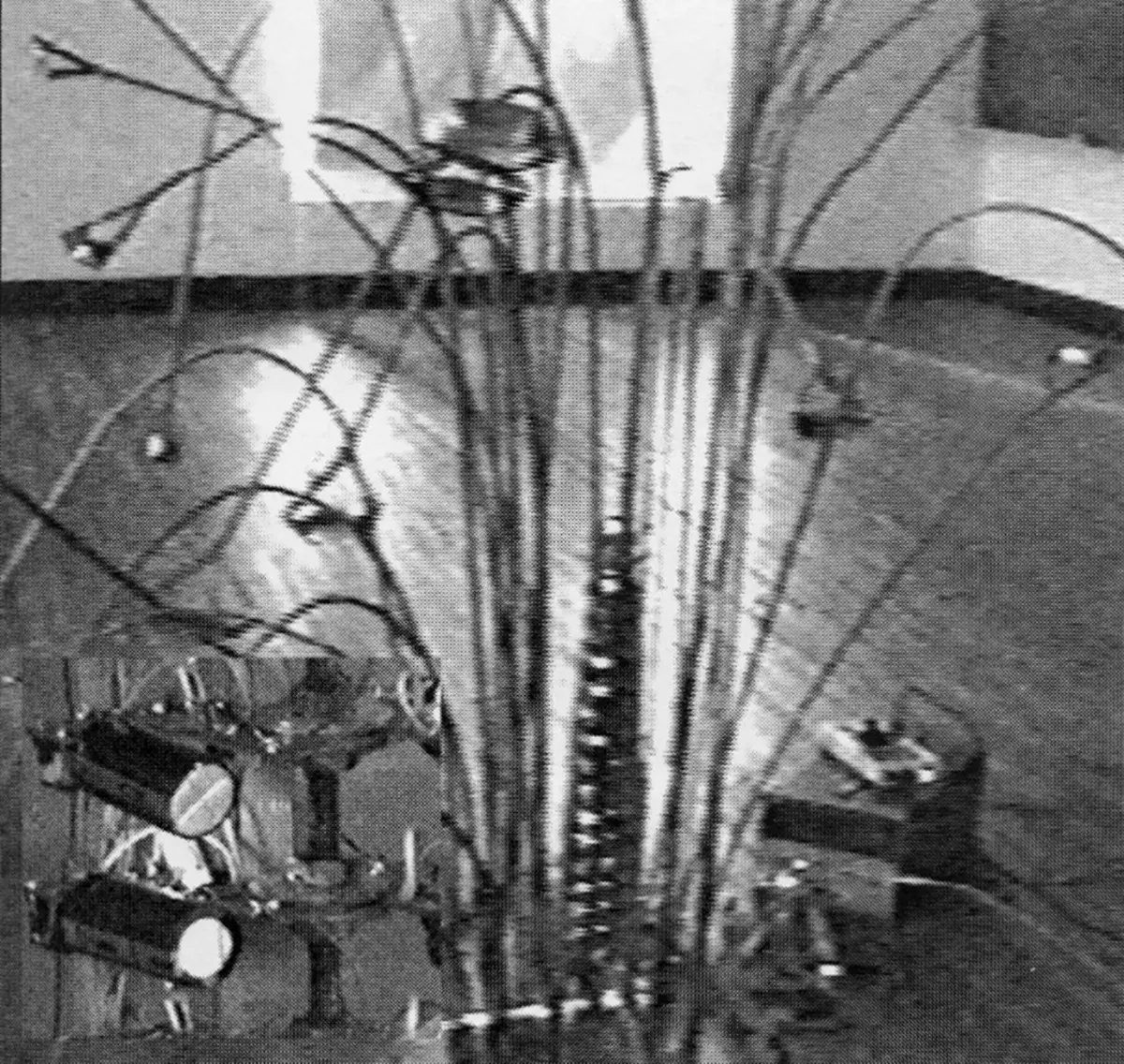
Drizzle by Kai Van Tongeren, is an interactive sculpture that works with sensors. As the spectator approaches, the work emits flashes, encouraging us to read the sculpture like a plant, or at least like a static living being. The work is a reflection on drizzle both as a means of delimiting space and as a source of vegetable food.
The selection of the video works offered an interesting set of mature proposals providing tangential evidence of the importance of the development of video art in our country. The idea was to compile a selection of videos as a means of discovering other exhibition spaces. The selection included works by pioneers of video art in Colombia, such as Charalambos, as well as by students.
The participants in the video exhibition were Fredy Arias, with Return; Felipe Arturo and Paula Bohórquez with Video Carceri; Andrés Burbano with Preliminary Electrolysis; Gilles Charalambos, with 00:05:32; Humberto Polar with A;5’4”; and Bárbara Santos’ Dark Room. There was also a collaboration by Alberto Lezaca.
ANDRÉS BURBANO