The original idea of dots and lines as the basis of drawing and the tools of expression of the intellect in our communication with ourselves and others can also be found in writing, which is also formed with dots and lines that make up letters, words, and ideas. Writing can be analyzed in two ways: as calligraphy, form, rhythm, and direction, and as a system for the production of meaning. With the emergence of mechanized writing, we have stopped looking at typography in itself and immediately started looking for the meaning-based content of writing.
In the same way, when we read a drawing, we look for what it depicts and then we look at how the depiction has been achieved. This might be one of the dilemmas of contemporary art, especially given the increasingly blurred dividing line between formalists and conceptualists, who give greater importance to this or that reading according to their interests or expressive intention.
This exhibition at the Carrillo Gil Museum in Mexico City (December 1999 - February 2000) brought together work by eleven artists in an attempt to provide a diagram of contemporary drawing as finished work, i.e. discarding the idea of drawing as a schema for something else —a painting, sculpture or piece of architecture. To consider the drawing as an end in itself recognizing and appreciating its expressive possibilities, is a debt we owe to avant-garde modernity which permitted the introduction of the line into painting: let us remember, to mention just two examples, Picasso’s Guernica and the more recent calligraphic and gestual painting of C.Y. Twombly.
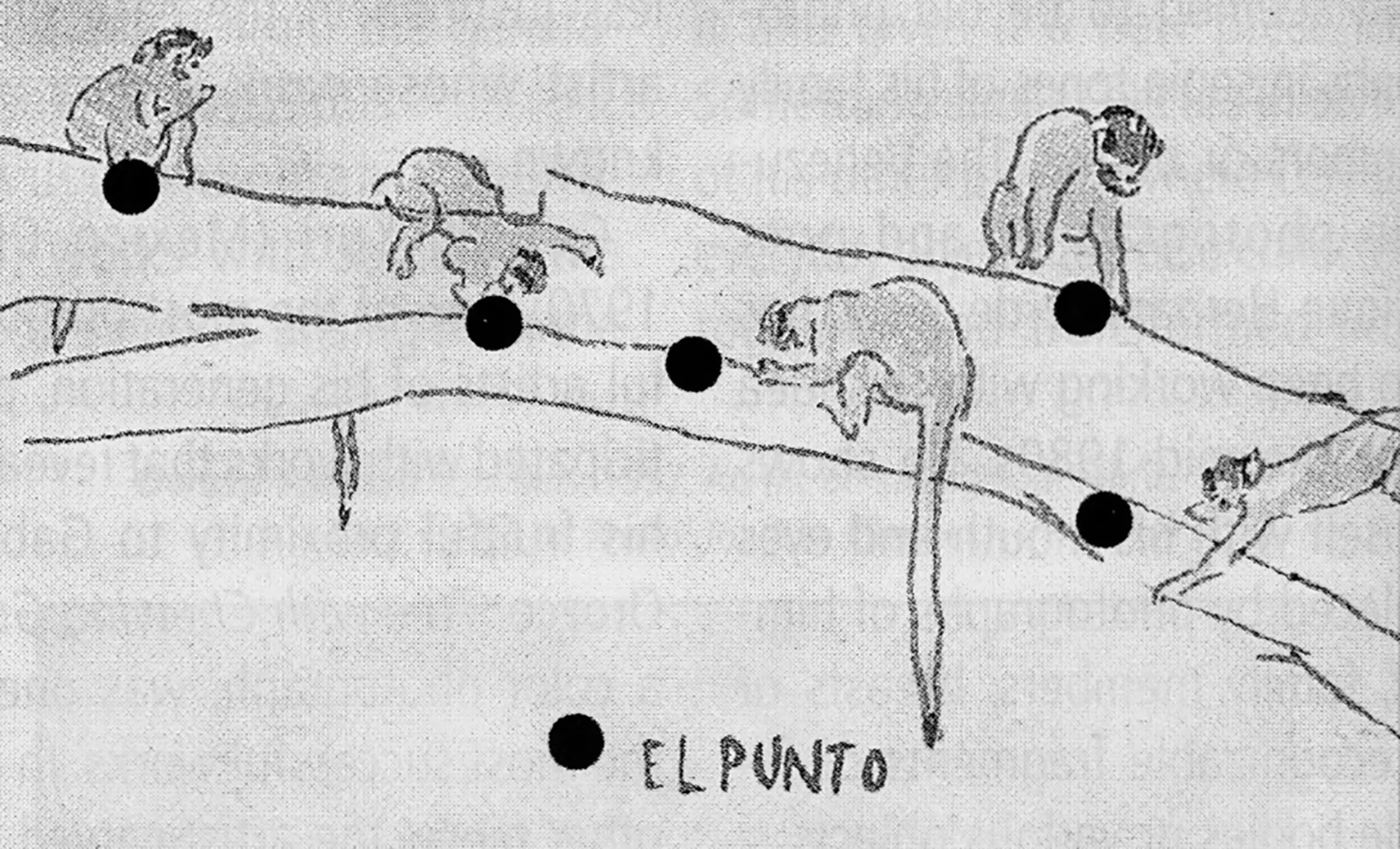
For Francis Alÿs (Antwerp, 1959), who himself has said that his work “is a series of notes and guides”, drawing is related to a schema which allows him to clarify and transform his ideas by means of cutting out, adding, or juxtaposing images on translucent paper and re-assembling them with adhesive tape—so that the drawings acquire a kind of destitute air, much appreciated by arte povera and Joseph Beuys. The precariousness and economy of the elements give the work the sense of commiseration we feel for certain abandoned objects and debris in the cemeteries of modernity and capitalism. In our frenetic and constant replacement of objects, we forget the being and purpose of things.
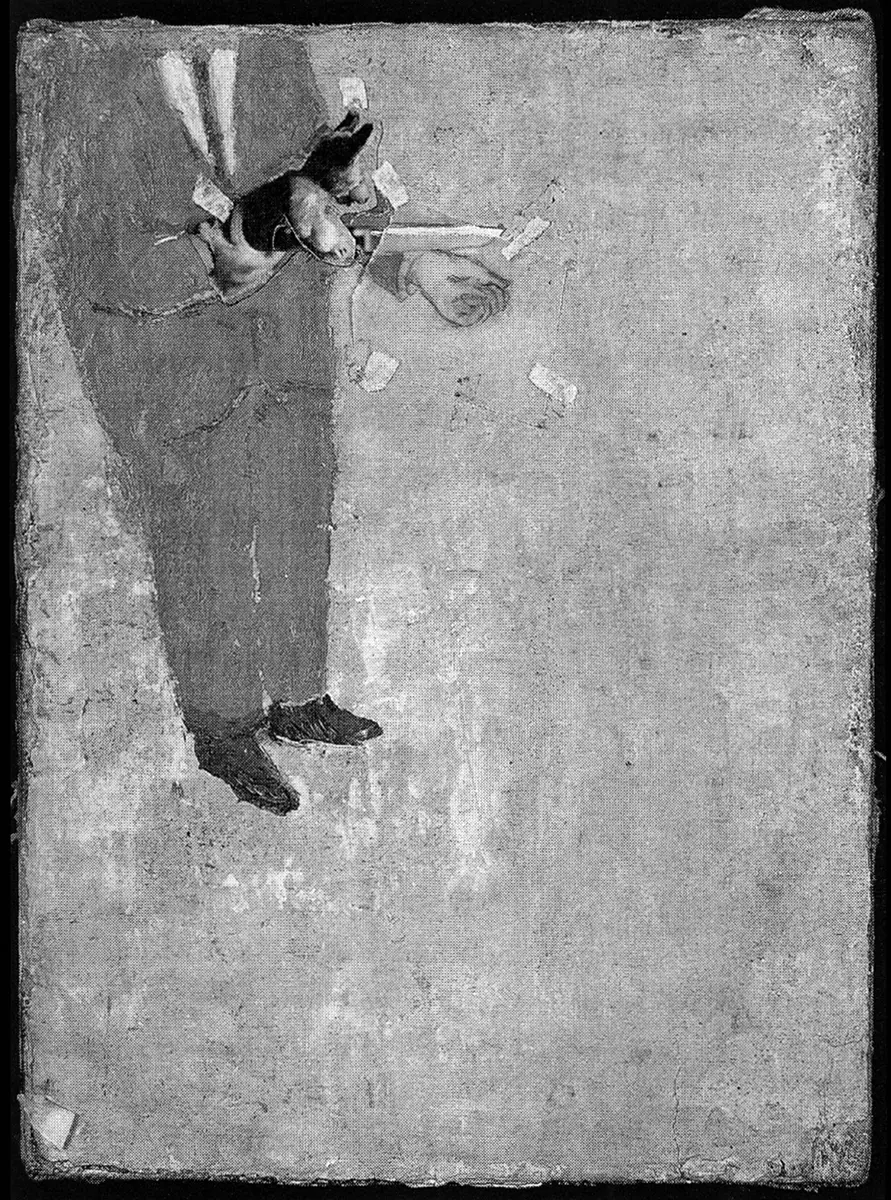
Notes and Guides, drawings made with dots on the wall and which offer a perspective of buildings done with the calque of a drawing, share the same principle of cutting paper to be seen in the work of Xawery Wolski (Warsaw, 1960), who is interested in the systematic perforation of paper and in the visual effort required to appreciate it, rather than in the form achieved. For this artist, the process has a close relationship to the tattoo technique, the result appearing like a high-relief scar.
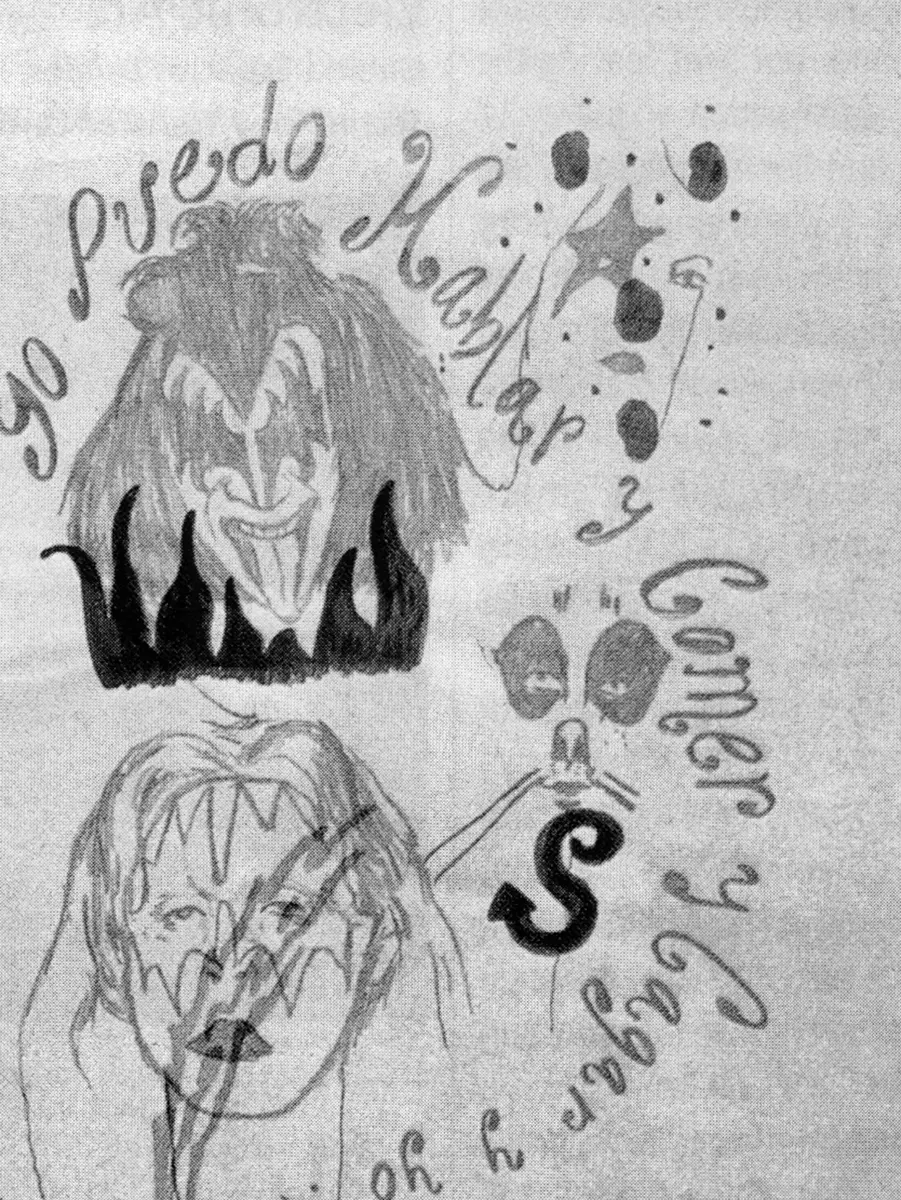
Daniel Guzmán (Mexico City, 1964) bases his work on “musical references, personal comments, and visual caprices”. His drawings are presented like the pieces of paper on which we write things we do not want to forget—a kind of everyday reminder hanging on the wall. The drawing offers a panoramic account of the development of therapeutic work in the form of a documentary diary, related to a state of mind onto events reflecting an existential and indifferent attitude very characteristic of contemporary forms of nihilism. Suddenly I was overcome with apathy or Oh My God, that again, that, that is some of the downbeat texts in his drawings.
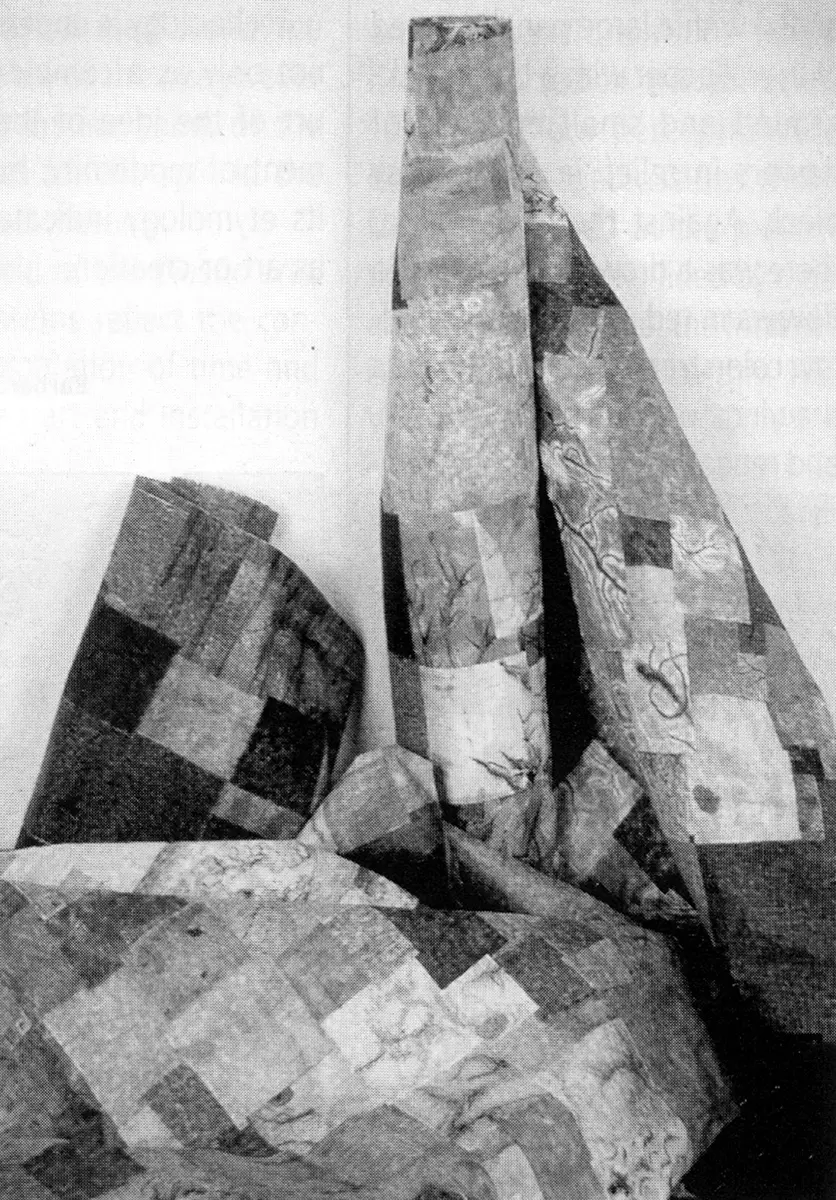
Gabriel Kuri (Mexico City, 1970), presented serigraphies of drawings kept in his portfolio. For this artist, drawing has the function of depicting thought, as many schools of psychology have maintained. Kuri believes that drawing has an experimental and immediate quality, without which it is unable to fully achieve its symbolic and expressive potential. Magali Lana (Mexico City, 1956), in addition to two portfolios, that could be manipulated, presented drawings on the wall of a clearly expressionist kind, in which she used pencil and organic substances like coffee and root beer, leaving marks of her action on the walls, ceiling, and floors. In this way, she created a disturbing testimony atmosphere of a space that bore the marks of some unspoken and painful event. Rocío Maldonado (Tepic, Nayarit, 1951) presented collage drawings, in ink on rice paper, which looked like partially unrolled parchments, with an infinite range of grey tones and fragmented drawings of the human figure, all done with a classical kind of taste. Here the spectator could go around the drawing, while in the case of Magali Lana, it was the opposite: the drawing, transformed into installation, surrounded the spectator.
Miguel Ventura (San Antonio, Texas, 1954) exhibited a series of drawings of heads done with graphite and colored pencils on albanene paper, inspired by comic strips and tattoos. The careful strokes formed a non-linear discourse of the transformations generated by the various states of mind determining the imagery.
The exhibition began and ended with a large panel covered with wallpaper with a black background and small bunches of flowers in relief in semi-glossy black. Against the background, there was a drawing of magnolia flowers in red, pink, and pale yellow colors, reminiscent of the flora drawings of José María Velazco, and repeated in a kind of net running up and along the wall. The work had a visual force, which made it difficult to read the title and the names of the participants. With this piece, the museographical intention of which was to form a contrast with the works in the show, which were generally small format pieces with a minimum of color, the visitor could see once again how far contemporary artists are (or should be?) from popular taste and mass culture.
ERNESTO SOSA