I have never been able to understand the tendency to compartmentalize Cuban art into different decades, particularly after the triumph of the Revolution in 1959. People speak of what happened in the decades of the 1960s, the 1970s, the 1980s (the so-called prodigious decade, because it marked a renewal), and the 1990s but so far, no one has spoken of the new decade. Each of these periods has been given a label with specific characteristics, as if life were not made up of the constant fusing of one moment into another.
Following this logic, we might say that the new decade reflects an impoverishment of Cuban art with respect to the earlier periods. With the exception of Kcho, Carlos Garaicoa, Los Carpinteros, and Tania Bruguera, there is really nothing very impressive in sight. Much of what is being done, in the general sense, is a repetition of earlier projects, with a few exceptions: José Ángel Vincench, José Toirac, Douglas Pérez, Pedro Álvarez, Esterio Segura, Manuel Piña, Juan Carlos Alom, Sandra Ramos, Fernando Rodríguez, and a couple of others.
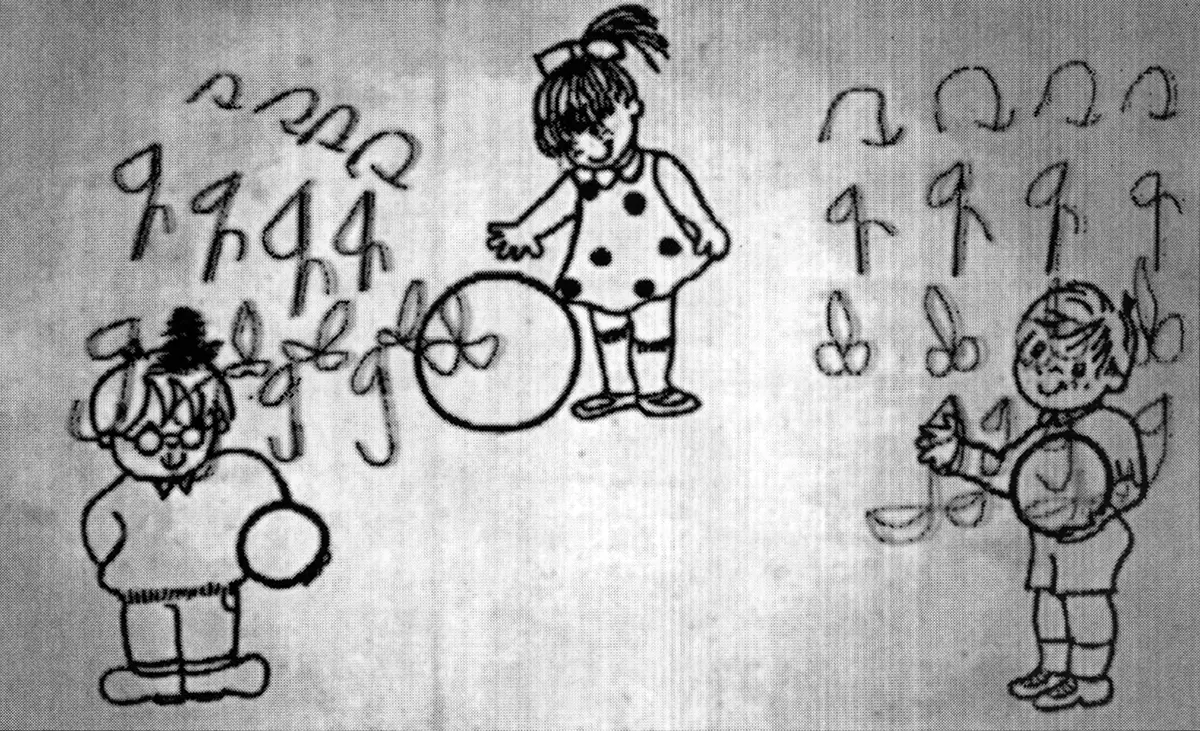
For years, Jorge Luis Marrero, an interesting artist, continued to work almost unnoticed. He did not follow any of the paths being explored at the time: social and political critique, existential commentary, emphasis on Afro-Cuban religions, exploration of mass culture, etc. Marrero at first preferred to work with appropriation and quotation, moving within the history of art itself and then parodying himself questioning aspects of originality and authorship in a work, through a kind of interplay with his own drawings done in childhood and freely manipulated.
Now, joining forces with his Costa Rican companion Nadia Mendoza, he recently presented an exhibition at the Habana Gallery that reveals a very individualistic vision directed to both morphological and conceptual aspects. But his new work also marks a sophisticated development of the way in which he approaches his theme.
The Habana Gallery, which has to perform miracles to comply with the economic plan established by the Ministry of Culture —it is a commercial gallery— has had the courage to move away from the dictates of the market. It offers its space for many projects with much less chance of making a profit, and whose special value lies in their artistic experimentation. It was here that Marrero and Nadia arrived to paint the walls, like illustrators of books for children creating a mural in an infants’ institution.
Another technique consisted of taking pages from original texts by children and framing them. The resulting picture was accompanied by others that included a drawing by each artist done in childhood. Yet another variation was to do new work but in the style of their childhood works. The pair explored different possibilities, including the use of children’s games and pastimes, and cast an ironic, humorous, and ingenious look at certain human values, including false stereotypes in the development of women and men. Without saying so directly, the narrative that formed the basis of the show reflected a questioning of such institutions as the family, school, and society as a whole, with its moral principles and rules that are very well established in terms of gender. What they Taught us, What We Learned, and What We Did was the title of the exhibition. It invited the spectator to reflect and to make his or her own personal interpretation. What remains of the well-behaved language of school textbooks, with their methods for transforming us into perfect individuals as adults? What do we absorb and what do we do with what we have learned? Judging by the intention of children’s schooling, how can we understand the hypocrisy, the violence, the interest in consumption, and the frivolity that comes later? Are children therefore being taught incorrectly? Or is the problem the environments into which children come or to which they go when they reach adulthood?
But no more of such didactic or hackneyed matters. Marrero and Nadia successfully overcame the risks involved. They managed to offer a subtle re-creation of the world of children from the moment they decided to place it within the context of a gallery (and to proceed in the way that they did) on to the very selection of the pages torn from a school book (sometimes in contrast with press cuttings). They are to be commended for the level of artistic effect they achieved with such simple means, including real drawings or drawings supposedly done by children, and above all, through certain details in which they used metal, which enhanced the visual attraction of the pieces.
I am curious about the direction that these two artists will take. I wonder if they will continue to work together with four hands if they will continue to explore the same theme, and if so, how their work will evolve. One of the most successful aspects of this show was the way in which both artists managed to fuse into one another, as individuals, as artists, and as people of the opposite sex, to create works that could not be attributed to either individually, except when they included some historical reference. This artistic work seems to reflect a very strong interpretation of experience, which in turn is a beautiful act of love.
ERENA HERNÁNDEZ