
The Third Festival of Performance Art culminated in an intense day of artistic activity that included a week of video documentary presentations (Yves Klein, Joseph Beuys, Robert Gober, Dan Graham, Bruce Nauman, Gerard Richter, Cindy Sherman, and Bill Viola), slide lectures, and specialist videos on testimonies, vocality, the body and rock music. This preamble, designed by Helena Productions in the cinema of the Museum of Modern Art La Tertulia, offered a historical perspective and points of reference for the live actions carried out on the final Saturday.
Marking the end of the year and the century, the Third National Festival of Performance Art was part of a tradition at the Museum that goes back to the 1960s. Back then the Mexican writer Raquel Jodorowsky made her triumphant entrance into the old mansion of La Tertulia riding a donkey, there were mythical recitals of poetry and prose by the members of the Nadaista movement, a happening by the Brazilian Clever Machado in the 1970s, and the performance of the Valle de Cauca artist Jonier Marín. The eighties and nineties witnessed the impressive presence of the Colombian action artists Alfonso Suárez (Barranquilla), Adolfo Cifuentes (Bucaramanga), Rosembeng Sandoval, and Guillermo Marín (Cali), who promoted this medium until it became a characteristic feature of our national art.
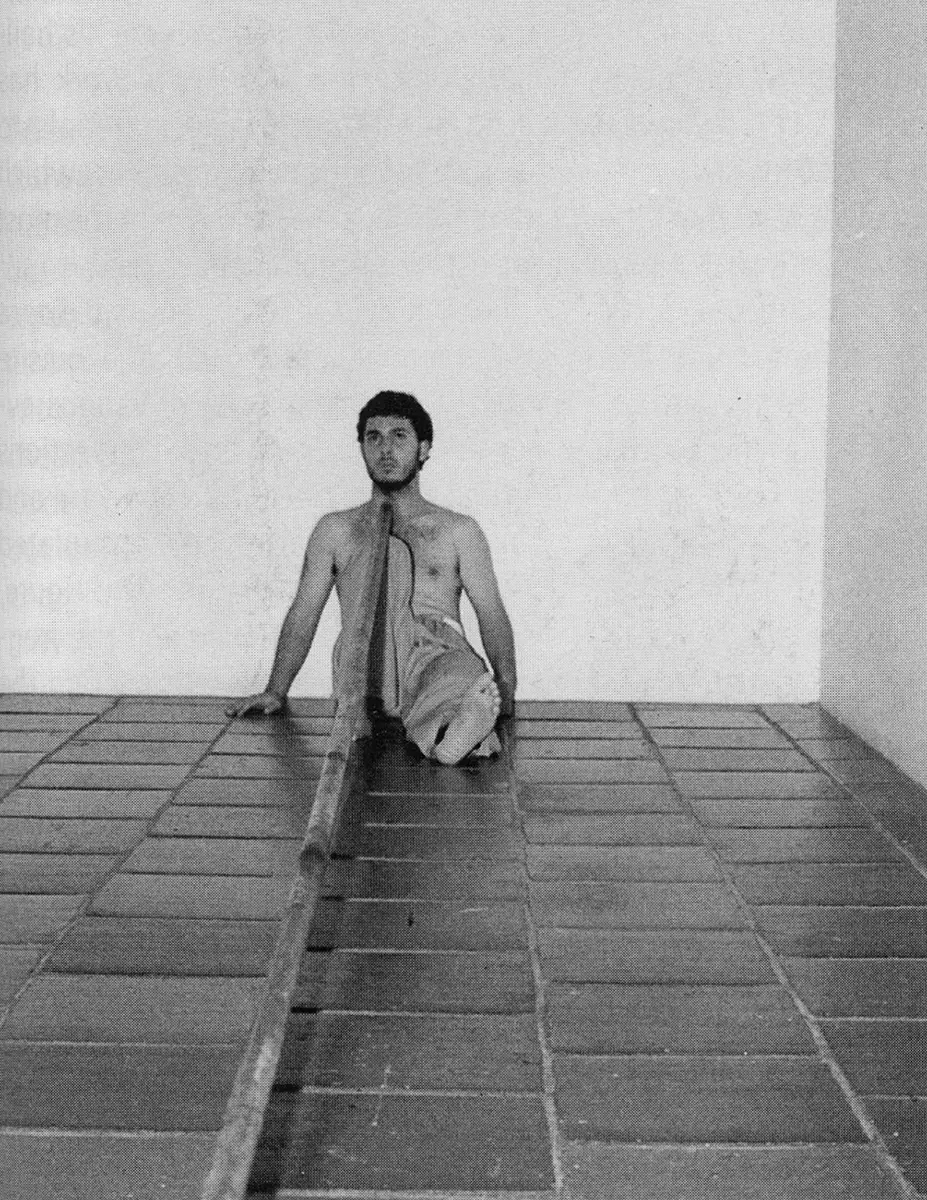
The Third Festival brought together 27 participants. The setting was the underground room of the Museum (which is used for traveling exhibitions) as well as the outside gardens. The massive attendance, which increased during the day, confirmed that this artistic medium is not only widely supported but is a source of curiosity and a subject for investigation.
The participants used various methods to perform their actions. One presented real protagonists like former drug users or people selling sweets in the street to support their families (Alejandra Gutiérrez), police officials inspecting bags, packets, alcohol, drugs, and arms (Giovanni Vargas) or the delivery of the national flag by a military unit which traveled from its barracks in an official vehicle, marched, executed the ritual line formation and handed over the national tricolor to the president of Helena Producciones, Wilson Díaz. Other artists preferred more dramatic and polemical approaches, such as children in strollers specially designed by the Grupo Nómada of Bogota, the very unusual action of Juliana Guevara with her own brother, a mental patient, or the ultra-provocative performance by Rosembeng Sandoval, entitled Dirt, in which a drawing was made on an immaculate panel with the dirty body of a real drop-out. This artist has always been concerned with exploring violence, \deterioration, and death, and is exasperated with the limitations imposed by what is considered politically correct and the double standards of public morality. The result is a series of active events focusing on one of the specific problems of our fratricidal war.
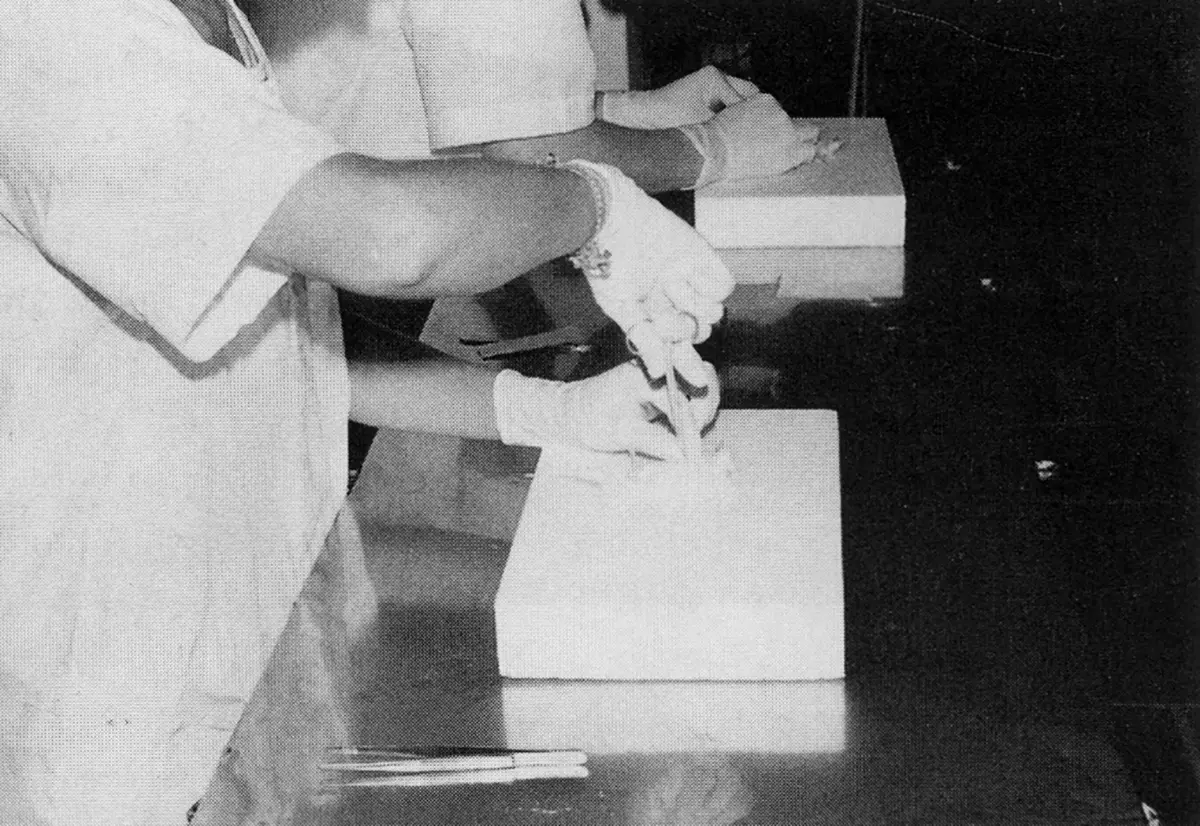
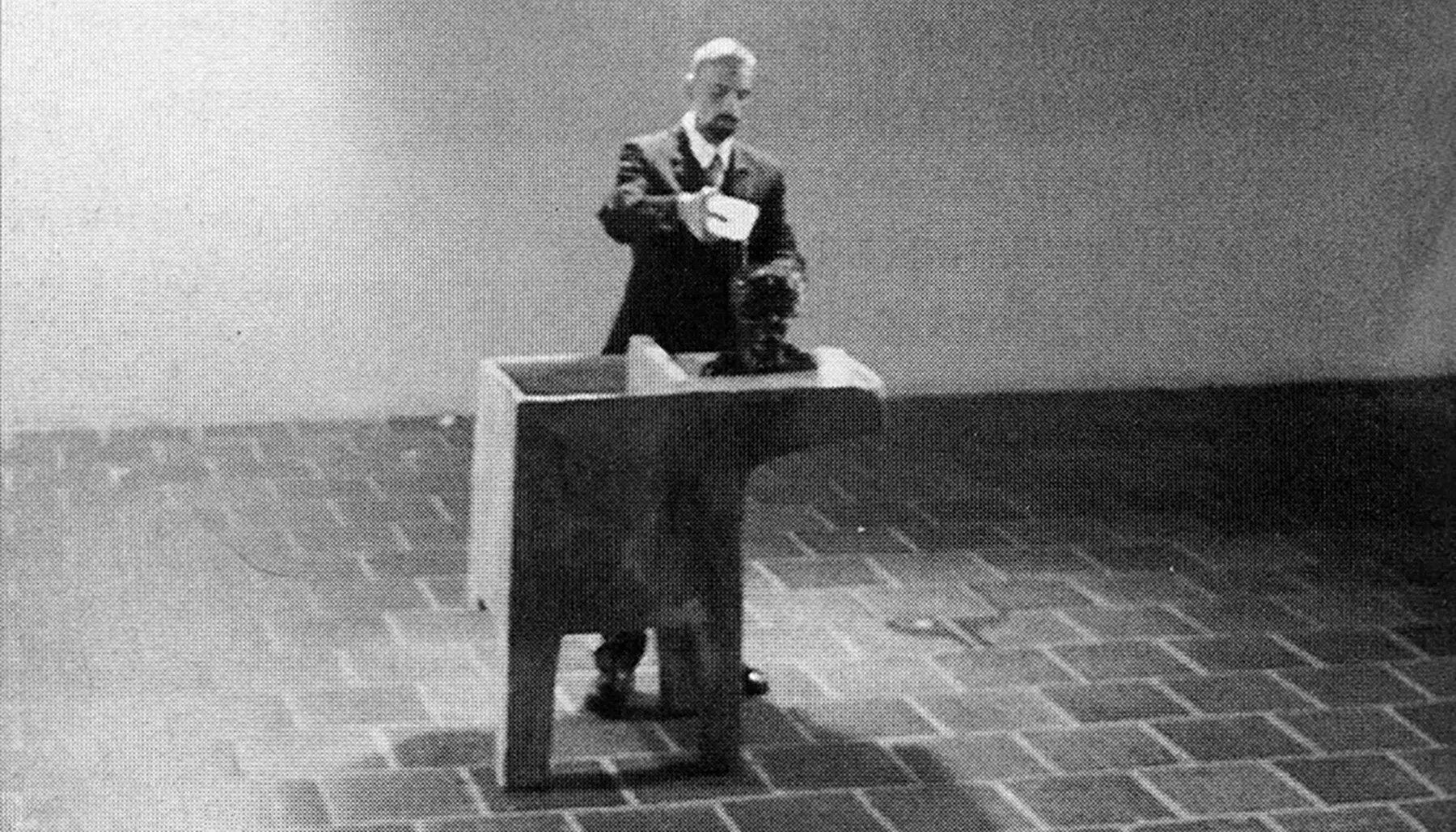
A reveille, gunfire, and the laying of a wreath at the entrance to the Museum accompanied the opening ceremony by Luis Eduardo Mondragón. There were also individual events, such as the sword-swallowing high risk action by Leonardo Herrera; the nude action, including a statement about deterioration and violence, by Fernando Pertuz; a phonetic disquisition on the letter ‘J’, accompanied by acoustic music by Juan Fernando Toro; the action of washing a bust made of blue soap, displacing the exercise of femininity and masculinity, by Yuri Forero; the self-hair-cut transmitted at the same time on four television monitors by Juan Carlos Melo; and the subsequent recording of the activity of members of the public at the festival; the half-didactic, half-folkloric/ nationalistic ritual by Manuel Romero; the dialogue with objects, transmitted by a loudspeaker by Marcela Gómez; the interviews about Cali on a red sofa located outside the Museum by Carolina Caicedo; the irritating action by Silvia Sánchez from Manizales, who grated dozens of onions as a means of making the public participate in a collective weeping; and the final event which was the locking in of the public in the packed room, in the final action of the event by Paul Arias. The two couples who participated decided to present experiences with animals. Mónica del Llano and Francisco Camacho carried out a live operation on two white mice. Dressed as doctors, they used instruments, with their movements being transmitted on monitors, which they appeared in white like little mice. Fabio Nemesio Palacios and Juan David Medina, sitting on a red carpet, exchanged presents wrapped in silver paper and with red rosettes. The group made up of Ángela Baena, Alfonso Castillo, Mauricio Corradini, Javier Morales, and Fernando Olivella presented an action in which they were transported and buried in a truck full of earth, with only their heads showing. Naturally, the performances expressed concerns about violence, the various facets of the human personality, and a variety of moving allegories with both natural elements and technological instruments. The series of live actions culminated in a program on the development of national sculpture over the last five decades, as expressed in various exhibitions presented at the end of the century. Sculptures on pine Columbian themes from Mexico, Peru, and Colombia done in the 1990s by Édgar Negret; the oxidized iron forms making up a Sacred Precinct, in the mystical and metaphysical designs by Lydia Azout; apparatus brought into motion by motors equipped with memories in an allegory of pain and danger, by Elías Heim; the performance entitled The fitted out Venus and representations of femininity by Guillermo Marín; a photographic installation, with documentary maps, geographical shots and videos of rural areas affected by violence, by Carmen Espinosa; and the two installations with artificial, real and recycled objects by Juan Mejía which showed the transformations that have occurred in various consumer phenomena. This third edition of the Performance Festival was presented within a framework of legitimacy and in a setting that showcased both its ironies and special sense of humor as well as its various proposals that complement the current artistic scene.
MIGUEL GONZÁLEZ