
The 2nd Mercosur Biennial1 in the city of Porto Alegre, Brazil, fundamentally centered on contemporary art. The curators avoided proposing a specific theme or aesthetic problem tied to current art. Fabio Magalhães, the curator general, considered that the work of art’s complexity stirs up problems and provokes inquiries that are no longer restricted to the theme as a binding element of contemporary production.2 Thus, the only prevailing premise was contemporaneity and, as a result, it showed diverse paths of strong vitality in this field.
The 2nd Biennial was presented as a pluralistic proposal, gathering painting, sculpture, installation, performances, video, and techno-art.
The show was organized with the participation of curators from each of the countries making up Mercosur: Jorge Glusberg from Argentina; Pedro Querejazu from Bolivia; Fabio Magalhães and Leonor Amarante from Brazil; Justo Pastor Mellado from Chile; Ticio Escobar from Paraguay; and Ángel Kalenberg from Uruguay. Colombia was chosen as an invited country and Eduardo Serrano was its curator. In all, some 130 artists from these countries came together.
Four special exhibits, outside of the contemporary show, configured the 2nd Mercosur Biennial: Julio Le Parc, a personality in the field of kinetic art and a precursor of technoart, which was curated by Sheila Leirner; Iberê Camargo, a Brazilian artist born in Río Grande do Sul and recently deceased, curated by Lisette Lagnado as an homage; the exhibition Ciberarte: Zonas de interacción (Cyberart: zones of interaction) organized by Diana Domíngues; and the show Picasso, Cubistas y América Latina (Picasso, Cubists, and Latin America) proposed by Fabio Magalhães.
The Biennial was mounted in three different city spaces, all of which were quite appropriate for the respective shows they housed. The historical shows were installed in the Art Museum of Rio Grande do Sul (MARGS); Ciberarte and Le Parc occupied the old building of the Usina do Gasómetro, completely restored in order to house cultural events; and the contemporary artists presented their works in the old space of the Warehouses of the State Department of Ports (DEPRC), on the docks of the harbor which in the past was home to metal shops and ship repair shops. This last space was specially prepared to receive the contemporary works of this Biennial. Also, with this space, the curator general made it possible for participating artists to appropriate places like houses, stalls, or walls, as well as structures previously used in reparation, such as ovens, which came to make up the artistic proposals. A new spatial concept thus emerged for the exhibition of contemporary art, beyond the galleries, beyond the museums, and within an urbanistic project of restoration and recycling of old parts of the city. The curatorship intentionally diverted the viewer’s gaze toward an alternative place. Space and art thus composed a transgressive stage.
In this Biennial there was no division by country, but rather a free distribution of artists, often in accord with their own choices, as in the case of the Harbor Pier.
From among the group of contemporary artists present at the exhibition, one existential aspect stood out among the other forms: 1) for the way it treated the body itself as a subjectivity expressed through the most varied metaphorical forms; 2) for the way it treated places like the house in this case, therefore, an identity-related concept of place; 3) for memory in its cultural essence; and, 4) for criticism of social reality.
The identifying and existential aspect of dealing with the body posits reflections of distinct qualities in contemporary artistic production. Common denominators of the art of the last decade may be perceived in the work of many of the artists of this Mercosur Biennial.
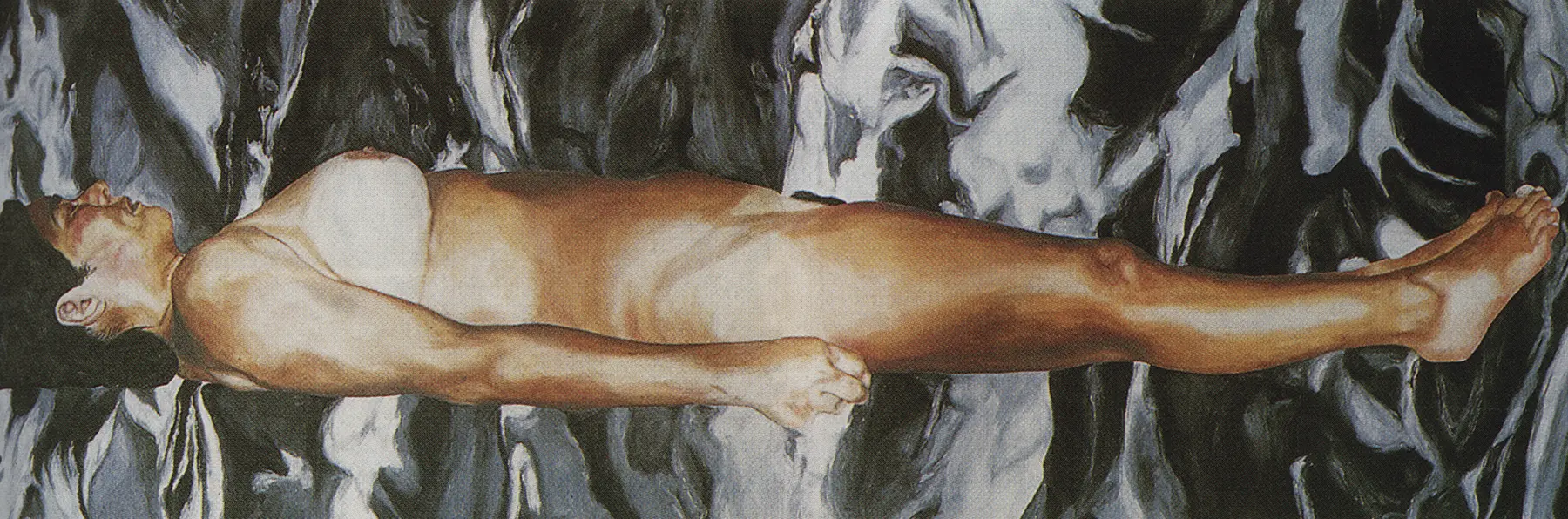
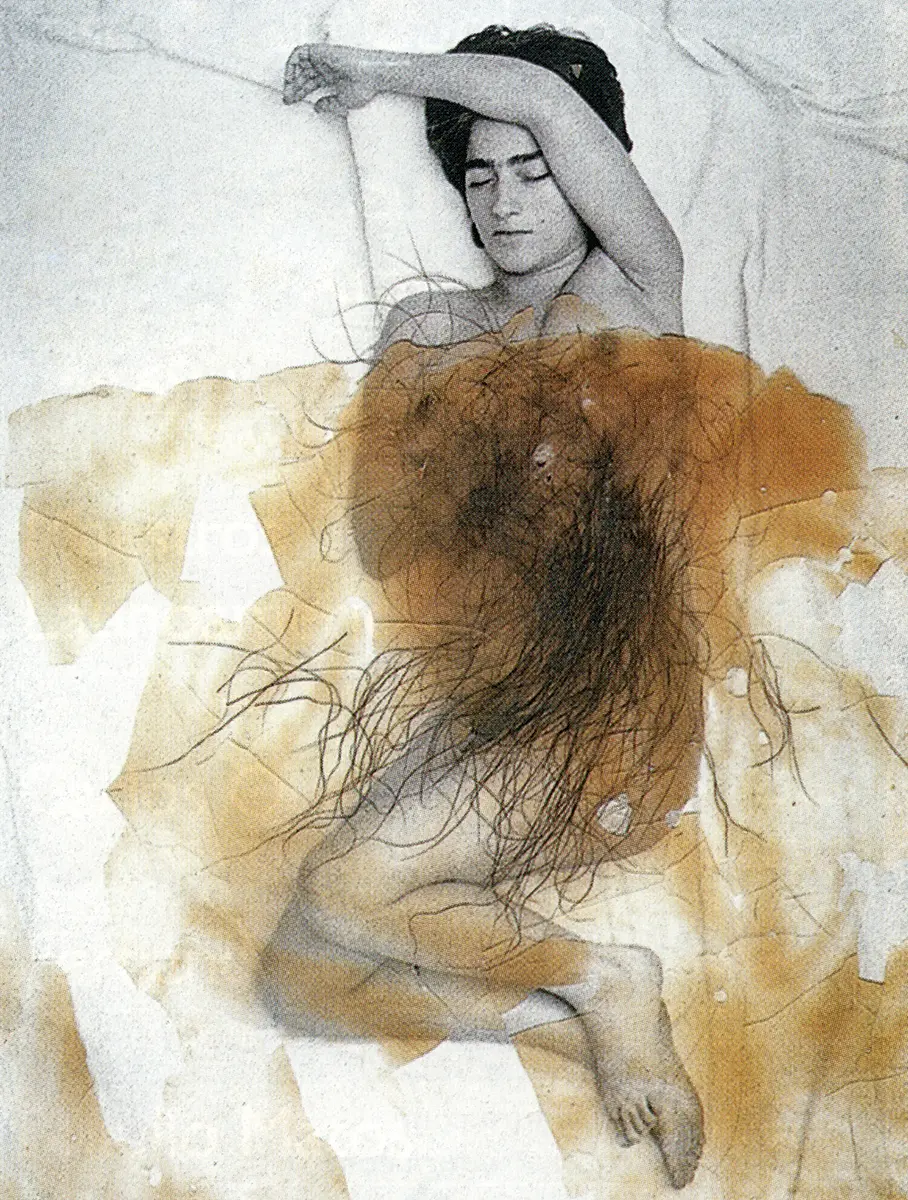
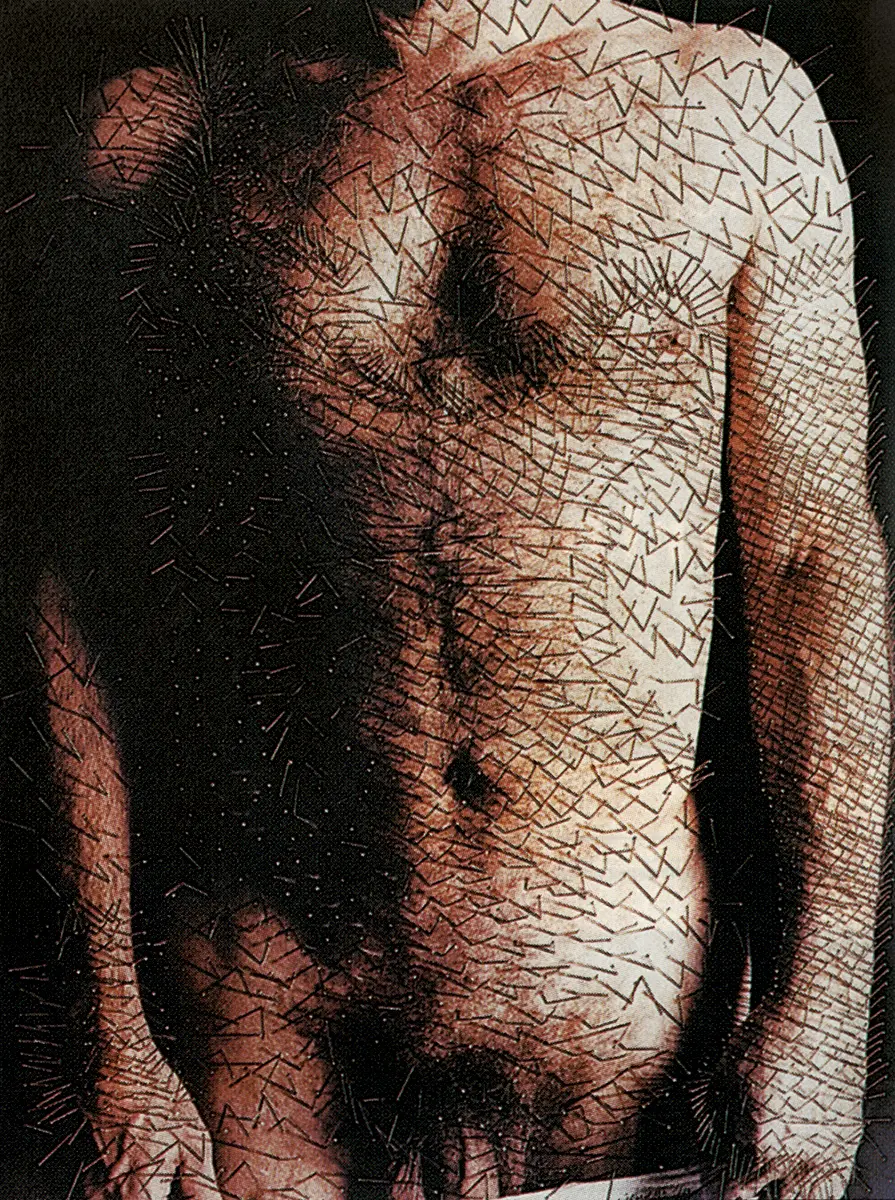
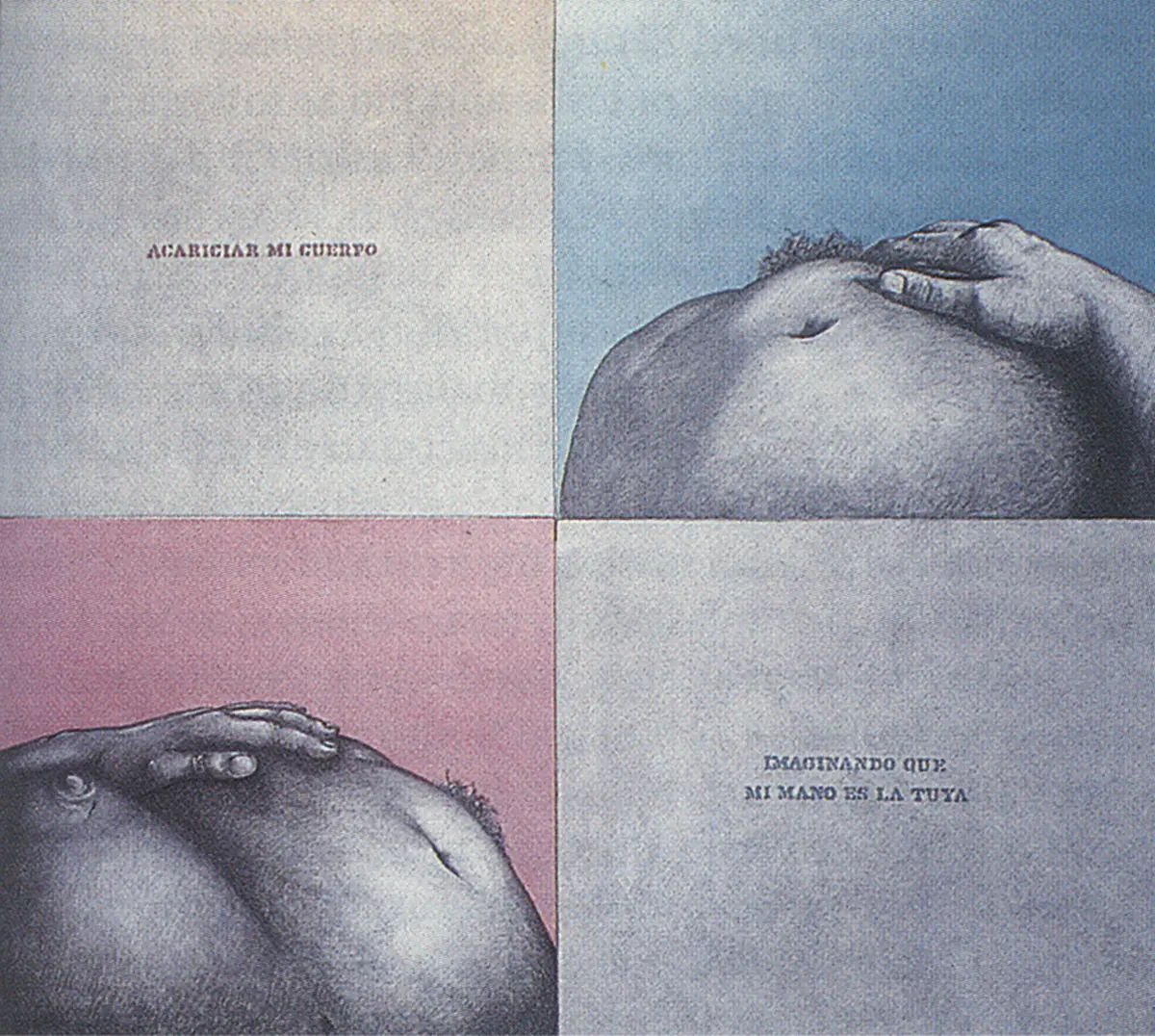
The gaze toward the body is made under the identity of gender with intimism and personalism; In certain pieces, the exhibition of the body’s corporal and physical aspects appears.3 We can see men’s and women’s sexuality as well as homosexuality. The Self-portraits by Erika Ewel (Bolivia) reveal female sensuality and the libidinal force of desire. Valia Carvalho’s (also from Bolivia) installation creates a strong metaphor for abortion: in this case, sexuality is shown as a bridge between life and death. Fernando Arias (Colombia) presents a photograph/tattoo of his nude body. The tattoo is the artist’s signature and the body is prepared to go to auction. The artist identifies his work with the title Desorden dismórfico corporal (Bodily dysmorphic disorder). In Ricardo Migliorisi’s (Paraguay) installation, the male body is attacked by pins. Its interior and exterior are the axes of Cecilia Vignolo’s (Uruguay) work. Vignolo operates with wax on the photographs of her nude, sleeping body. Her body is covered by a blanket of depilatory wax with her own hair (a product of a previous hair removal). Photography is also the medium used by Luiz Zerbini (Brazil) to present deformed images of bodies. Alejandra Wolf Rojas (Chile), in her oil on canvas titled La que yace III (The one who lies III), exhibits a dead female body with signs of violence. When she lacerates it, superimposing an image, she makes us see her entrails.
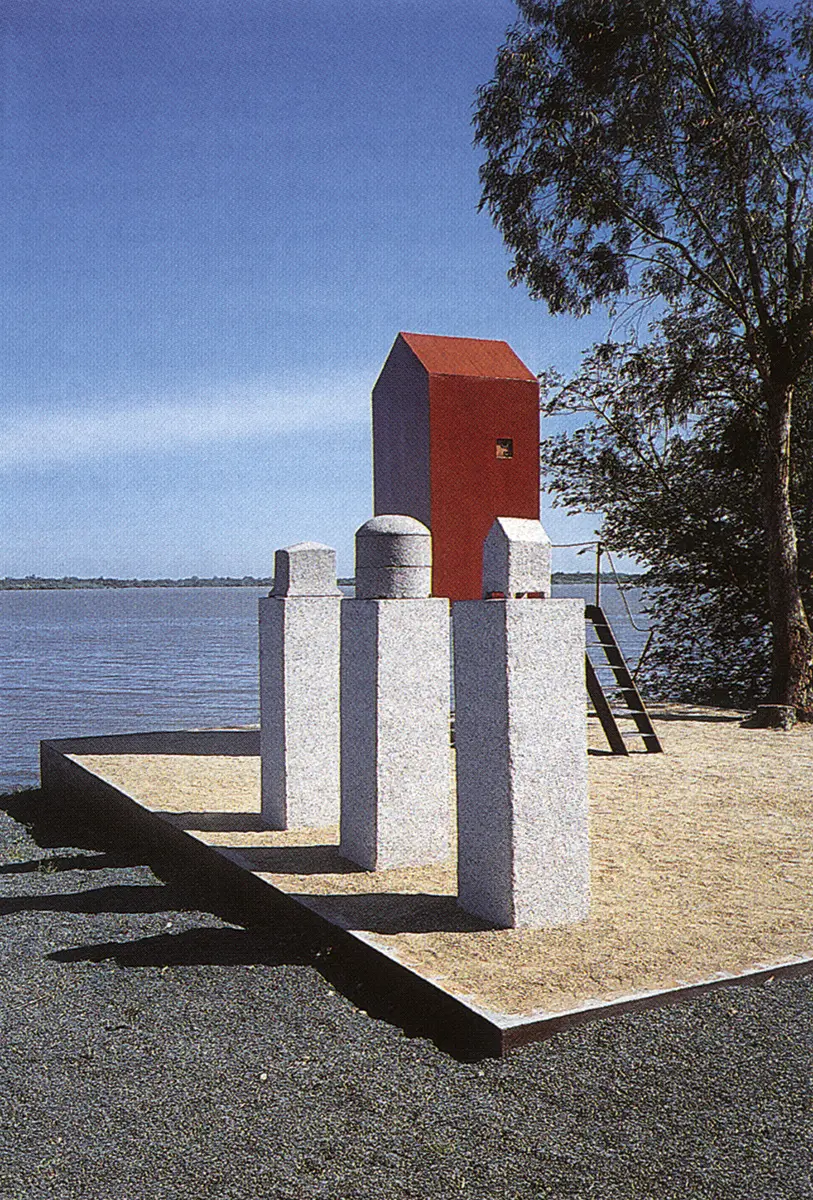
The concept of place as it relates to identity appears in installations like that of Maria Tomaselli (Brazil). There, the house is the poetic place where the artist registers the periods of life; it is the space of intimacy, and from where frivolity is projected. The artist took possession of a security booth that she chose for her installation. Tomaselli reconstructed it and took part inside creating paintings- objects, small boxes that can be opened, and small openings through which the exterior landscape may be viewed. Around this house, she placed three works sculpted in granite on pedestals—signifying totems, and thus configuring this installation, which she called La Cuarta Casa (The Fourth House).
Totems are equally present as a register of memory in Nadín Ospina’s (Colombia) work El bosque de los ídolos (The Forest of the Idols). The artist adds a critical sense to his work: he criticizes our era’s tendency to lump things together. He tackles the subject, especially from the point of view of culture. His totems are arranged in a temple (a religious altar?), a stage of red walls. In his work, pre-Columbian sculpture metamorphoses, becoming a hybrid with the faces of the Simpsons and Mickey Mouse.
A similar strategy appears in Federico Arnaud’s (Uruguay) installation titled El juego de los milagros (The Game of Miracles), where images of Jesus and the apostles are used in a soccer match. The artist makes use of Christian religious iconography in order to convey his concern for the Latin American identity.
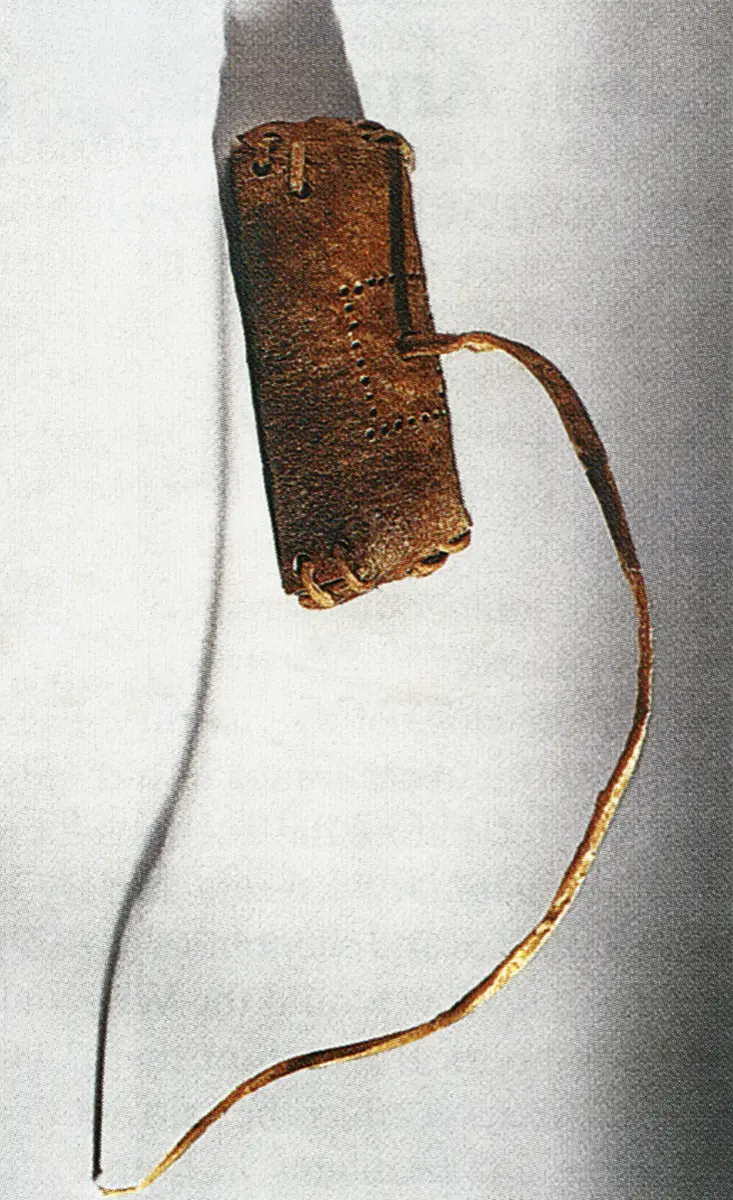
In Osvaldo Cibils’s (Uruguay) work, the cultural and critical sense is also present. Cibils makes use of the hairless hide of dried skins, recovering his country’s artisanal traditions. He constructs small imagined objects that are distributed in space, thus creating the installation that he titles Cueros (Skins). It is interesting to remember, as the Uruguayan curator Ángel Kalenberg observes, that in Spanish andar en cueros [lit. “to be naked”] means to go through life naked, without costumes.
In the context of the exhibition of contemporary art of the 2nd Mercosur Biennial, the aspect of social criticism is clear in works like Información/Desinformación/Contaminación (Information/Disinformation/Contamination) by Adriana González Brun (Paraguay), presenting a large garbage dump with a mass of newspapers. The installations by Andrea Goig (Chile) and Mario Opazo (Colombia) project a criticism of political violence.
In the show as a whole, there was still a significant presence of conceptual works and pieces within a formalist aesthetic, such as that of the Brazilians Marco Gianotti, Mauro Fuke, Nelson Félix, and the Argentines Nora Aslan, and Pablo Siquier, among others.
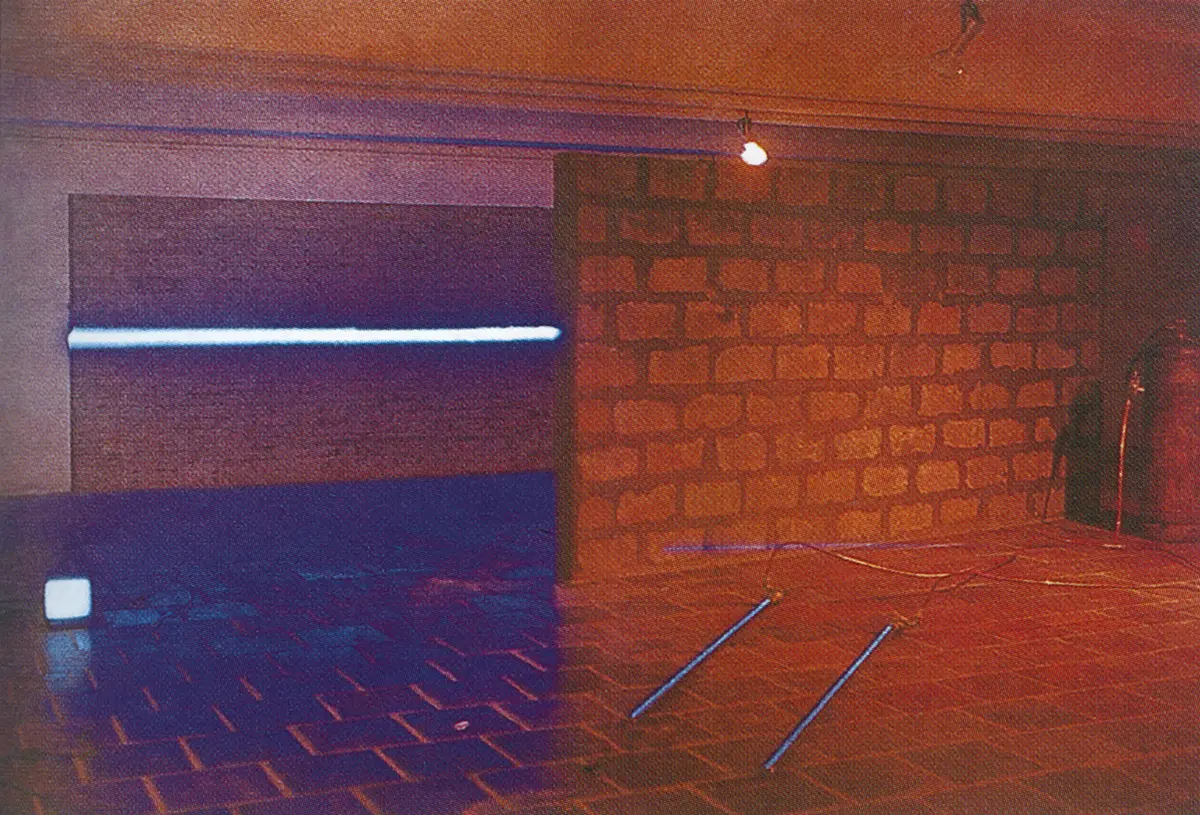
The show Ciberarte: Zonas de Interacción gathered 34 internationally recognized multimedia artists who presented works in different forms such as cyber-installation, cyber performance, websites, hypermedia, and CD-ROMs, all of which allowed contact with virtual artistic reality. A Cyberport that links artistic websites can be visited at www.bienalmercosul.art.br/ ciberporto.
With the aim of offering a broad view of the current state of cyber art, the curator Diana Domingues invited personalities that act beyond the geographic space of Mercosur, like Christa Sommerer and Laurent Minonneau (Austria and France), Edmond Couchot and Michel Bret (France), Masaki Fujihata (Japan), Roy Ascott and Josep Biribet (England and Spain), and Yoichiro Kawaguchi (Japan).
Domingues states that in the context of the zones of interaction, the devotion of those who participate in the technological experience is necessary. The choice of connections and immersions into virtual atmospheres belongs to the public, which interacts with the works of the cyber artist. The life of the virtual system depends on this interaction.
As for the historically oriented shows like Picasso, Cubistas y América Latina, in addition to the contact with drawings, etchings, and oils by that founder of cubism, we were able to appreciate works by Léger, Lhote, Metziner, Lipchitz and the Latin Americans, Petorutti, Portinari, Barradas, Tarsila, Brecheret, Di Cavalcanti, and others.
The homage show that underscored the peculiarity of the expressionist investigation of Iberé Camargo gathered works from his production between 1950 and 1990.
Le Parc made very clear the fact that the method of experimentation was essential in his constructive and kinetic project. In the group of works presented, what stood out were the moments of his life where the abstract, the virtual, and the interactive (Lumière en vibration [Light in vibration], Continuel-Lumière mobile [Continuous mobile light], for example) inserted Le Parc into the history of artists who were precursors of techno-art.
During the 2nd Mercosur Biennial, a group of encounters developed: the symposium “Ciberarte: Zonas de Interacción;" a symposium on "Psychoanalysis, dreams, and Artistic Creation;" an international seminar: “Art in the Face of the Contemporary;" and a symposium on art criticism put on by the Brazilian Association of Art Critics who commemorated the fiftieth anniversary of their founding.
NOTES
1. It opened on 5 November 1999 and closed on 9 January 2000.
2. See the general catalog, Contemporaneidad, Ia marca de Ia II Bienal (Porto Alegre: Fundación de Artes Visuales de Mercosur 1999).
3. Observation by the curator for Bolivia, Pedro Querejazu.
LISBETH REBOLLO GONÇALVES