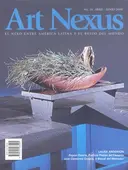
Adriana Varejão’s paintings and installations confront the viewer with the reality behind the appearance, in terms both visual and cultural. She literally lays bare what she suggests lies beneath the surface of a work of art and the life crushed beneath the European buildings imposed upon a people. Varejão brutally dissects the placid, seemingly enchanting physical attributes of colonization. ln her painting Azulejaria (De Tapete en Carne Viva), (Carpet Style Tile Work in Live Flesh, 1999), for example, she slashes the Portuguese tiles that pave her Brazilian homeland revealing the teeming life squashed beneath. In this large, sculpted painting, typical of Varejão, the canvas-covered wood bears the rich intricacies and shimmering surface of blue and white tiles. Upon closer inspection one notes that it is a painted surface, an artifice sliced open, such that the “layer” of tiles bulges and ripples under the apparent weight of the bloody organs and entrails inside. So vivid are the innards that they appear to all but spew upon the viewer and the gallery floor.
In Carne Marinho (Marine Meat, Sparts, 1999), Varejão literally serves the oppressors and their victims. The painted image of a framed seascape appears upon a rectangular canvas painted white. Both the ocean view and its frame are flatly rendered and ample white canvas surrounds it, making clear that this is a visual pun, a literal painting of a painting. A deep laceration splices the lapping waves of the seascape and gruesomely vivid, shiny red blood and guts spill out of the canvas dropping onto an actual blue and white porcelain plate hung below the canvas. Moreover, bits and pieces of entrails litter the four different blue and white plates decoratively hung above the seascape.
Varejão makes a less truculent commentary on colonialism in her installation Equatorial Line 114, 1999. Within a large white square canvas, she painted two, different-sized, small depictions of the sea. Beginning on the wall above the canvas numerous, pale-hued strings flow over the top of the large white ground like a waterfall, then fan off the canvas in rivulets down the wall and cascade over the floor.
Attached along the flow of strings from wall to canvas to floor are broken pieces of blue and white pottery. This engaging installation evokes the relentless showering of colonialist influences upon a nation reached by the sea. Beyond the thematic content, there is the sheer, unexpected pleasure aroused by a painting that spills off the wall in tendrils at your feet, that lingers in one’s mind.
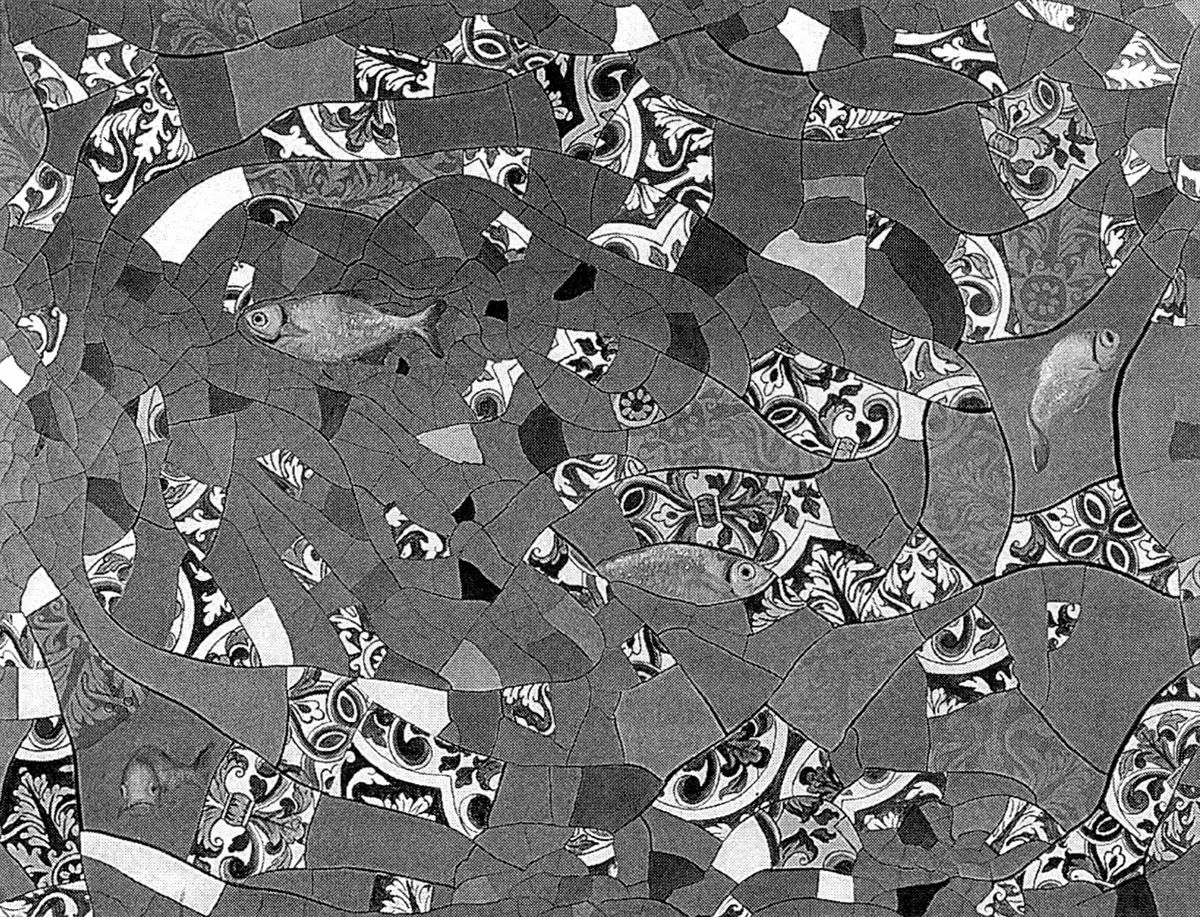
The viewer comes to expect certain vivid and unsettling visual ploys in Varejão’s paintings and installations, and the Brazilian artist does not disappoint. She hones her work and challenges her audience. In Cacos e Peixes (Fragments and Fish, 1999), she conceived a vibrant wall mosaic incorporating shards of blue and white pottery (actually painted plastique on canvas) and segments of blue plaster. Delicately rendered silvery fish appear upon several patches of blue, as if swimming within the kaleidoscope of tactile fragments. In effect, the work suggests the flickering light one sees upon observing sunlight filtering through a river current. Given the subject matter explored in her work, it no doubt conveys, as well, the sea littered with the debris of Portuguese settlers. In the end, this demonstrates one aspect of Varejão’s artistic skill, her ability to surprise the viewer in works both subtle and strident.
MARY SCHNEIDER ENRIQUEZ