
Unlike the previous decade, the 90s appears as a multiform stage open to a multiplicity of strategies and resources. As a result, it is complicated to define adequately its peculiarities in a few words. If in the 80s the return to painting and to large scale was the predominant channel in which distinct viewpoints flowed together, today it becomes difficult to discern a similar unitary concept.
To sum up the differences, we could think of the repercussions of photography and the electronic arts. We could likewise think of the disintegration of the borders between traditional disciplines and their convergence in the territory of installation. But we are far from comprehending the high number of variables. In Argentina, for example, painting continues to interest many artists, as does sculpture and the object.
Therefore, we shall not reduce the responsibility of characterizing this turn-of-the-century decade with the single feature of the ambiguous object. But we do think that it could help to define one of the features of a historical sector halfway between the staunchest tradition and the most innovative techniques.
More than 70 years after Duchamp’s Bicycle Wheel, the theme of ambiguity reappears with full force in the art of the 90s, following in this regard the impulse of the ‘60s. We likewise observe that, in Argentina, ambiguity appears consistently in the work of numerous artists. Marked by a more unstable social position, they appear as legitimate bearers of questioning to the system of objects. Through different approaches, the artists use a fluid and free subjectivity that renounces the need to classify. They move comfortably in the scope of an aesthetic of uncertainty, supported by the deterritorialization of the object and subject for whom that object is set aside.
But, what is an ambiguous object? There is no better way to capture its meaning than to go back to its origins, that is, to the presentation of the problem that Valéry makes in Eupalinos or the Architect (1923).1 There he imagines a dialogue de morts between Socrates and Phaedrus. The philosopher recalls that, as an adolescent, given the impossibility of knowing whether what he held in his hands was an object of nature or of art, he decided to throw himself into the sea. However, at the end of the story, Socrates surmises that should he have to live another life, he would choose that of the artist; that is, he would accept to live on the side of an uncertain happiness.
Like the adolescent Socrates, many demand certainty in the face of ambiguous artistic objects, without making any type of theoretical effort capable of resolving the posited enigma. They throw the object, if not to the sea, at least beyond the field of their attention. They do not accept that things are not “simple and pure like the sky, the sand, or the water,” as Socrates wished.2
Various levels of the presentation of ambiguity exist. The most dramatic are those in which the viewer prolongs the stupor of the young Socrates: he does not know if what he is seeing is or is not an object of art. Alberto Greco’s signalings of persons (Vivo Dito) in the early sixties place us in the problematic divide between what is artistic and what is not. The artistic statute itself becomes a problem since the viewer is the one who must ultimately decide whether what he is seeing also has the right to be art. In short, it is up to him to seal a definition. It is obvious that we are at the polar opposite of the aesthetic experience as a phenomenon of contemplation.
Many artists in the nineties deliberately placed the viewer in the middle point between the artistic and the non-artistic, between the valuable, unique, golden object, and the common, reproducible, non-golden object. Objects of design (fashion) or works of art? Many border works are thus presented halfway between extravagant design allocated for use, and the autonomous, self-sufficient work.
Nicola Costantino, Argentina’s representative at the 24th São Paulo Biennale (1998), realizes unusual wardrobes in silicone, sometimes combined with natural hair. The concept of cannibalism—the thematic core of that international show—found in Constantine’s work is one of its most eloquent examples. The intimacy exhibited by the fabrics of his suits, because they were copies of parts of the human body that are generally hidden (nipples, navels, anuses), highlighted not only the interchangeability of the terms public-private, but also the phagocytosis of the second by the first.
In a cannibalistic society like ours, hungry for consumption, everything is an object of exhibition and commercialization. Intimacy, then, one of the last bastions of individuality, loses all possibility for existence. These concepts, implicit in Costantino’s work, constitute his artistry, his added substance. But there is something more. In fact, certain clients may use those eccentric suits. The artist himself usually wears them. The strategy of his work is constructed precisely upon this friction of functions, this ambivalence.
On the border between public and private, we also find Miguel Rothschild’s sensual furniture. Covered with designs that imitate lips, as if to kiss whoever sat upon them, they transfer an intimate and incommunicable experience to the scope of the industrially repeatable. Rothschild also asks: “Where is the limit of the experience of the private when it becomes public?
Marina de Caro’s work is equally placed on slippery terrain. Some of her suits have been used in performances programmed by her. And they are equally displayed as sculptural objects in traditional exhibition spaces. The possible use of the dresses that the artist weaves with domestic machines stretches the meanings of the work as if the author were ironically looking sideways at the world of consumption and the world of art. In effect, her weaves refer to an artistic tendency rooted in Argentina: geometric abstraction.
Trend or art? Thus too does M6nica Van Asperen present her impossible objects. Making a detour from their established function—to dress the body—her clothing molds or parts are presented as autistic manifestations of anarchic proportions, excessively pleated or gathered. Resisting measurement patterns, goes against a society that exaggeratedly worships the body and is capable of subjecting it to all kinds of violent means in order to perfect it.
In the face of such immoderation, Van Asperen invents another in order, finally, to worship art. With the practical finality of dressing gone, everything is reduced to the scope of the media, to the textures of the fabrics, to the luminosity of the colors used (like fuchsia), and the fantasies of drawing that create unusual movement.
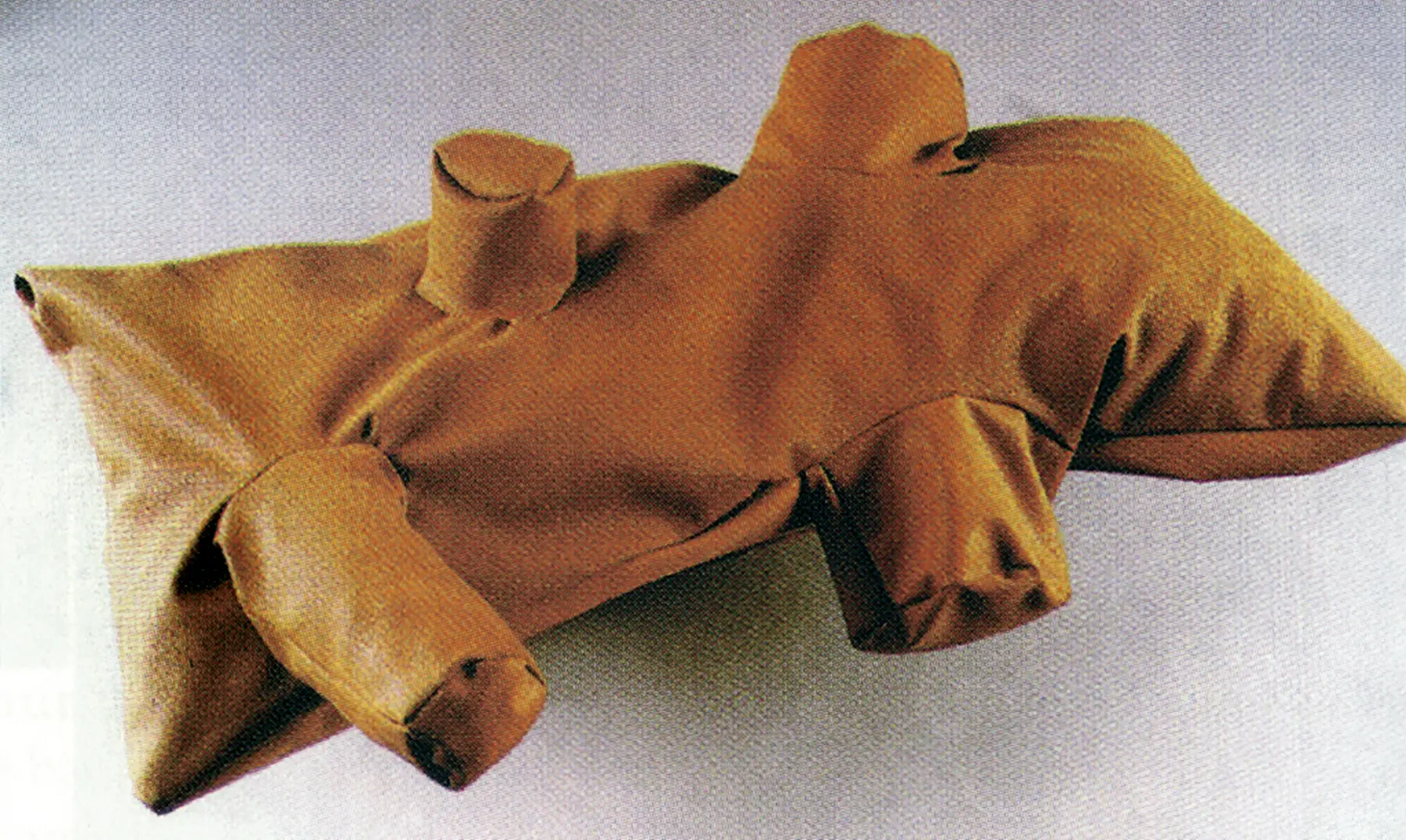
Ariadna Pastorini’s bland sculptures, simulating in her montage a fantastic jungle, also turn out to be borderline objects. Her furniture, her wallets, and her animals, always conceal identity. They are and they are not. They seem to serve a specific purpose, but in fact they do not. Only the illusion of the artificial material is left intact, the truth of a fiction, like that of the industrial rubber identified with real skin.
The object is not the only territory of ambiguities. Painting is too. What do Karina Peisajovich and Alicia Herrero show, for example? We are used to the multi-sensed condition of the work, to the multiplicity of meanings that constitute its essence, but we do not ignore what we are in fact seeing. Hence the confusion promoted by these artists is similar to that produced by the works of Costantino, Rothschild, De Caro, and Van Asperen.
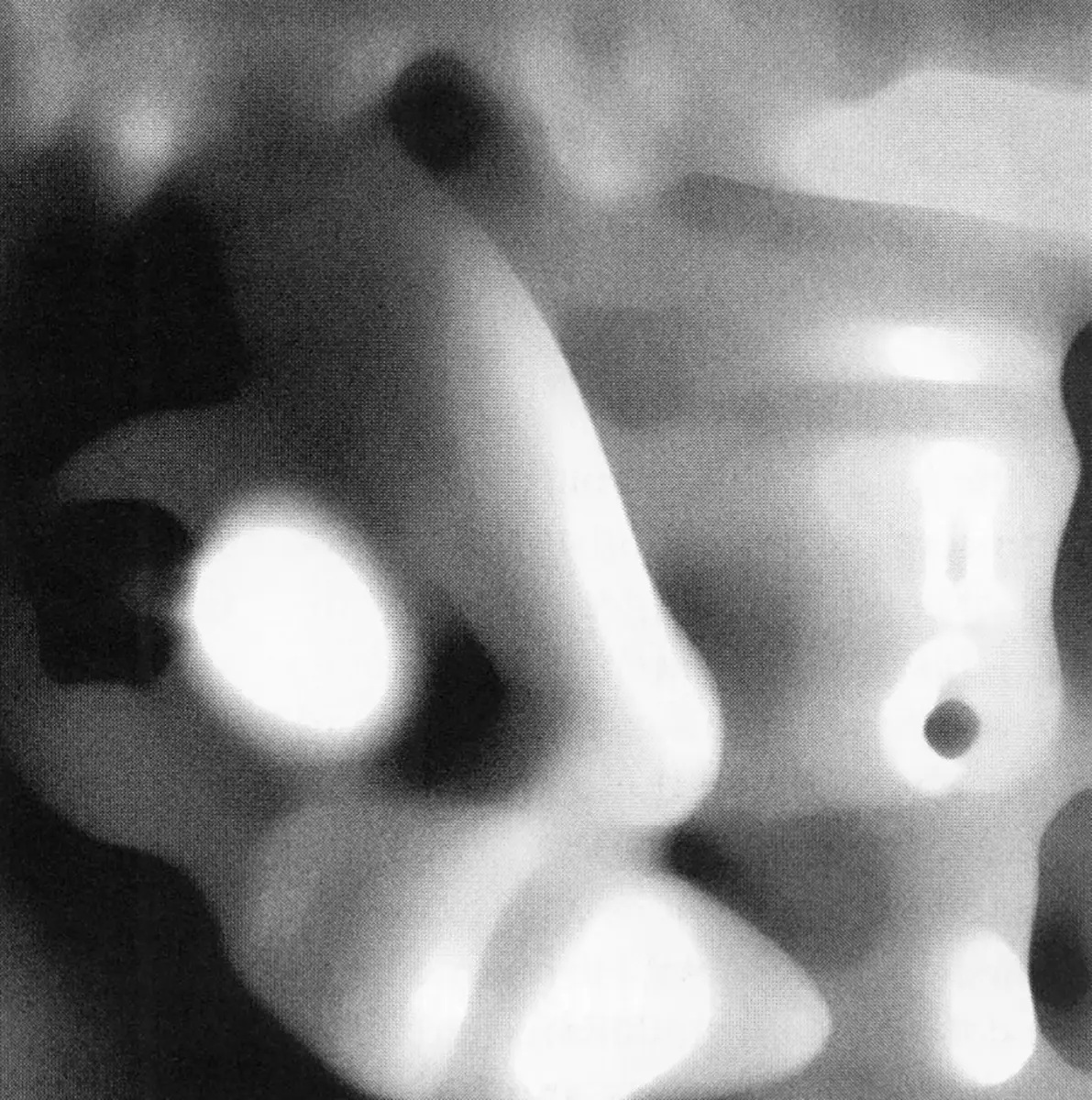
Does Peisajovich paint animalized human bodies or humanized animals? Are they covered by skin, fabric, animal shells, or water that dissolves the skin and makes it disappear? The ambiguity of the motif sums up, for the artist, a marvelous and real fact: we can invent ourselves (as Orlan, the French performance artist, demonstrates). From the exercises in mental expansion to the genetic manipulations, everything makes it possible for the most extravagant fantasy to be able to come with the real. Alicia Herrero, for her part, does not relate ambiguity with the body, but rather with the category of art itself. Parodying her own last name [herrero means blacksmith], she opposes iron models. She is interested in questioning the titles of nobility that grant specific classifications. What allows some objects to be seen as artistic, appropriate for a collection, and not others? By juxtaposing in one display prestigious pieces (a Chinese vase from the seventeenth century, a Wedgwood ceramic piece, a Kamares glass, or a Limoges sauce dish) with industrial objects that housewives use every day (a cup, a teapot, a carafe for wine), she questions institutionalized classifications, legitimizing at the same time the subject’s action in the free play of his or her power to choose.
The distinction between greater artistic object and lesser artistic object is, for Herrero, always ambiguous. The question is also present in artists like Gerhard Richter. His Atlas, begun in 1962, is an infinite work in progress, a paradigm of the archive aesthetic, made up of approximately 5,000 images, including small drawings, sketches, and photographs. These preparatory outlines of his finished pieces were presented at the Fridericianum Museum during the 10th Documenta in Kassel (1997) as a main work. Maintaining the same delimitation, Hans Haacke presented simple street posters denouncing the unhealthy effects of sponsorship. All in all, both seemed to defend us from the need to classify.
On the other hand, what is the name of the objects that Roberto Elía presents? In the works that he has created since the eighties, we see, among others, the image of a brooch coinciding with that of a human figure (a banal theme next to a great artistic subject). But he always leaves the designation of things open. This is why the brooch may also be a letter (“K”), a parenthesis, the curve of a hand, or a pair of wings.
The ambiguity around representation extends into the field of photography. What does Dinio Bruzzone capture with his camera: shots of real objects or simulacra? The process is complex and uses subtle differences in our approaches to the real. In the first place, the artist photographically records the chosen place: a dock, a power station, a warehouse, and a soccer stadium. Using these shots as a point of departure, he constructs models or small stage designs in which each real element is expressed by a stage prop. He then photographs those simulacra: they are the final product.
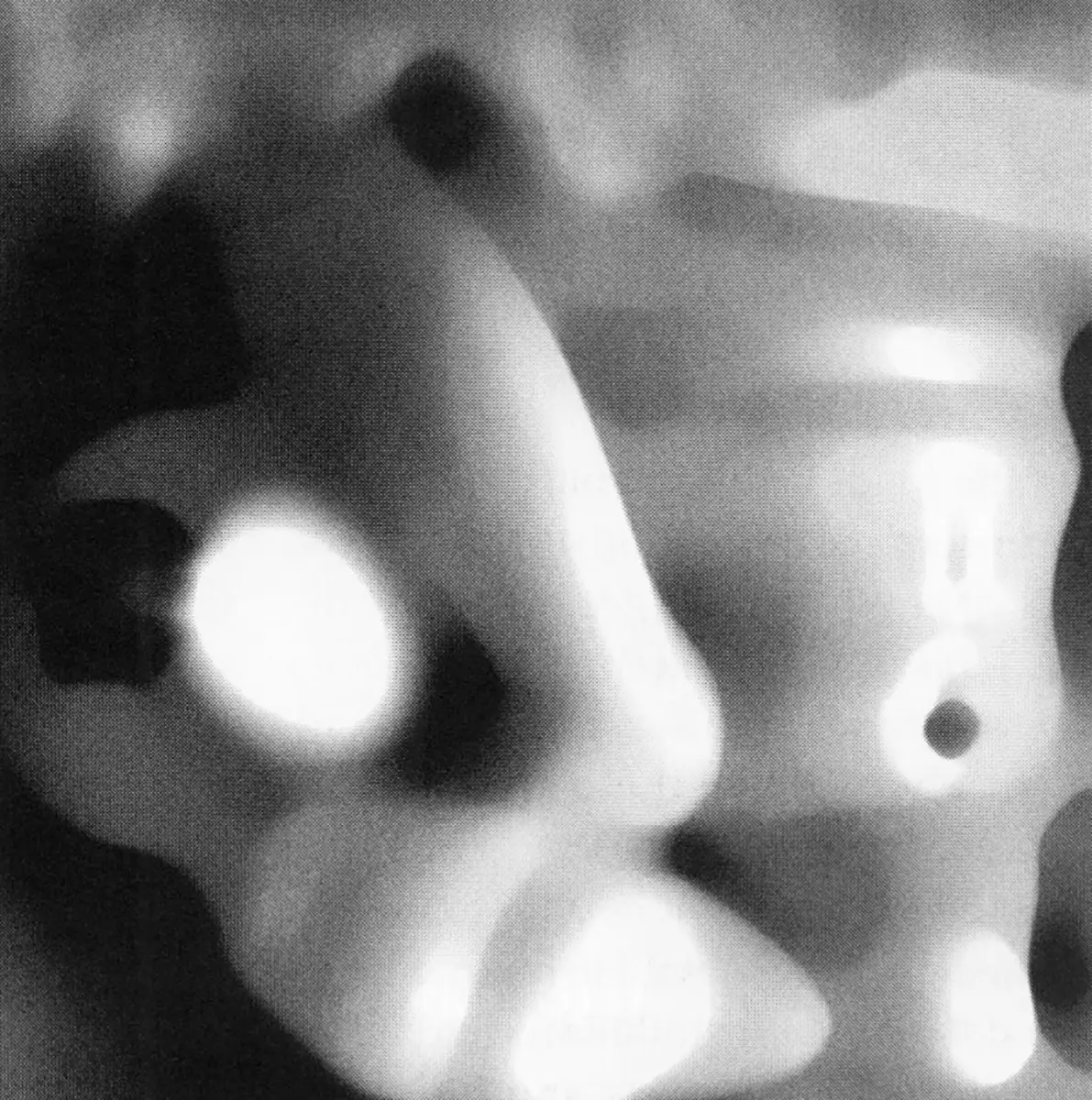
Curiously, the real—thrice displaced by the first photo, by the constructed simulacrum, and by the photo of the latter—acquires, in the finished work, a greater appearance of truth. The sky seems more profound and the cement more consistent in its cardboard appearance.
In some pieces by Bruzzone, the out-of-focus vision is limited to a few figures; in others, it is extended into wide strips of space, thus increasing the sensation of an imminent catastrophe. But, in all cases, measuring the degree of reality of each work, and verifying the reality-copy border, is part of the (serious) game that the artist proposes to the viewer.
In Gabriela Forcadell’s photographs, the real is also posited as the first interrogator. Nothing better for un derscoring its ambiguity than the direct shot with no manipulation whatsoever.
Interested in recording the rapid perceptions of our environment, Forcadell dwells on highly codified social spaces. The animation of Japanese culture stands out among others. But fantastic animation is subtly conjugated with the ominous. Such is the case of Fideísmo (1999). There we see packages that contain noodles piled up on a marketplace display stand. Faces with a curious expression have been carved out of the edible material. Somewhere between familiar and strange, they are as ingenuous and indifferent as they are threatening. Are they sleeping furies or friendly goblins that hope to be embraced on the shelves?
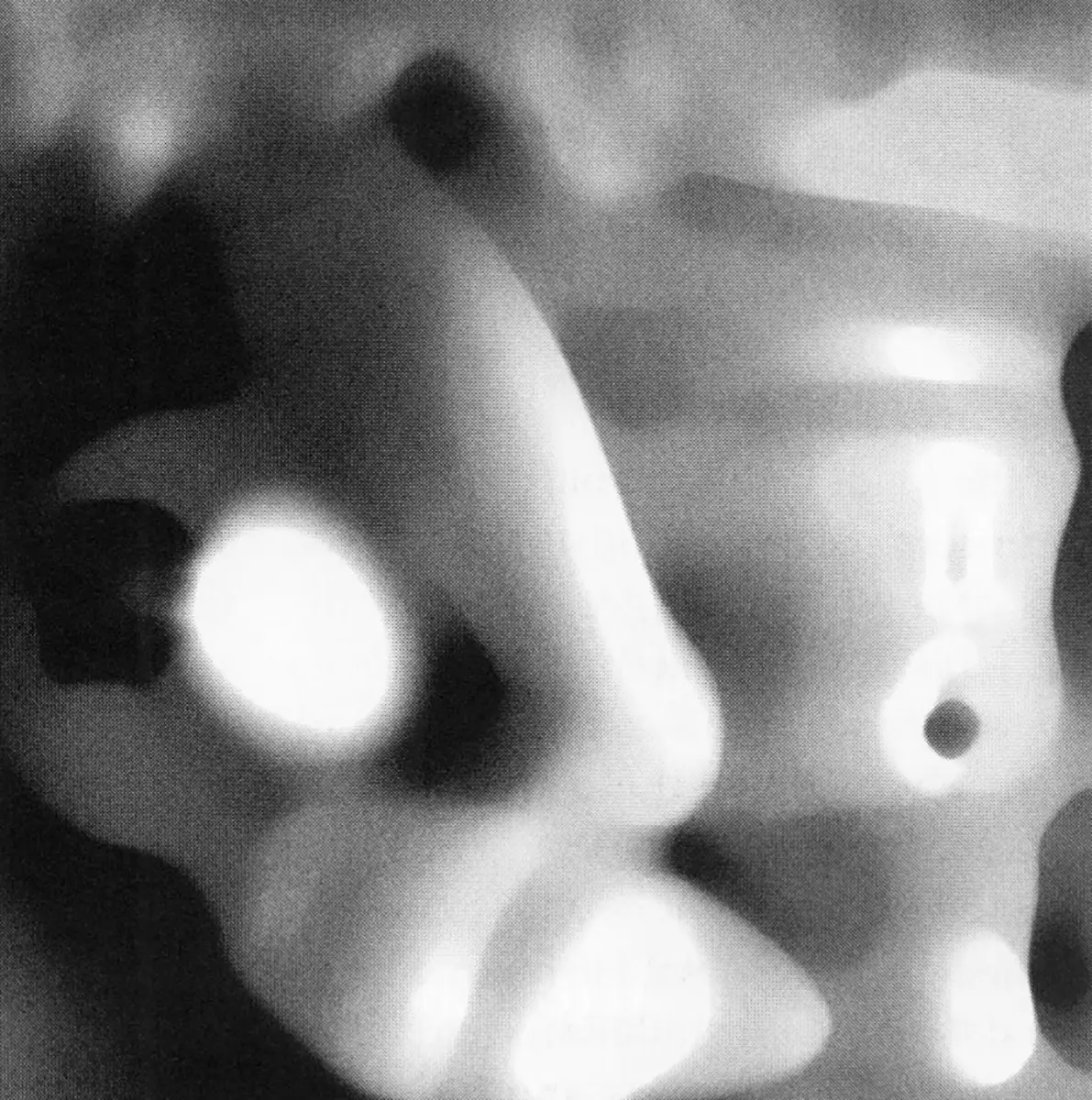
The title, with its double meaning, refers both to a prosaic object (fideo = noodle) and to the transcendent road to knowledge opened by faith. Out of the union of both referents will rise the ironic question of the possibility of believing in the definitive name of things.
Video and digitalized photography are the media to which Marta Ares turns in order to charge her images with ambiguity. Placed halfway between figuration and abstraction, they oscillate between the familiar and the unknown, between the pleasant and the painful, the loveable and the sinister, the golden and the banal. Some of her recent pieces consist of the impression of computer images on vinyl canvas. This support, later mounted over the stretcher, makes them present themselves under the equivocal appearance of paintings.
Likewise, Ares moves with total ease in the field of writing. He has incorporated it into her installations and it has also been presented as an independent work. Such is the case of Ella (She, 1997), a work that renders the distinction between writing and the visual arts ambiguous. It deals with a text thought as a statement and as a visual act in which chromatic aspects and montage are emphasized.
We cannot forget that the indistinction of disciplines is part of the work on the real that Liliana Porter has been doing for three decades. Some of her recent large photographs present fields of intense color that vibrate as if they had been worked with oil or acrylic. In order to contribute to the confusion on the ever-transitory state of the real, these works maintain composite relations peculiar to painting. Like painting, they too may be distributed in diptychs or polyptychs.
One same current flows through distinct channels in synthesis: one same ambiguous and unclassifiable art of oscillation. Art that invites us to exert the healthy methodic exercise of doubt. Art practiced by artists of distinct nationalities, like Franz West, Martin Kippenberger, Annette Messager, Rachel Whiteread, Mike Kelley, Tony Oursler, Félix González Torres, Lygia Clark, Ernesto Neto, Gabriel Orozco. In Argentina, in addition to the aforementioned, we must also include Alejandra Padilla, Marcelo Pombo, Pablo Siquier, Mónica Girón, Elba Bairon, Cristina Schiavi, Alejandra Seeber, and Silvana Lacarra, among others.
From the plurality of their languages, each one repeats the same question on limits. Situated on the border between the artistic and the extra-artistic, between greater works and lesser works, between referents and diverse techniques, they show us, by reflecting a very current sentiment, that the truth of comprehension consists of never comprehending anything definitively. And this is because —contrary to what Valéry’s Socrates desired— things do not enter entirely into a perfectly and hierarchically ordered world. Although it is difficult for us to accept, things are not “simple and pure like the sky, the sand, or the water.”
NOTES
1. Paul Vaéry, Eupalinos ou I’architecte, Paris, Gallimard, 1923.
2. Ibid., p. 6.
ELENA OLIVERAS
Aesthetics Professor at the Faculty of Philosophy and Letters, University of Buenos Aires. Art critic and researcher.