Three large and ambitious works made up this one-man show by Elías Heim (Cali, 1966), the interest of which lay in the museographical aspect and the exploration of risk and danger. Once again, the artist used the poetics of the machine to reflect not only on the materialization of artistic ideas but on some of the most chilling dramas of contemporary society. His three installations based on his strange apparatuses were motivated by these lines of thought and action.
Necessary Anomalies for Maintaining a Desert Island consist of four large towers which, once their motors are started, inflate two bags with yellow and black edges. These signs erroneously indicate an inappropriate track on the museum ceiling where it would not be feasible to land properly, because of the faulty signage. The ceiling and the incorrect landing circle are illustrated in an accompanying photograph, entitled Anomaly covering the roof.
The gesticulating work sends out distress signals related directly to the current situation of uncertainty. The museographical enclosure appears as an island. In this sense, the work is an allegory of its role as a place of transit and accommodation, a place under vigilance and constantly on the alert.
Another work in the show was entitled Wind Farming, which refers to the vegetable world by means of programmed mechanical movements. Wind which we do not see but which we assume is there. Its action is replaced by a mechanism that makes metallic petals rotate. The grey-painted stones reiterate the artificial nature of the work and hybridize its entire operation.
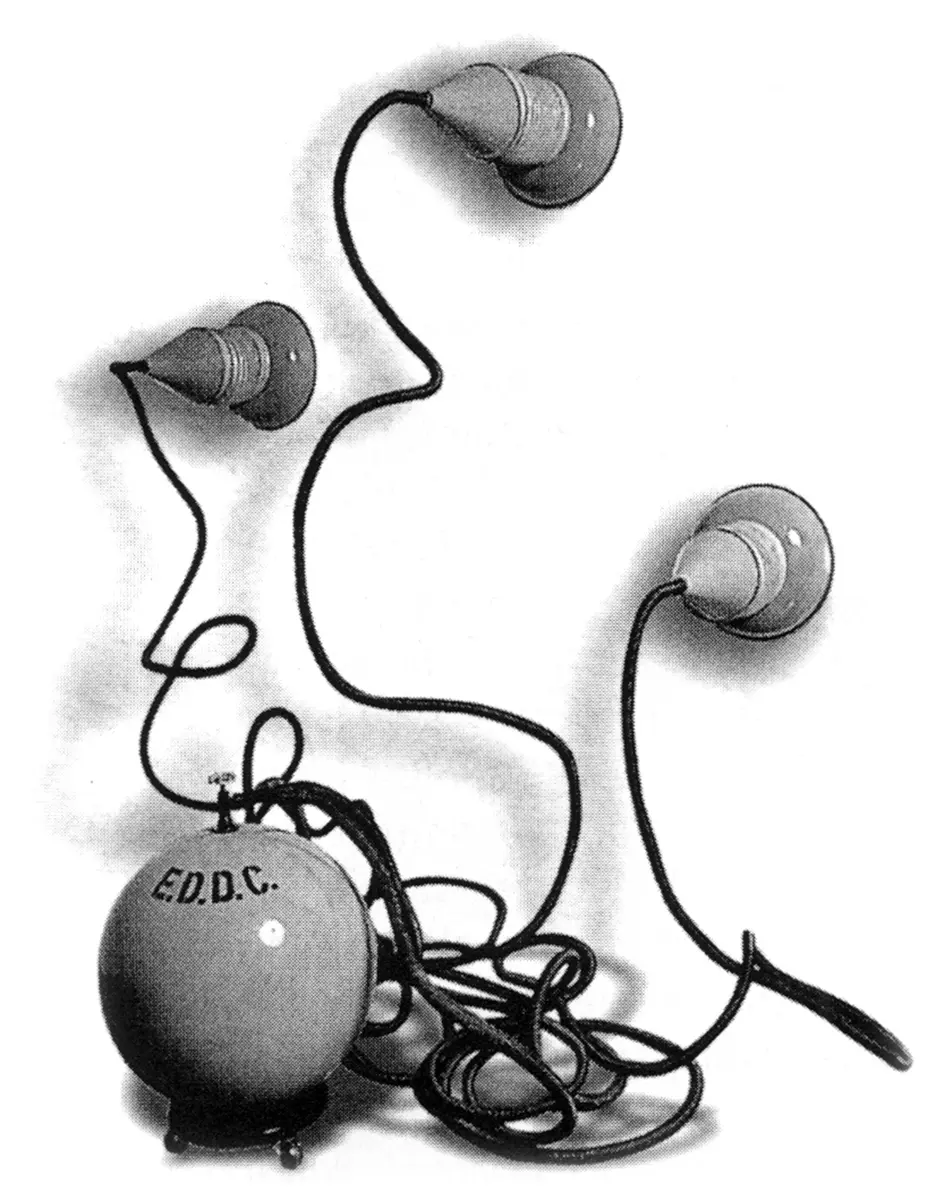
Fondler of Walls Full of Holes is a work in three sections. In the first machine a large arm moves and provides help in the form of soft pillows to the injured walls of the museum. Another part of the work is a segment consisting of sucking devices for drawing out pain; thus complementing the process of care being provided to the architecture. The function of the suckers is extraction, and the dramatic pain travels through tubes toward spherical containers. The trilogy of machinery concludes with a Compressed Pain Extract, E.D.D.C. Here the artist presents a black shelf with four metallic spheres marked with the abbreviated letters of their content.
These allegories on solitude, places watched over, and the artist’s reflections on pain and constant suffering are political observations on our particular situation, of which Heim is a timely and effective observer.
In another part of the museum, Juan Mejía (1966) presented two independent, but interrelated installations, entitled Food Chains, which establish a relationship between natural and artificial processes, the degradation of the former, and a comparison with real and organic reality.
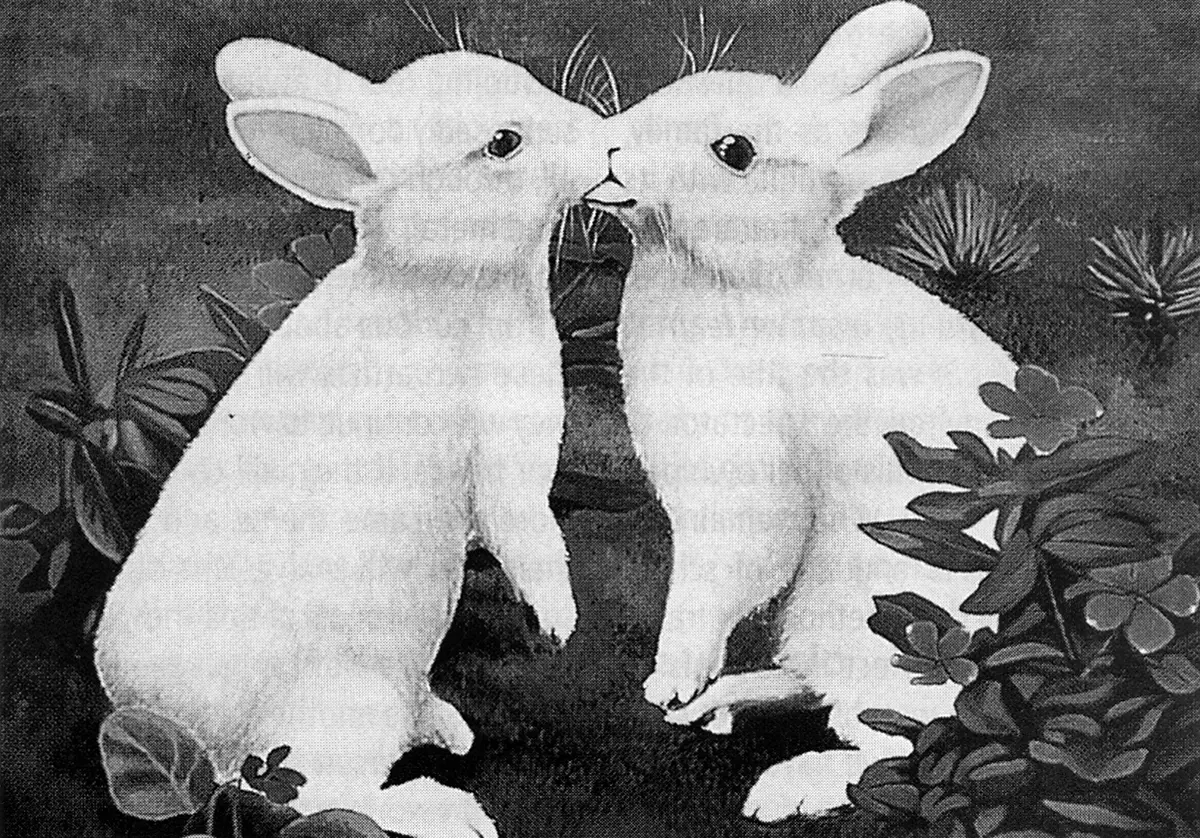
The installations contain paintings with various arguments (competition, rivalry, clashes, survival, effort, and life). Animals are present in different materials (rubber, felt, plastic), as well as trees, the sky, and water in artificial imitations. In contrast, there are boxes and packets, books and newspapers, a real water dispenser, and food in its natural state, such as beans and rice. The entire project was an attempt to contrast representation and reality, fiction and truth. It also referred to memory, the passing of time, reason, and even history, in a correlation that also included such concepts as expiry and sell-by dates.
There is a metaphorical search here concerning the fate and condition of different elements that make our existence possible, with special reference to their origins, manipulation, function, and recycling for subsequent re-processing or re-utilization. This inevitable condition establishes links of acceptance or rejection since some processes lead to a state of degradation in the form of garbage or eschatological ingredients.
The selection of icons, their loquacious sense of color, the playful intentions, and the mischievousness of the citations and appropriations also illuminate the use of this unusual sense of humor to discuss problems with multiple readings. Juan Mejía gives us the data and points out the counter-arguments. He then leaves us with questions and to reflect on the subtly clandestine or evident existence of various kinds of phenomena in our environment.
MIGUEL GONZÁLEZ