The Alejandro Otero Museum concluded its 1999 activities with an exhibition entitled Memento Mori. The show, curated by Ruth Auerbach, presented solo works by the artists José Gabriel Fernández (Venezuela) and Ruth Liebermann (of German origin), both of whom live in New York. One of Fernández’s interests has been to diminish the protagonistic role of the artist, and with this in mind, he has proposed to exhibit occasionally with Liebermann, since they studied together in England. Perhaps because of this training, Fernández’s work has always been characterized by markedly classical and conceptual concerns.
It is interesting and refreshing to note that his rather minimalist proposals have always been linked to the magic of Greek mythology as applied to the sordid contemporary world. Silently, the fragile and the sublime characterize the essence of his work. Here, the presence of a brutally sophisticated thought eliminates any kind of impurity and emphasizes and restores an idyllic relationship between form and desire. The bullfighter’s cape is the central axis of these installations, which lie coldly on the floor or on wooden supports, suggesting sculptural proposals for development on an urban scale. The cape is almost a theft since it is a copy constructed by the artist; copying it or reconstructing it provides the alleviation of fetishism.
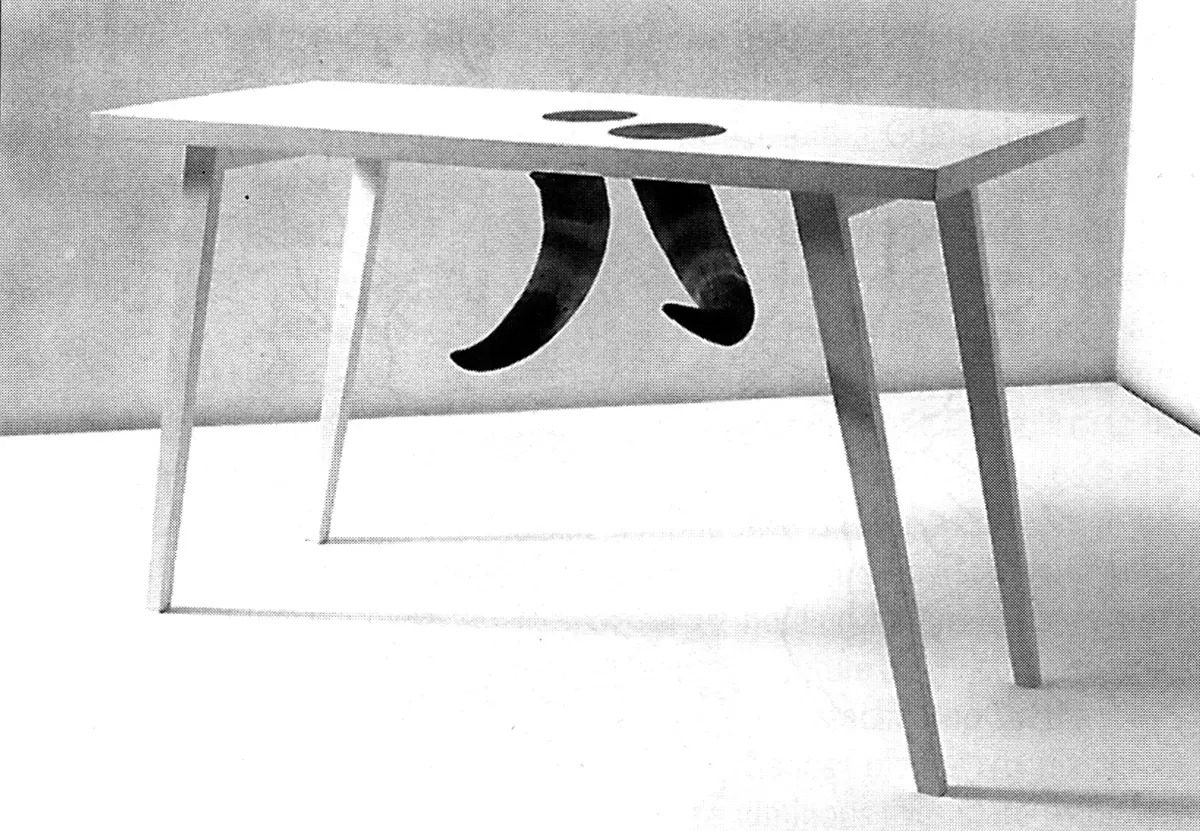
The shadow of passion appears once again in a reconstruction using synthetic materials of the complete costume of the bullfighter, the hero of the bullring. By means of industrial resin, the outfit is soldered to a chair and captured in an impeccable whiteness, where purity waits patiently.
From this subtle and suggestive map, his work is broken down into sculptural pieces, very well represented through their formal protocol. The pieces give the impression of being abstract sculptures, and in order to convince us, the artist deliberately constructs the supports on which these delicate constructions are to be placed. In this way, the wooden bases become the first volume of these sculptural proposals, which nevertheless do not stop being installations. But the most important thing is not what the things are, but what they are used for.
In the first instance, these pieces seem to be inspired by the works that Naum Gabo did in 1916, as well as the studies by the English artist Anthony Caro, whom Fernández admired when he was a student and pupil of the artist’s most direct disciple, Philip King. But unlike Caro, who works with iron, Fernández uses wood for his fragile leaves made with great precision and neurotic passion. This material plays a decisive role in the artist’s current proposals, since it reflects, with elegance, the same interest that Duchamp had in the forms of dressmaking models from the tailoring world, which determined the appearance of the acid molds, the central figure in the Large Glass.
In some cases, these pieces also recall the pictures of Ben Nicholson, another English artist greatly admired by Fernández. His most spontaneous conceptions also remind us of the eccentric architecture of Frank Gebry’s new Guggenheim Museum in Bilbao, Spain. Fernández has on previous occasions shown a clear interest in the residual effects of architecture.
However, Duchamp’s coherent morbid fantasy about the female body lurks stealthily in Fernández’s work. It is undeniable that the spirit of The Bride stripped bare by her Bachelor, is present, as it was in previous installations. Through the Duchampian experience, applied here to the symbol of masculinity (the classic bullfighter myth), Fernández achieves a delirious kind of fetishism.
Similarly, as an almost surrealist or unconscious presence, we can also sense the spirit of the pathetic figures of the male bodies idealized by the Venezuelan painter Pedro Centeno Val leni lla. Those works created landscapes made of male torsos that revolved around one another in some non-existent paradise-like world.
It can therefore be said that Duchamp, Caro, and CentenoVallenilla are keys to the latent mystery that seems to be present in Fernández’s work. But this supposition disappears when we confront an immaculate landscape of overflowing whiteness. The artist plunges us carefully into a climate of great purity where rigor and a kind of tortured discipline seem to invite us to enjoy the sublime voice of the famous castrato, Farinelli. Everything revolves within a high-density splendor, accompanied by a precise economy of technical resources. The chaos and narcissism of technology have been replaced with a sense of exemplary austerity.
Jose Gabriel Fernández has once again surprised us with this work, which is rich in whispers, enigmatic poetics, and artificial sweetness. He has confirmed once again through the quality and seriousness of his work that he is one of the most important contemporary artists in Venezuela.
The show also included pieces by Ruth Liebermann. These require a high degree of concentration in their contemplation. They consist of fragile structures containing stories taken from the history of the Jewish Holocaust, including the diaries of many refugees in the concentration camps and other documents describing the events of this tragedy.
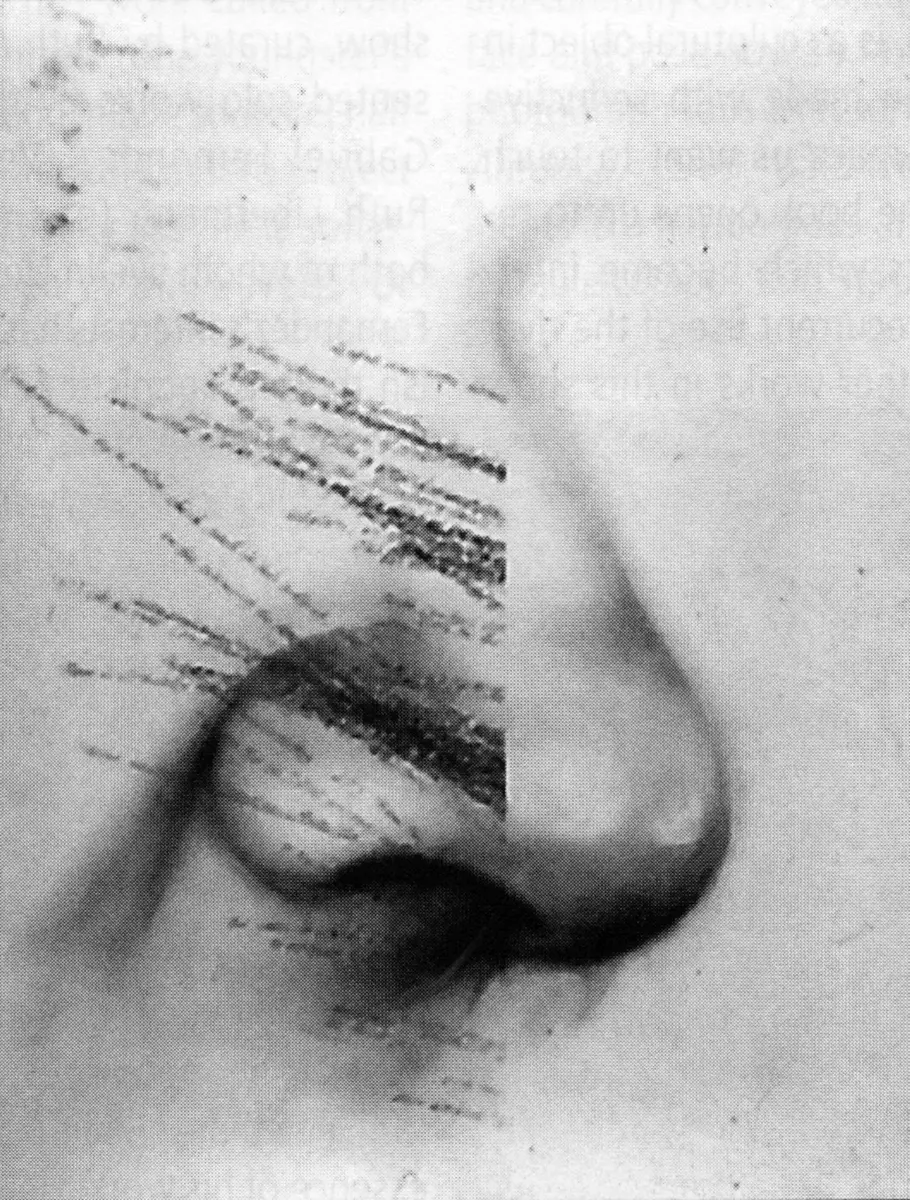
The text is the structure with which Liebermann works. She copies it, using dentistry equipment, onto long and narrow synthetic surfaces, and makes use of new computerized methods to reproduce old news about the Holocaust on more permanent materials that have the elegance of our times.
At the beginning of the 1970s, artists like Joseph Kosuth explored the philosophical analysis resulting from the attempt to define our relationship with art in semiotic terms. This analysis simultaneously became the artistic experience, superimposed on to our customary way of looking at art through objects, whether sculpture or painting and created a parallel, eminently conceptual kind of art.
At present, texts have become the most appropriate instrument for giving a work the meaning that is of greatest interest to the artist. It is like an oratory where a permanent discourse is developed. In this way, the observer feels obliged to see the work with greater precision. Both Fernández and Liebermann have been developing their art for almost twenty years, and from the beginning, especially in the case of Liebermann, they have rigorously moved in a forward direction. This is a position of moral and social fortitude, as well as artistic maturity. In Liebermann’s work, there is a kind of counterpoint between her work and that of other artists. It is not a matter of appropriation, but rather a timely reflection that she uses to introduce, through another sensibility, her concerns with narrative, which is the culmination of the final stage of conceptual art. Some of her pieces are inspired by famous works by Donald Judd and in particular Untitled (1966). But she does not passively accept these influences, but gives them an added sense of historical and social responsibility an aspect, which has remained floating in the minds of many artists in New York, like the clouds that float in Rothko’s pictures.
The physical support for Liebermann’s work is essentially graphic. She rarely uses three-dimensional forms and when she does so, it is to reproduce press documents, which she amplifies and transforms into variations of minimalist composition. The real concern in Liebermann’s work is how to capture social and political reality in a language, which moves through post-avant-garde structures but does so without acquiring the semblance of a heroic attitude. Neither does her work function like a simulacrum to create aesthetic or ironic disturbances; its goal is to rescue from oblivion, as in the case of Boltanksi, the unfolding of a painful tragedy. There only remains the doubt that has been expressed by Luis Camnitzer: to what extent, if I work with these themes, am I exploiting the victims?
EUGENIO ESPINOZA