
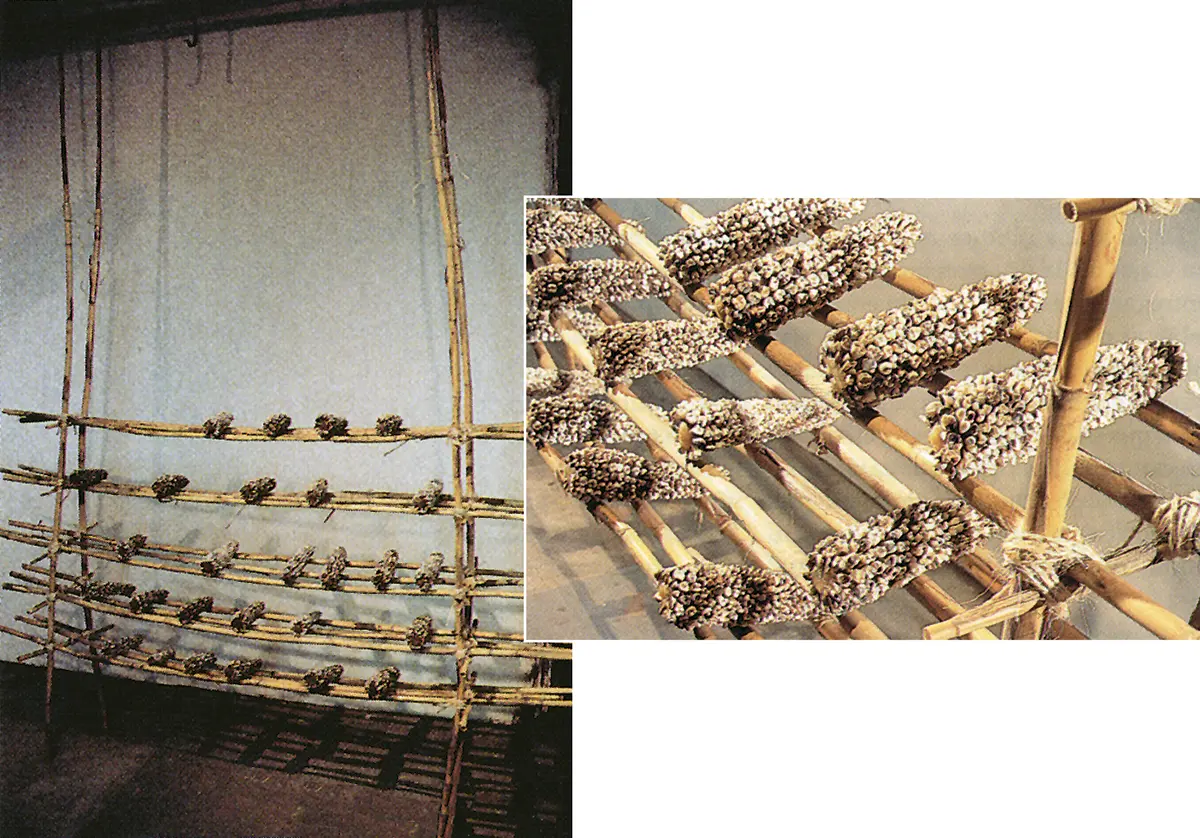
After a long walk through El Morro, visiting the successive spaces that the 6th Havana Biennial had arranged for each participant, I arrived at a closed boundary at the end of a corridor, from which I could only leave by retracing my steps. With my eyes naturally fatigued after having contemplated so many works, I saw a display shelf full of corncobs and I almost did not go nearer to observe from close-up something so obvious. But that astonishing sixth sense that we all possess made me approach to see, against my initial impulse, and I could not avoid the spine-tingling sensation: they were not kernels of corn, but human teeth.
Laura Anderson Barbata would later tell me that those shelves were a copy of those used by the Aztecs to display their war trophies in the public square, to show off the heads of their enemy recently sacrificed on the high temple. Those kernels, which are called elotes in that region, had some five thousand human teeth inlaid in the alveoli with a special beeswax produced in Campeche.
"I am interested in making certain processes of acculturation visible. That is what this work is about each extracted tooth represents a dead word."
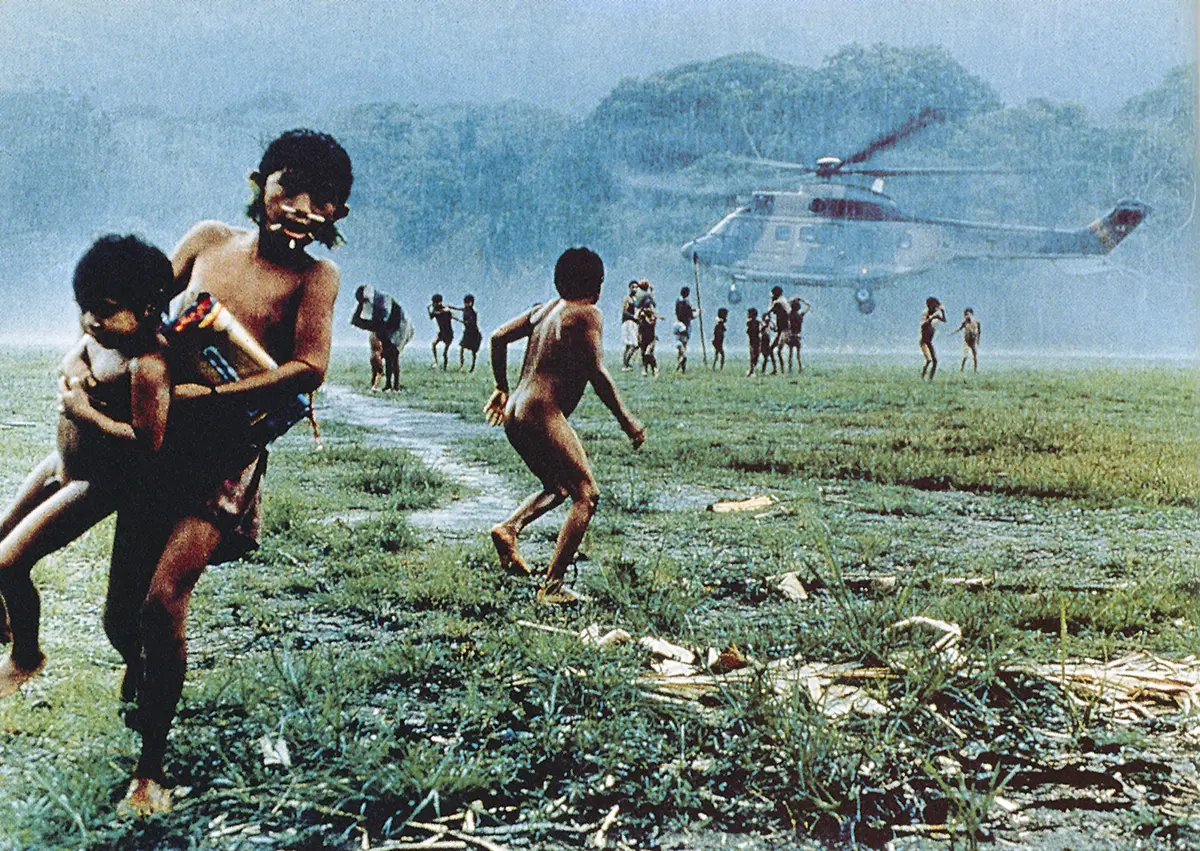
Apropos of this work, Axel Stein, going back in history, wrote: “The Inquisition raised its tribunals against indigenous cultures and customs, condemning the poor Indians as heretics on a daily basis, considering them genuine children of evil. The entire abject world of torture, practiced in Europe since the thirteenth century was carried over to the New World, and the Indian was, little by little, stripped of everything, even of his way of speaking. Those inquisitors are long gone, but the teeth continue to be pulled out.”
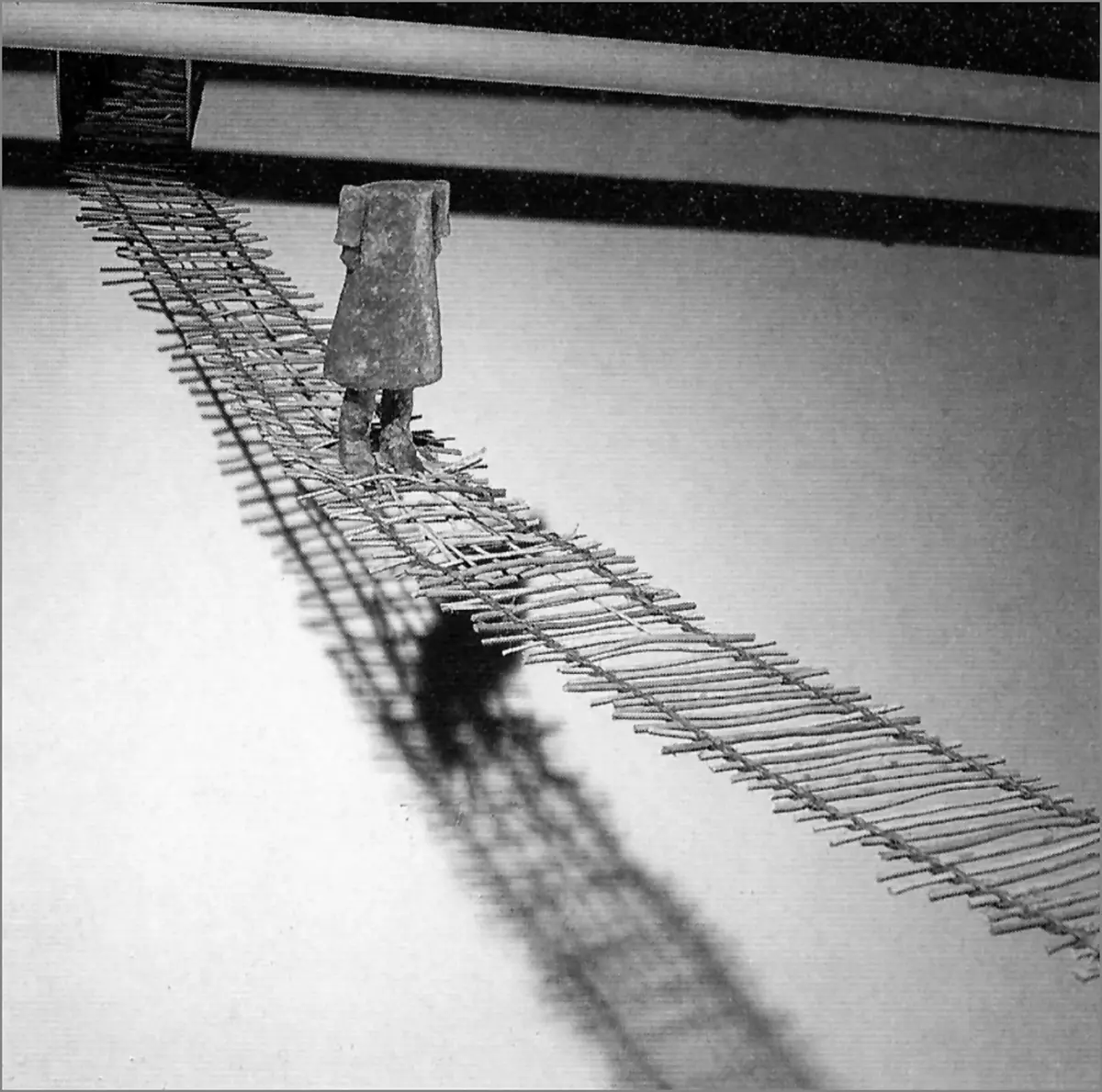
A little later, I had the opportunity to see another of Anderson Barbata’s installations, titled Autorretrato (Primera parte) (Self-portrait [First part]). It features a small headless figure that walks across a bridge that has no railing. The figure is both dressed and undressed, looks fragile, and is leaning to one side as if about to lose its balance. This second work allowed me to calibrate the artist’s expressive resources especially her lyricism and her poetry: "I feel guided less by my head than by a force that starts from my upper chest, or at least that’s how it seems to me. I have worked the little figure with the same indigenous wax from Campeche as I used to shape the toothed corncobs."
It seems as if crossing the bridge would mark the beginning of a journey, a search for truth, for the world of spirit and peace. Actually, Anderson Barbata always builds bridges: bridges between her Mexican-New York education and her work in the high Orinoco with the Indians; personal bridges in order to transcend her own work and, as she explains, in order not to rest on her laurels.
In recent years, the artist has traveled to the Amazonian jungle in order to devote herself wholly to teaching, in this case, the manufacture of paper and printing. She sought the most ideal fibers in order to make paper. Naturally, it was not white paper, but it was the first project in that region of such characteristics and it consisted of manufacturing paper and printing on it texts in a language of whose existence Western man is not even aware. She started from vegetable fibers that she had never seen and that today she only knows by the name given them by the Indians. She then proceeded to dry the paper on clay and iron sheets where the fonts were fired in order to prepare the rudimentary notebooks, sewn with natural fibers, on which the children could draw their huts and their rivers with plant extracts.
As a resident of one of the most highly populated cities on earth, I asked her to explain what effect discovering the immensity of the jungle had on her, and she replied that getting acquainted with the Brazilian jungle had such an intense impact on her that she didn’t have the slightest idea that it was going to leave an indelible trace on her. Years later, entering once again into the jungle and taking the technique of manufacturing hand-made paper to the indigenous communities of the Venezuelan Amazon, she came into contact with the Yanomami, the Piraoa, and the Ye’kuana. The project’s aim was to foment self-sufficiency, by teaching them how to make paper out of vegetable fiber and the recycled materials that they had available to them, such as the technique of etching in wood. It also taught them how helpful making their own books could be, especially for school use. In addition, the project proposed for those communities the recovery of their own language, traditions, and history. For her part, she returns from each trip loaded with leaves, seeds, vines, and condiments that she immediately orders, classifies, and puts away carefully in her spacious studio.
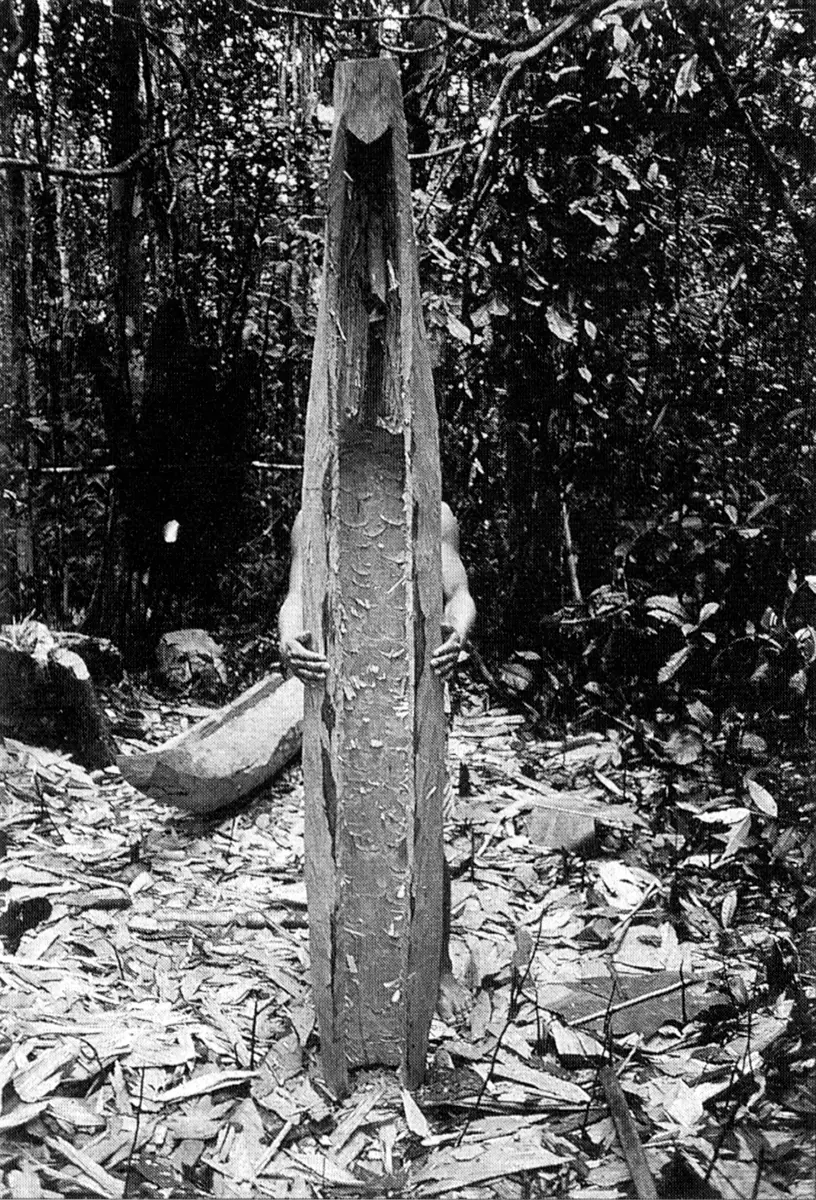
"Since my arrival, my aim has been to hear and to see. I should say that to penetrate that world was gratifying from every point of view. I made a deal: I would teach them how to make paper and they would teach me how to make a curiara, that is, how to make a canoe out of a tree trunk. I learned how to cut the trunk open with an ax and how to hollow it out with a machete. I also learned how to apply fire to it. The men told me that I was wasting my time doing something that wasn’t women’s work, and that gave them less time to learn how to make paper. Without a doubt, I learned a lot. It seemed as if the seed that Brazil had planted in me ten years earlier was beginning to sprout, to grow. It changed the meaning of my life, especially keeping in mind the fact that, five years later, I would have a second experience, this time in Ecuador, on the Cotocachi-Cayapas reserve. This was even more ambitious since the ultimate goal was to establish a paper factory."
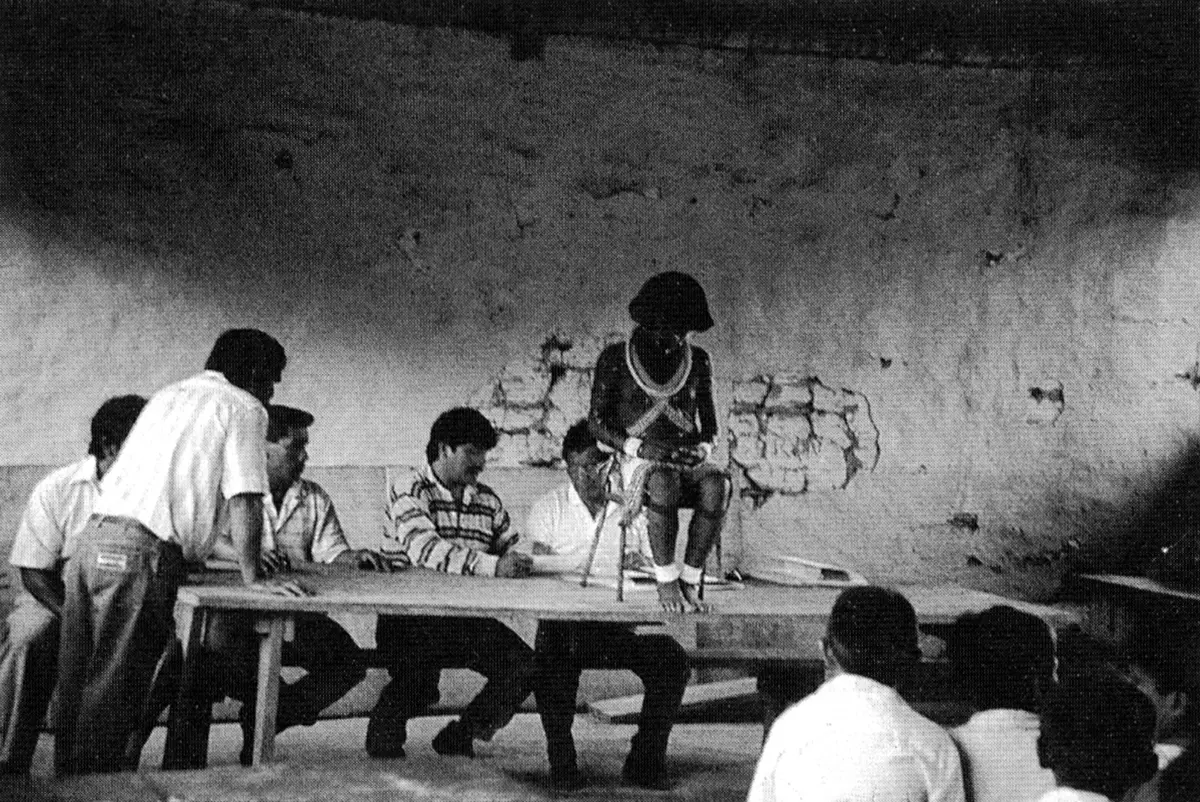
The great commemorations with which the Discovery of America was celebrated in 1992 came to finish off the destructive action exercised by civilization, which has been displacing the traditions and oral histories of the inhabitants of the banks of the Venezuelan Orinoco for decades. Those peoples celebrated the 500th anniversary of the discovery of Tierra de Gracia (Graceland) with a negative outcome: the fragmented primitive societies of the high Orinoco found themselves, 500 years later, destitute and unable to adapt themselves to the changes that had so tremendously affected their lives, to their new illnesses, to mercury contamination caused by uncontrolled mining, and to deforestation by indiscriminate exploitation of forestry resources. Finally, they were faced with the problems of understanding why, today, they are still a mere object of study, and why people want to convert them into the last children of Christ. Among the inhabitants of those regions, there is an immense respect for each finding that is openly discussed. When they discussed what they should write first, they came to the conclusion that it should be the Watunna, the story that explains the origin of the Ye’kuana. Later, since they traditionally painted their bodies with ink, they easily learned the xylographic technique used to illustrate writings and to recover in a visual way the memory repeated from parents to children over generations. As we begin to understand better their personality, so simple and cordial, we come to think that an unfolding is produced in it. It seems as if the artist who exhibits her plastic work in museums and galleries, who expresses her inner world in her work, had a double with her same name, committed to a social imperative that leads her to enroll in programs related to biodiversity and multiculturalization. It seems as if she were struggling between the meditative Eastern culture and the taste for action, typical of the West, because before discovering the Venezuelan Amazon, Anderson Barbata had taken an interest in art, and little by little she had completely devoted herself to creation. A stay in Rio de Janeiro while studying at the School of Fine Arts had allowed her to drink from the sources of etching and sculpture. Then, upon her return to Mexico, she frequented studios and took architecture courses at Motolinia University, and she studied sociology in San Diego.
In 1986 she showed for the first time her drawing in Mexico’s National Gallery of Plastic Arts and won a prize. It would take time for Anderson Barbata to enter upon new paths, making maps out of orchid leaves and with Bible pages, filling her own culture with seeds and foreign things, and trying to make life on the edge of those rivers more authentic.
The Venezuelan Amazon is a prohibited territory for foreigners, and in order to enter it one must request special permission. Everything is regulated, and controlled, which seems almost natural to Laura Anderson having been there many years engaged in her commitment to find fibers, to shape and dry papers in conjunction with the Indians of Culebra. These papers will also be bound with threads of wild cotton and bamboo shoots that contain a written history that speaks of origins.
Strolling along the narrow paths among the tightly-packed vegetation of the woodlands of Wave Hill in Riverdale (part of the Bronx), where Teddy Roosevelt and Mark Twain once lived, walking upon a bed of roses in a dreamy landscape is something more than a poetic experience. It unquestionably refers to the recovery of ancestral traditions of religious quality, to the flower carpets that the faithful laid along the road that the monstrance was to follow under a canopy, a tradition still intact in some regions. In Spain, for example, and not only in Andalusia but also in a town like Sitges near Barcelona, the locals do not only cover with flowers the streets along which the Holy Sacrament will be carried, but they also previously draw designs on the pavement with careful and splendid religious allegories. Anderson Barbata, however, extends this privilege to the common people, to each and every one of those who go to relax with the pleasures of the beautiful Bronx Park. A constant feature of her work is to drink from the sources, to delve into the traditions of the people, in order to create works of art for today, whose principal virtue stems precisely from its ability to unite a community in an artistic action, whether in the Amazonian jungle or in the Bronx.
If the proposal of covering the paths of the park with rose petals and blue flowers is principally an ephemeral one, we must not lose sight of the fact that it inevitably comes preceded by the artist’s work, a long, difficult, and tiresome process that begins by asking flower wholesalers and florists in general to make gracious donations of their withered flowers that are no longer suitable for sale. Anderson Barbata accumulates industrial quantities of these flowers in her studio, where she proceeds to remove the petals and stems, to arrange everything on metallic structures prepared for this aim in a hermetic space provided with dehumidifiers. She must then proceed to load the petals into sacks which she transports once a week from Manhattan to the Bronx. It is not a question of a punctual act, but rather a minute process repeated again and again.
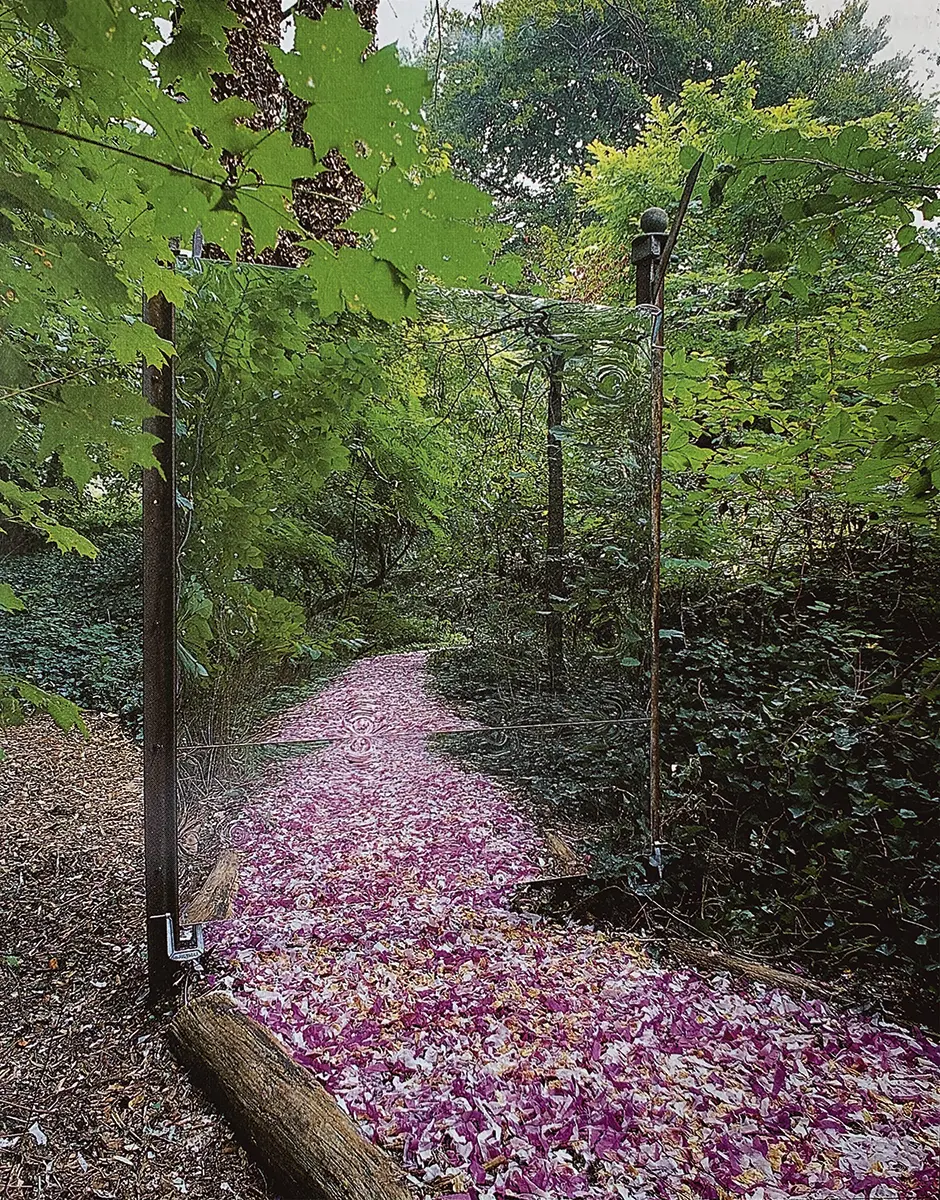
Walking through the woods, the hiker comes across a series of installations, the artist’s unmistakable work: halfway down the path, he finds himself before a door mirror, after having observed little houses of branches hanging in the trees that are Huellas de migración (Traces of migration) or the female ancestors that she calls Huellas infinitas de luz (Infinite traces of light).
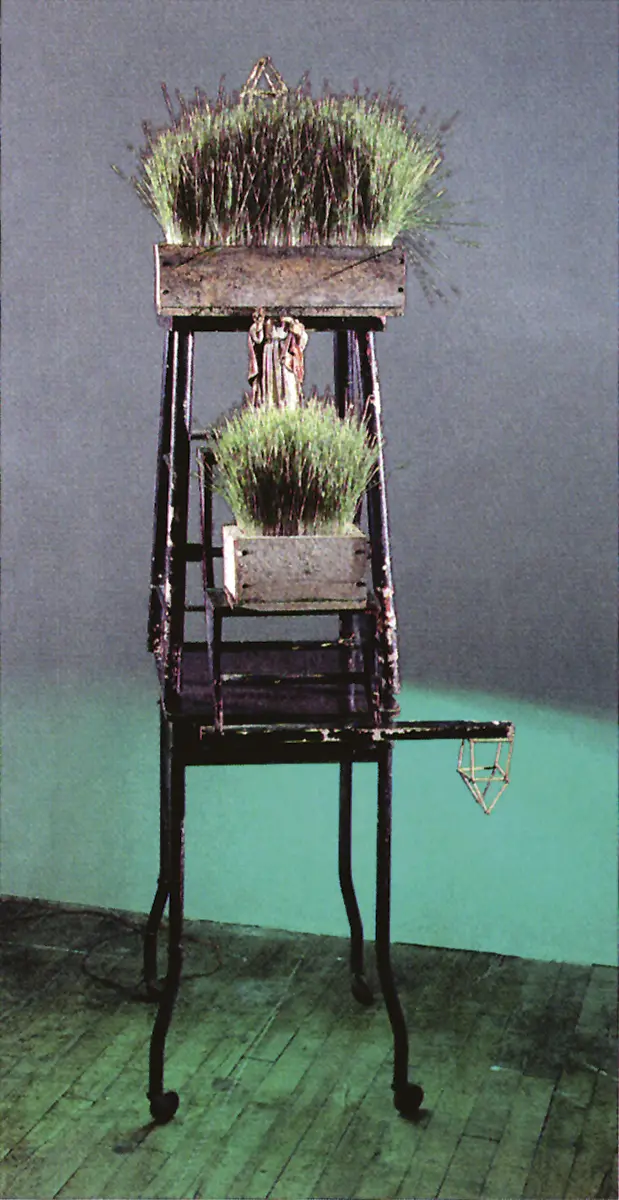
A simultaneous exhibition in a New York gallery (Ramis Barquet) completes, and to a certain extent consolidates her action. The show displays seven installations that she titles Huellas de lo infinito (Infinite traces) in which, referring to the pre-Hispanic world of the Mayas and the Aztecs, she appeals to diverse elements, like old furniture or a rickety canoe, as altars of an unknown cult in which religious images and green wheat, photo albums and columns of books, are mixed.
"I realized that there are invisible threads that connect my life with my country, from pre-His panic Mexico to the Mexico of today, that interweave the histories and migrations that make up the tree of my country, of my life, and of my family. It is a reference to those who are born, who live, and who inhabit the land of Mexico. But it is also a reference to the paths crossed, by both voluntary and forced migrations."
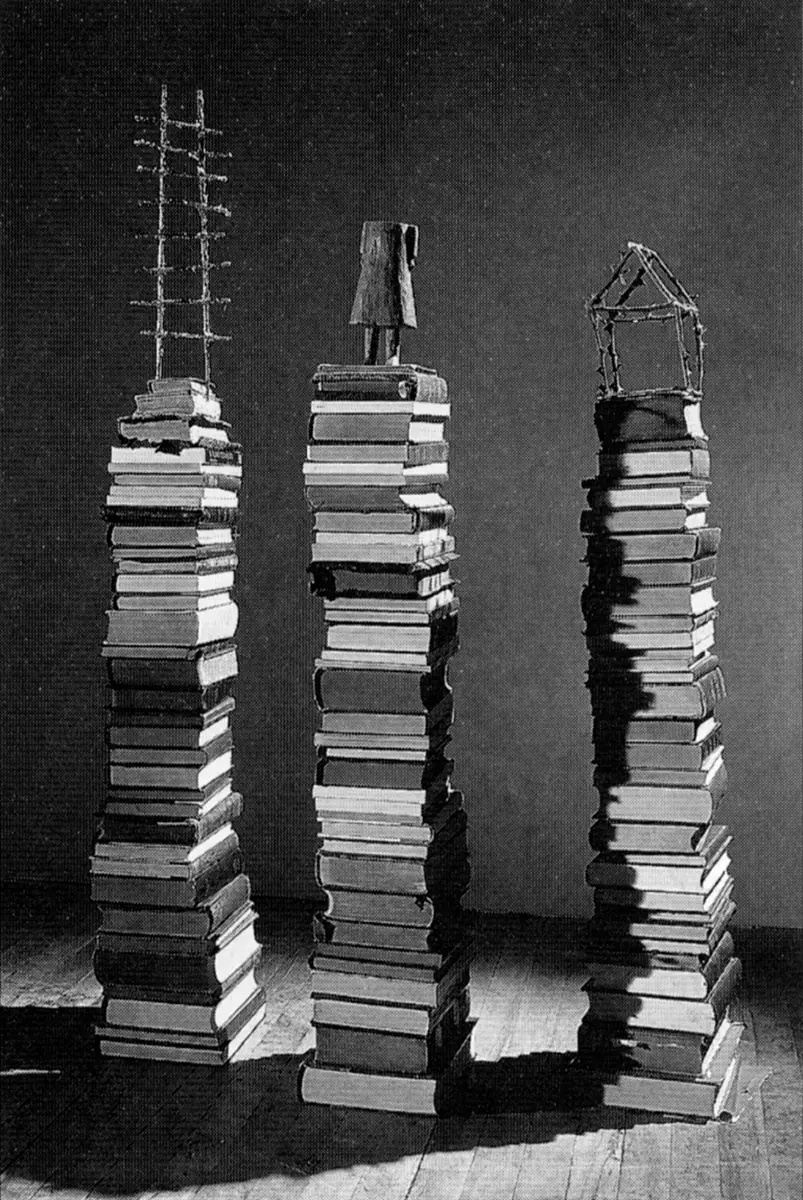
There is a piece formed by three columns of Bibles and other books used for the conversion, which she titles Pensamiento, palabra, obra y-o-misión (Thought, word, deed, and-o-mission), which alludes to the Bible, translated into each of the languages spoken in the Amazon jungle. It is a symbol of the transformation of the indigenous mentality, not only with respect to their religious beliefs but also to their habits and customs, their concept of work, matrimony, the exploitation of natural resources, their way of dress, and self-adornment. Cultural erosion has destroyed a rich weave of beliefs, myths, and traditions that have been constructed since the conquest, imposing a worldview that coincides with the vision of Western man. In fact, what finally distinguishes the different Indian groups is whether they were educated by Catholic nuns and priests or Evangelical ministers.
MARIA LLUÏSA BORRÀS
Doctorate in Art History from the University of Barcelona. Art critic and independent curator.