With the proliferation of Internet auction sites and gallery spaces creating a virtual international art market, it is interesting to contemplate the future of art fairs and the ways in which the art market will change in the next decade. Although the recent scandal involving the online sale of a fraudulent Richard Diebenkorn painting will undoubtedly scare many collectors away from this emerging trend, the increasing efficiency and convenience of viewing and purchasing artwork via computer will inevitably change the art business as we know it.
The potential uses for this type of technology are vast and could perhaps have solved this weekend’s biggest dilemma—the simultaneous opening of the new Tate Modern in London, and Art Chicago 2000—one of the most important art fairs in the United States. Since many curators, artists, and patrons were unable to attend both events on the same weekend they were forced to make a choice. Could some type of Live, online art fair have allowed individuals to attend both events on the same weekend, and could this entire gathering of international artwork be conducted in a virtual space? Only time will tell.
This year Art Chicago was marked by a noticeable shift in media that was dominated by exhibitions of painting, photography, and works on paper, in contrast to previous years where video and installations were far more prominent. Another apparent trend was a decrease in works concerned with identity politics and a return to interest in formal and aesthetic issues. A big surprise was the abundance of postwar abstraction and pieces by established artists such as Joseph Albers, Ellsworth Kelly, Robert Mangold, Sean Scully, Aligherio e Boetti, and Ed Ruscha.
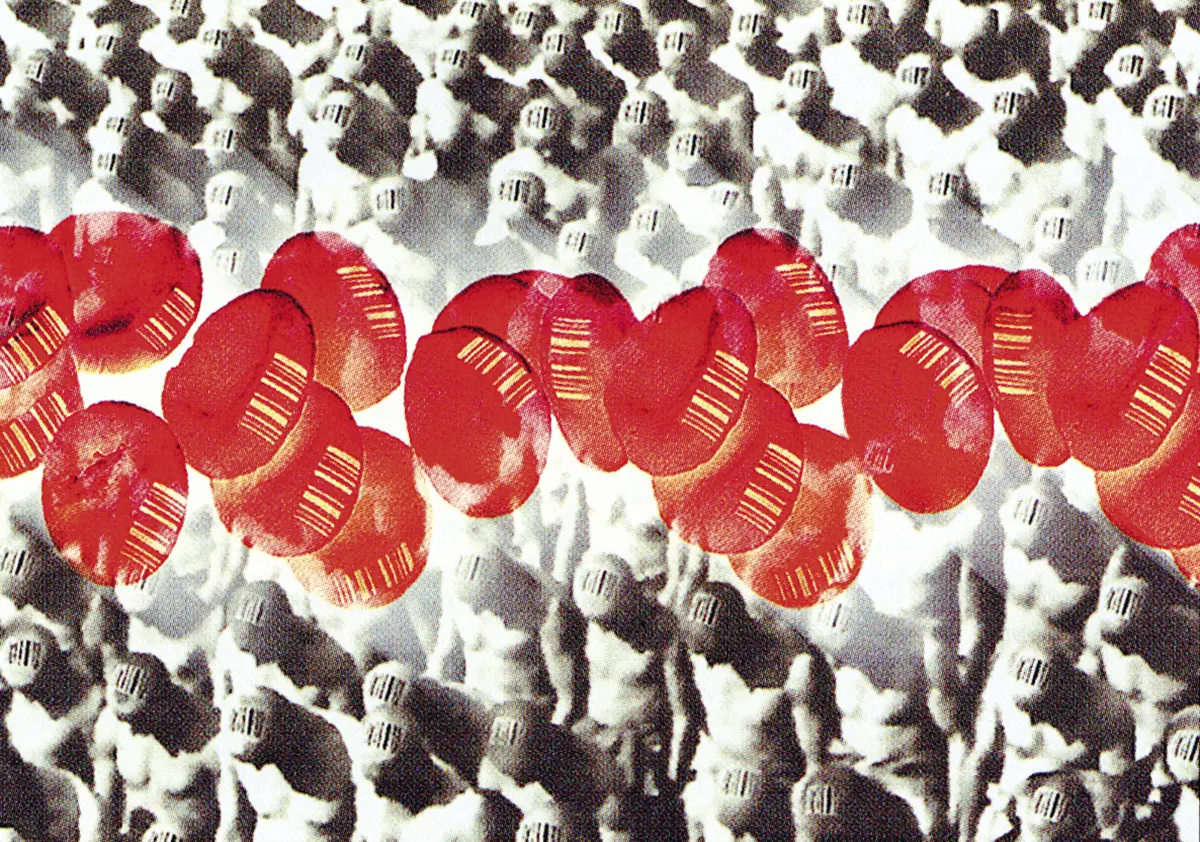
Computer-generated imagery and digital photography were also heavily represented at the fair. Artists such as Lluís Barba (Jacob Karpio Gallery), Iñigo Manglano Ovalle* (Max Protech), and Mauro Machado (Diana Lowenstein Fine Art) presented computer-generated works exploring advances in science, technology, and industry in provocative and distinctive ways. Luís Barba’s Latest photographs portray a nightmarish vision of consumer society where objects and human relations are determined by economic exchange. Barba has chosen the ubiquitous bar code—a contemporary symbol of consumer culture—and inscribes it upon depersonalized human heads and images of mass-produced items such as pills, bullets, guns, and Coca-Cola cans—references to the pharmaceutical and gun industries as well as to multinational corporations. Barba’s interest in the merging of consumer society and human reproduction is illustrated in computer-manipulated works such as Clonation, 1999 and Genome, 1999. Superimposing bar codes onto depictions of mass-produced and replicated human figures, Barba’s visions Lead one to question how nature, technology, and consumer goods can all be relegated to a single system of economic exchange.
Exploration of cutting-edge medical science is also a theme in works by Iñigo Manglano-Ovalle. Using DNA samples with the aid of scientist Suzanne Hart, ManglanoOvalle created detailed chain-like genetic portraits, transforming informational codes into abstract Lyrical color photographs. In Banks in Pink and Blue, 1999 also on view at Max Protech, the artist invited forty-nine individuals— artists and curators—to donate their sperm. Women were included in the process being asked to petition a male friend for so-called “contributions” to the project. The donations were placed into two cryogenic sperm banks, one pink and the other blue, sorting sperm according to the gender it would produce. The work is intended to raise questions about genetic selection and its future potential for use and abuse.
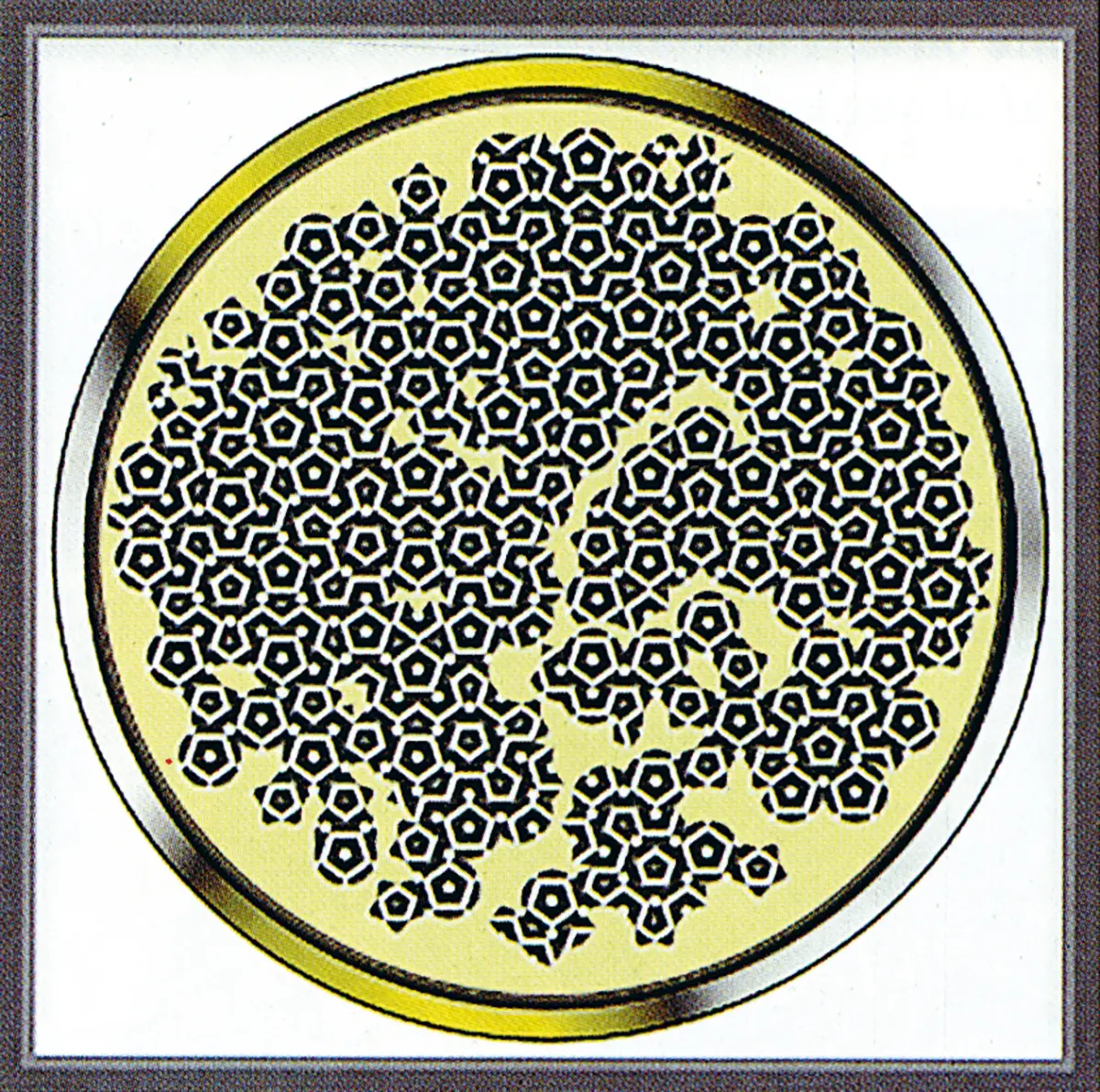
While Barba and Manglano-Ovalle examine issues related to genetic misappropriation by a nascent industry for human reproduction, Argentinian artist Mauro Machado’s series, Café de la Opera, 1999 is a more benign Look at scientific experimentation. Using open Petri dishes to record the environment of a specific time and place, Machado converts these moments into visual representations—producing computer-generated images of environmental molecular changes. Interested in the geometry of nature, Machado translates his scientific data into beautiful and complex color mosaics, giving visual form to the micro-level of organic existence.
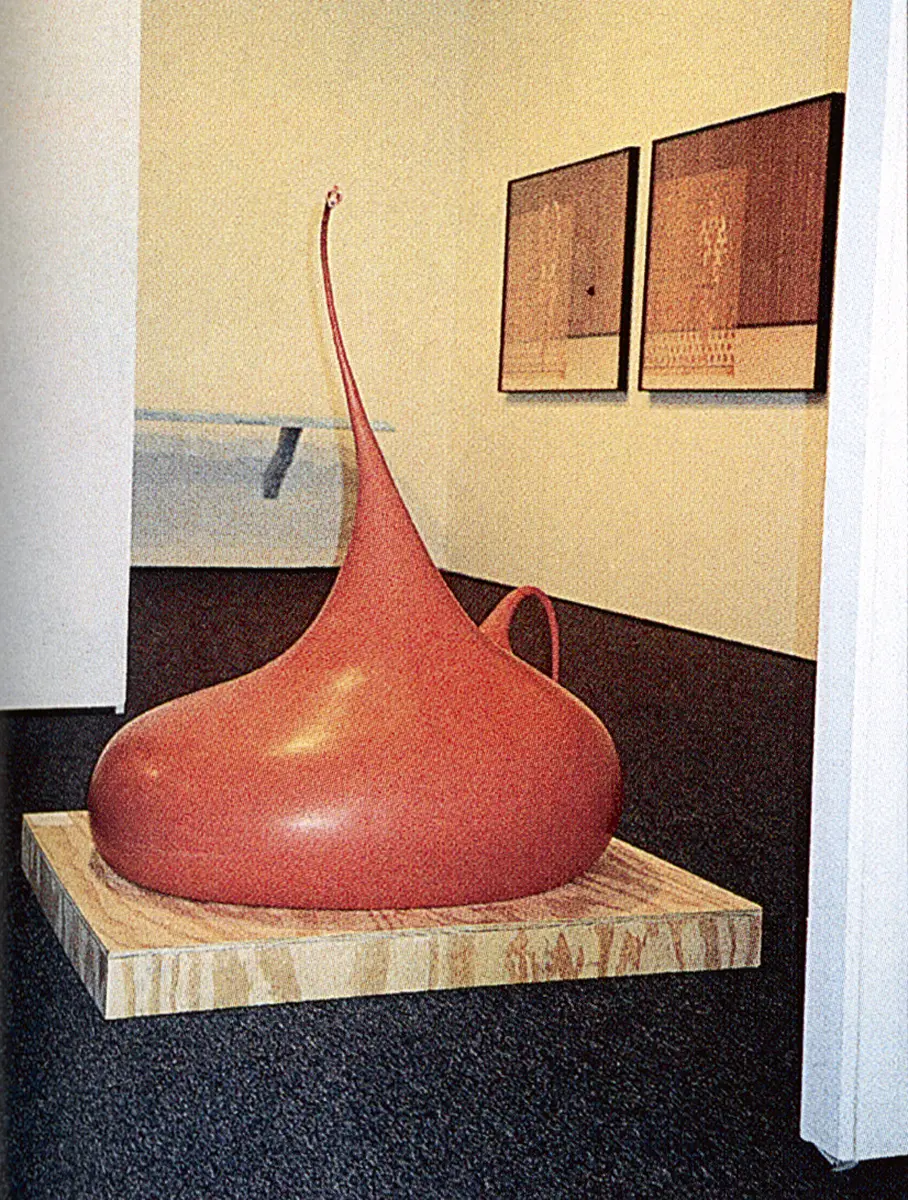
Also of interest at this year’s fair were playful and sensual sculptures by Edgard de Souza* at the Jack Shainman Gallery. De Souza’s elegant sculptural drips and smooth fluid shapes incorporate the notion of time and explore the tension between solidity and fluidity, desire and gratification. Like fellow Brazilian artist Ernesto Neto (Bonakdar Jancou Gallery), de Souza is part of a young generation of Brazilian artists who are expanding the inheritance of the Neo-Concrete movement, creating works that engage the senses and incorporate wit and humor.
Equally playful in its conception was the post-Minimalist sculpture, Extinction, 2000 by California artist Charles Long on view at the Shoshana Wayne Gallery. Long’s Ludic piece functions as a fetish object having a Pop art sensibility. This biomorphic globular-shaped mass with extension-cord arms is intended, according to Long, to “bring out Latent physicality in a culture on the edge of the information age, to remind people that at the end of every wire is a flesh-and-blood body."1
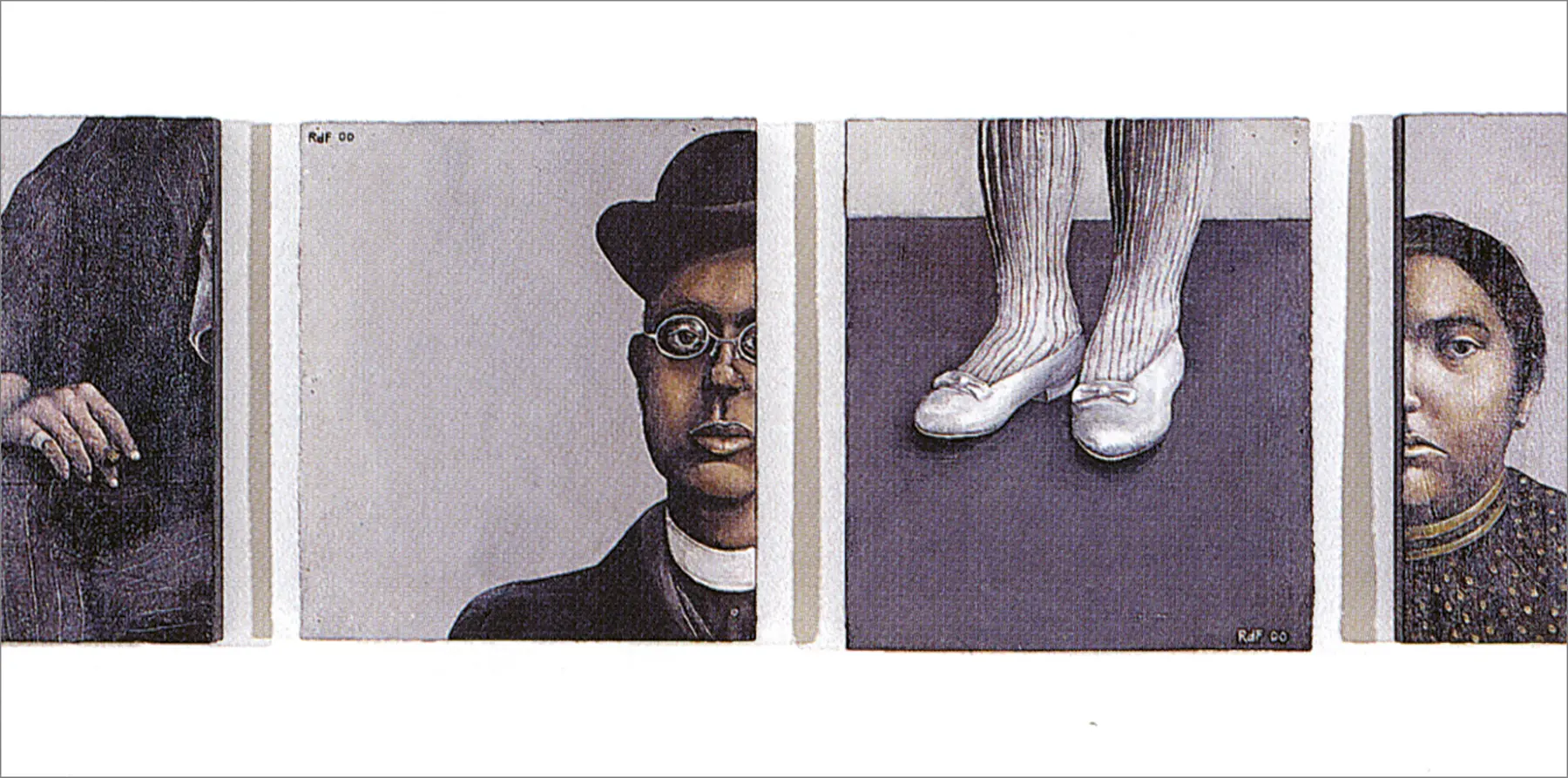
An emphasis on painting and mixed media works was prevalent throughout the fair. At Galería Nina Menocal seven artists were invited to create new works specifically for Art Chicago. Perla Krauze’s Prints of Memory, 2000, introduces a series of small-scale paintings that incorporate fragments of steel, stone, Lead, and other objects in a poetic and Lyrical meditation on memory and time. Rodolfo de Florencia’s Portrait Series, 2000 makes use of the idea of synecdoche—where the part symbolizes the whole—in an installation of seven retablo-like small narrative panels. The fragmented portraits question the manner in which we consciously or unconsciously read cultural markers such as clothing, hair, body types, etc., to draw conclusions about a person’s position in society and their relation to ourselves.
Marco Arce’s* obsessive contemplations on the events and personalities of postwar art were represented at GaLería Ramis Barquet. Grouped in a series of four, Arce culled his visuals from the international art journals that originally published these images and helped to create the tropes, cliches, and mythic status of these art world figures. The theatrics and spectacles produced by artists such as Bruce Nauman, Piero Manzoni, Vito Acconci, Carolee Schneeman, and Chris Burden are revisited by Arce in drawings that ironically both critique the cult of the artist and celebrate the myth of the rebel.
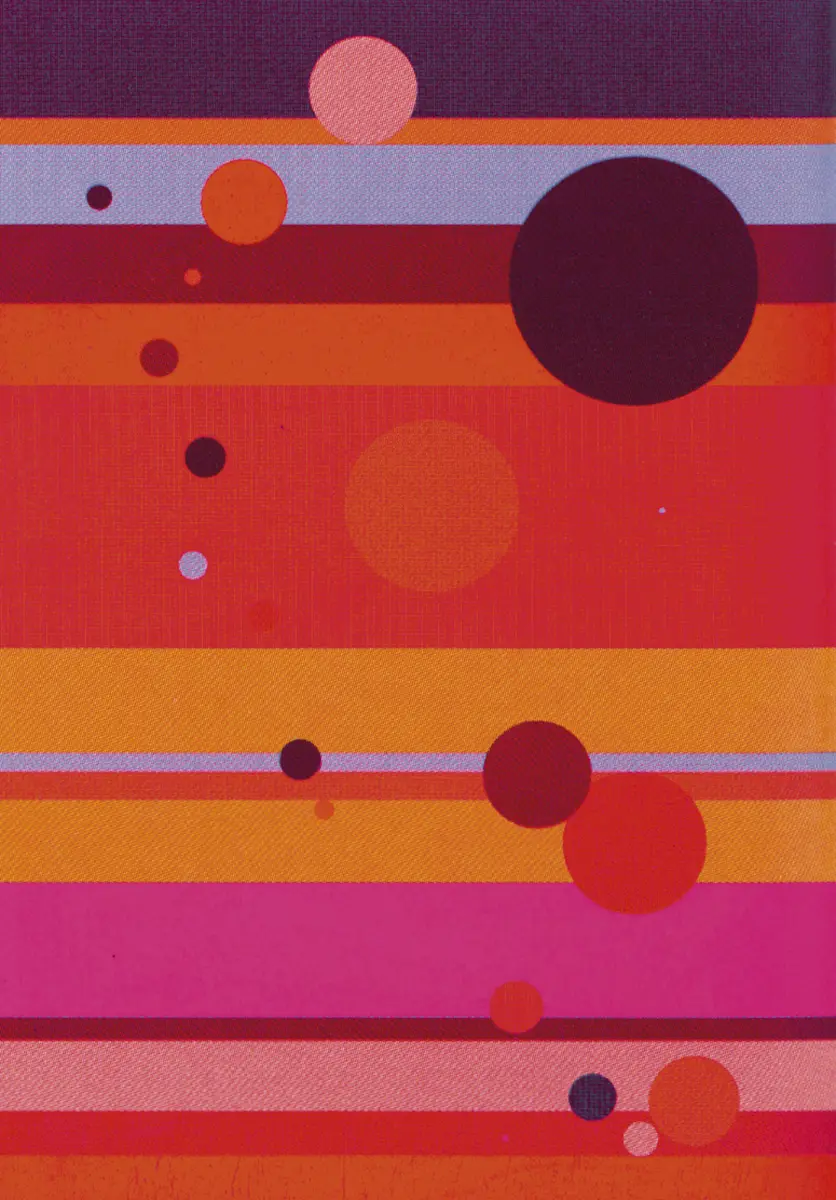
Conceptual and computer-related works by Yishai Jusidman and Tobias Rehberger were represented at GaLería OMR. German artist Tobias Rehberger is currently one of the hot new names being mentioned in contemporary art circles. Blurring distinctions between art, craft, design, and architecture Rehberger is a multimedia feng shui type of artist who is concerned with space, color, and design. Rehberger presented colorful computer-generated images such as Casanova 70, 1999, that were stored on computer discs and were sold as a set, cleverly allowing the buyer to own both the image and the reproductive technology itself.
Jusidman’s installation Mutatis Mutandis: J.P., 1999, is a formal exercise in deconstruction and translation using a variety of media—photography, painting, digital scanning, computer manipulation, and tapestry—in a process that deconstructs and reconstructs the portrait of an institutionalized patient. The circular Logic of Jusidman’s orchestrated work begins with a photograph and ends with a series of related yet autonomous objects and images that contemplate the art historical trope between madness and painting, and the imperfections of translation.
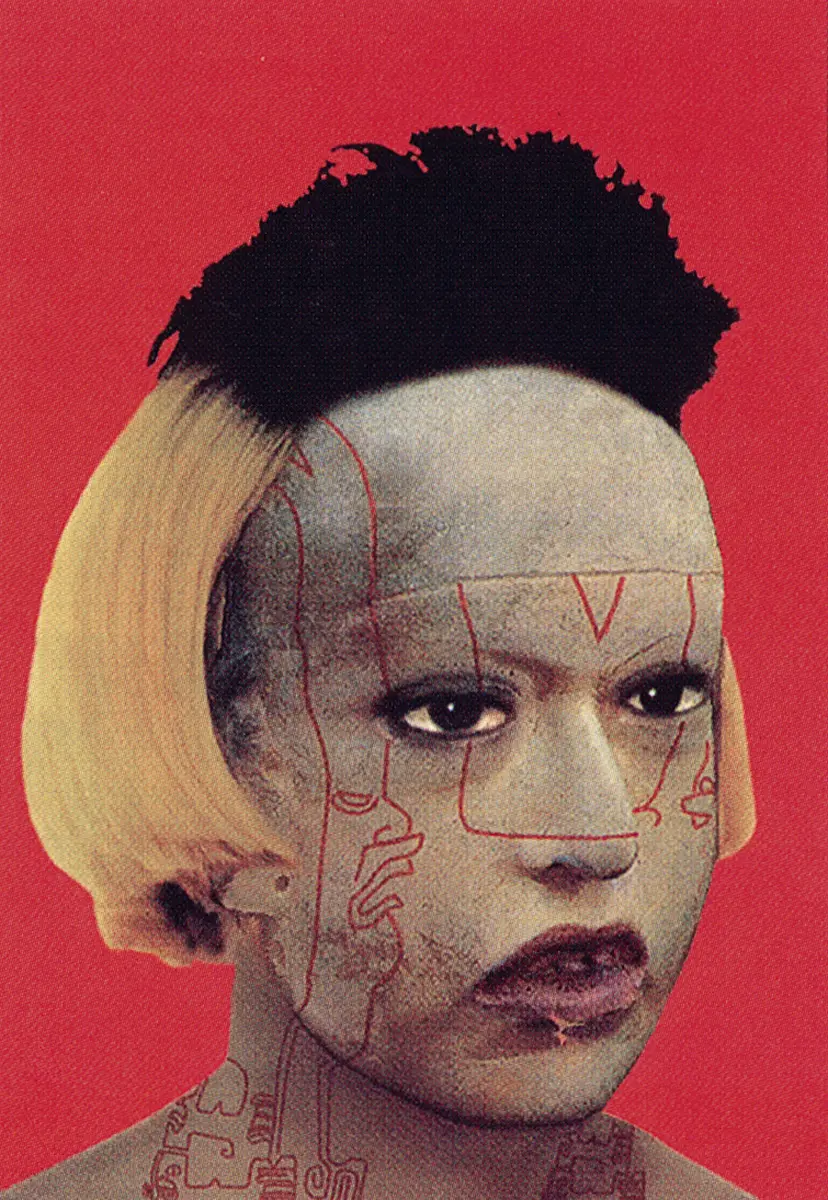
Continuing on her obsessive investigation of the concept of Beauty, Orlan’s Self Hybridization series of 1998, shown at Galerie Yvonamor Palix, explores notions of beauty in pre-Columbian civilizations. Using statuary and vessels depicting such traits as cranial deformation, crossed eyes, filed teeth, and scarification, Orlan superimposed Mayan, Olmec, Aztec, Moche, and Inca canons of beauty upon her own computer-enhanced image. Always provocative, Orlan’s series proves that the concept of Beauty is not universal, essential, or stable.
Also noteworthy at Galerie Yvonamor Palix was a sculptural work by Argentinean artist Pablo Reinoso. The diptych consists of two rows of rhythmically inflating and deflating pillows, setting up an interesting tension between the artificiality of the materials and the idea of a natural, breathing life form.
While Art Chicago 2000 was a financial success bringing in over 65 million dollars in sales during a booming art market, there were no real surprises. The quality of work was consistently high, yet no artist stood out above the rest or created a general buzz. Art Chicago may not be the place where dealers bring their most controversial or experimental works, but it remains a Leading venue for the sale of artwork—and although we’d Like to believe otherwise, in the end, that’s really what the fair is all about.
*Reviews on the work of these artists are also included in this edition.
NOTE
1. “Shapes of Things to Come: Interviews by Raphael Rubinstein”, in Art in America (November 1995) pp. 98-194.
CHARMAINE PICARD
Art critic and Ph.D. candidate in Art History at the University of Chicago