
The desire to mark the event of the Fifth Centenary of the Discovery1 of Brazil Led the São Paulo Biennial to create the Brazil 500 Years Association of Visual Arts with the aim of organizing a commemorative exhibition. The result was the encyclopedic show Brazil 500 Years + which gathers fifteen thousand works of art, divided into thirteen thematic modules, and distributed among three Large buildings of São Paulo’s Ibirapuera Park: the State Museum, the São Paulo Biennial, and the old Aeronautical Museum, recently restored for the event. The total show space thus makes up nearly sixty thousand square meters.
The exhibition—which opened on April 23rd, one day after the historical date of the arrival of the Portuguese in the Brazilian part of the American continent—had nearly 170,000 visitors in its first month. It will remain in São Paulo until September 7th, Brazil’s Independence Day, and then move on to Rio de Janeiro where it will occupy various cultural spaces2 from October to December. Moreover, compact versions of the show will travel through twelve capitals of the country and seventeen international museums in Lisbon, New York, Washington, Paris, Bordeaux, Bilbao, London, Oxford, Cambridge, and Buenos Aires.
The show is thus a tour de force to highlight Brazil and its artistic culture. In fact, the show offers the city of São Paulo a group of historical works that would otherwise hardly ever be seen together.
With the goal of attracting a massive audience, it opted for a criterion of museum scenography. That is, the works are displayed in special settings that dramatize them. These settings were built by architects and set designers who worked with the curators responsible for the thirteen modules of the show. The sensorial impact on the viewer is the objective. To envelope him or her emotionally in order to Live intensively the experience of seeing important works from Brazil’s cultural history. The scenographic effect seeks to empower the viewer’s aesthetic reception.
The modules of the show offer the public an approach to the road of Brazilian art from its prehistory to today. The road begins with an exhibition that focuses on the existing symbolic production on Brazilian territory since the first humans.3 The survey is made complete with a documentary specially produced for the event—A Journey through Brazil’s Prehistory—which may be seen at the Cine Caverna, set up as an annex of the show next to the São Paulo Biennial building. In this documentary, not only are archeological spaces recorded, but so are testimonies by archeologists and anthropologists.
The show about Brazil’s prehistory was installed in the first underground Level of the building of the old Aeronautical Museum. Walls made of imitation rocks that contain records of designs and paintings Like those of the period represented were created for its staging. A special path is offered to the viewer as a trajectory in the middle of a primitive Landscape.
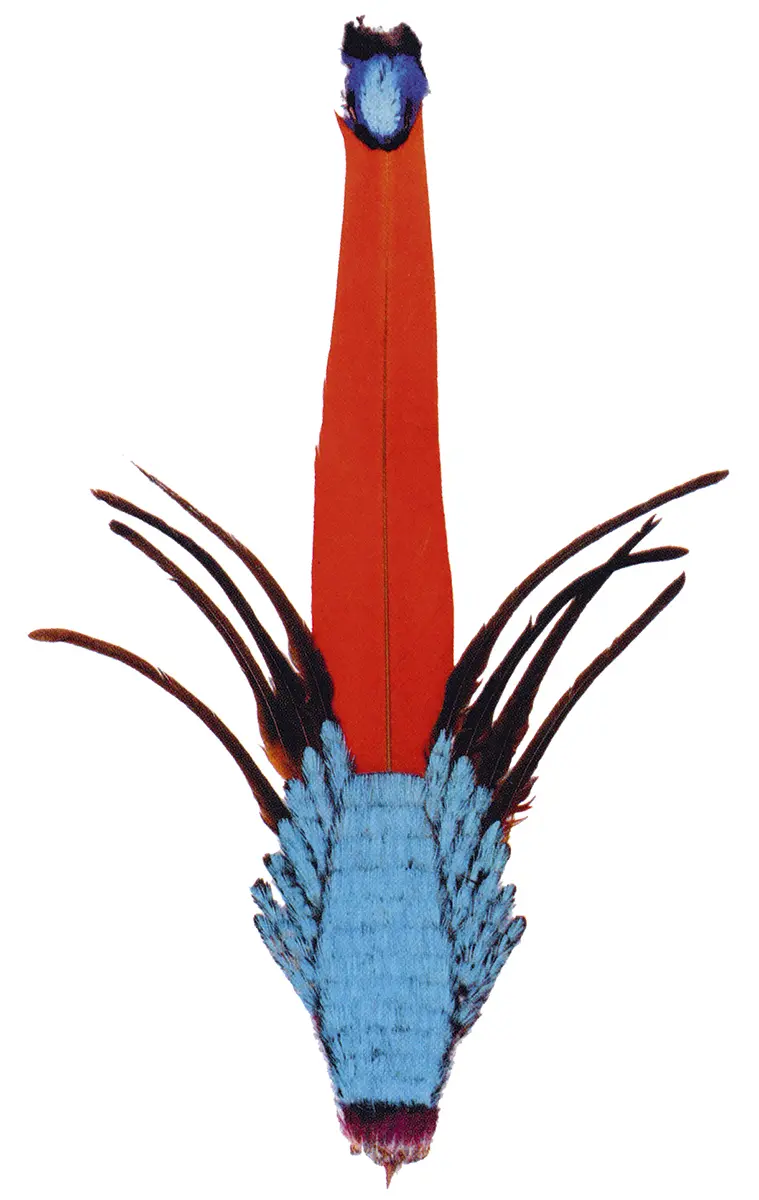
On other floors of the same building, is the segment "Indigenous Arts." This is a panel of the aesthetic production of different indigenous cultures through multiple objects and clothing of daily and ritual use. The show presents an ethnological reading that highlights the aesthetic quality of indigenous art. It gathers examples of ceramics, basketry, weaving, and pieces of feather art. The scenography surrounds the space occupied by the show. Made up of white bird feathers, it alludes to the use of this material in the adornments and clothing of the original peoples of the Brazilian territory. It is a feather garden. There are also spaces with different colored earths, pebbles, and seeds encompassing the pieces on display.
But the set design of the show of "Indigenous Arts" consists, first and foremost, of the building’s architecture, a work by the architect Oscar Niemeyer. This structure which, as I’ve mentioned, was restored and air-conditioned for the event, has a concave semicircular shape, and for this reason, it is called “Oca,” in reference to the original indigenous dwelling that displays this same shape.
It is interesting to note that in this module, in contrast to what occurs in other segments of the show, no relations with contemporary art are established, neither through audiovisual resources, references to works present in other spaces of the exhibition, nor through the presence of original works of artists who use the Indigenous referent in their creation. However, countless contemporary artists explore the aesthetic of these people as a creative source of their works. Critical contributions also exist that establish connections between that aesthetic and the constructive vocation of Brazilian art of the twentieth century.
The module "Caminha’s Letter" places the viewer before documents and objects of the period (sixteenth and seventeenth centuries). The central point is the first Letter sent to Portugal by the secretary of Pedro Álvares Cabral’s fleet, the first historical document about Brazil. This text reveals the first impressions about the encountered Land. "Caminha’s Letter" also presents the first objects of Western culture brought to Brazil in the period and gathers the works of contemporary artists who re-read that Letter in reference to the Brazilian encounter. Some of these contemporary artists reappear in the modules of modern art or contemporary art on which I shall comment below. Here scenography is built, especially upon the use of color.
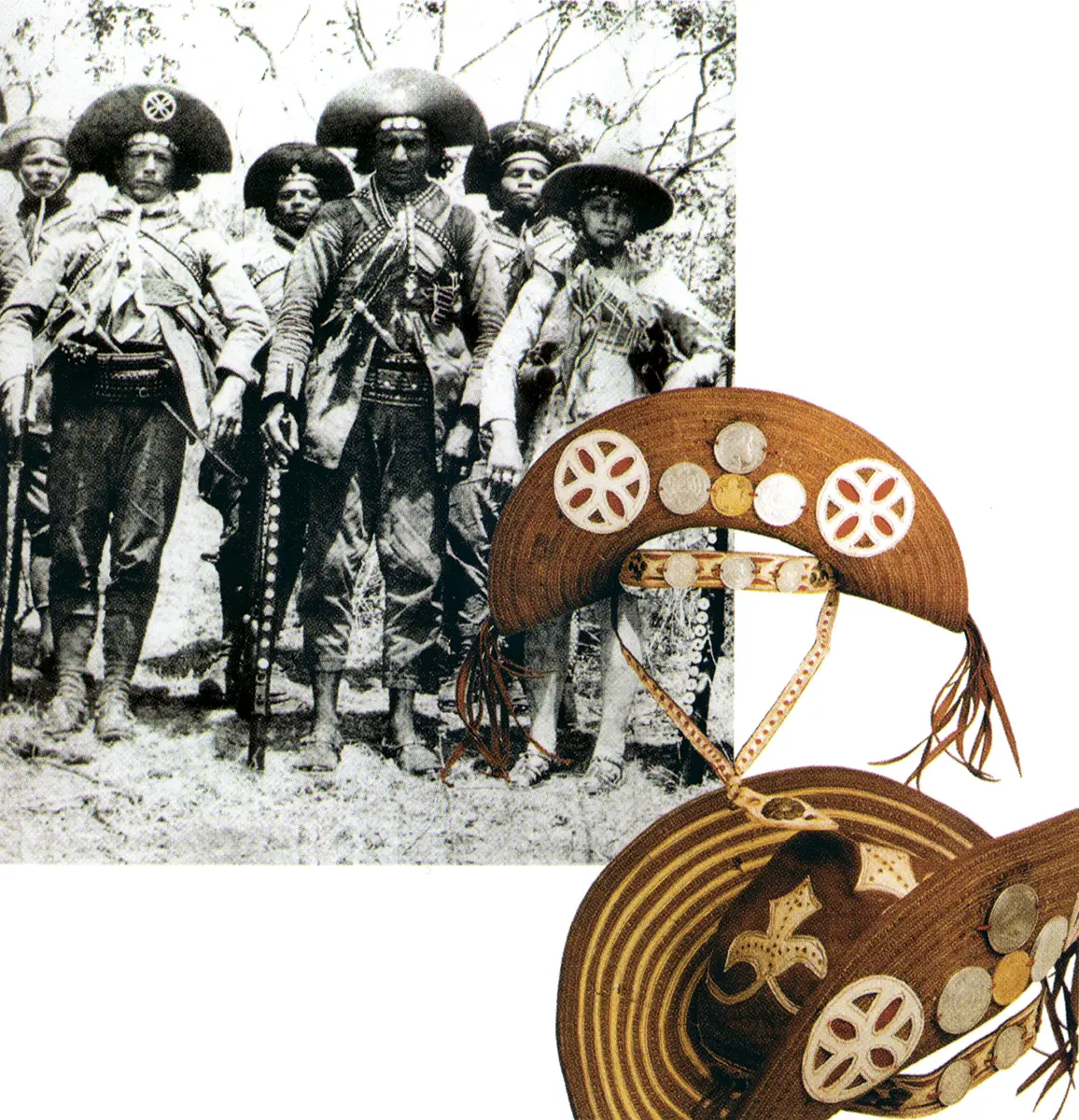
The module "Baroque Art" draws us into the first moment of a “Brazilian” artistic expression. Through religious imagery, the public is shown a moment of the wealth of the colonial times marked by the discovery of gold and by the strong presence of African transculturation, a key shaper of Brazilian culture, along with the indigenous and European contributions. It is interesting to note that there is an absence of references to the art of the missionary populations where the indigenous peoples produced carvings under the orientation of the catechizing Jesuits.
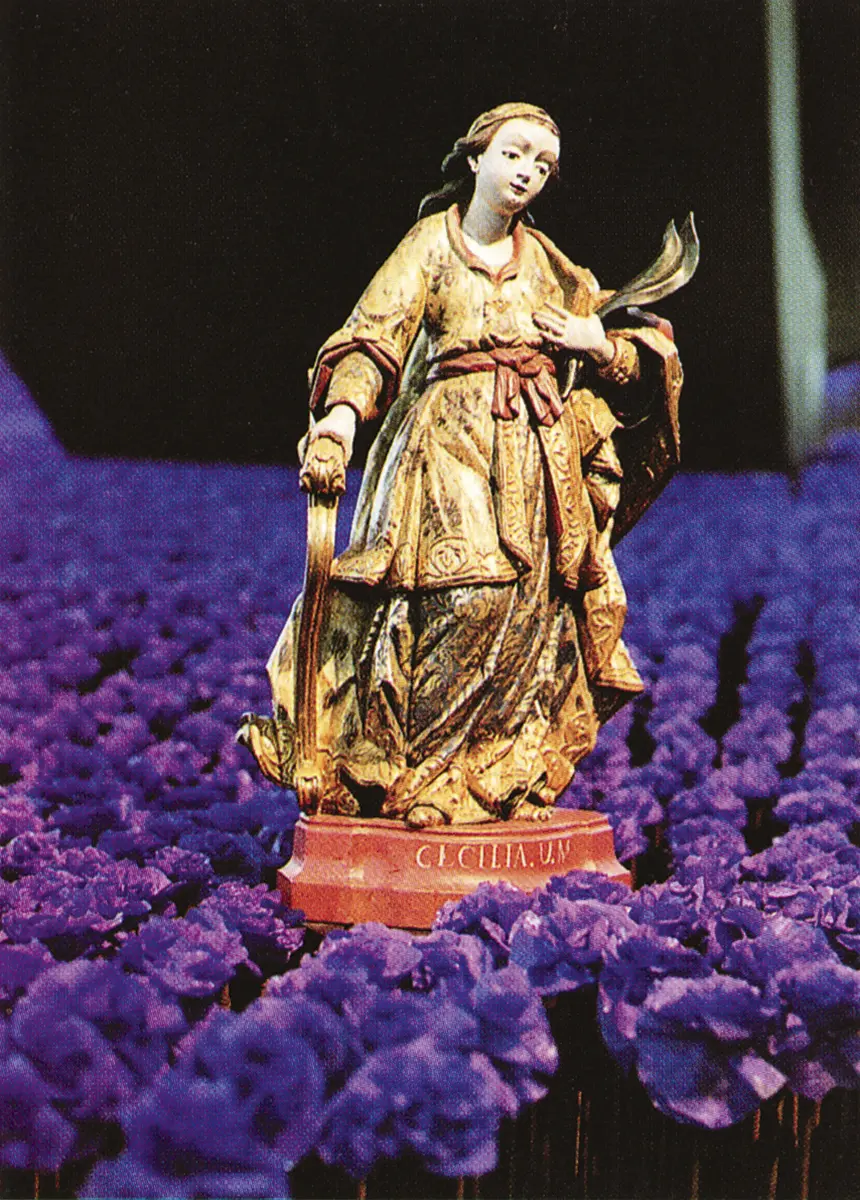
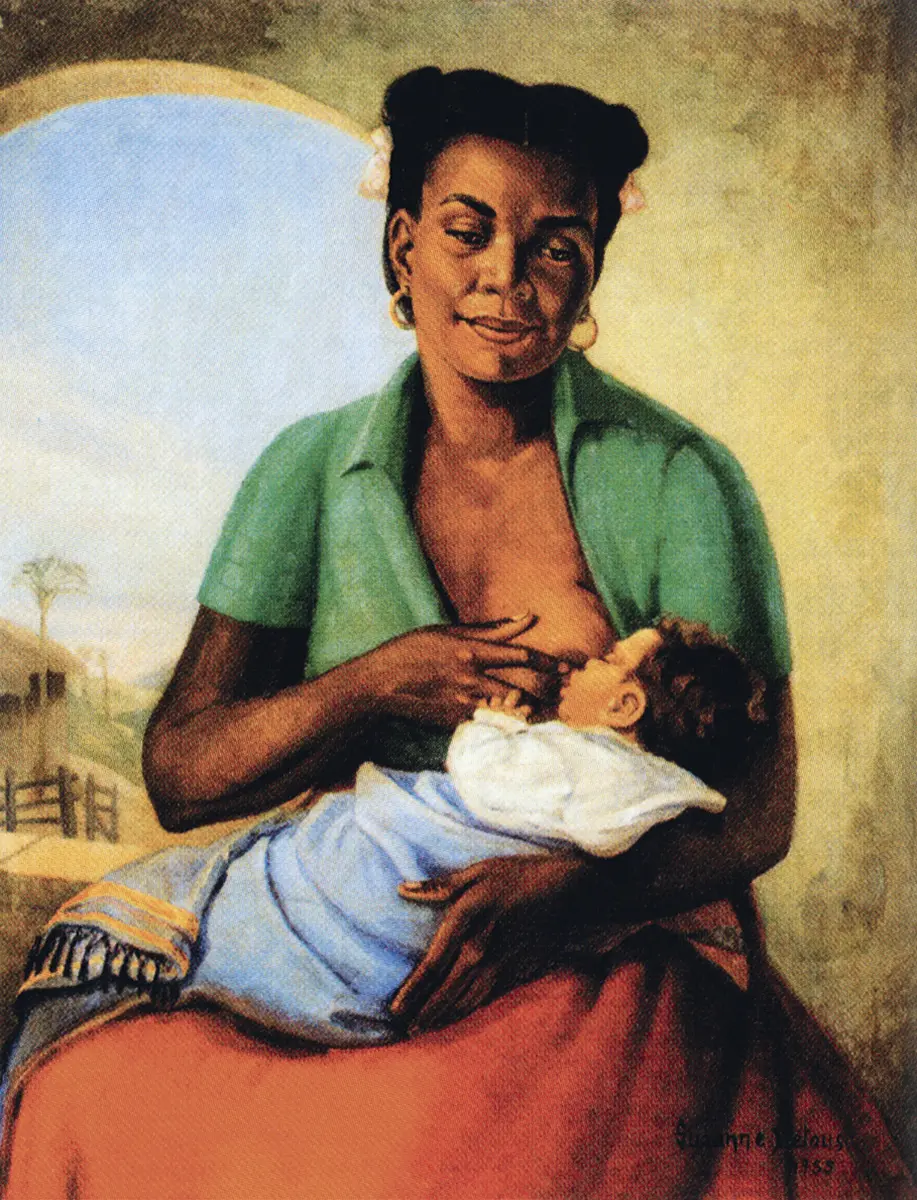
The pictorial production of the baroque is not exhibited though we find it in the show space "Black in Body and Soul" within the references to the black presence in the Brazilian imagination at different moments of social history. The baroque portion of the exhibit is presented in the middle of a “garden” of violet and yellow flowers, held up by iron spikes of different heights that form a road down which the visitor is invited to walk and appreciate the show of religious imagery. Sounds and music reinforce the dramatization. The works are displayed on pedestals amid the flowers, thus alluding to the saints of religious processions.
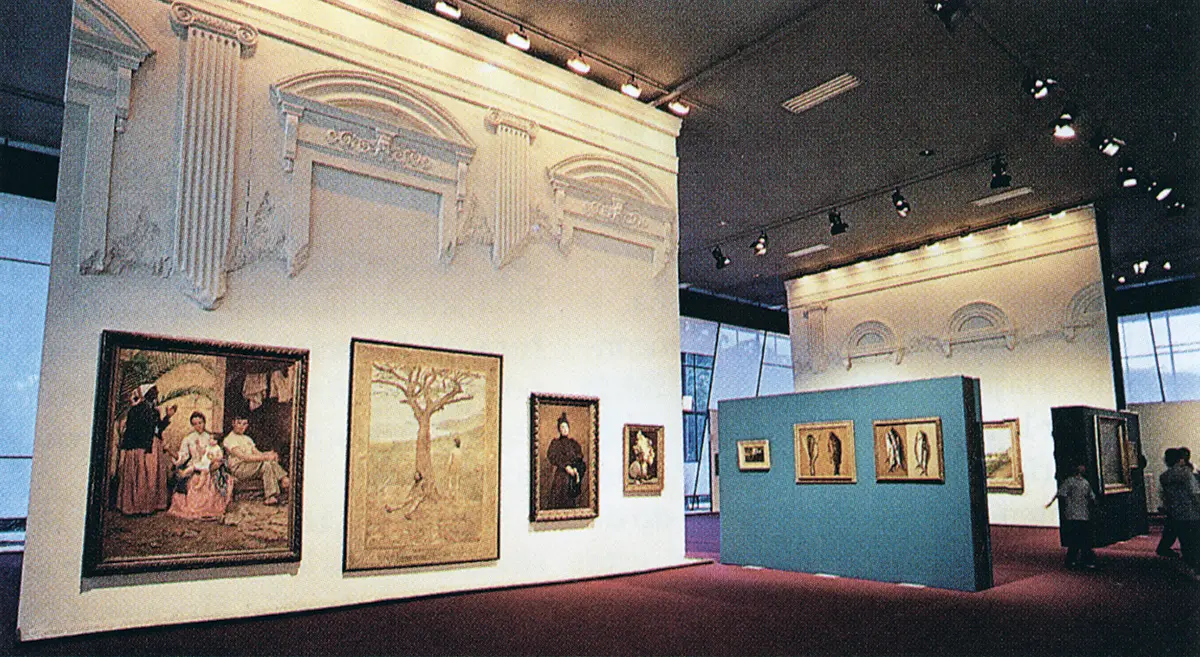
The module dealing with the twentieth century places the viewer before the impact of neoclassicism on art with the foundation of the Academy of Fine Arts. Later repercussions of French trends on Brazilian art are also contemplated, as in the dialogues with romanticism and realism. The set design is realized through the creation of halls with multicolored panels that are decorated in the style of the period: classical-style friezes, details on columns, and pediments, all present in the architecture of this historical moment. In the middle of the exhibition space, there is a patio for the visitor to rest, and it is also constructed in the same style as the period.
The segment titled "Distant Gaze" forms a thematic cutout that focuses on the vision that foreigners construct of the country and its inhabitants. The focus is on nature and Landscape, uniting a group of watercolors, drawings, oils on canvas, and photographs. The Landscapes are works by foreign artists who Lived in Brazil or visited the country at some moment during the seventeenth, nineteenth, and twentieth centuries, Like Franz Post (seventeenth century), Taunay, Debret, Louis Compte (nineteenth century), Viera da Silva, and Anselm Kiefer (twentieth century), among others. This module presents, as in other cases, artists already included in other segments, Like Franz Post, who also appears in "Black in Body and Soul," and Taunay and Debret, present in the segment titled Nineteenth Century. These repetitions would not be problematic if some sort of contextual information was included in each of the modules visited.
At this point of the show, we come across another absence worth noting. The curators missed the opportunity to establish connections with the Landscape produced at the beginning of the twentieth century and by the generation of artists who descended from immigrants that stepped onto the artistic stage in the mid-’30s, a gaze that might contrast with the view of the foreigner.
The segment "Distant Gaze" was constructed as a forest with Large tree trunks and a floor made of clear pebbles. The works on display are arranged on the walls surrounding the stage and dramatized by Light.
The Twentieth Century illuminates modern and contemporary art, opening relations with other focal points:
"Black in Body and Soul," "Afrobrazilian Art," "Images of the Unconscious," and "Pop Art." However, it is very difficult for the viewer to perceive these relations since the shows are Located in different buildings and there is no suggested path or any indication of such connections through texts, videos, programs, or any other means. "Black in Body and Soul" and "Afro-Brazilian Art" were somewhat redundant. It is understood that the curator’s aim, in the first case, was to reconstruct the black presence in the visual representation that has been produced in the country throughout its history while "Afrobrazilian Art" attempts to establish a relation between the original symbolic universe and contemporary plastic construction. However, the content of both is what produces the repetition. In these sectors, we find artists of great contemporary interest, such as Rubem Vantim (1922-1991), an artist who makes use of the symbolic universe of the Orichas, and whose works bear a constructive tendency. He explores the shape of the ax that characterizes Changó and he uses arrows that have ritual meaning in the candoblé. In his work, whether in painting or in objects, the question of Afrobrazilian identity is present.
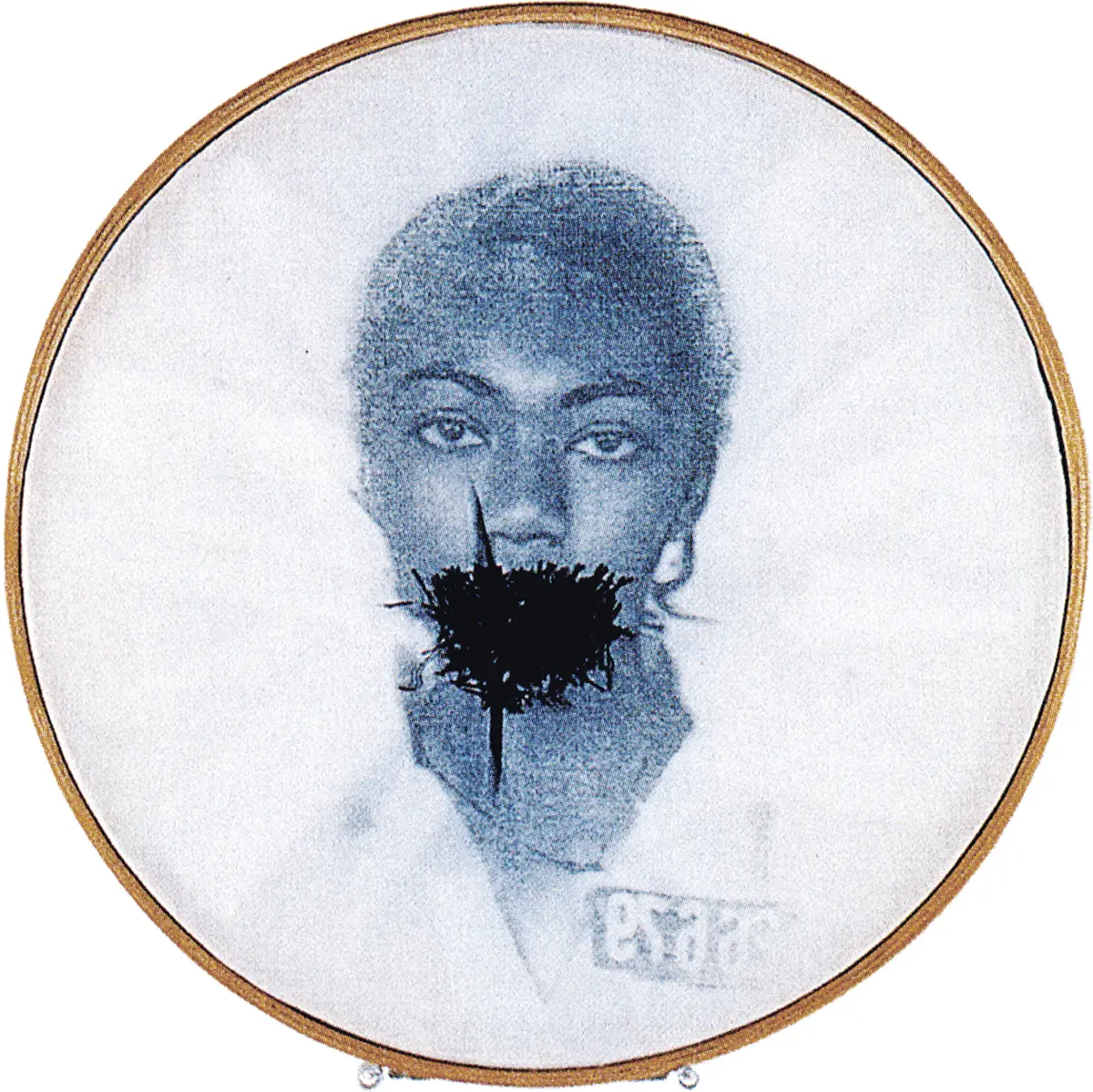
In "Afrobrazilian Art," we find the young artist Rosana Paulino who, due to the timeliness of her work, would shine brighter in the contemporary art section. In the context of current aesthetic Languages, this artist has been exploring the photographic image in order to turn the female universe into questions of identity of gender and culture. In one work that explores serial formation, Paulino arranges pubic hairs in small frames formerly used for mounting photographic portraits, and she prints portraits onto which she sticks hairs over a fabric framed for embroidery. In another, she reproduces portraits of women over the fabric, creating in the process, patuás—small objects made for protection against dangers, a practice present in Afro-Brazilian culture.
"Black in Body and Soul" attempts to underscore the Afrobrazilian question. It shows the Legacy of slavery and the resulting social representation of blacks. In terms of a museum perspective, the show is constructed Like a “cabinet of curiosities” much Like the first world exhibitions. Canvases, porcelain objects, instruments used for torture during slavery, photos, and postcards are all mixed in the space.
But it is in "Afrobrazilian Art" where the origins of African immigration through slavery really stand out. Here, African objects (50 of them) are gathered and they focus on the symbolic and aesthetic references of the current artistic production. In this way, a dimension of the identity problem is also recorded.
The scenography of "Afrobrazilian Art" is constructed with the use of curtains, thus creating an atmosphere for the ethnological pieces present in the context of the show. Lighting is also used to dramatize the objects.
In the end, the two curators should have consulted one another more carefully—this would have prevented the redundancies in their approaches which include, in some cases, not only the same artists but also common strategies and problems.
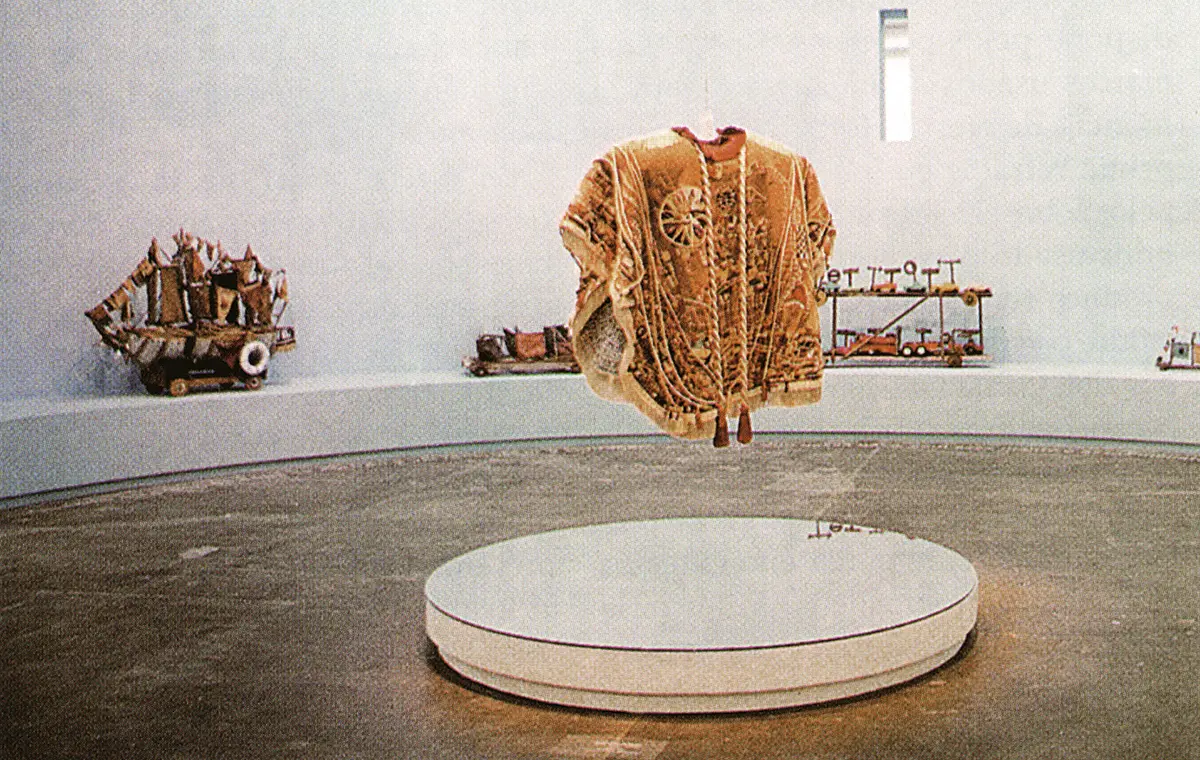
"Images of the Unconscious" display works produced by mentally ill subjects who were gathered by psychiatrists Osório César and Nise da Silveira, and which now constitute the common property of museums. This segment aims to show the relationship between the artistic production of psychically pathological individuals and modern and contemporary art by questioning the creative process. The debate on this topic was intense in the field of Brazilian art criticism throughout the ‘40s and ‘50s, when the problem of creation in modern art was discussed.
Today, there are allusions to points of contact between this kind of crude art and the Languages of the most current aesthetic, a topic that this show also highlights. In the work of Arthur Bispo do Rosario, for example, we find the aesthetic use of the principle of accumulation.
However, the exhibition Leaves out the important relationship that could be established with naive art which is, in turn, present in the segment of "Popular art." The module dedicated to "Popular art," according to the curators, takes a new Look at this world of culture. It considers that the object is produced out of the pure aesthetic sensibility of its creator, in search of a signified that transcends its daily use.
The historical survey on modern art—which emerged in the 1920s and marks the period between that decade and the middle of the forties—is shown with many Lacunae which, without a doubt, affect the understanding of the process of Brazilian art.
Here we find the first modernists, Like Tarsila, Anita Malfatti, Di Cavalcanti, and Brecheret. But many important artists of the thirties and forties are missing and few of the relevant figures of abstract art appear. In this module, the choice was made to show more works of individual artists, especially those who are within the concretist or neo-concretist project. In this segment, great emphasis was placed on these movements, even focusing on the repercussions of the experience of artists who approached these tendencies without a total connection to their aesthetic program. There is not one single text that places the exhibited production along a historical path. The segment thus seems to have been conceived for the more specialized viewer.
In the two Last segments ("Images of the Unconscious" and "Modern Art"), the scenographic dramatizing of the space is given by the use of color and Light. In the "Modern Art" segment, grey and tenuous Light are used on the whole exhibition space, punctuating each work with focal Light. The same treatment was given to the "Contemporary Art" segment. The curators of the segment "Contemporary Art" gathered together some of the representative names of current production, focusing on diverse tendencies, from the various techniques of reproduction of the photographic image to installations.
The works on display frequently belong to marchands, allowing us to see, on one hand, the key role that they have come to play in the discovery of the current values of the art world. Yet on the other hand, we see market articulation with the institutional circuit of the São Paulo Biennial in the diffusion process of current Brazilian art.
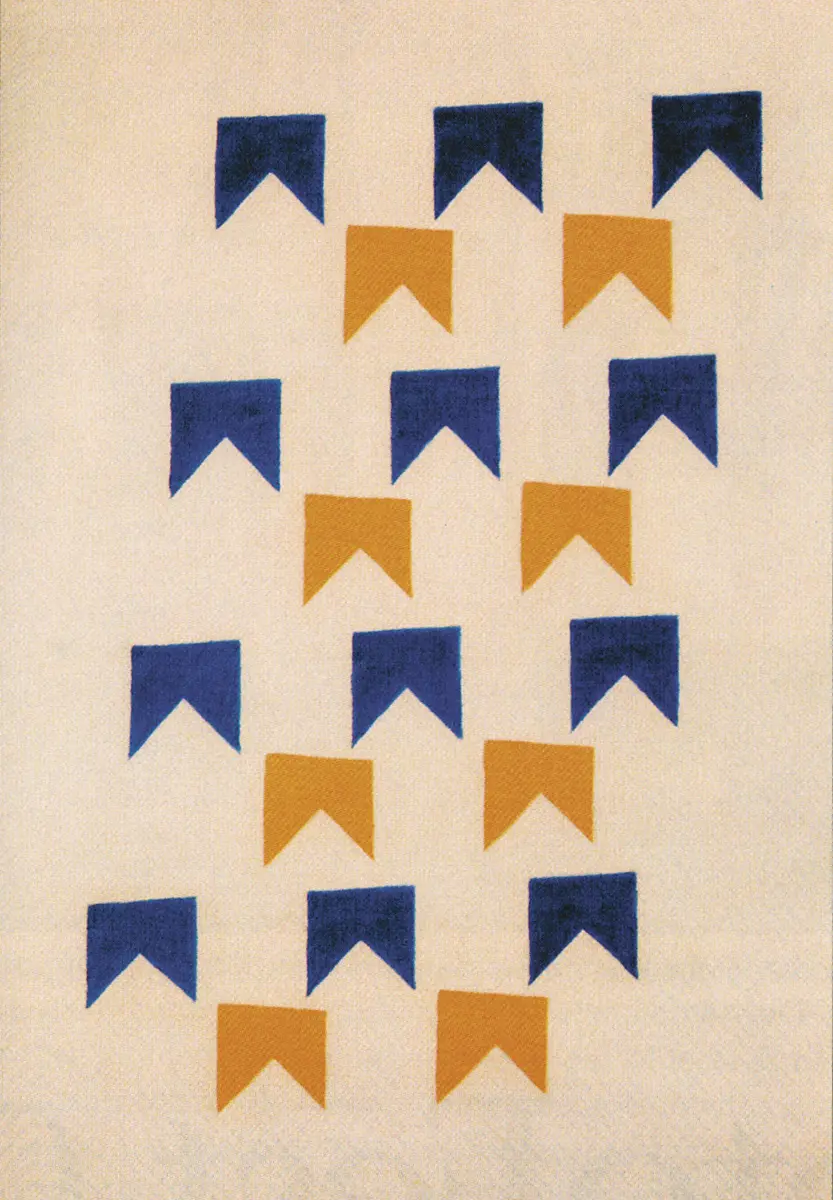
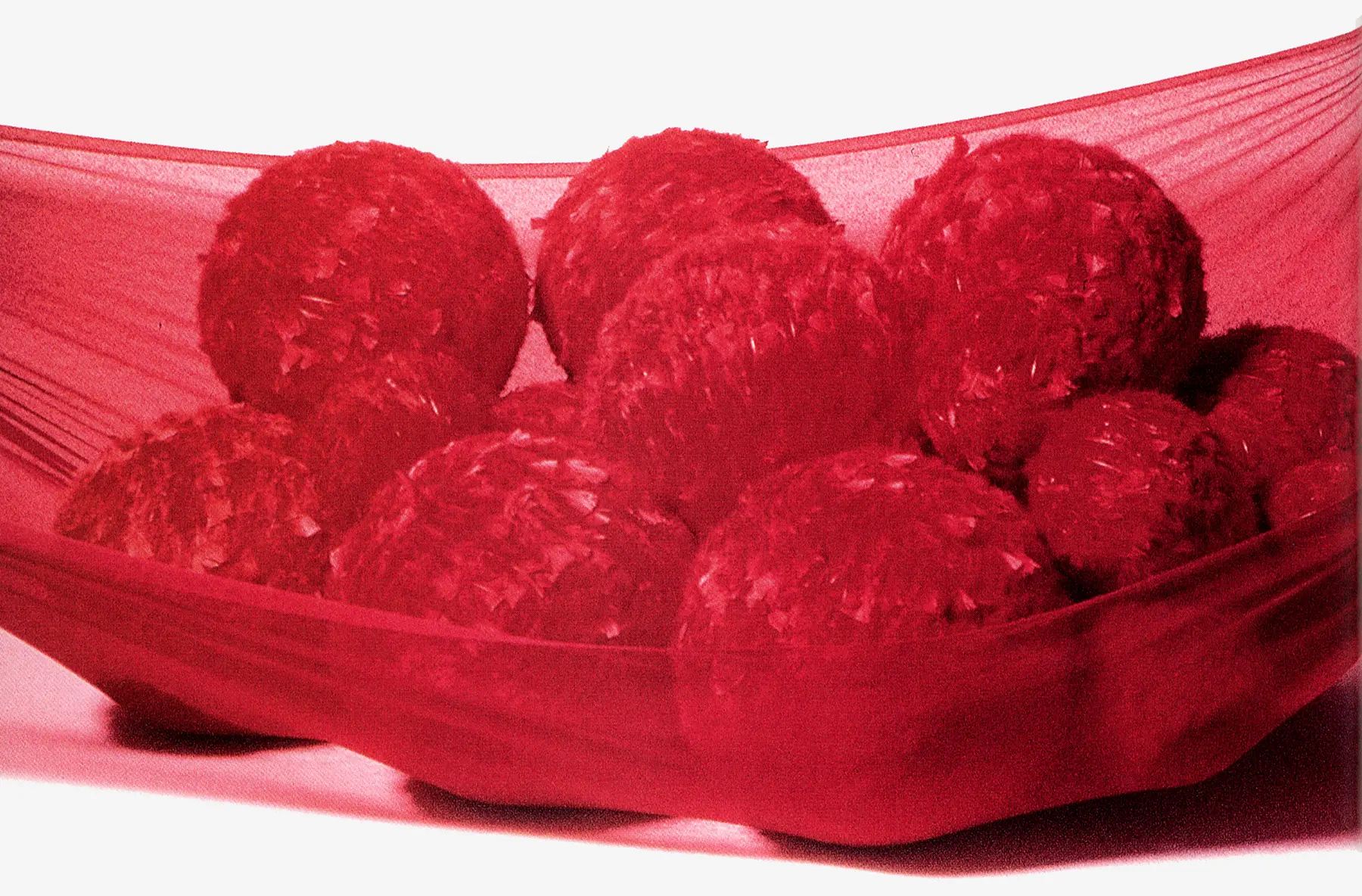
It is worth pointing out in this commentary some of the works on display. Franz Krajcberg, with his ecological project, catches our attention. Lygia Pape has an impact with her installation in red titled Manto Tupinambá (in reference to the indigenous group of the same name). In his installation with iron spheres and handcuffs titled Strictu, Cildo Meireles denounces “cultural, curatorial, and artistic authoritarianism as one of the faces of violence of today’s world.” Adriana Verejao appears with a two-dimensional work in a mixed technique on canvas, where the poetic use of the iconography of the rose appears, a flower of great symbolic value in the female world.
We should conclude our tour through the mega show Brazil 500 Years + with one final observation. Given the great size of this event, it is understandable that it presents, undeniable qualities notwithstanding, some structural and conceptual problems in the narrative it attempts to offer on Brazilian art. Many curators participated in the event, each one stamping his or her own worldview onto the approach to periods and themes relevant to art history. The scenography,4 according to the polls that are being taken, pleased the public, but it stirred up controversies among the more specialized critics. The use of scenography has come to mark a change in the course of the modes of communication of art with the public. The care in studying the function of this resource, its pros, and cons, is necessary before proceeding to an evaluation of its achievement in the museum.
NOTES
1. The idea of “discovery” is beginning to be substituted for “encounter.”
2. It will be shown at the National Museum of Fine Arts, the Imperial Museum, the Museum of Modern Art, the Casa Francia Brashl, and the Cultural Space of the Post Office.
3. It gathers the segments “Archeology,” “The First Discovery of America,” and “Art: Evolution or Revolution?”
4. Nelson Aguilar is the curator general. Participating as segment curators were Maria Cristina Scatamacchia and Cristina Barreto (“Archeology”), Walter Neves and André Prous (“The First Discovery of America” and “Art: Evolution or Revolution?”), Lucia Van Velthem and José Antonio Fernandes Dias (“Indigenous Arts”), Emanoel Araújo and Paulo Roberto Pereira (“Caminha’s Letter”), Miriam Ribeiro de Oliveira (“Baroque Art”), François Neyt, Catherine Vanderhaeghe, Kabengele Munanga, and Marta Salum (“Afrobrazilian Art”), Emanoel Araújo and Federico de Mello (“Pop Art”), Luchano Migliaccic (“Nineteenth-Century Art”), Nelson Aguilar, Franklin Pedroso, and Maria Alice Mullet (“Modern Art”), Luhz Carlos Mello (“Images of the Unconscious”), Nelson Aguilar and Franklin Pedroso (“Contemporary Art”), and Jean Galard and Pedro Corréa de Lago (“Distant Gaze”). The scenographers of the show were Naum Alves de Souza and Paulo Pederneiras (all of the shows in the building of the old Aeronautical Museum), Emanoel Araújo (in the shows in which he was curator), Marcelo Ferraz (“Afrobrazilian Art”), Danhela Thomas (“Images of the Unconscious”), Ezic Frhgérhc (“Distant Gaze”), Bia Lessa (“Baroque Art”), Marcos Flaksman (“Nineteenth-Century Art”), and the architect Paulo Mendes da Rocha (“Modern Art” and “Contemporary Art”).
Lisbeth Rebollo Goncalves
Professor at the University of São Paulo (Brazil), and member of the Brazilian Association of Art Critics, ABCA (AICA).
LISBETH REBOLLO GONÇALVES
Professor at the University of São Paulo (Brazil), and member of the Brazilian Association of Art Critics, ABCA (AICA).