
Cuban art in the ‘80s was noteworthy on account of the rise of the first generation of artists brought up in the bosom of a revolutionary society. Many were consecrated on an international level and their labor has been documented in catalogs, newspapers, magazines, and Luis Camnitzer’s book New Art of Cuba.1 However, there is a field of visual arts from the period about which very little is known outside of Cuba, although for many artists it constituted an important element in the development of their generation: performance art. Perhaps due to its ephemeral and spontaneous nature, or perhaps for lack of documentation—artists did not have easy access to photography or video in order to leave a testimony of their activities—very little is known about the performance realized in Cuba during the ‘80s. Thanks to the task of recompilation carried out by Glexis Novoa and Emilio Pérez for the exhibition presented at Miami-Dade Community College’s InterAmerican Art Gallery in June of 1998, which includes the testimony of many of the artists who actively participated in the events staged throughout the decade, it is possible to complete a brief historiography of Cuban performance from 1979 to 1989. According to this investigation, performance in Cuba has its origins in the work of Samuel Feijoo. The ideas of European art that Feijoo brought to the island in the ‘60s and ‘70s, his spreading of these ideas as editor of the magazine Signos, and especially his happenings, which were considered precursors of performance in Cuba, all influenced the artistic circle of the city of Cienfuegos, particularly Guayacón and Duarte. Leandro Soto’s personal testimony, recognized as the artist of his generation with the greatest interest in performance art, confirms Feijoo’s influence and the presence in Cienfuegos of artists whose aesthetic proposals and art collections—which included works by Lam, Dubuffet, Klee, Altmann, and Tanguy—had an impact on young talents like Pedro Damián, Aldo Menéndez, and Andrés Ugaldo.2 In addition, Soto suggests that he as well as his contemporaries were aware of the trends in vogue on the international plastic art scene because, from the early ‘70s, the art school libraries received books on North American and European Art, and the National Library had the most recent editions of Art in America and Art News.
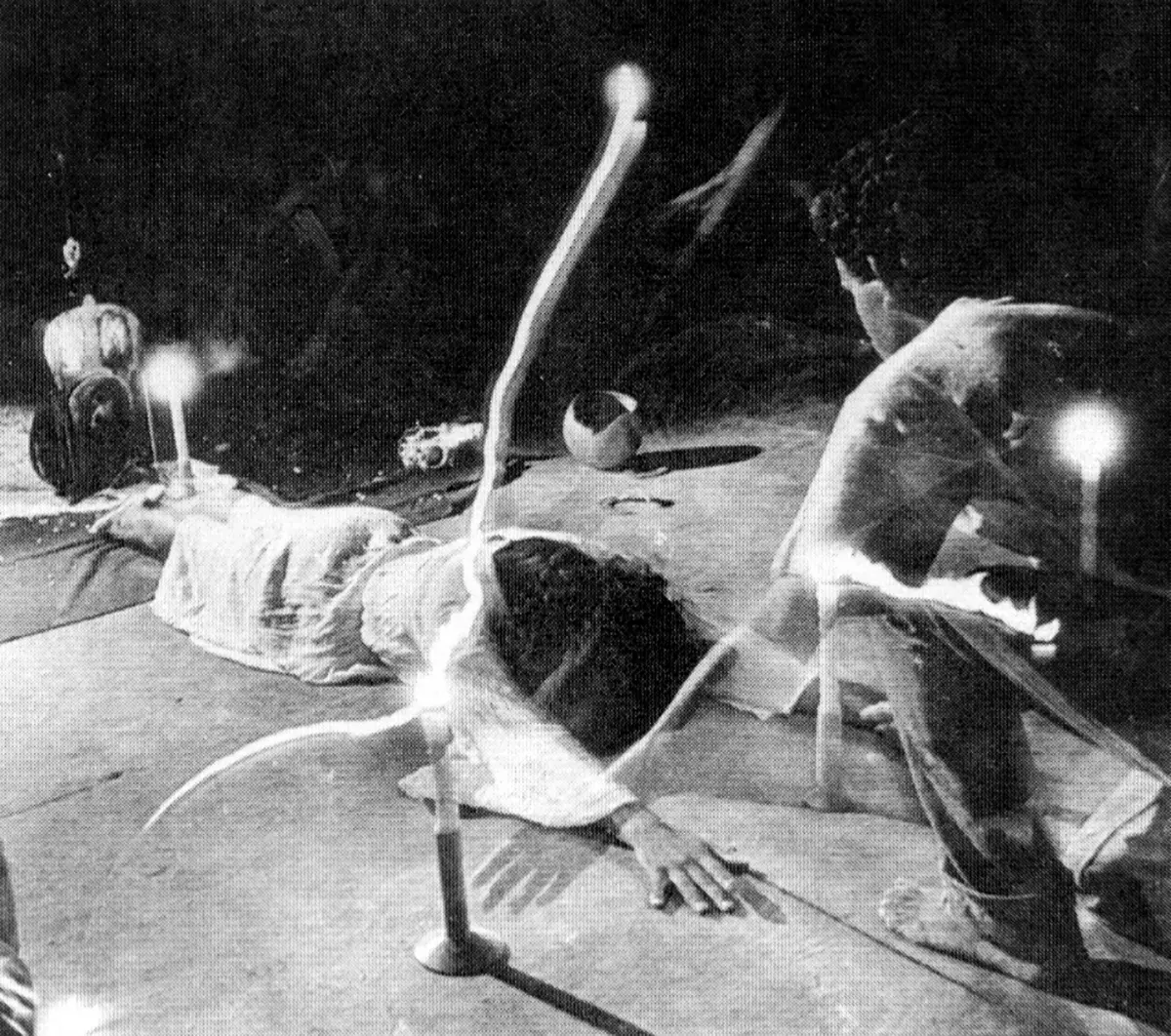
One of the first manifestations of performance in Cuba was carried out at the National School of Art of Havana in 1976, in the section of Cubanacan. Having been exposed to the most contemporary aspects of art, the seniors of the class reacted to the traditional academic requirements by staging what Leandro Soto calls “plastic actions” (translated from the French action plastique).3 These activities, conceptually conceived as works of art, lasted for ten to fifteen minutes and were designed in advance. Characterized by humor, non-verbal language, and the element of surprise, these performances criticized the rigidity of the traditional academic system and promoted interaction among the students.4 One of the students was Leandro Soto who, after finishing up his studies and moving to Cienfuegos, continued to create “plastic actions” as an integral part of his work. After 1979, Soto exhibited several of these works, noteworthy among which are Mutable en la Avenida Cero (Mutable on Avenue Zero), El Hombre y los estrobos (Man and Slings), and Ancestros (Ancestors). In the first two works, he retakes found objects and materials and recycles them as key pieces in the context of the work of art. In Mutable en la Avenida Cero, Soto uses empty beer cans crushed by car tires and places them in an orderly fashion on the pavement of a busy street. The composition creates curiosity and provokes diverse reactions by the drivers of the cars and the passersby. The idea that an industrially produced object can only constitute something by accident serves as a metaphor for what supposedly should have been Cuban society. In El Hombre y los Estrobos, the idea was to create an aesthetic composition based on a white sailboat and old sea ropes, molded either spontaneously or premeditatedly. The original performance was carried out on a beach in the afternoon, during the short time that a sunset lasts. Ancestors, on the other hand, responded to the artist’s anthropological interests. During his stay at Cienfuegos (1977- 1980), Soto investigated the cultural roots of the population in which Cuban indigenous traditions are mixed with African, Spanish, French, Chinese, and Arabic traditions. Ancestors consisted of a series of cardboard guitars placed as an offering before a ceiba tree, thus bringing the three roots together: the Indigenous culture (the ceiba), the Spanish culture (the guitar), and the African culture (the rite itself).
In general, at the end of the ‘70s, the generation of artists born and trained in the revolutionary system became openly interested in contemporary plastic activity, particularly in conceptual art. In 1979, a group of artists that included, among others, José Bedia, Flavio Garciandia, Ricardo Rodríguez Brey, Leandro Soto, and Rubén Torres Llorca, inaugurated in a gallery in Cienfuegos the show Pintura Fresca (Fresh Painting), organized with the goal of exhibiting new aesthetic proposals. One year later, several of these artists organized the Festival de la Pieza Corta (Festival of the Short Piece) in a house in Havana’s Brisas del Mar neighborhood. The festival was conceived as an event entirely dedicated to performance, presented Materiales de Pintura (Painting Materials) by Julio García (Pirosmani), La película Americana (The American Film) by Rubén Torres Llorca, Querido Stella (Dear Stella) by Gustavo Pérez Monzón and María Elena Diarde, El Pollo Canadiense (The Canadian Chicken) by José Bedia and Ricardo Rodríguez Brey, Alfa-Tasgolfo by Rogelio López Marín (Gory) and Raúl de la Nuez, and Una noche en la ópera (A Night at the Opera) by José Bedia and Flavio Garciandia. These performances were characterized by their collaborative nature, the appropriation of theatrical elements, and the use of kitsch and written texts, characteristics that would later be repeated in the happenings staged by the younger artists of the so-called “third generation.”5 Even though the Festival de la Pieza Corta gathered an important group of artists and marked the beginning of a change in Cuban plastic art, the first official exhibition that validated these changes was Volumen I, carried out at the International Art Center of Havana in 1981.6 There, the public had the opportunity to appreciate for the first time in an official space the new aesthetic possibilities offered by media such as installation, photography, and performance. Volumen I marked the official beginning of performance in Cuba, being the first time that the testimony of the realization of a “plastic action” was exhibited in a gallery. The show included photographs of the original performances, graphics drawn on the floor, and objects used in the original performances of Ancestors, Mutable en Avenida Cero, and El Hombre y los Estrobos by Leandro Soto. It is important to note that the word “performance,” in English, began to be used in Cuba after visits to the island by critics, academics, and artists from the United States —like Luis Camnitzer and Ana Mendieta— who were interested in the artistic movement that developed after Volume I. Mendieta’s influence is particularly significant if we keep in mind her performance pieces and documentation carried out in the Cueva del Águila, Guanabo, and Varadero in 1989. Some artists of Volume I—like Juan Francisco Elso Padilla, Ricardo Rodríguez Brey, and Gustavo Pérez Monzón—later developed projects in rural areas, using nature as an integral part of their happenings and/or installations. In some cases, the conceptual element of the works was inspired by Afro-Cuban religious rites whose practices maintain a close tie with nature. This type of approach continues to be used today by some artists of the island, especially by Tania Bruguera.
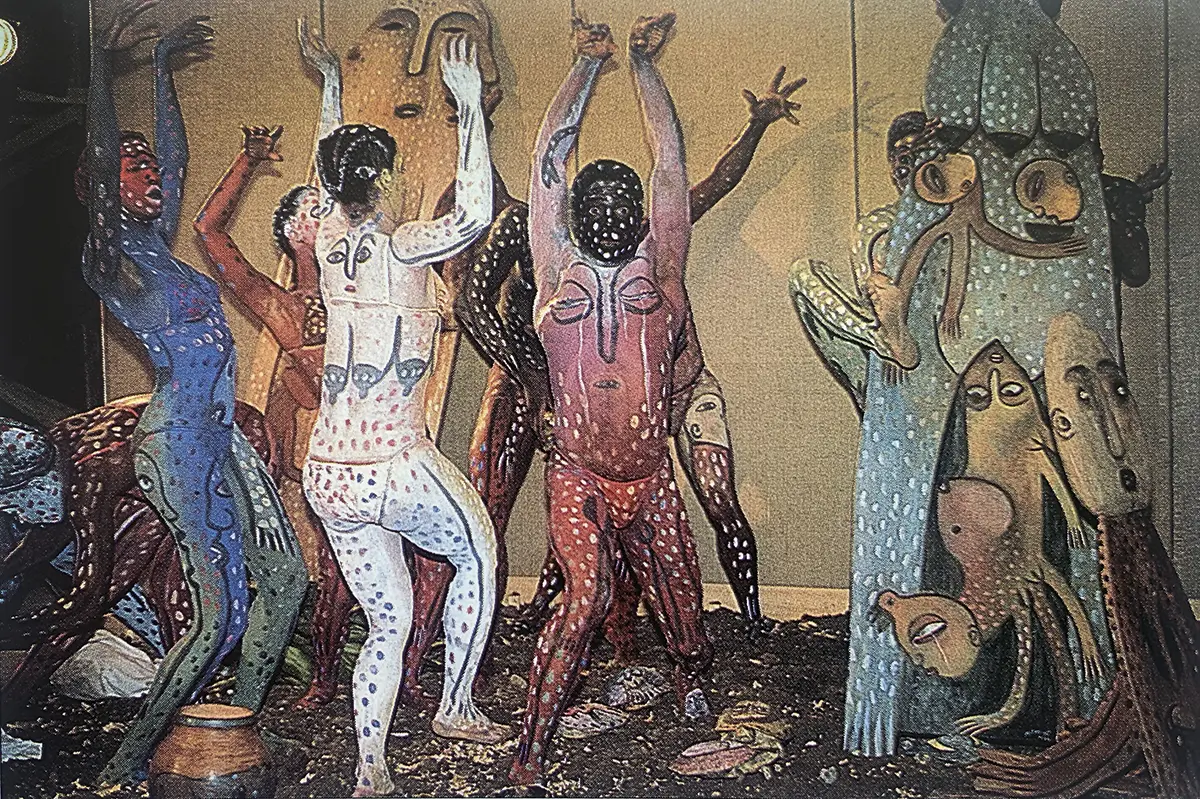
Between 1981 and 1986, several young artists—including Carlos Cárdenas, Aldo Menéndez, Segundo Planes, Leandro Soto, and Juan-si—staged performances in galleries and on the streets of Havana. Among others, we can point out La obra llega después de usted (The work arrives after you) Menéndez, 1982; Ofrenda al espíritu de un nuevo taller (Offer to the spirit of a new studio) and Mercedita la loca del barrio (Mercedita, the crazy girl of the neighborhood) Menéndez, 1984; La expedición (The expedition) and Campamento (Camp) Soto, 1984; Una caja de cristal encima del cielo (A glass box above the sky) Planes, 1984; Hojas clínicas (Clinical leaves) Juan-si, 1985; Naturaleza viva (Living nature) Carlos Cárdenas, 1986; and Así es como es (That’s how it is) Juan-si, 1986. These same young artists later organized the groups that toward the end of the ‘80s demonstrated an extraordinary active participation in this field. In 1986, for the 2nd Havana Biennial, Manuel Mendive presented the performance La Vida (Life) at the National Museum of Fine Arts. The work which was a prize at the biennial, represented a ritual dance based on the Yoruba tradition in which symbolic elements typical of Mendive’s pictorial work came alive. The dancers-actors that participated in the performance appeared totally covered with drawings that made up physical features of the individuals in such a way that, as Camnitzer described: “each character turned into a multiple and polyvalent symbol in accordance with his position and his movements”.7 From that moment, Mendive became known as one of the major exponents of this type of plastic manifestation and, to date, he has staged a large number of choreographies based on Santeria and the Yoruba rituals that inspire it.
A key moment in the history of performance in Cuba was the incorporation of performance into the program at the Instituto Superior de Arte of Havana in the mid-'80s. Even when it was not taught as part of the curriculum, some professors, like Consuelo Castañeda and Flavio Garciandia, promoted performance art in the academic arena. The spread of performance by this means created a wider audience and promoted the realization of performances in different artistic events. At that time, the majority of happenings were elaborate pieces that included artists, musicians, dancers, poets, and even critics.
Toward the mid-'80s, the subject matter of performances turned toward social issues. Artists began to take a critical stance before the social, political, and intellectual reality of the island. Performance became an ideal means to express disquiet, although it is true that, as Camnitzer indicates, these events worked in a different way from what was expected of them in the Western mainstream.8 Since they were used by the members of the third generation, happenings became even more a critique of the system rather than works of a purely aesthetic or conceptual nature (Camnitzer calls these actions a “theatrical and humorous guerrilla warfare”).
As an example of these interventions, we may point out the one staged by Consuelo Castañeda and Humberto Castro at the National Union of Cuban Writers and Artists (UNEAC) (Havana, 1986). Disguised as gigantic phalluses, they unexpectedly entered a conference on sex at the central headquarters of the organization and they sprayed the panelists and participants with milk. Although today Consuelo assures that it was more of a joke than an artistic performance, the intervention served as a reference for successive actions by younger artists.
Performance in Cuba in the mid-'80s reflected, first and foremost, an attitude. The young artists used humor and irreverence to communicate their ideas. The immediacy that characterized the happenings was also explained by the very spontaneity of the messages that they transmitted. For many, performance was a sort of game in which the artist could express himself or herself without the need for necessarily seeking recognition.9
The majority of performances staged between 1986 and 1987 followed these guidelines. Such is the case with Al final todos bailan juntos (In the end everyone dances together), realized by Glexis Novoa and the Grupo Civico at the Galeria Habana. The performance began in the street where two groups of popular dancers confronted one another in a breakdance contest, and it ended inside the gallery where the dancers forgot their initial confrontation and joined the rest of the audience. In addition to making reference to the popular culture of North America, Novoa intended to conceptualize the internal conflicts that existed within the art world at that moment. 1988 was the most prolific year in the history of Cuban performance.
According to the investigation carried out by Pérez and Novoa, a total of thirty-seven performances were presented during that year.10 Many of them were staged by groups of artists who stood out by creating performances that grabbed the attention of the official censors. Among the best-known groups were AR-DE (Arte-Derecho [ArtLaw])—made up of Jorge Crespo, Juan-si, and Eliseo Valdez—Grupo Provisional—founded by Carlos R. Cárdenas, Francisco Lastra, and Glexis Novoa—and Arte Calle (Street Art)—made up of Iván Álvarez, Ariel Serrano, Ofill Echeverría, Erick Gómez, Ernesto Leal, Leandro Martínez, Aldito Menéndez, and Pedro Vizcaíno.
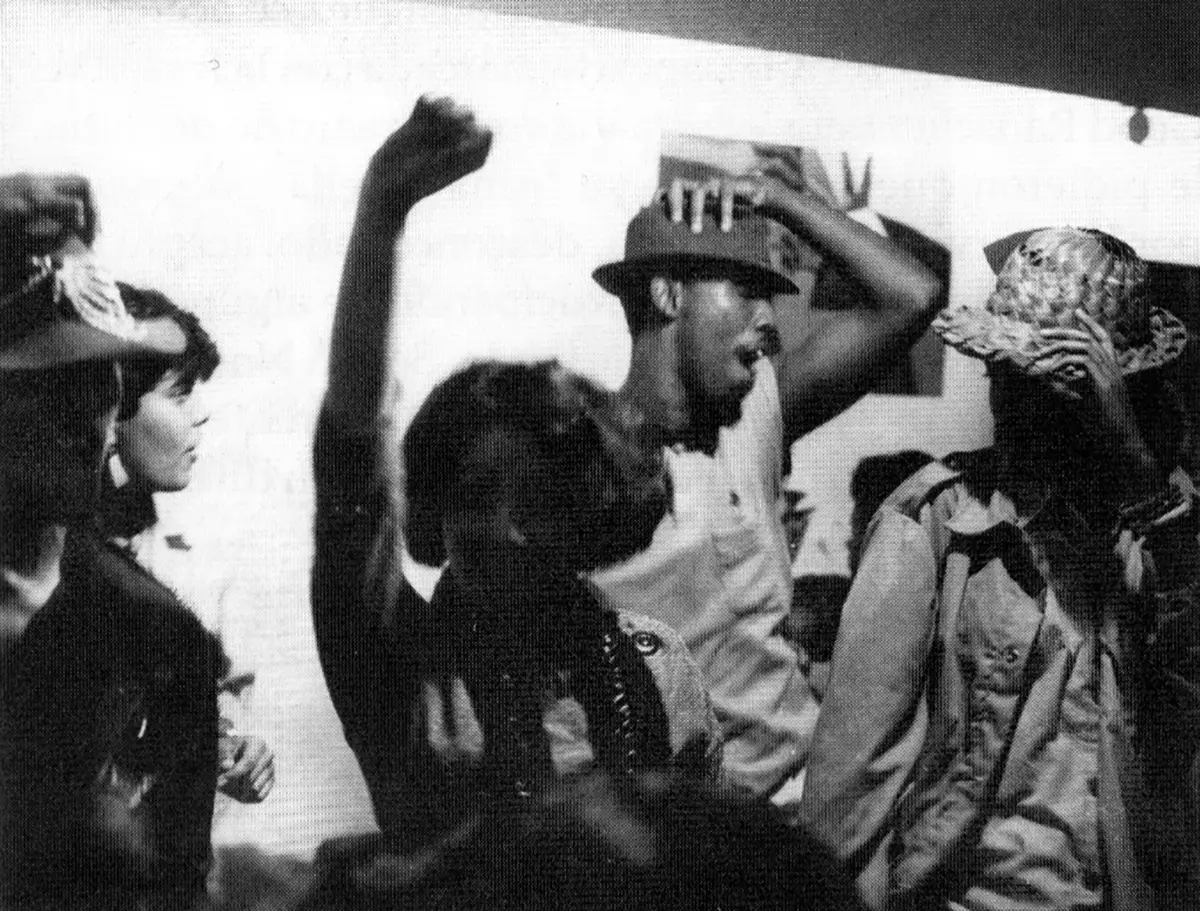
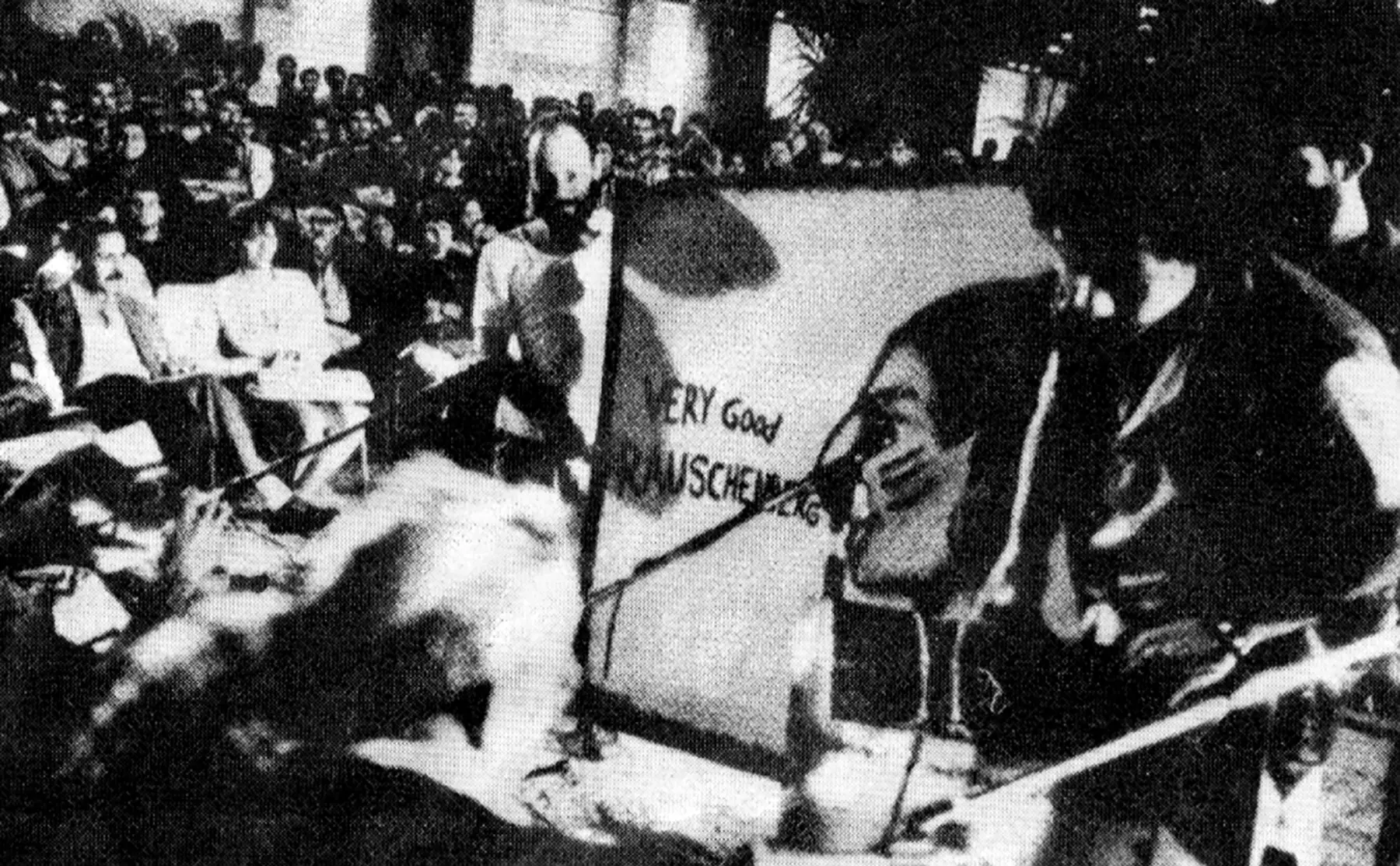
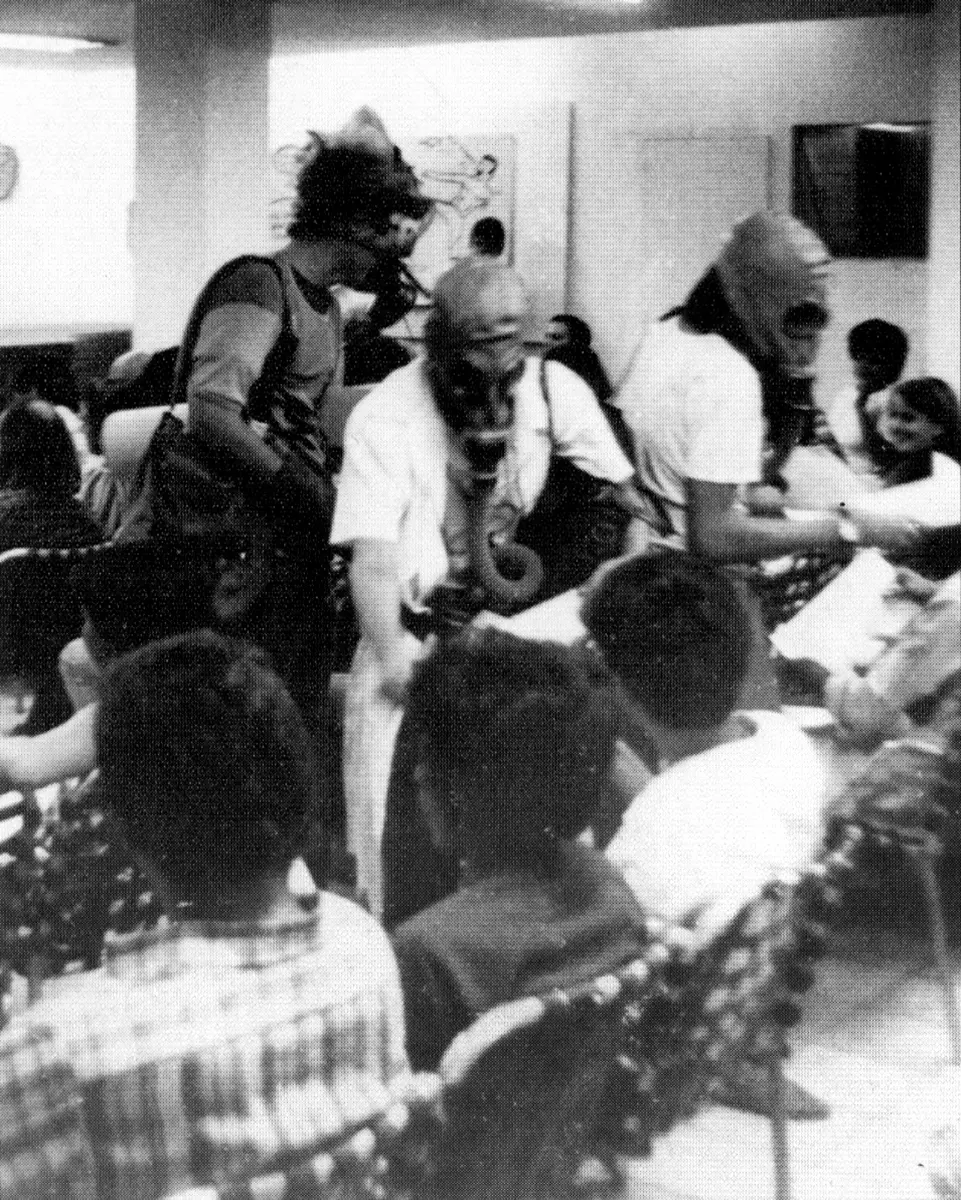
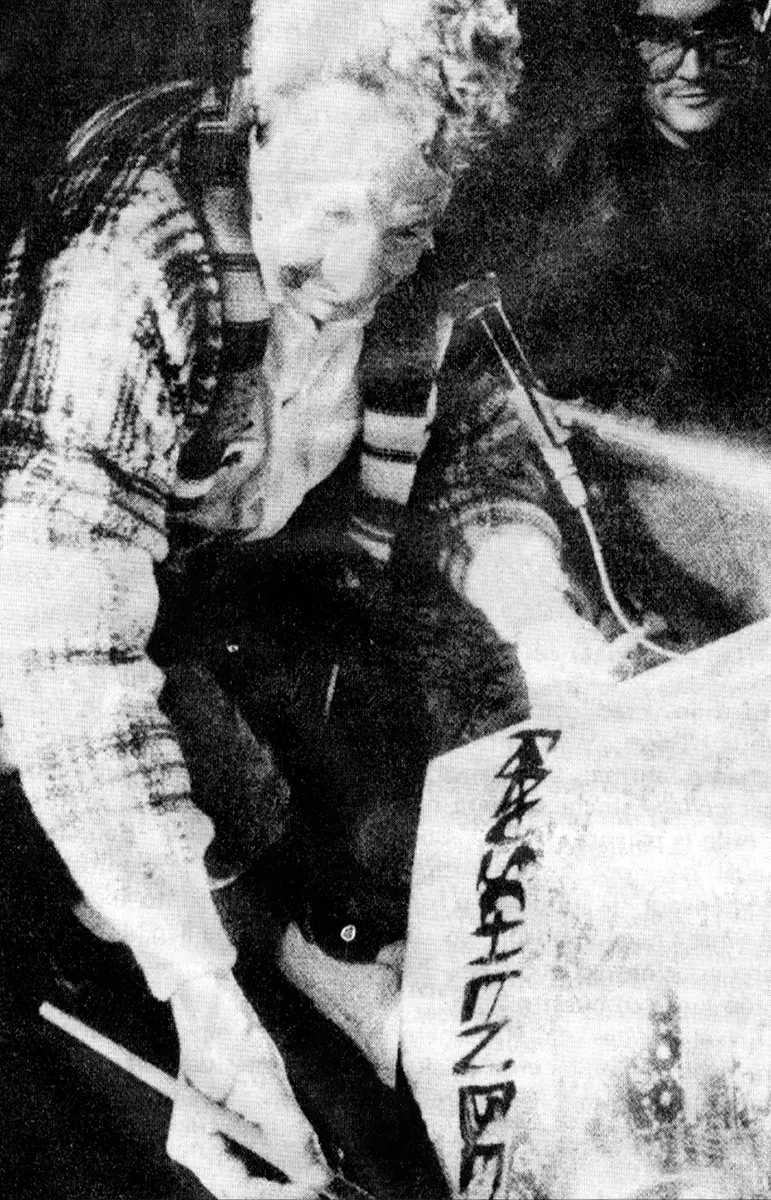
The members of Arte Calle, young artists whose ages ranged from 15 to 18, kept their projects a secret and took advantage of events that were carried out in the city in order to stage surprising interventions. One example of this type of action is No queremos intoxicarnos (We don’t want to get poisoned), realized at the Union of Cuban Artists and Writers, in 1987. The members of the group broke into the conference with their faces covered with gas masks and placards that parodied revolutionary slogans and popular sayings like Críticos de arte: sepan que no les tenemos absolutamente ningtún miedo ("Art critics: know that we have absolutely no fear of you"), En caretas cerradas no entran moscas ("It pays to be discreet; lit: flies do not enter closed masks"), and Revolución y Cultura ("Revolution and culture"). Their principal aim was to use performance as a strategy of direct action and to mock the censorship of the government.11 One member of the group, Aldito Menéndez, staged individual performances following the same criteria. One of the most recorded is El Indio (The Indian), conceived on the occasion of Robert Rauschenberg’s conference at the National Museum of Fine Arts of Havana in 1998. Menéndez came to the event as one more member of the public, dressed as an Indian with feathers, a bow, and an arrow. During the conference, he sat down in front of Rauschenberg without saying a word, but his mere presence tacitly expressed the act of cultural colonization implied not only by the attitude of the North American artist but also by the large number of works that had been placed in different spaces in Havana.12 During the same conference, Grupo Provisional staged the performance Very Good Rauschenberg, during which Novoa, Lastra, and Rodríguez approached Rauschenberg with a placard, painted with the face of an Indian, that read “Very Good Rauschenberg,” and they asked him to autograph it. Surprised by the intervention, the disconcerted artist finally accepted to sign the placard, thus participating in a way in the criticism of himself. According to Novoa, both performances showed an irreverent attitude before “the gringo who was doing what he wanted in different spaces of the city."13
Inasmuch as the dividing line between art and political denunciation began to vanish, censorship reached the limit of physical aggression and the arrest of artists by State security. By stepping on the portrait of Che Guevara in the opening of an exhibition as part of a performance, Arte Calle caused quite a stir. Because of censorship pressures, Arte Calle and AR-DE then distanced themselves from the traditional artistic spaces and looked to the street for a more crude and immediate type of performance, premeditatedly distancing themselves from critics and the cultural elite. Curiously, during the same period, the government decided to use performance in an official event and several artists were invited to stage an activity for the anniversary of Che Guevara’s death. During the meetings prior to the date, several ideas emerged, such as Aldito Menéndez’s proposal to write “Reviva la Revolu” (Relive the Revolu).
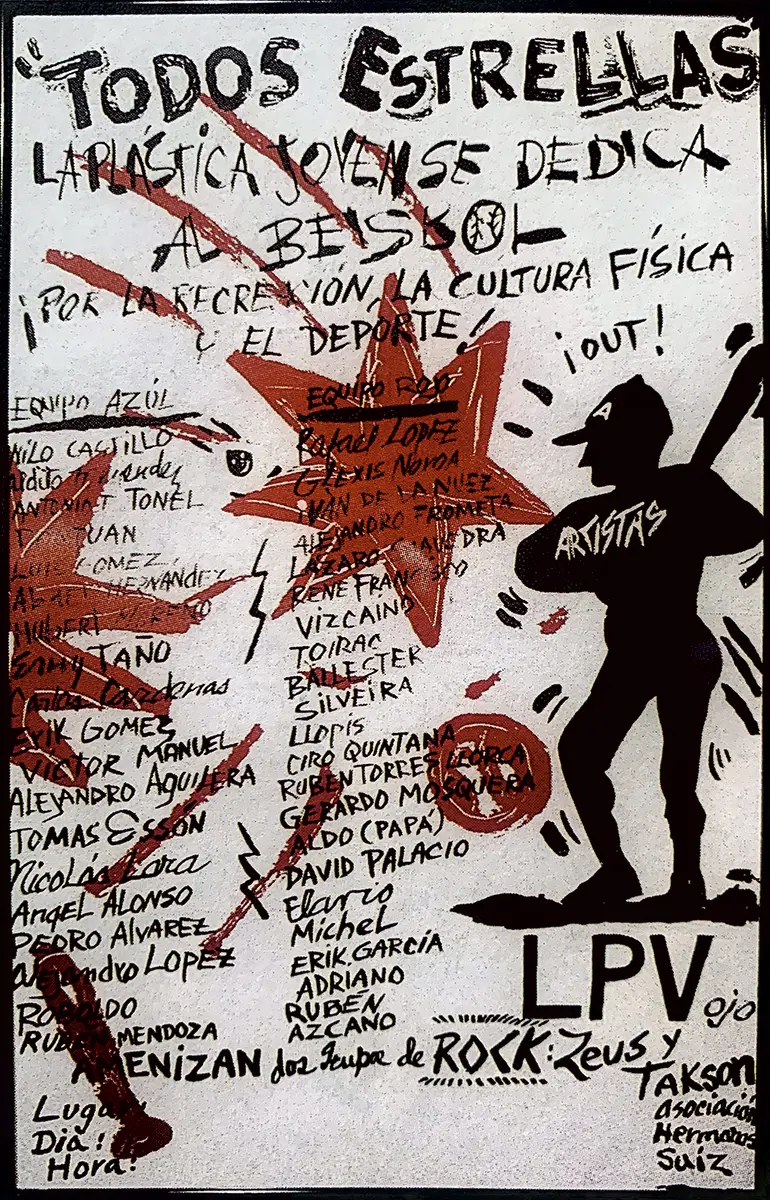
In the end, the government accepted that the word “Meditar” (Meditate) be written on a large mural, a more reflexive and safer term in accord with their interests. At the end of the decade, the censorship and the difficulty in obtaining funds and spaces outside of the official sphere made the work of the artists impossible. In a large-scale demonstration of protest, more than thirty artists and intellectuals took over the Marcelo Salado Sports Center in Havana. Later known as El Juego de Pelota (The Ballgame, 1989), this performance expressed the discontent due to the restrictions that they experienced at every level and it suggested that, if they could not continue to create artistically, the artists would devote themselves to the practice of sports. This act marked the end of the boom of Cuban performance.14 The majority of the artists who actively participated in the development of performance in Cuba in the ‘80s began to emigrate at the beginning of the ‘90s. The performance of aesthetic discourses of many of these artists disappeared with their exile. Because of this, some consider that performance as an aesthetic proposal was not a great concern to them. What is certain is that performance played a key role in the development of the arts in Cuba in the ‘80s, both on an aesthetic level and on a level of participation and expression. The fundamental characteristics of Cuban performance differ from the performance realized in the international context, and for that very reason, it has great value from a historical point of view. Among the general characteristics that stand out are the use of non-artistic contexts, such as alternative spaces; the use of recycled materials; the performance of the event without previous rehearsal; the interest in documenting the process and the event with only minimum resources; the use of communicative elements that were easily decipherable by the public; the criticism of the totalitarian regime; the clear desire to broaden the concept of art; and an explicit sense of humor.15
Performance as an aesthetic proposal in Cuba had tremendous success. According to Soto, this success was due in part to the predilection of Cubans for meetings and social events. What is certain is that a reaction to an artistic proposal as visceral as that of the public of the period has rarely been seen. It is difficult to explain to people who have not lived in Cuba how important the performances were and how relevant the collaborative element was for everyone.16 The public needed to express itself, and the artists were a sort of Robin Hood who broke the censorship for them.17 In the case of Arte Calle, for example, each time that the group wrote a sentence on a wall of Havana, the rumor spread, often modified and augmented by the popular imagination. On one occasion, they wrote “El arte esta a tan sólo unos pasos del cementerio” (Art is only a few steps from the cemetery) in front of the Columbus Cemetery of Havana. The rumor that spread was that a group of young people had painted the following words on a tomb: La libertad ha sido enterrada por la Revolución (Freedom has been buried by the Revolution). Perhaps the most important aspect of performance in Cuba in the ‘80s was the use of conceptual art as a collective text that allowed multiple interpretations, an art in which not only the artists but also the common folk saw their reality reflected.
NOTES
1. Luis Camnitzer, New Art of Cuba (Austin: u of Texas P, 1994).
2. Leandro Soto, “Performance in Cuba in the 1 980s: A Personal Testimony,” Coco Fusco, ed., Corpus Delecti: Performance Art of the Americas (London: Routledge, 2000) 267.
3. Soto 268.
4. Soto 26.
5. Camnitzer 175-200.
6. Gerardo Mosquera, “Volumen I, cambio en Ia plastica cubana,” Arte en Colombia Internacional, 40 (1989).
7. Luis Camnitzer, “La Segunda Bienal de Ia Habana,’” Arte en Colombia international, 33 (1987): 83.
8. Camnitzer, New Art in Cuba, 175.
9. Glexis Novoa, interview by Prancine Birbragher, May 2000.
10. Glexis Novoa and Emilio Pérez, curators, Cuban Performance Art of the 1980s (Chronology) (Miami: InterAmerican Art Gallery, 1998).
11. Aldo Damián Menéndez, “Art Attack: The work of Arte Calle,” Corpus Delecti, 278.
12. Menéndez 280.
13. Glexis Novoa, interview.
14. Novoa and Perez; Menéndez.
15. Soto 272.
16. Soto 268.
17. Menéndez, 277.
FRANCINE BIRBRAGHER
Candidate for the Ph.D. in Latin American History at the University of Miami. Art Critic and Historian.