
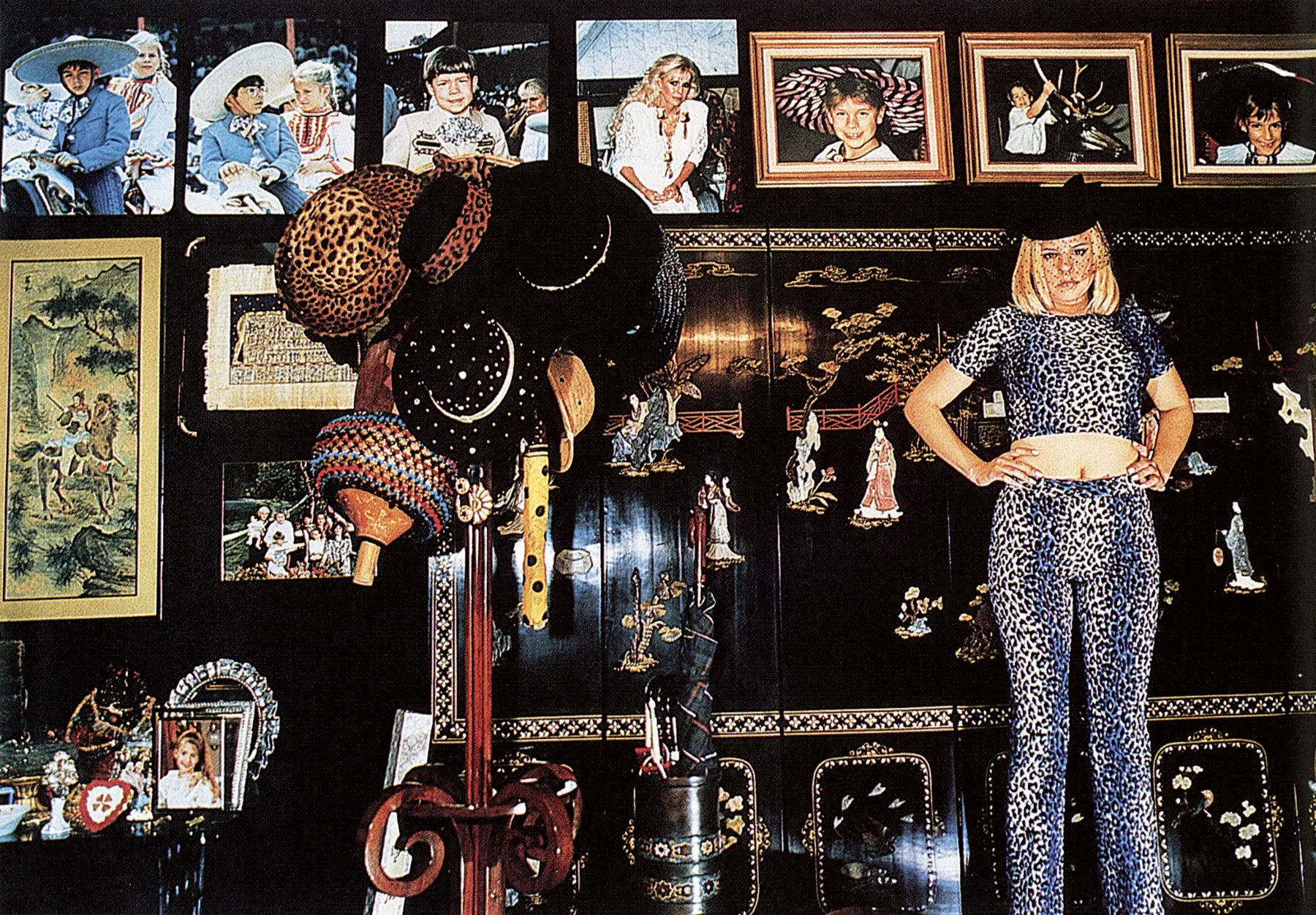
It could be said that Daniela Rossell’s work is a sadistic photographic exercise through which she ridicules the upper classes (especially but not exclusively Mexican) by simply letting her characters stage themselves in the intimacy of their homes. But Rossell’s work goes far beyond the parody. Her influences range from Velázquez’s palatial scenes to Leni Riefenstahl’s eulogies of power and include as well her anthropological and adoring study of the Nubian. All the Best Names Are Taken is Mexican-born Daniela Rossell’s first solo show in New York. This selection of recent photos is divided into two series: Olympic Towers and Ricas y famosas (Rich and famous). The first series is devoted to images of some of the extravagant tenants living at the Fifth Avenue skyscraper of that name; the second and longer series is a collection of images of a number of Mexico’s powerful elite in their natural habitat, surrounded by their personal belongings, furniture, art, and servants. Without ever preaching or moralizing, Rossell uses her corrosive humor and splendid eye to show, without didacticism or doctrinaires, how right F. Scott Fitzgerald was when he said that the very rich were different from the rest of us. A first reading of these portraits offers a perspective on the scale of the wealth and outsized egos of her characters, who in a way fancy themselves as if they were posing for Vogue, Vanity Fair, or at the very least, the Spanish socialite publication Hola! But at the same time, every photo tells more complex and involved stories about Mexico’s plutocracy. Every small detail in the surroundings expresses the excess, indulgence, and self-celebration of success and the banality of the glamorous fantasies of these pampered personalities. Apart from gaudy luxury and ostentatious decorations, best represented by the abundant, delirious, and pretentious bad art and collections of blackamoors, there is a vehement desire to portray lust in some of the youngest characters of the series. This is a mild but obsessive sexual innuendo that draws clichés (poses, revealing clothes, or other suggestive artifacts selected by the characters themselves) from soft-core porn, like the femme fatale who lays seductively on a couch with Central Park as a background to the hilarious minimal comedy where a blonde woman leaning forward is contemplated in disbelief by the driver of a passing car. This could be brushed off as a reaction to conservatism and sexual repression among Mexican higher classes, but most likely it is a desperate search for a personal expression outside of the social boundaries in an attempt to establish some intimate link with the photographer and reveal their true selves. That is probably the reason why even though the pictures are obviously staged, they are amazingly sincere. Rossell’s images are evocative of Tina Barney’s family photos but with a twist. She proposes that identity is a construction of the milieu and that photography is a quasi-esoteric device capable of revealing dreams and desires. Her work is closer to an observation and intervention approach to photography than to the dominant trend of the nineties of pseudo-spontaneous and grungy snapshots.
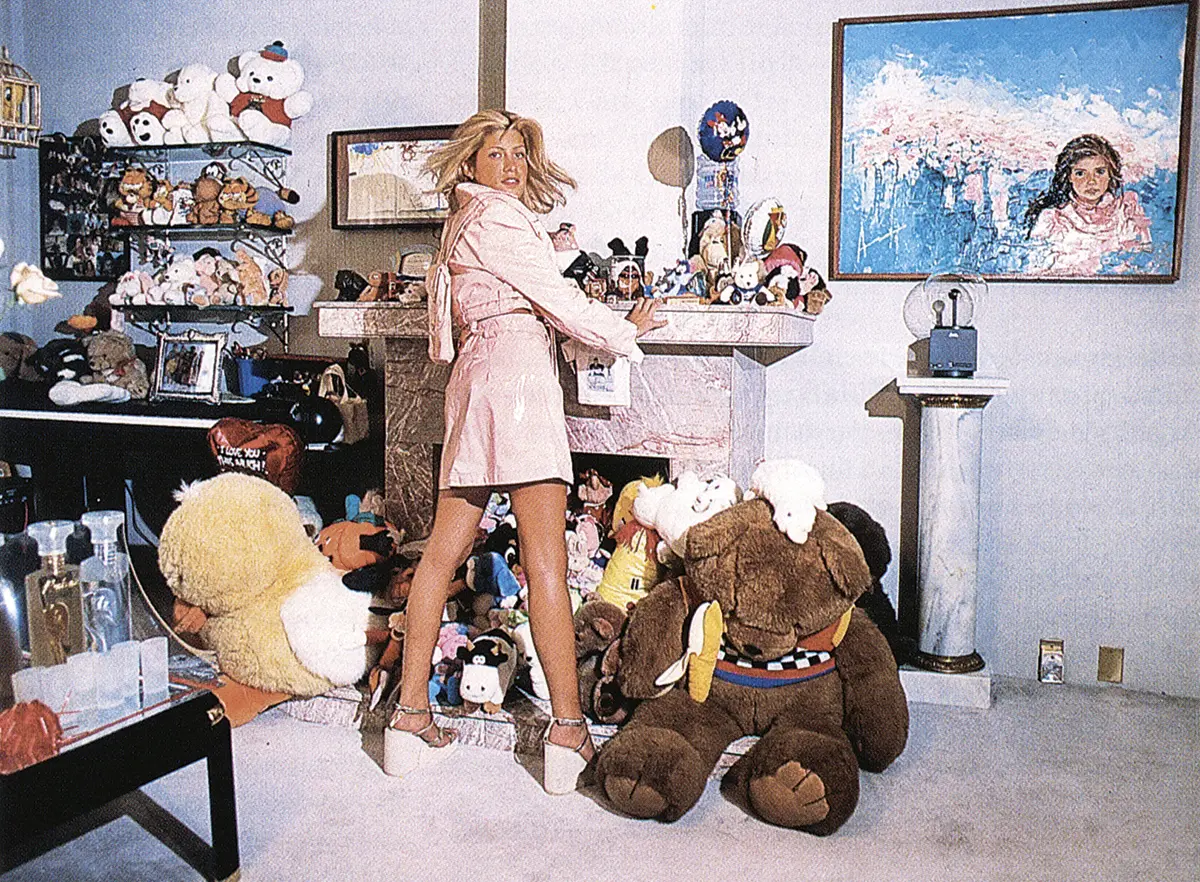
There is no need to manipulate the spectator to cast doubt on the suspected origin of the character’s fortunes. Without an insight into the identity of the subjects, we could easily think that they are just some anonymous nouveaux riches. But knowing who are some of the characters adds to the show a political and moral reading. One of Rossell’s subjects is Paulina Díaz Ordaz, the granddaughter of a former president and stepdaughter of Raúl Salinas, the brother of Mexico’s former President Carlos Salinas. Her grandfather, Gustavo Díaz Ordaz, was the president during the worst civilian massacre in modern Mexico’s history (the indiscriminate repression by the armed forces and paramilitary squadrons in Tlatelolco in 1968) and Raúl Salinas is now in prison accused of murder, money laundering and several other crimes committed during his brother’s administration. In one of the photos, Paulina poses in front of one of Ratúls paintings. Most of Rossell’s subjects are young women with a couple of exceptions, like Emilio Salinas, the son of the internationally infamous Carlos Salinas, now living in exile in Ireland. Emilio wears a formal suit and a gloomy look and is standing over the trunk of a huge dark and twisted tree whose branches seem to engulf him. This is one of the most obvious, but at the same time, most fascinating metaphors of power in the work of this artist.
There is the risk of seeing Rossell’s photographs of overblown personalities only as social, political, and ethnographic documents while ignoring the esthetic elements of her large format photographs, coherent visual grammar, radiant composition, and beautifully balanced structures. But more impressive is the extraordinary way in which she frames her subjects and establishes reflections, echoes, and resonances between the characters and settings. This work offers also new readings of traditional and simplistic perceptions of colonialism in the “third world.” Separated from their context, these magnificent oversized C-prints become distant from their original meaning. Nevertheless, they capture a formidable universe of appearances and illusions, of expensive replicas and boundless consumerism. Rossell is not only an excellent photographer but also a talented storyteller who, believe it or not, has an enormous respect for the characters of her wordless narratives.
This text was written on the occasion of Daniela Rossell’s show at Green Naftali Gallery, New York.
NAIEF YEHYA
Cultural Critic, Industrial Engineer, and fiction writer. Lives in New York and Mexico City.