Escapism is one of the most common reactions of the discouraged individual to the pressures of a hostile social, economic, and political environment. These expressions take unexpected forms, which are sometimes incongruent and often expressed at the subconscious level. It was the diversity of such expression that was part of the subject of this exhibition entitled Idillicum: Desiring, Dreaming, Longing, as reflected in the work of a number of Colombian artists.
Consciously organized as a response to the political situation existing in Colombia and to the widespread apathy in which the middle class—as the invitation stated—only thinks about “a house in Florida”, the artists presented their works in a spirit of sharp criticism of the fascination with attractive and beautiful things, things one does not possess, a fetishistic attitude to all those things that help us to forget our present reality. Our dreams and illusions, as these works made clear, reveal not only what we want to be but what we want to deny in our own identities. The various works covered a wide range of themes—consumerism, sexuality, romanticism—which were nevertheless linked to the context of desire.
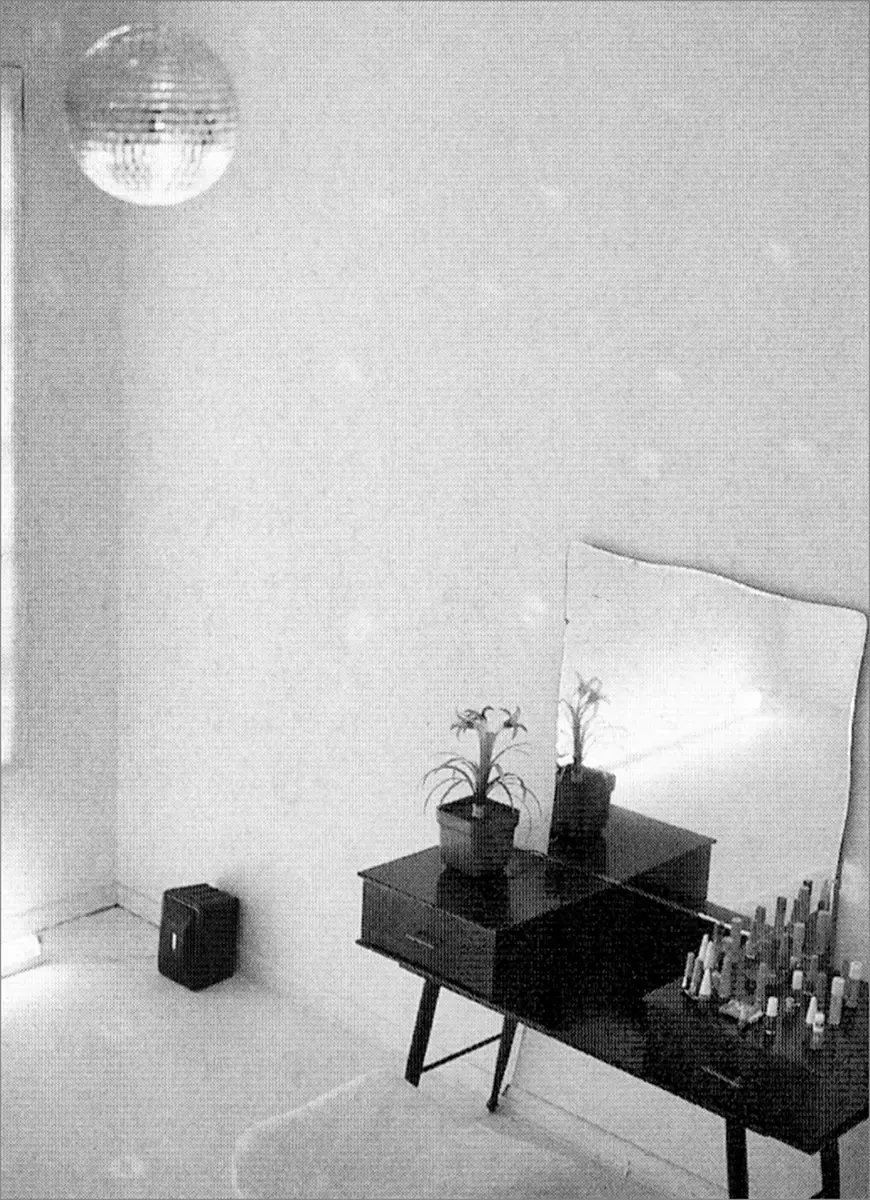
The work of María Margarita Jiménez reflected the obsession to possess, and if possible, to represent what is beautiful. The artist constructed a self-indulgent atmosphere in a room with pink lights, soft music, a dressing table with beauty products, a recording of voices describing the objects that they thought were most beautiful, and a series of drawings on the wall illustrating these same descriptions. Jiménez brings into play the ingenuity of a children’s game as the basis of her strategy; she invites us to reflect on our own aesthetic hierarchies and establish our own desires, as well as the dark reasons that govern them.
Juan Mejía and Giovanni Vargas presented a room covered with photographs of parts of the world, like postcard images taken from the collections of ordinary tourists, with pictures of palaces, monuments, museums, and ruins. The installation was accompanied by a recording of the voices of the tourists in question who described their travel adventures, most of which were banal and frivolous. There is nothing more boring than listening to the travel adventures of other people and sitting in front of an endless series of other people’s travel pictures. Mejía and Vargas, who undoubtedly realize this, tried to make their installation reflect the impersonality of these images and the fact that although the idea of travel is seen by most people as a unique, unrepeatable, and memorable experience, it becomes completely trivial and in the end alienating when it is mixed with the experiences of others. By emphasizing the impersonal dimension, these artists were proposing a critique of the romanticism of travel and the way in which it is supposed to transform our lives.
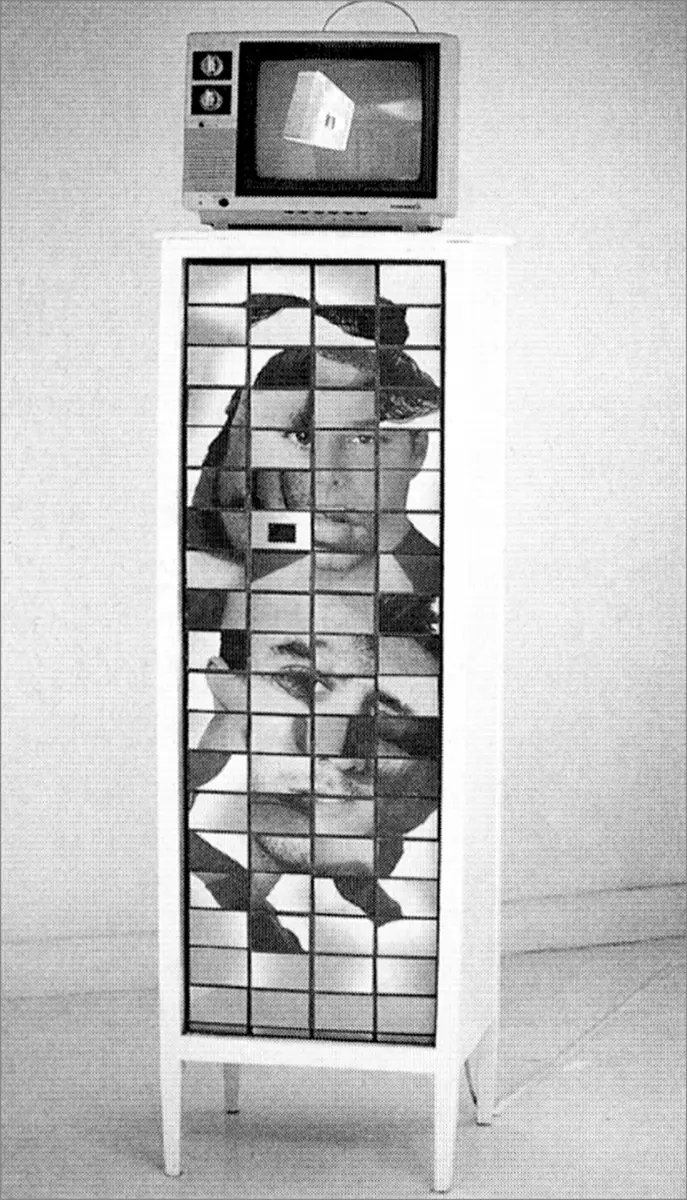
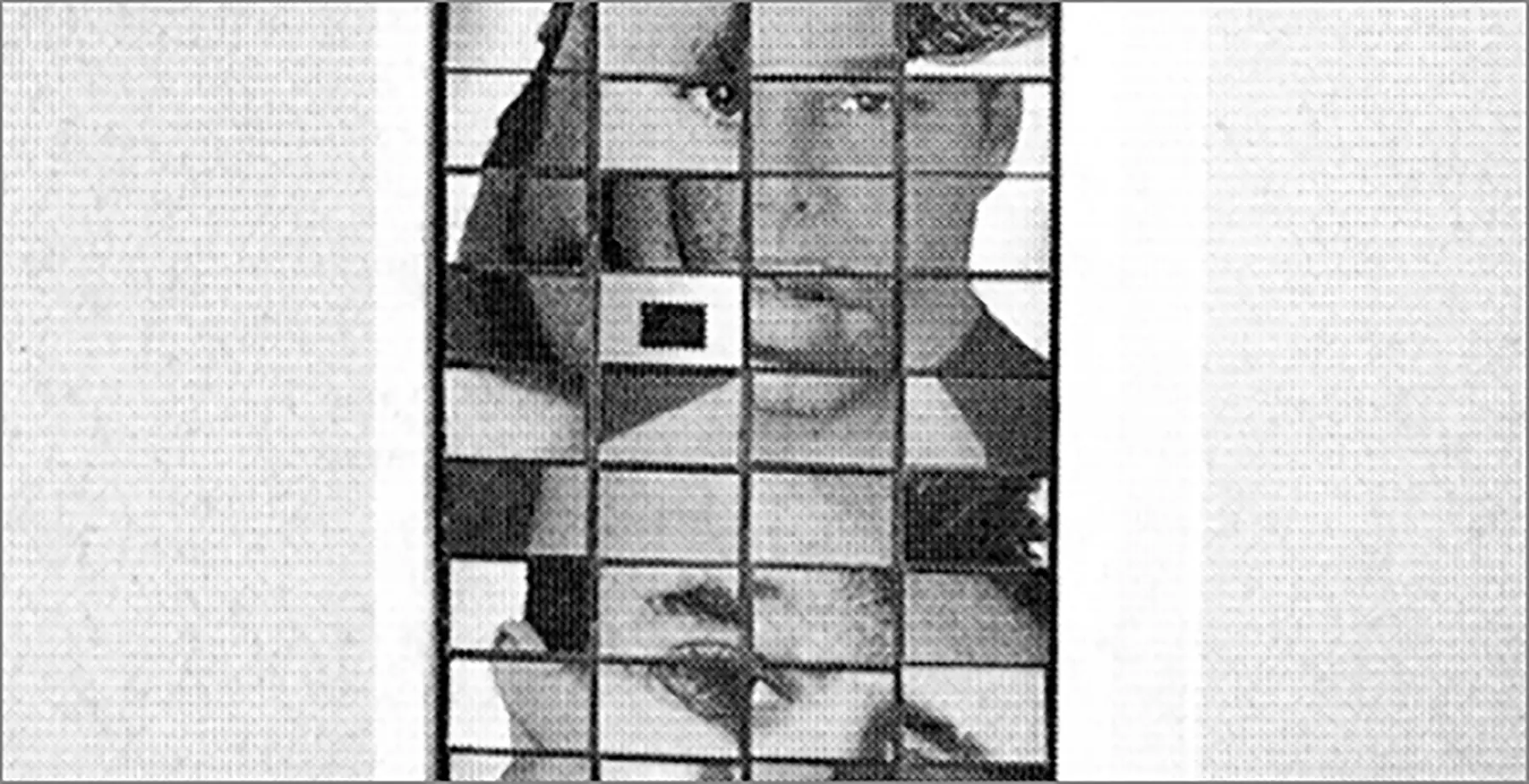
For its part, the group of artists known as Malas Amistades (Bad Friendships) highlighted the way in which record companies and singers seduce us and control the market of our fantasies. The group presented an installation comprising a number of elements in which gestures reflected the state of mind of a music fanatic: a piece of furniture made up of a photograph of Enrique Iglesias and another of Ricky Martin, a tower of pirated cassettes, and a review from a magazine of a first recording by the same Malas Amistades group, which half jokingly and half seriously has created its own rock band. The work focused on the desire of the music junkie to belong to the same world that he admires so much, to establish an imaginary dialogue with his idols, and to take possession of part of this same world.
Other works included the suggestive photographs by Ernesto Ordoñez, who showed consumer objects (such as ice cream and lollipops) with the clarity and saturation of color characteristic of commercial advertising, and with clearly erotic tones. The objects of desire, though attractive, betray their own artificiality (another piece shows lollies made of plastic). The work establishes a direct relationship with sexual desire and the action of consuming—suggesting for example that sexuality plays a fundamental role in capturing our attention as consumers—though this initial attraction is only a husk with nothing in it. Juan Carlos Haag also explored the commercial world by using a segment of a television commercial in which he himself participates as an actor.
Extracting a three-second sequence from the video and placing it in a dizzying loop, Haag recontextualized the meaning of the text and the images of the video clip to create a kind of allegory of the state of mind of consumer youth.
Victor Escobar presented two very different videos, one showing an eye in constant movement in search of a sexual object, and the other entitled Nymph and Skinheao’, with turn-of-the-century elements of an ambiguously symbolist and contemporary nature, in which mythical figures emerge in unreal scenarios, engaged in a relentless search that is no less confusing in its objective.
The works presented in this show oscillated between criticism and reflection and could be seen as frankly honest and decisively direct expressions of artists who, although addressing certain states of mind and or mentalities in a spirit of irony, saw themselves as engaging in these same practices. In a sense, each artist creates his own idyll, expressing it and putting it into practice perhaps in an attempt to exorcize it Novalis, said, that when we dream we are dreaming we are close to waking up.
PABLO HELGUERA