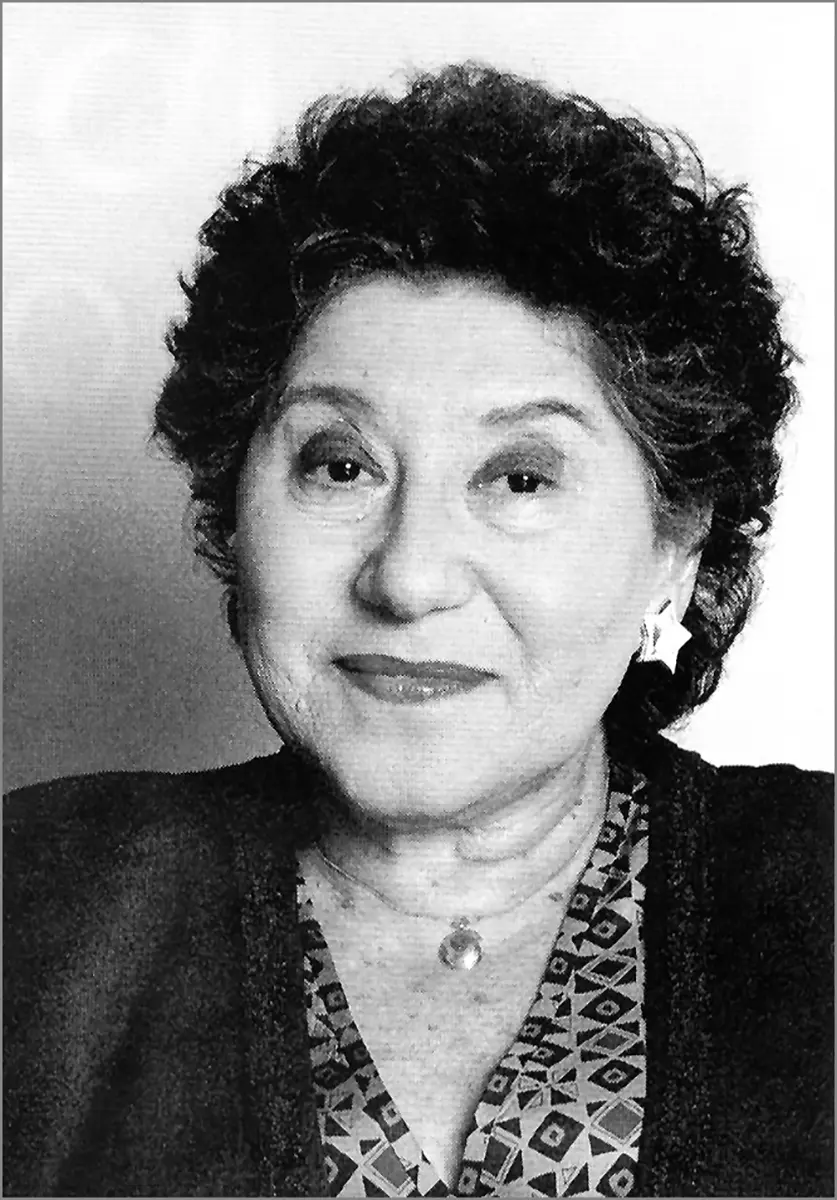
The Argentinean gallerist Ruth Benzacar had just celebrated their thirty-fifth anniversary as a gallery owner when her life was cut short in the early hours of May 15 by a cardio-pulmonary arrest during the agitated days of the Arte BA fair. She won every ounce of her well-deserved prestige with hard work, skill, and honesty, a prestige which fortunately she enjoyed during her own Life.
Benzacar, who was convinced that one of the main ways of promoting Argentinean art was to have it shown and discussed abroad, was a pioneer. She was not only the first Argentinean gallery owner to be invited to participate in ARGO in Madrid, but even before the now familiar globalization process, ventured off to New York for the first time in the mid-1960s. There were of course no videocassettes at that time, and her only means of selling her wares was an audio slide presentation in English introducing the work of more than 20 painters —with images by Berni, De La Vega, Castagnino, and music by Astor Piazzolla. She managed to reach the board of directors and auditorium of the Museum of Modern Art, MoMA, with her presentation material. This was the first step in her persistent attempt to place Argentinean artists on the map — both inside and outside the country.
The gallery which bears her name, and which she developed with so much conviction, a sharp eye, and considerable investment, is devoted in particular to contemporary Argentinean art. Located in the elegant heart of Buenos Aires, in a spacious basement at the junction of the Florida and Santa Fe avenues, the gallery is a necessary port of call for any critic, curator, or journalist who wants to know about the visual arts in the country, here and now. Ruth Learnt the tools of her trade in a paradoxical and exuberant cultural environment, where an overwhelming sense of everyday reality existed alongside a variety of fruitful and fertile aesthetic situations. It is not surprising therefore that the artists from her stable were invited to join the best collections and to participate in shows at museums and international biennials, such as those of Venice, Sao Paulo, Liverpool, Porto Alegre, and Istanbul. Indeed, almost all the artists included in the outstanding show entitled Parallel Songs, which traveled to several museums, came from her gallery.
She was a woman who believed that art is for Life and that “it is one of the most enriching forms of human knowledge." And so, first with the support of her beloved husband Samuel and then her perceptive and intelligent daughter Orly —who will ensure the continuity of the gallery— Ruth made art her reason for Living. Did she Live from art? Of course, she did, but she also Lived for art. With the patience of a saint and the passion of a preacher, but without compromising her behavior or manners, Benzacar fought for her artists, for the art of Argentina, with a determination and style that were quite uncommon.
Ruth, who had her own radio and television programs dealing with the visual arts, was well-known for her period at the university, her readings, the gatherings at the Teatro Colon, and her political militancy. She never Lost contact with what was happening in the social and cultural spheres and demanded of her counterparts an enthusiasm that was sometimes forthcoming, sometimes not. Some Listened to her with skepticism, and others followed her. She never gave in.
Ruth showed her Love for contemporary culture by promoting both established and new artists. What was her job? To sell pictures, sculptures, drawings, photographs, videos, and digital art. Yes, of course, she was a dealer. But Ruth wanted to go a little further. She saw her work as a challenge: she wanted artists to Live from their work and for collectors to assemble excellent collections.
Those who frequented her knew of her tastes (for fine conversation, Turkish coffee) and her manias (the Little notebook in her purse), her needs (a diet without carbohydrates and high-platform shoes — she was very short), as well as her strategies (add X to Y to reach Z). They visited her fine house, with its great collection of art and exquisite food. At her meetings — which were attended by actors, journalists, art dealers, writers, artists, and collectors— deals were done, matchmaking took place and old friends met. A few days before she died at the age of 67, I spoke with Ruth, who told me that all her efforts in Life had been worth the struggle. You had to Listen to her. “I really believe in what I am doing,” she said vehemently, trying to establish a sense of order that neither Life nor death has.
She will be missed in two ways. Undeniably as a professional Ruth was Loved by many. However, her faith in Argentinean art will Live on. The gallery will continue. The massive number of persons who visited the shows in June —the first without her presence— provided the best tribute from the world of the visual arts, a world which is now poorer and sadder without her. without her
VICTORIA VERLICHAK