
The exhibition of work by Silvia Gruner at the Carrillo Gil Museum in Mexico City between March 1st and May 28th was an invitation to reflect and to laugh. Perhaps a reflective kind of laughter or an exhilarating kind of reflection. Regardless, one thing is clear as we look at, discover, or contemplate the proposals of this Mexican artist of Jewish origin: the way in which objects, the body, memory, and desire are woven into her works. The title of the show, Interior Circuit, was an attempt to conceptualize the variety of objects presented in this space, consisting of installations, photography, sculpture, video, and documentation of performance artworks.
A constant feature in her works is the theme of time, which has passed. For Gruner memory is a network of the past: the mythical past, the historical, religious, and cultural past, our own past. Gruner’s use of the past can be seen, for example, in the myth of Venus (mythical memory), the presence of the holocaust and the motifs of pre-Hispanic religion (historical and cultural memory), and her personal past (the reference to the family history of Jewish immigrants in Mexico). In this way, textuality and objectuality are co-implicated and interrelated to such an extent in her work that an almost infinite number of meanings emerge that are the result of a crisscrossing of signifiers constructed through the itinerant use of memory and the flesh. In the case of memory, the supports themselves become ritual objects in which the artist exploits the semantic values that characterize them: clay, grinding stone, human hair but also family photographs or technological artifacts used to manufacture soap in a small factory in a popular Mexican district. A piece of machinery that has never broken down, as the text points out, one that has a strong cultural meaning for the artist.
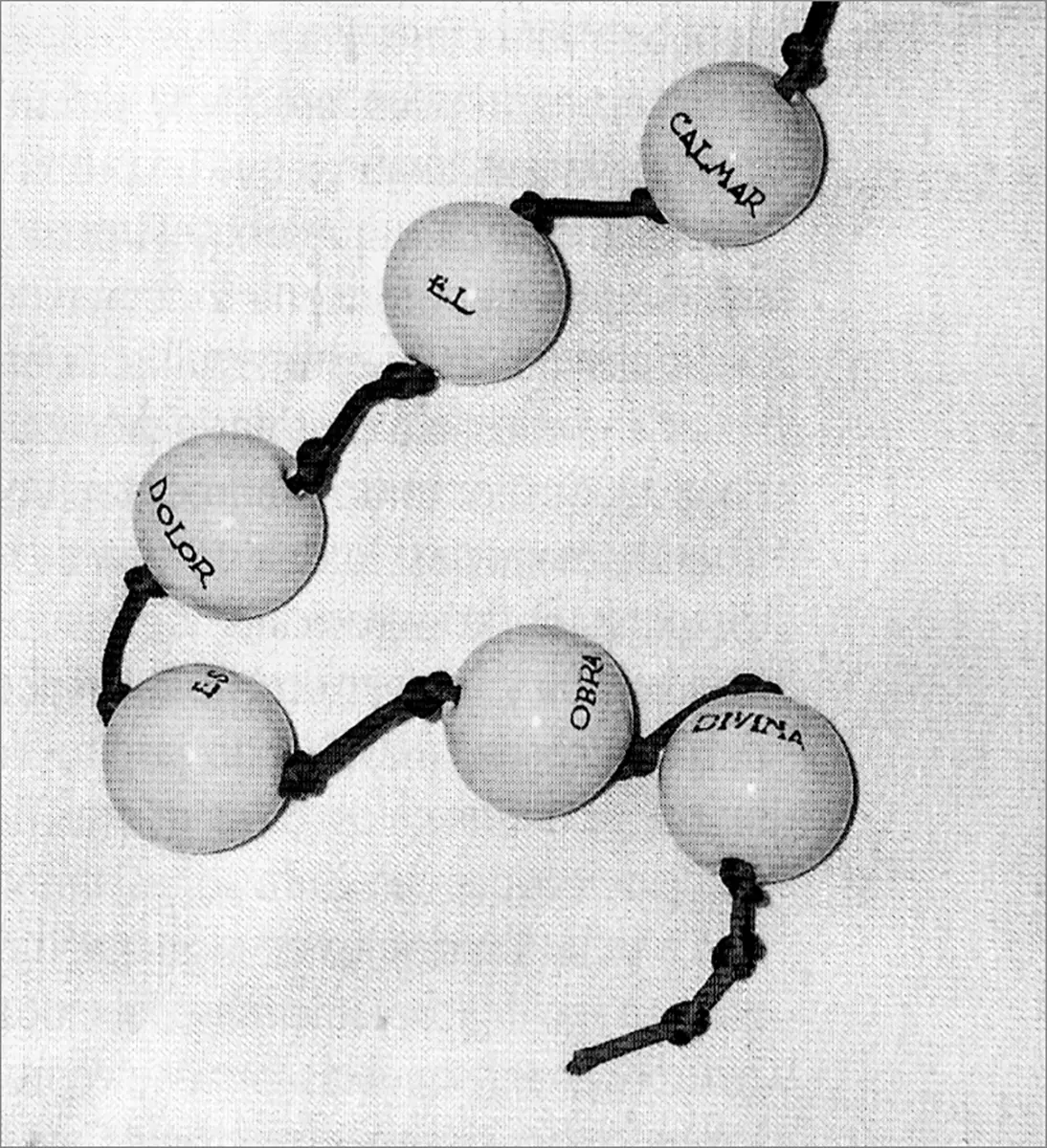
Along with this repeated presence of the mythical, historical, and personal past, there was a further element in the works on show. Desire appeared as a form of the present that lay in wait and in despair in her works; a desire that was far from repeating the canons with which the feminine is traditionally defined. For Gruner desire is more a problem of anguish and uncertainty than a problem of longing or a psychological structure, which sees the feminine as a matter of passivity. In this sense, the artist has a clear awareness of time and desire as fragmentation. At least this seems to be suggested by certain works in the show in which the fragments and the destruction of the plastic fabric of a garden chair become a metaphor for jealousy, or the cracks in a floor held together with pieces of adhesive tape are a sign that something needs to be repaired. In any event, the way in which Gruner assumes the forms of the present as desire and passion (Jealousy, 1999, and Repairing, 1999) is mediated by the dialectical interplay between text and image. This is a mediation that furthermore presents itself through the actual meaning that accompanies the objects: a damaged garden chair in the case of the concept of jealousy and a floor held together with tape to evoke the idea of repair and mending.
In addition to exploring the forms of memory and recollection and the presence of desire, Gruner’s poetics also have another aesthetic characteristic: their sense of humor and carefree-ness. We could not say that her work is ironic, but it is undoubtedly enjoyable and witty. I am referring here to a video in which the artist reveals, with impeccable technical cleanliness, and above all discursive clarity, the laughter caused to both her and ourselves by the use of a rather smooth romanticism from the 1970s. In a work entitled Lazy Susan, a sequence of almost four minutes showing a rotating centerpiece for a table, such as those used for presenting marmalade, bread, or any other foodstuff on which there are two glasses dancing to the rhythm of some classic piece of disco music. The interesting feature in this work is the way in which the artist makes the table, plates, and cutlery (traditional symbols of the feminine) into a motif for comic sympathy. This goes much further than the obvious and familiar forms of subversive feminist discourse and has to do with a certain sense of amusement in which the actual re-semanticizing of the objects evokes a sense of joyful pleasure in which these “paradigms” are reduced to the point of absurdity in which they lose all importance.
In the present context of art in which gender difference, multiculturalism, nomadism, exile, memory, oblivion, and fragmentation would seem to indicate the demise of narratives of identity, Gruner’s work proposes an “interior circuit”, where the body is text and consciousness is an object. Thinking through the limits of identity also means thinking about the possibility of art and culture beyond the solipsism of subjectivity. It means conceiving—and conceiving oneself—as an itinerant and open-ended process. It means transcending the limits of any territoriality.
JOSÉ LUIS BARRIOS