
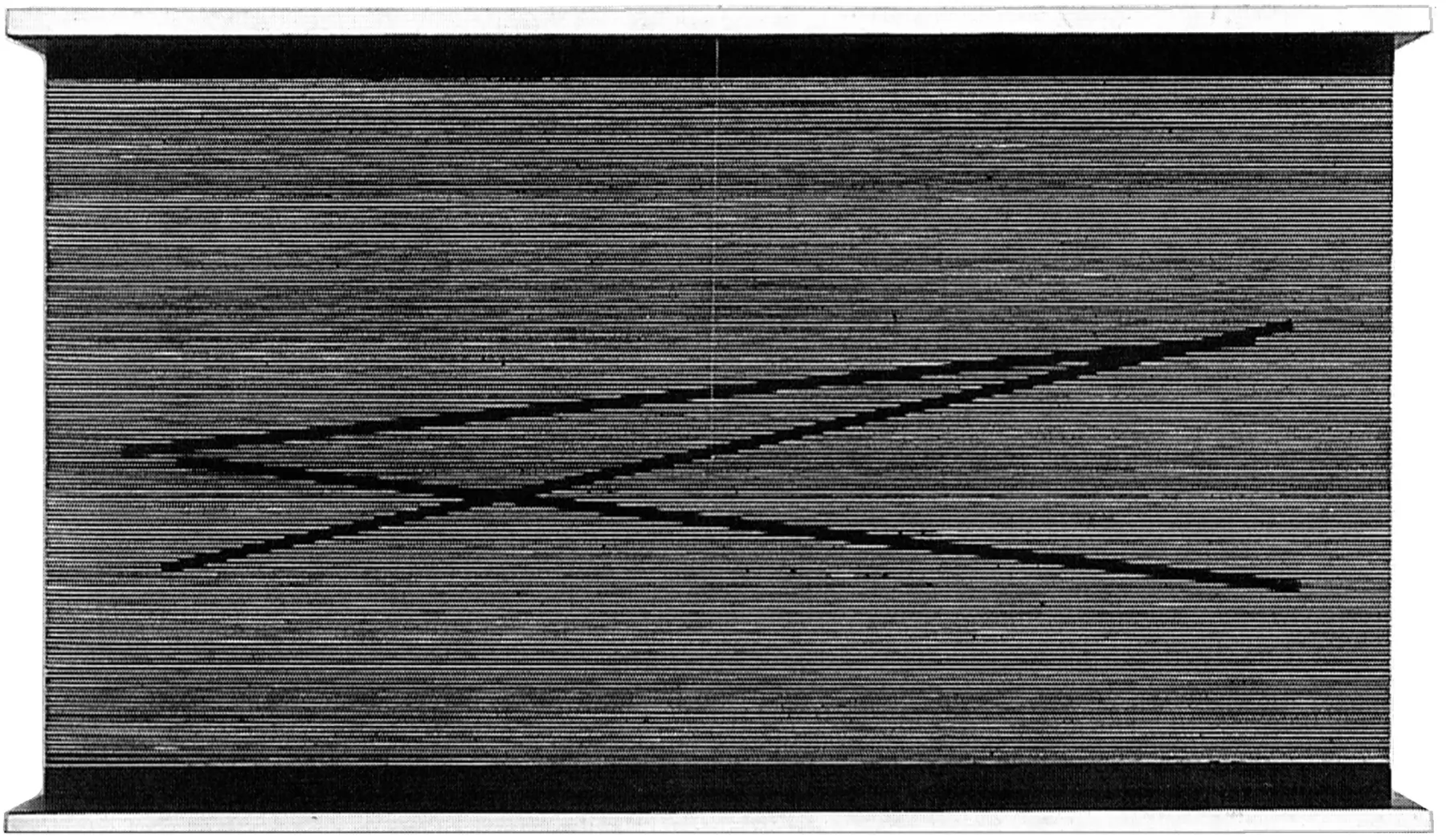
Collection of the Jesús Soto Museum, Alejandro Otero Museum Caracas, Venezuela The Alejandro Otero Museum recently inaugurated an exhibition of works from the Jesús Soto Museum of Ciudad Bolívar, entitled The Challenges of Modernity.
It is useful to recall that the Jesús Soto Museum has a collection of almost 700 registered works and is considered to be the most important institution of its kind in Latin America. Its works reflect the artistic languages of modernity, with special reference to the abstract geometrical tendencies that emerged between the 1950s and 1970s. These works can be divided into three groups. First, there is the production of the constructivists with their optical, kinetic, and planimetric variations. Second are the neo-realistic works which, though not based on a specifically abstract code, do reflect what was simultaneously happening in the development of Soto’s own work. There are also a significant number of pieces by different figures of the heroic or historic avant-garde movements in the development of aesthetics in the twentieth century. Finally, the collection has a comprehensive number of works by Soto himself, from different periods and in various formats and techniques.
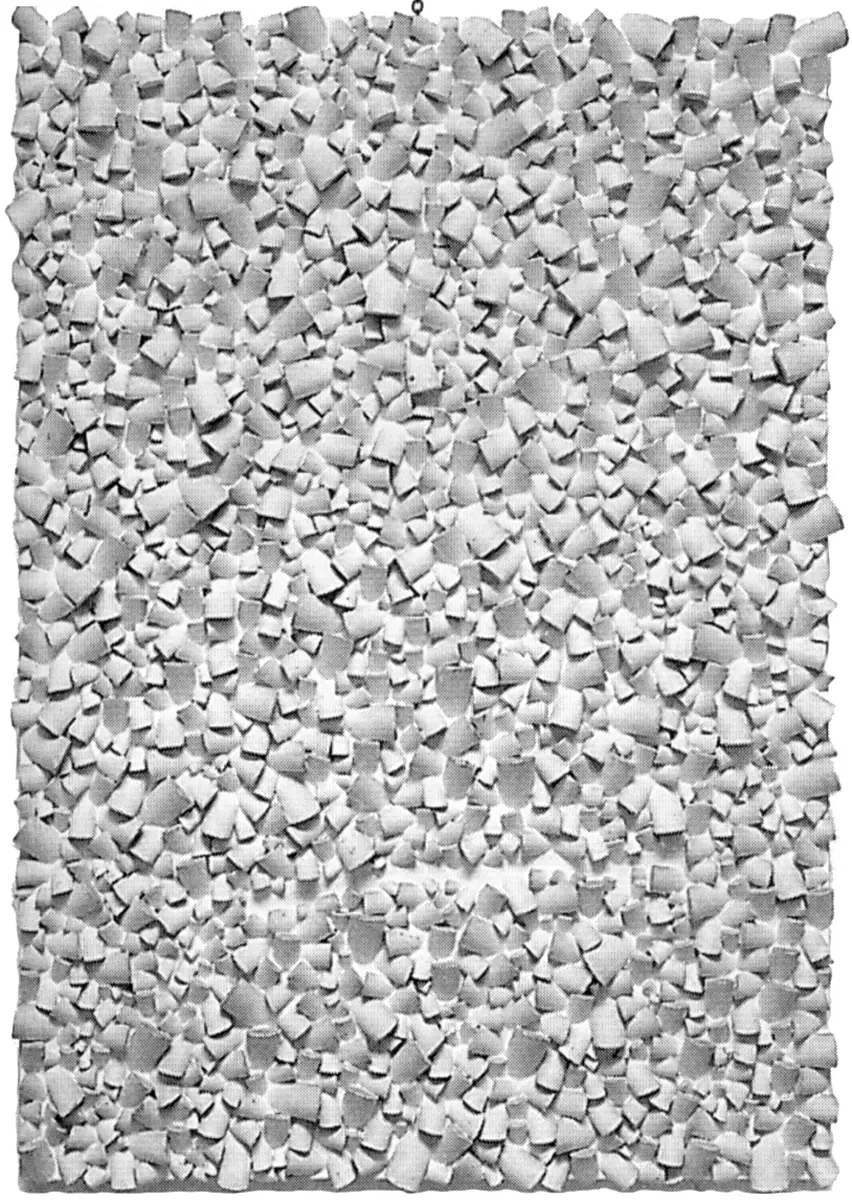
The origin of this extraordinary collection was described by Iva nova Decan Gambus, President of the Soto Museum Foundation, during the inauguration of the show on April 9, 2000. She recalled the decision Soto made when he was in Paris at the beginning of the 1950s to create a space in a small house, next to the one in which his mother lived in Ciudad Bolívar, that would present small format works that would develop the knowledge and sensibilities of visitors. What is astonishing is that this rather unpretentious idea soon became an increasingly dedicated vocation, transforming the space into a major Latin American museum.
Of the many aspects of the selection of works on show at the Alejandro Otero Museum, mention must be made first of all of the excellent curatorial work carried out by Ruth Auerbach and Freddy Carreño, as well as the professional and educational installation of the works in the three most important rooms in the museum, by Miguel Miguel.
The first room presented Interferent Parallels (1952), White Wall (1952-1953), Metamorphosis (1954), and Black Trapezium (1957), all by Soto. They illustrate the pristine stages of the artist’s language, as well as the consolidation of technical expertise, combined with a solid mastery of construction and a sense of enlightened inquiry. During this period, the artist forged and clarified the basic concepts which he subsequently developed throughout his brilliantly successful career. The room also contained works by Antonio Calderara (Spaces Lights, 1964), Lucio Fontana (Concetto Spaziale, 1953), Yves Klein (M61-Rouge, 1957), Alejandro Otero (Untitled, 1961), Narciso Debourg (Untitled, 1971), Gunter Vecker (Relief, 1968), Sergio De Camargo (Relief A7, 1960) and Francisco Salazar (Positive-Negative, 1969), among others.
Another gallery contained a comprehensive selection of works by artists including Carlos Cruz-Diez, Alexander Calder, Yacov Agam, Victor Vasarely, and François Morellet. Soto was represented by the work, Red with a Hole (1970) and two large format pieces, Ambivalence (1982) and Black Writing (1979).
A reading of the works presented in these two rooms revealed conceptual and thematic concerns that ranged from mathematical and algorithmic rationality to a projection of absolute and universal elements through reductionism and spatialism. Equally evident was the interest in new materials and the use of innovative techniques resulting in clean, impressive resolutions. The investigations into the effects of perception and real and virtual movement were also clearly illustrated in these works. Similarly, the visitor could sense the attempts to establish inter-relationships and connections between science, technique, and art.
In the next room were a number of significant and curious pieces by Jean Tinguely, PcI Bury, Vassilakis Takis, Christo, Daniel Spoerri, Arman, Josef Albers, Piet Mondrian, Man Ray, Fernand Lóger, Natalia Gootcharova, Sonia Delaunay and Serge Poliakoff. There is no doubt that this list of prestigious names conjures up a variety of different aspects of modernity in the field of the plastic arts. They bear witness to some of the most impressive movements, tendencies, and directions that characterized the development of art in the fundamental decades of the twentieth century: the metaphors, objects, and critiques are about the history of art as well as the social-political process of modern civilization.
A quick attempt to identify the contribution made by this show would require us to highlight at least three essential aspects. The first was its pedagogical nature, in the broadest and most illustrative sense of the term. Indeed, the works—over and above any considerations of a chronological kind—illustrated the basic elements of the modern development of art, such as the construction of geometrical spaces, art in movement, the effects of perception, and the identification and aesthetic problematization of referents and everyday objects. The second aspect is more conceptual and has to do with the intellectual stimulation resulting from our contact with the precursors of modernity and the representatives of the twentieth-century avant-garde movements. These developments, as well as their impact and derivations, provide an unavoidable point of reference for any discussion of contemporary art. Here once again, what is being emphasized is that art, rather than being a matter of “progress”, is about the broadening of aesthetic sensibility and the range of creative possibilities. Of course, such a wealth of tendencies and artistic codes will result in a broad and fruitful dialogue, which in this case reveals the singularity of the languages and the co-existence of concerns, as well as the complexity of the concept of modernity in all its expressions and manifestations. Within the framework of this sense of dialogue, we are left with the impression that sectarianism, both in art and in politics, is not so much the radicalization of thought, but rather the actual death of thought.
I cannot conclude this review without pointing out that this was the first time that an organically conceived part of the Soto Museum’s collection of works was presented in an institution in Caracas. For this very important effort, our thanks and recognition go to the two institutions concerned. The Jesús Soto Museum of Ciudad Bolívar and the Alejandro Museum of Caracas clearly demonstrated that, despite geographical distance, the limitations imposed by the socio-political situation of the country and the different profiles of the two bodies, it is possible to meet challenges together and add value to the culture. They also demonstrated that while in the past comparative advantages, which only increased the strength of those with more, were important, today it is the “cooperative” advantages that are important since they allow us to establish alliances and associations that will compensate for weaknesses and develop our respective strengths.
VÍCTOR GUÉDEZ