Carlos Basualdo showed us how to be simultaneously interesting, intelligent, provocative, and amusing, through his choice of theme and artworks with the exhibition Worthless (Invaluable) at Modern Gallery in Ljubljana, the capital of Slovenia. Although his quote written in the entrance hall of the Gallery emphasized that the question of the value of artwork was one of the principal interests of the 20th-century artists, a good deal of the exhibition was dedicated to the artistic reflection and experience of the contemporary conception of value in general. Money as the materialization of Capital and Power, its exchange, gold, banking, and market functions are the theme, motif, and inspiration that, as was shown, equally burden globally acknowledged and locally known artists. Perhaps only in Slovenia, one of the transition countries that successfully shifted between socialist and capitalist economy as well as between geopolitical periphery and center, it was possible to install an exhibition thus conceived in the most representative official exposition space.
I have a strong impression that Basualdo’s main point was exactly the demystification of the inveterate hierarchy of art’s value. It seems that the mimetic disposition of art functions at its best when it reflects the geopolitical constitution of the world. As we know, the world is divided into the place of the power center of the Capital (USA and Western Europe), and the remnants and art hierarchy just follow this pattern. On the other hand, the Capital established the market value as the Value so that marketing, the skill of selling, has been inaugurated as the top-level discipline that finally led to the supremacy of appearance over substance. In such a frame the art practice, whose basic aspect is the materialization of the spiritual, found itself on dangerous ground. The only option was to submit either to market rules in the sphere of the so-called free market or to the ideological discourse of state artists in the sphere of the Socialist plan economy. This dichotomy, although being the true theme of the exhibition, actually does not have there its representative. The exhibited works are beyond the established key of value. They belong to that strange category of “worthless-invaluable” where the lack of purposefulness of the artistic act is equal to the pure creative insight, this very last enclosure of freedom in a completely corrupt reality.
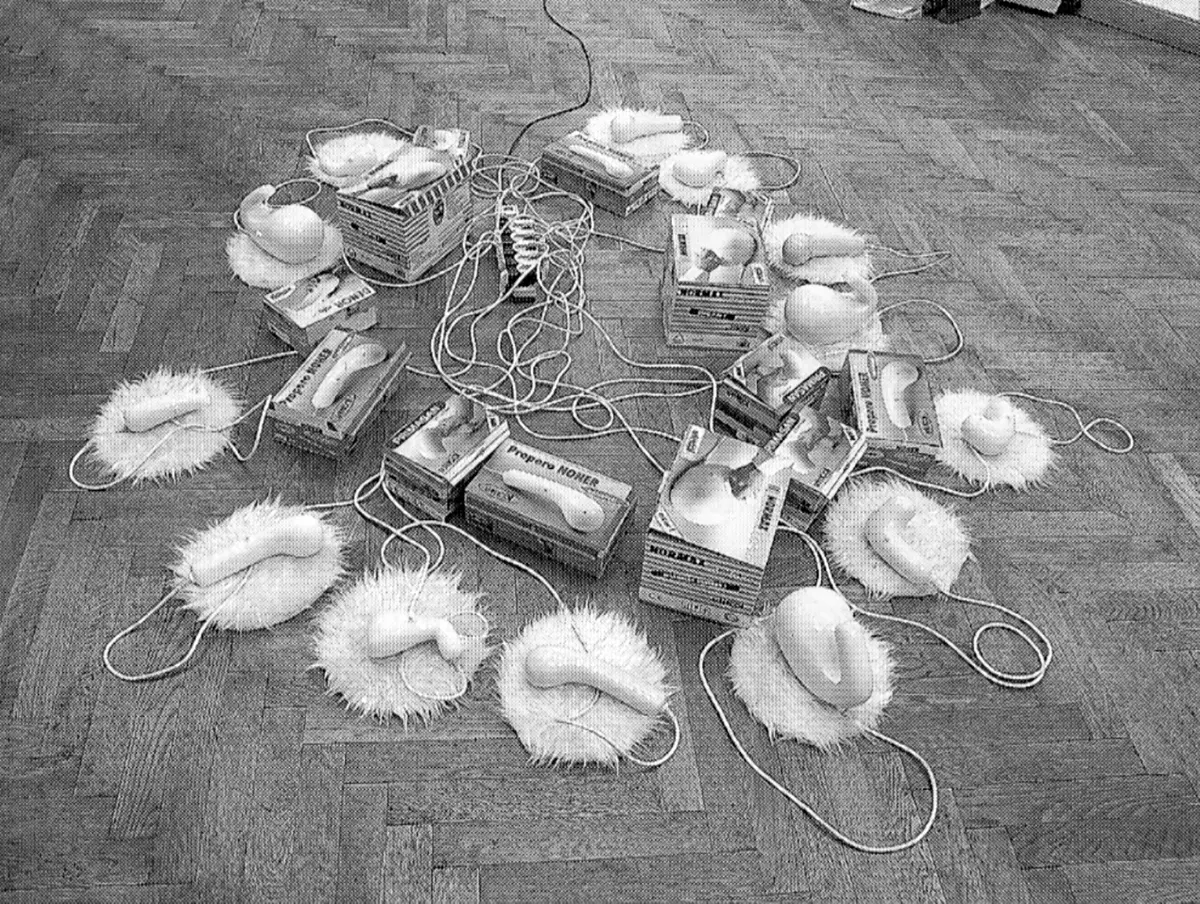
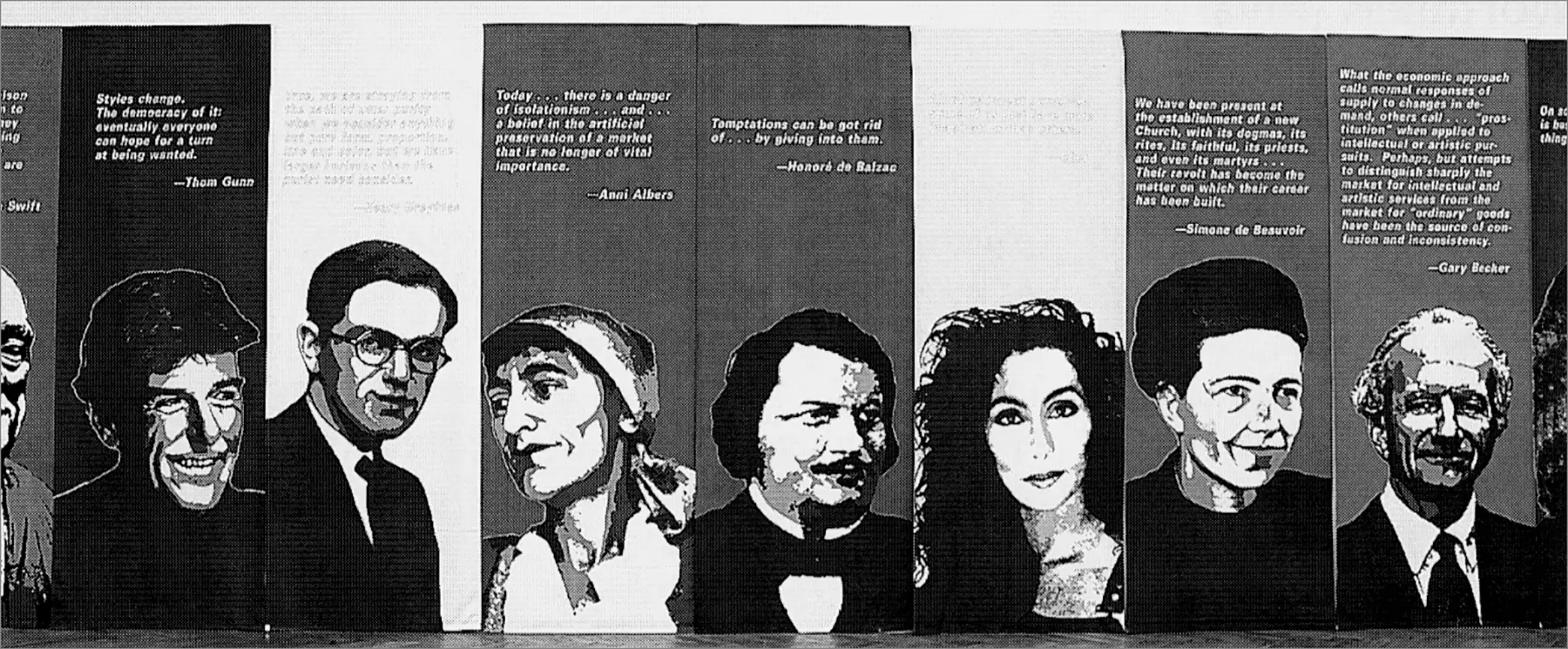
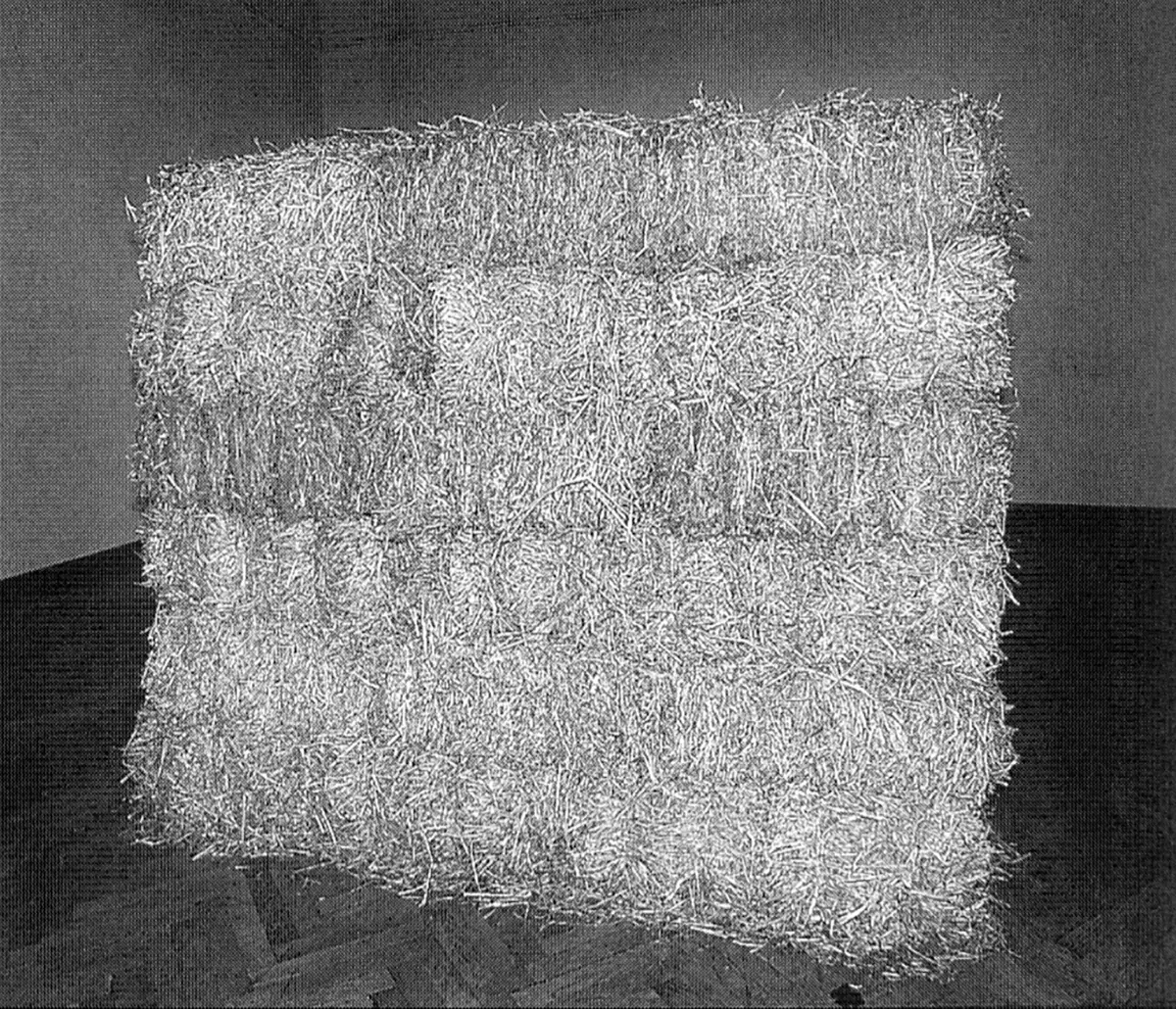
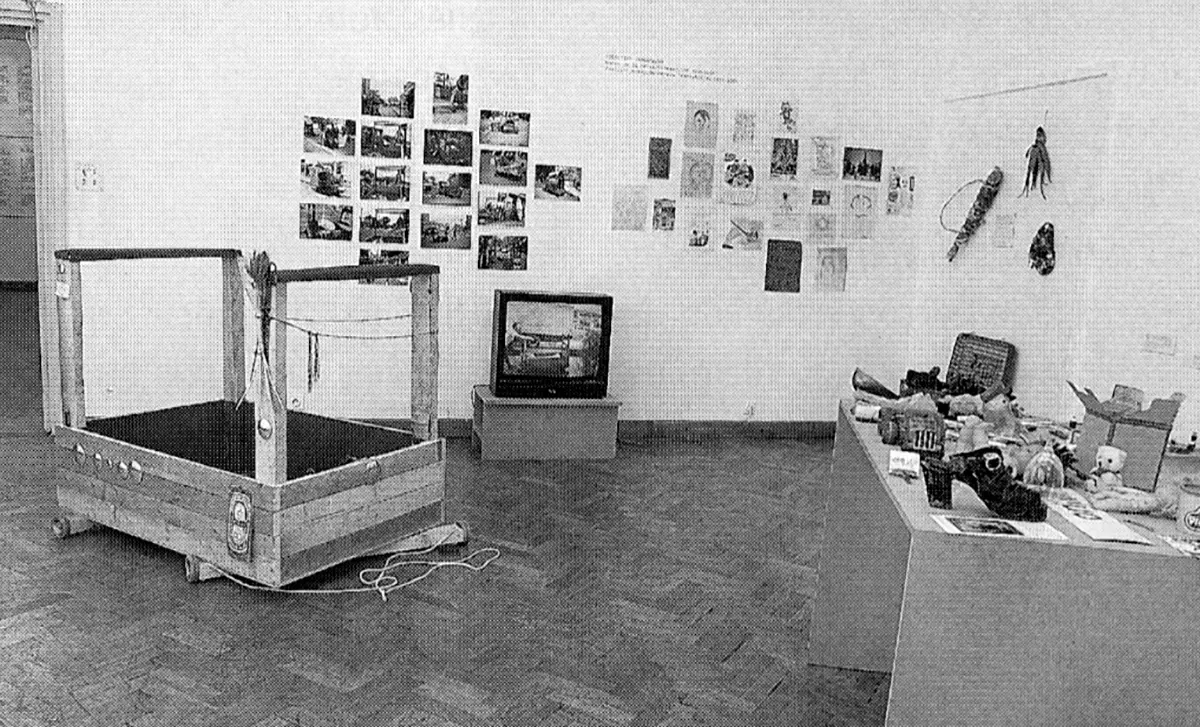
Basualdo’s choices represent different approaches to this problem as they emerged from the multidisciplinary contemporary art production. In Cildo Meireles’ work Thread (1990-1995), it is manifested through the neutrally symbolic act of winding a gold thread around the monumental cube of the new-mown hay. Mladen Stilinovi tackles it more directly in his installation Government-Eggs-Money (1998) where spread over the floor co-exist collages of words from politically loaded newspapers, bank notes, plates, and spilled eggs. Apolonija Ustersic in her video Production of Desire (1997) exposes the subtle marketing aggressiveness of the consumer economy through the idealized portrait of the product of the Italian shoe industry. Marcel Duchamp’s Boîte en Valise, Series G. from 1968 is a parody of ‘the best of’ products’. Robert Morrison’s work from the politically loaded year of 1969 is simply titled Money. Emily Jacir demystifies money as the abstract bearer of value exchanging one currency for another until nothing is left. The Change/Exchange action is documented with photographs and bills. Marcel Broodthaers focused on gold as the safer bearer of value exalting it as the art object par excellence in the work descriptively titled, Gold Bar Stamped with the Image of an Eagle with Showcase (1995). Hans Haacke in his Manet-PROJECT ‘74 (1974) revealed the absurdity of the art market. A succession of photocopied documents is the genesis of the growth of the “value” of Manet’s painting from its first purchase for a few hundred francs to, after a series of transactions, its alienation into millions of German marks worth of museum-corporation property. Yves Klein poetically deals with this theme in the action displayed with photographs and specially designed receipts in Zone de sensibilité picturale immatérielle (1959), while Piero Manzoni does it cynically with anthological series, Merda d'Artista (1961). Joseph Beuys conceptually and pragmatically concludes it with the equation Art = Capital from 1980. The new phenomena of the Third World artists’ survival economy are skeptically represented by Luchezar Boyadjev. This way of existence is made possible by the international chain of philanthropic art foundations whereby chosen artists are reduced to attractions for politically correct exhibitions, seminars, or workshops. Boyadjev’s Cultural GastARTbeiter (2000) is a bare balance sheet of won and consumed grants that for a decade provided for living expenses from one project to another in different parts of the world. This process brought him to the conclusion that with the amount spent on his tours, he could live and create more productively if he was allowed to use the money simply to live in his own country.
I shall complete this discussion of the short selection of works and artists from the exhibited forty pieces that I believe illustrate the key points of Basualdo’s conception, by focusing on Oscar Bony’s work, The Workers Family (1968) in a complex manner intertwined with the social reality of Slovenia and the whole region. Bony’s work is a live sculpture: on a black pedestal there is the unemployed worker’s family, receiving in return an average wage. It is easily imaginable what languor is provoked only by the idea of this work and it is obvious what levels of value are radically at stake. The organizer of the exhibition applied to the Slovenian Ministry to engage the unemployed Slovenian worker and his family but the Ministry replied that no such Slovenian family could be found and suggested a three-member family of Bosnian refugees, which caused further discomfort. The Bosnian family consented. At the first meeting, the wife reacted to the proposed terms and, herself unemployed, accepted the stipulated wage. This request was immediately fulfilled. A few days after the opening of the exhibition the daughter got ill and congruently to the current laws the mother took the sick leave with her. I visited the exhibition the week after that. In place of the family, their color photo was found on the pedestal together with a note explaining that the entire family took sick leave. It is necessary to point out that the institution of sick leave is one of the often abused benefits of socialism that was conveyed during the transition period as well. Bony’s work deals with the whole range of questions of value, from economic to moral appearances, including their complex interweaving in society.
Evidently challenged by the difficulty of how to harmonically install this contradictory production, and how to clearly express his attitude towards the issue, Basualdo’s goal was the global representation of artists and the installation of as many different styles, generations, and disciplinary approaches. The result is a dynamic exhibition, pleasing to the eye and inspiring to the soul. Miniature depliant with Basualdo’s essay was packed together with colorful foods of expired value. Or, obviously not.
BRANKO FRANCESCHI