
Erógena is a group show that includes work by more than 20 artists from various generations and in various media, from painting to installation art, video, drawing, photography, etc. As part of the discourses of sexuality at the end of the twentieth century, the show highlighted different postures and attitudes towards one of the recurrent actions or elements of human beings, and thus of the history of art as a product of the latter. Although sex has not ceased to be a matter of taboo in the context of Mexican society, the Carrillo Gil Museum managed with this show to bring the museum-going public closer to these themes which are not so evident in terms of presentation in public places.
Although the Museum team showed great maturity and professionalism in the selection of works and artists, particularly in its inclusion of emerging artists with very short careers, such as Gerardo Monsiváis, along with others of the stature and fame as Francisco Toledo and Julio Galán, the exhibition had a dynamic and in no way didactic character. This was important since the objective was not so much to put an end to such taboos but to reflect diversity in the way these artists have chosen to use various means of speaking of sex in their heterogeneous ways of experiencing it.

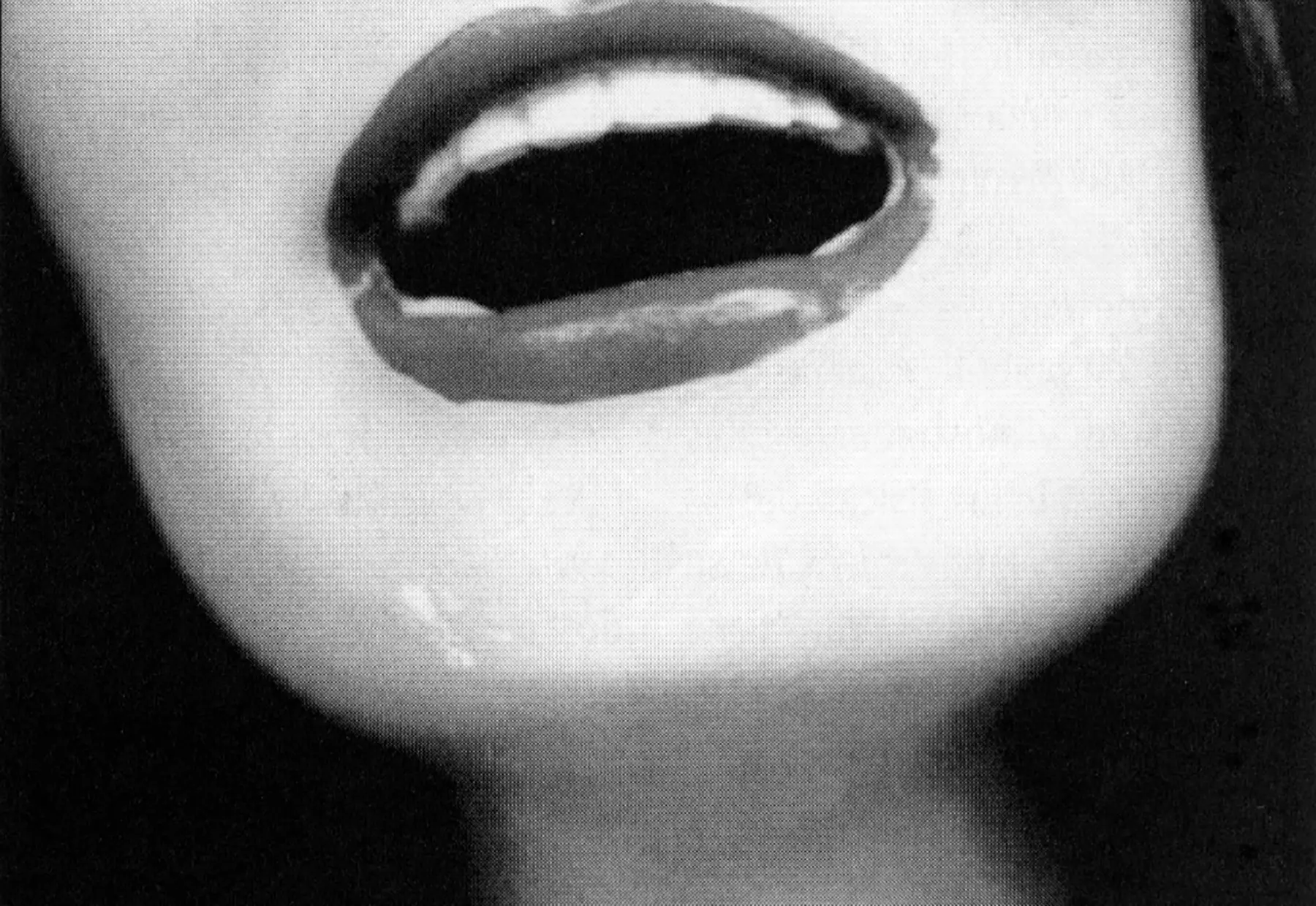
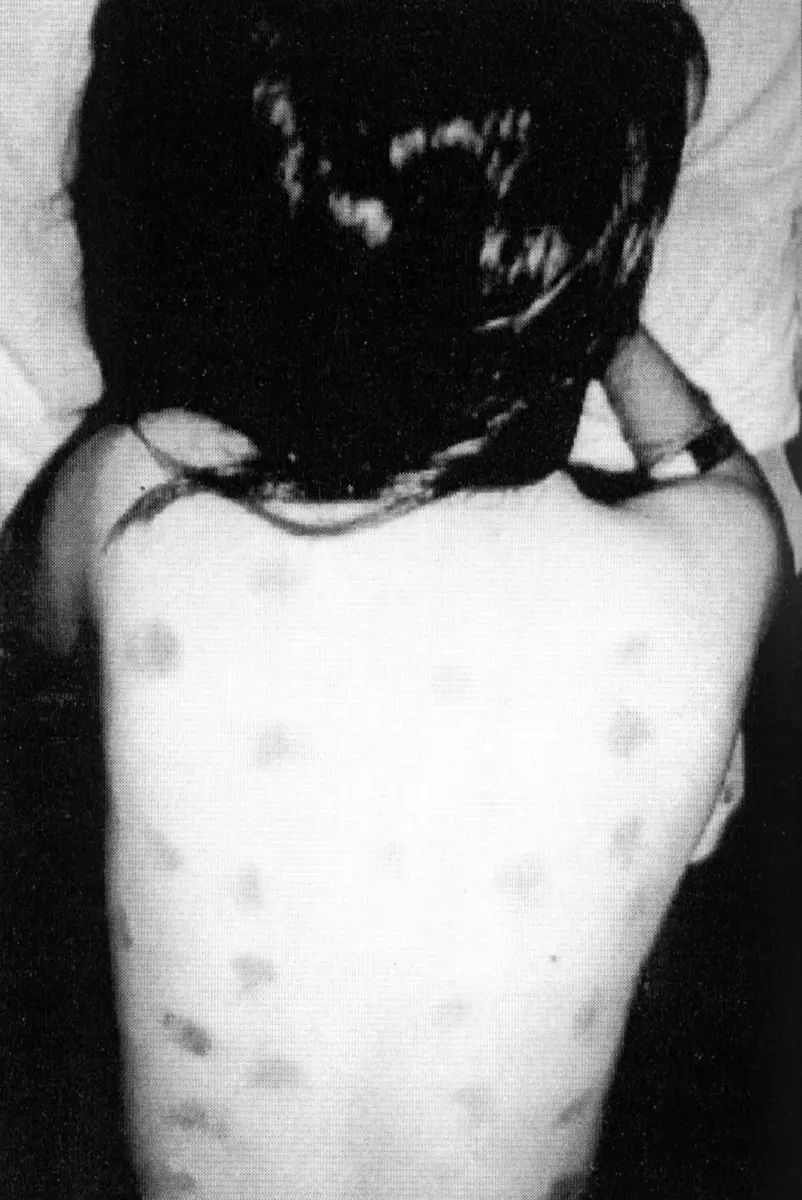
Metaphysical Eruption of the Waste Men (199S), by Eduardo Abarca (1968), consisted of a phallic mountain made of porn magazines with a mirror in the upper part which reflected the covers and images of the magazines. Rodrigo Aldana (1967) presented Diary 6 (1999-2000), in which he related his personal stories printed on IS panels and presented to the public, who could discover details of what went on in his life. These diaries explore the interplay between the public and the private and evoke the spirit of our times. Marco Arce (1968) presented 8 little drawings and paintings, entitled Porno (1998), with an extremely detailed finish, which captured explicit scenes copied from some adult magazine. Carlos Arias (1964), in 4 embroidered works dating from 1994-1998, showed fantastic and surrealistic scenes the imagery and technique of which were both audacious and ingenuous. Artemio (1976), in a piece entitled Sex on Wheels, presented a 4-minute video in which the images and stories are developed through a screen, which is constantly present in the scene, and which functions as an element of transition or connecting thread. Without any linear story to relate, Artemic used as his pretext the vicious circle of images, i.e. each scene was linked to the next through the image which seems on the television screen to be a porno scene but which, in the next scene, proves to be perfectly innocent. In this way, the artist catches the attention of the spectator with an image that is not what it seems to be. Fernanda Brunet (1965) exhibited 30 oil paintings from 1997 with a white background and almost monochromatic images of graphically explicit fragments of both men and women, without any kind of censorship. Miguel Calderón (1970) presented his Private Collection, which consisted of 3 found photographs of women in a brothel deliberately posing and showing the physical marks on their bodies of their sexual acts as the trophies of their profession. Iván Edeza (1967) presented the only work in the show that was censored by the Museum, a video lasting eight and a half minutes, which no doubt contained scenes that were too much even for the broad sense of morality that the Museum espoused in its selection of works. The work appeared in the form of a black image with two pink and blue edges, without any sound, and with the word “censored” in the identification slot. Galia Eibenschutz (1970) proposed two small format sculptures entitled Molluscs (1999), in which she used plastiline to confuse the spectator about human sexual organs and marine animals. Javier de la Garza (1954), in a radical departure from his previous work, showed a series of photographs from 1999, entitled Vanitas Vanitas, in which he transforms Barbie’s companion into a grotesque human sexual animal displaying the enormous size of his new attributes. Julio Galán (19S8) presented two oilworks on canvas from the end of the 1980s, which were the most conservative proposals in the context of the show, and one of the few representatives of painting as such. Thomas Glassford (1963) showed three works, an animated video entitled Porno (1994), and two objects, Untitled (1991) and On Etiquette (1993), which used the form and recurrent material of his work entitled Guaje to create a porno-sadomasochistic discourse. Maurycy Gomulicki (1969) presented three photographs from a series entitled Sentimental Typology (1999), focusing on the lips of dummies touched up with paint. These enigmatic images refer to plastic and apparent elements as sources of seduction. Vignettes (1999) consisted of 13 digital pink-colored prints that used the form of the vagina to create extremely beautiful patterns. Los Lichis, a group from Monterrey, exhibited three digital prints entitled Pumping Barbie (1997), in the same aesthetic discourse based on nostalgia for childhood, but with a perverse hint of adolescence. As in the works of Javier de la Garza or Edgar Orlaineta, Los Lichis creates scenes by manipulating Barbie and Ken, transforming them into the protagonists of the most daring kind of sexual adventure. Gabriela Molina (1971) showed a work made up of assembled photographs of fragments of images of genitalia, which created a harmonious effect of great beauty with little chromatic variation. Gerardo Monsiváis (1974), like Los Lichis, intervened in innocent existing objects, transforming them into sexual chimeras. Designs for Repetition Models (1998) used found photographs and played with their repetitions, enlarging their volumes and creating a kaleidoscope, an adolescent paradise exploding with hormones. Richard Moszka (1968), in a seven-minute video entitled Kiss (1997), showed two very similar locking men lightly stained with red paint, kissing one another constantly. Edgar Orlaineta (1972), in a work entitled Modely, explored the same obsession of the lost world of childhood, with its toys full of sexual allusions, but in a more subtle manner in this case. Orlaineta’s installation was not so clearly related to the context of Erógena, although in comparison with other works in the show, Modely did appear as one of the most enigmatic. Ángel Ricardo Ríos (1965), in a work entitled The Origin of the World (1997), the video of an installation previously presented at the Museo del Chopo, took the famous image of Courbet and transferred it to a trampoline, from which the visitors to the exhibition could enter the image and play with its meaning. The piece on show in the Carrillo Gil Museum was only the video recording of the public interacting with Courbet’s iconic image, which gave an amusing and contemporary treatment to a controversial masterpiece. Daniela Rossell (1973), in three photographs entitled La Pitufina (The Schrumpfs) (1995), All the best names are given (1999), depicts wealthy men and women from Mexican societies in their homes and natural environments. These works reveal a certain black humor and eroticism hidden between the golden pieces of furniture and the excessive decoration of the mansions of these figures, who are the sons and daughters of politicians or important businessmen. Rossell managed to capture in her enigmatic aesthetics a unique combination of glamor, innocence, eroticism, solitude, opulence, and mystery. The Semefo Group, working within the dark aesthetics of their works, presented a 990 video entitled Black Wind, in which one of the members of the group carries cut acts which, through the way in which the video frames the action, might be interpreted as flagellation or onanism. At the beginning of the take, the subject of the recording has an octopus stuck to his body and it is the latter who is the victim of the acts perpetrated by the protagonist. Piero Slim (1950) exhibited 6 black and white photographs of young persons who unashamedly reveal their bodies to the camera. The titles emphasize the anonymous nature of the subjects: Reclining Figure No. 27 (1998), or Portrait of El Durango (2000). Finally, from Francisco Toledo (1940), the exhibition included 16 polaroid Self-Portraits (1994-1996), showing the artist in playful postures, including the recurrent animals of his iconography, such as tortoises and armadillos interacting with his naked body.
Erógena presented, without any prejudices or major moral limitations, the way in which artists of different origins and generations use the theme of sexuality. In a manifesto on the exhibition signed by the director of the Museum, Osvaldo Sánchez wrote: "Our starting point has been the artistic quality of the works and their place in the avant-garde movements, and not the thematic aspect or the exercise or representation of minorities. The show, which is explicit in its radicalism, is intended for adults who are ready to approach the theme, but above all the contemporary nature of the imagery which it brings together and the critical discourses on sexuality that these images evoke."
These works created at the end of the 1980s and 1990s challenge the spectator to evaluate the concepts of what we consider to be erotic, pornographic, public, and private. These 23 artists capture a facet of life in their works—sex in all its variations, whether explicit or implicit—as an essential element in the integrated development of the human being. In this celebration of diversity, the Carrillo Gil Museum continued its excellent program of activities that are encouraging artists and spectators both young and not so young — to open up their horizons.
FRANCISCA RIVERO-LAKE