
One of the more stimulating exhibitions in Venezuela in recent months was undoubtedly the show by Sigfredo Chacón presented at the Corp Group Foundation.
This time the artist presented 38 new works that synthesized his production over the past five years and reflected his insistence on the dismantling of the traditional ways of producing and reading painting As Eugenio Espinoza rightly points out in the introductory text in the exhibition catalog, Chacón adopts an approach which is different from the tradition of abstract painting, in which the plastic elements express some spiritual or metaphysical dimension. Chacón, on the other hand, tries with intelligent irony to dismantle the elements on which this tradition is based, “like a plastic surgeon, constructing the skin of his painting and then consciously planning the result of the picture with considerable premeditation." Thus in some of the works of the Pure abstract painting series, the artist uses the technique of acrylic collage on canvas: we can see thick layers of pigment which, produced outside the support, have been organized on the surface like collages, as though the artist were trying to invert the logic of the abstract/lyrical pictorial process, detaching himself from the emotive nature of gesture through a camouflage mechanism.
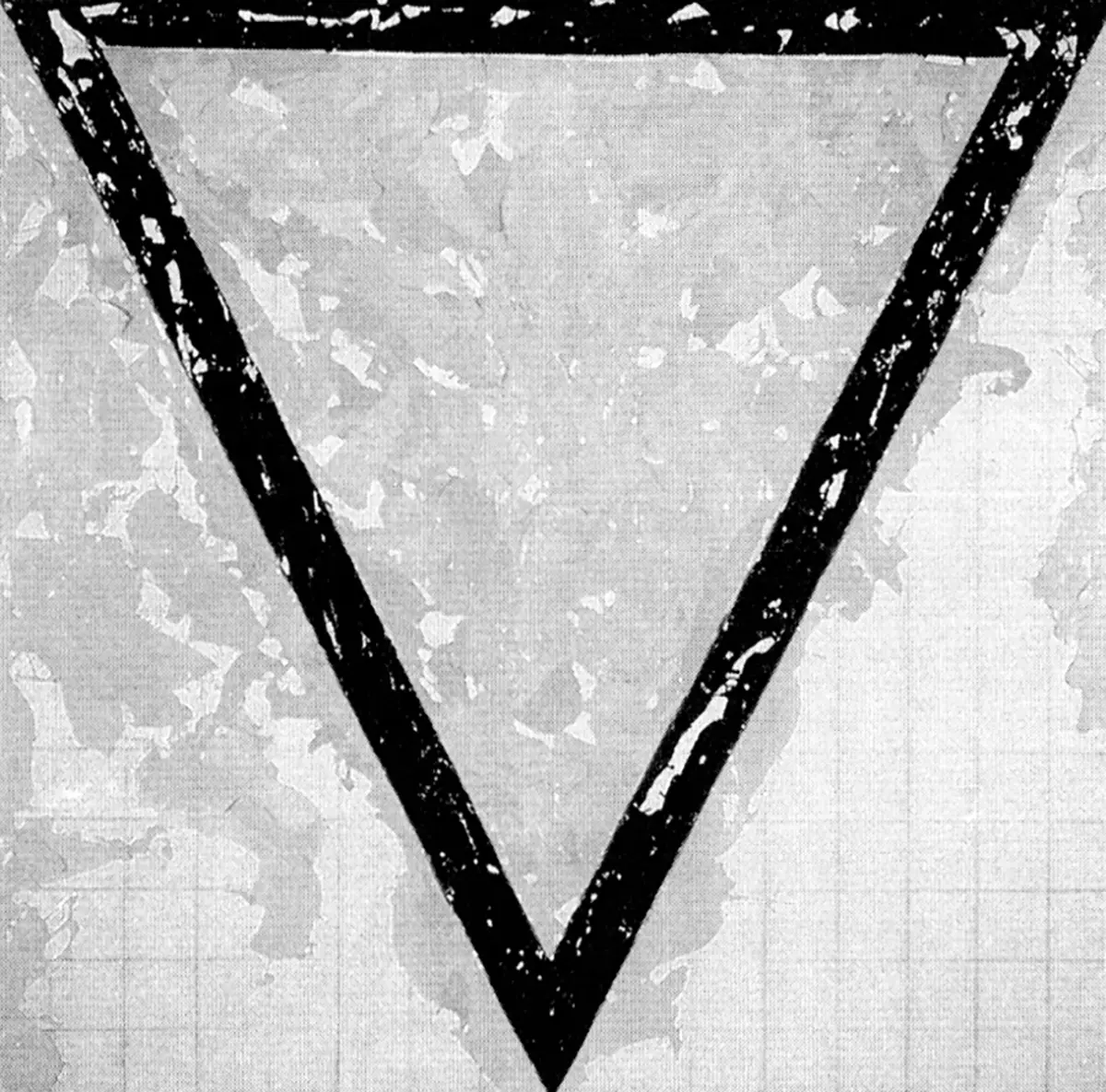
In his Paramanifesto, Pure abstract painting series, Chacón points out that: "Man today has to camouflage himself to penetrate all the social political, and cultural networks... In camouflaging ourselves, we assume a mimetic and codified posture through which we can appropriate signs or forms... A work should be the negation of the direct relationship between man-gesture-action-support. By freezing action, whatever it may be, before its conclusion on the support, we can make a break with the traditional schema of what might be a man-gesture-support result." Another interesting aspect of his work is the confrontation established between ordered space (grids, lines, geometrical forms), which becomes blurred on the support, and the enormous textural effect of the impasto, drippings, and collages of acrylic material. This tension between order and chaos, constructive intention, and expressionist spirit, can be seen once again in the questioning of painting itself and its formulas, i.e., in a kind of laying bare of the notions associated with the structuring of pictorial space and textural expressiveness. Color is another interesting aspect of the artist’s elements. The repeated use of bright, contrasting colors, in part derived from his training as a graphic designer, gives his work an urban and contemporary topicality.
These conceptual concerns, however, are proposed within a strategy that refers back directly and constantly to the sensitive qualities of painting and drawing; they can also be seen in the drawings included in this show, which can be described as events traced on the surface of the painted, or rather camouflaged, canvas.
All these aspects allow us to see Chacón’s work as an installation that is a picture only in its appearance, i.e., where the expressive elements of painting and drawing—color, texture, and space—have been transformed into pictorial camouflage. This is a painting that, exploring the defining elements of its essence in terms of texture and color, transcends itself through its network of simulations. In this way, the artist manages to create plastic proposals which are among the most dense currently being developed in Venezuelan art.
KATHERINE CHACÓN