
Sculpture, like all the traditional genres making up the visual arts, is subject to the pressure of trans-generic approaches and the requirements characteristic of the concept of installation, where the ideas of context, situationality, expansion, and experience fuse together into an integrational refocusing.
Given this strong tension exercised by such all-embracing expectations, artists who work with sculpture have had to choose between one of four options: to resolve their works along installation-related lines, to move toward freer and more independent disciplines, to explore the general demands of installation work by abandoning the resolution of sculptural pieces or finally, refocusing the sculptural proposals and transforming them into the referential axes of the installation.
Within the context of this last-mentioned possibility, Félix Suazo recently curated a pedagogic and illustrative exhibition of works by J. J. Moros, Rámses Larzábal, Luis Lovera, Magdalena Fernández, Carlos Quintana, and Luis Lartitegui, entitled Variable Dimensions, which occupied rooms Nos. 8, 9, 10 and II of the Galeria de Arte Nacional.
Apart from the above-mentioned didactic character of the show, mention must also be made of the sense of assertion with which these artists met the challenge of resolving the demands of volume, form, and space. In their work, sculpture sidestepped traditional features and the requirements of introspection to achieve a sense of refocusing and reinforcement resulting from the use of materials and, above all, the incorporation of space and specific sites. These qualities are accompanied by concerns relating to monumentality and scale, as well as spectator participation.
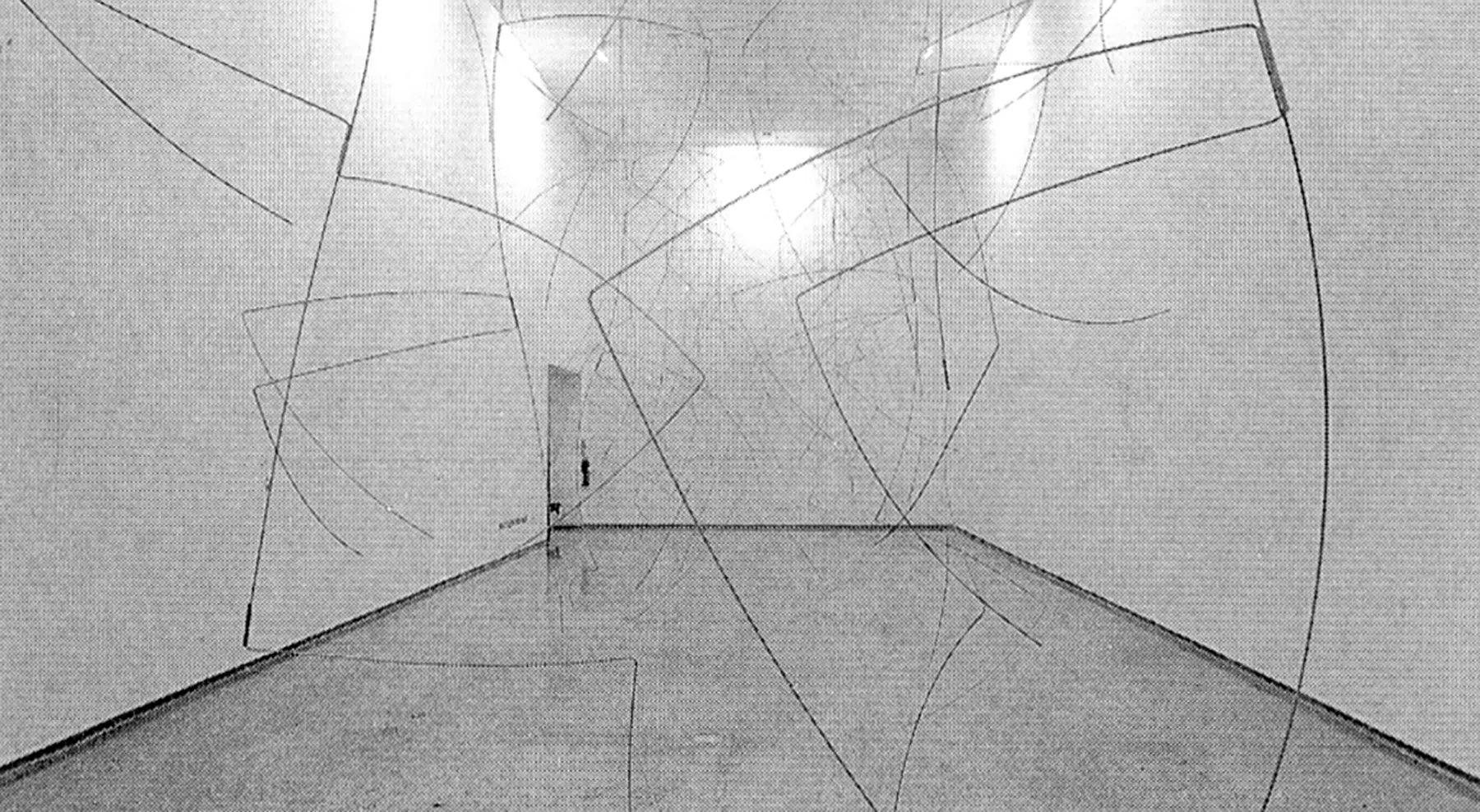
A brief approach to the exhibited works takes us to point cut that. J. J. Moros presented his varied experiments with the interactive tensions that sculpture and architecture have exercised in his rigorous and structural geometric pieces. His vectors, tensors, bisectors, angular elements, and braces dramatize space as the result of forces that they suggest and promote. Here simulation and dissimulation are not only contained in the sculptural elements but in their interactions with the walls, corners, and floors of the architecture. Contained pressure and exercised pressure combine to create a kind of expanded power in the atmosphere itself which is created in the presence of the spectator.
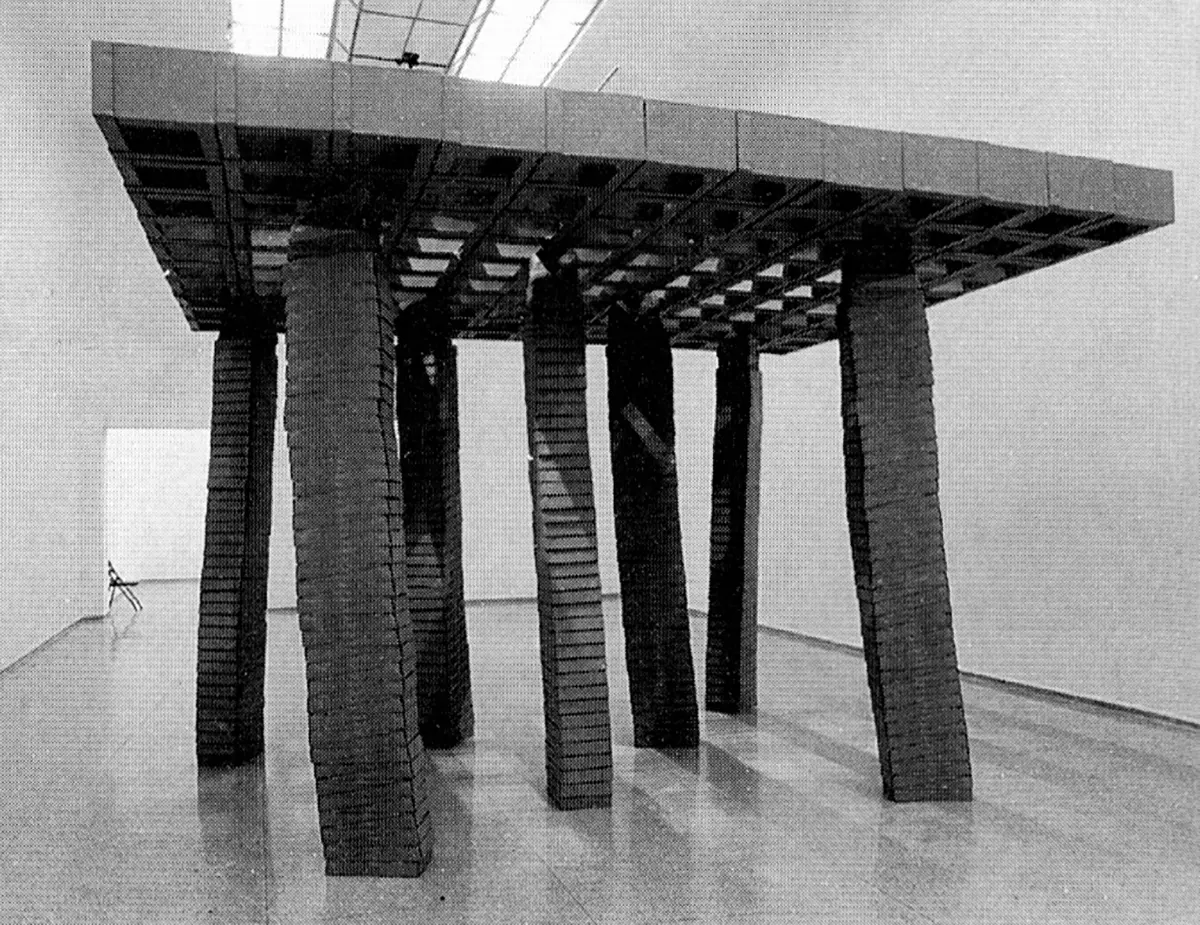
Ramsés Larzábal presented a sculpture made with serialized sheets of cardboard, the scale of which challenged and exceeded the demands of the spectator. The totemic feel of the work was combined with ludic elements to create an architectonic space that was revitalized by filtered lights set in the ceiling. The challenge was made greater by the fragile nature of the material and the precariousness of the structure, coupled with the tightness of the joints and connections and the artificial nature of the resources. Here the idea of appearance seemed to be inspired by Baudrillard’s concept that “appearance consists in not feeling oneself even brushed by the idea of feeling.”
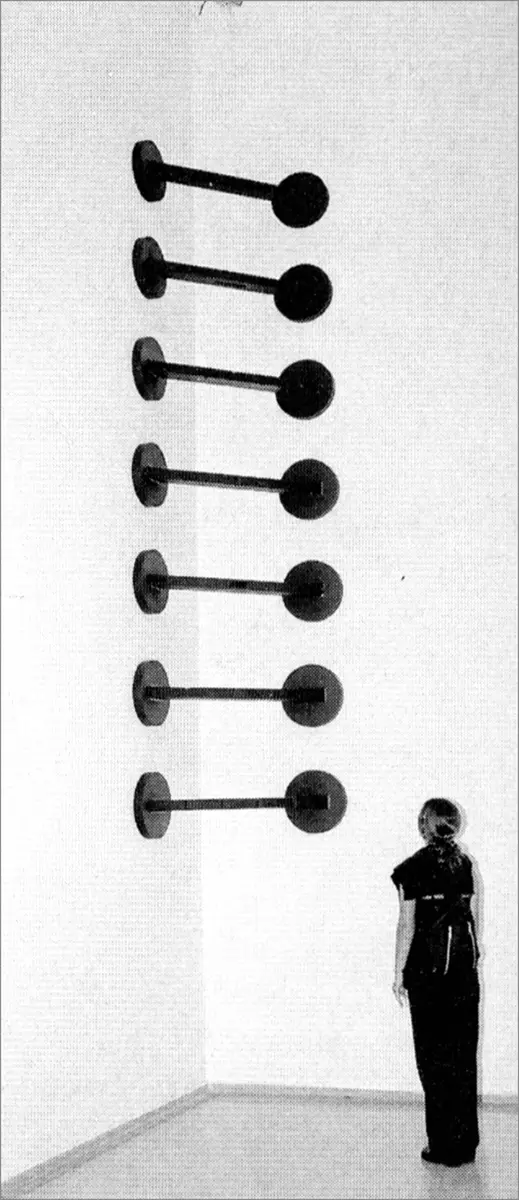
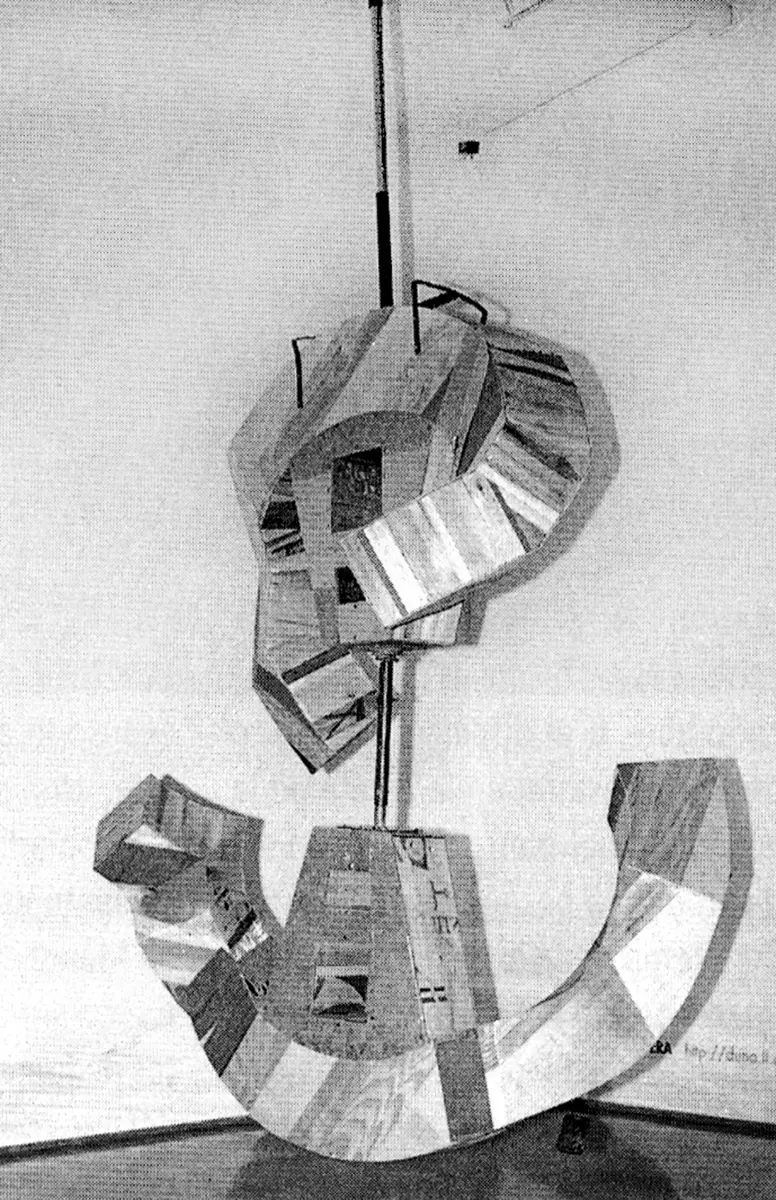
The work by Luis Lovera consisted of an enormous suspended wooden assemblage, made with metal sheets, bolts, and tubes. The associations were many: the enigmatic pendulum might be an anchor or a figure responding to curvilinear volumes resolved on the basis of geometric connections. The sense of ambivalence was everpresent, challenging the spectator’s most varied perceptions and encouraging his repeated participation. Any definitive description necessarily resulted in a betrayal of the other forms of existence contained in the work, which generated a sense of power and energy as well as a multiple interplay of shadows that were made even more powerful through the participation of the spectator.
Magdalena Fernández’s work filled the entire room No. 10 with its resonance. The resolution was based on a large number of modular rods that made up a space through which the visitor could move. One of the most important features of this experiment was the fact that the artist deliberately made use of Soto’s penetrables and Gego’s environments, but without any cynical or appropriating intentions. Her purpose was rather to engage in a process of review, reversion, and refocusing, and in the end, the work acquired a different character from that of her predecessors reaffirming the thesis that we have to begin with others in order to end up being ourselves. Only weak artists are afraid of influences, and this is certainly not the case with Magdalena Fernández. From the perceptive angle, her handling of space resulted in a reactivation through signs and scribbles that came together in modular and sequential surfaces, with space and shadows becoming active accomplices and enriching each outcome.
Carlos Quintana presented an installation that revealed the figurative and anecdotal features of his particular style. Of course, humor and ludic elements, as well as satire and criticism, were not excluded from the resolution. In formal terms, the pieces that made up the work were inspired by a hieratic and symmetrical presentation that involved different levels of perspective. The formal elements were complemented by details related to the registers, codes, and symbols of the artist’s language. The combination of structures and details created a magical and ambiguous atmosphere which combined the simplicity of satire with the intensity of the psychological problems posed by the contents.
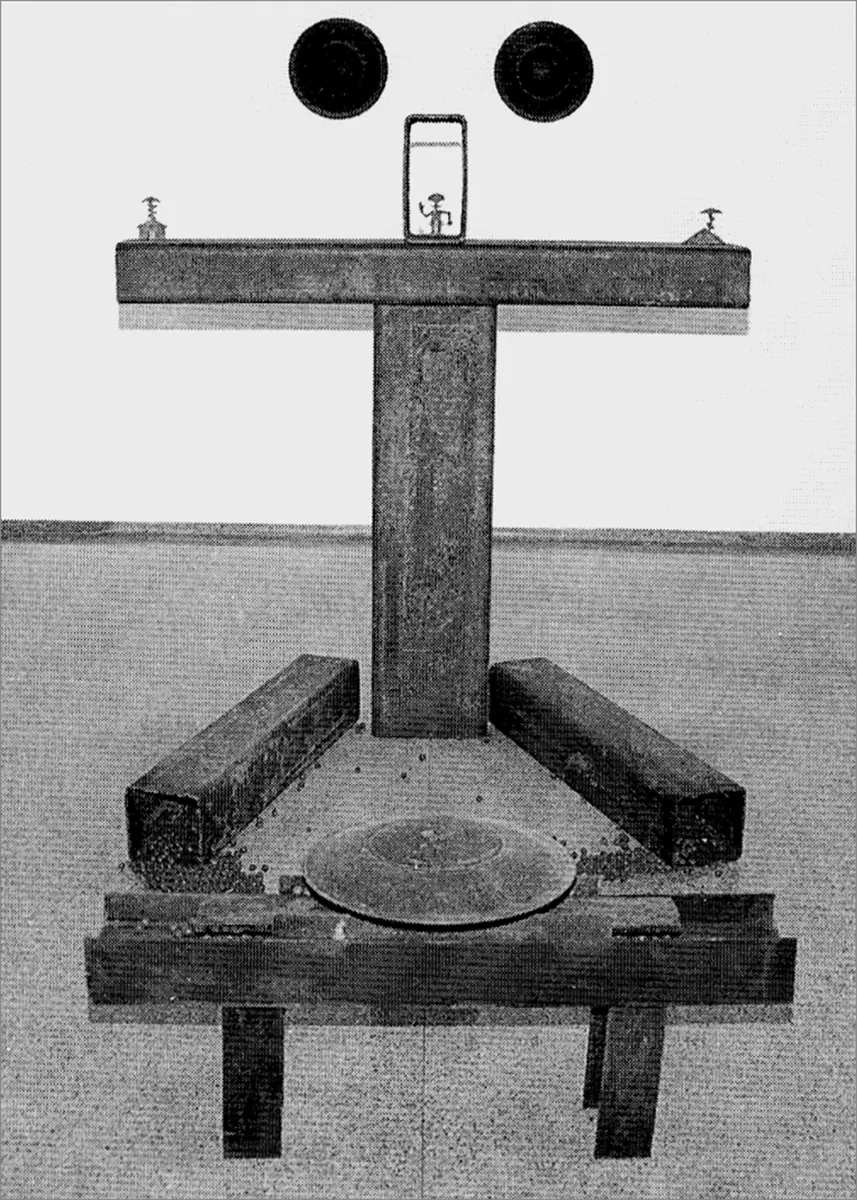
The show concluded magnificently with a work entitled Quomodo Vidore by Luis Lartitegui, in which the artist synthesized the achievements of an extraordinary symbolism based on profoundly conceptual content and a broad and intriguing range of subtleties. The installation had a sober and schematic sense of balance, which was gradually discovered through the direct and explicit participation of the spectator. In the powder compact in the center, the “I” is enlarged through the effect of a magnifying mirror. Then the “you” is distanced and reduced by means of a perception device. Finally, the “he” is inverted and relocated through the effect produced by a glass ball. This problematization of personal pronouns not only reaffirmed the illusory sense of the existential capacities of the human being but allowed the artist to create a versatile and significant correspondence between conceptual reflection and plastic formulation.
VÍCTOR GUÉDEZ