
More ideas, projects, and discussions than ever before have stirred up the recent celebration of the 5th Art Biennial of Panama, and for this reason, I dare to call it the best one of all. This assertion may not seem evident at first glance. The invited judges —three curators of solid international prestige: Cuban Gerardo Mosquera, from the New Museum of Contemporary Art of New York; Guatemalan Alma Ruiz, from the Museum of Contemporary Art in Los Angeles; and Venezuelan Maria Elena Ramos, president of the Museum of Fine Arts of Caracas— selected only 17 of the 220 works in competition (compared to the 45 of 257 works at the last edition). They refrained from awarding honorable mentions and, not satisfied with that, they publicly declared that, in general terms, art in Panama is mediocre and anachronistic compared to the rest of the world, an obvious symptom of a deficient education and of the scarce institutional support of culture. This rough verdict unleashed a predictable wave of criticism, but it also motivated many art professionals to gather in order to debate the problem with the aim of finding possible solutions.
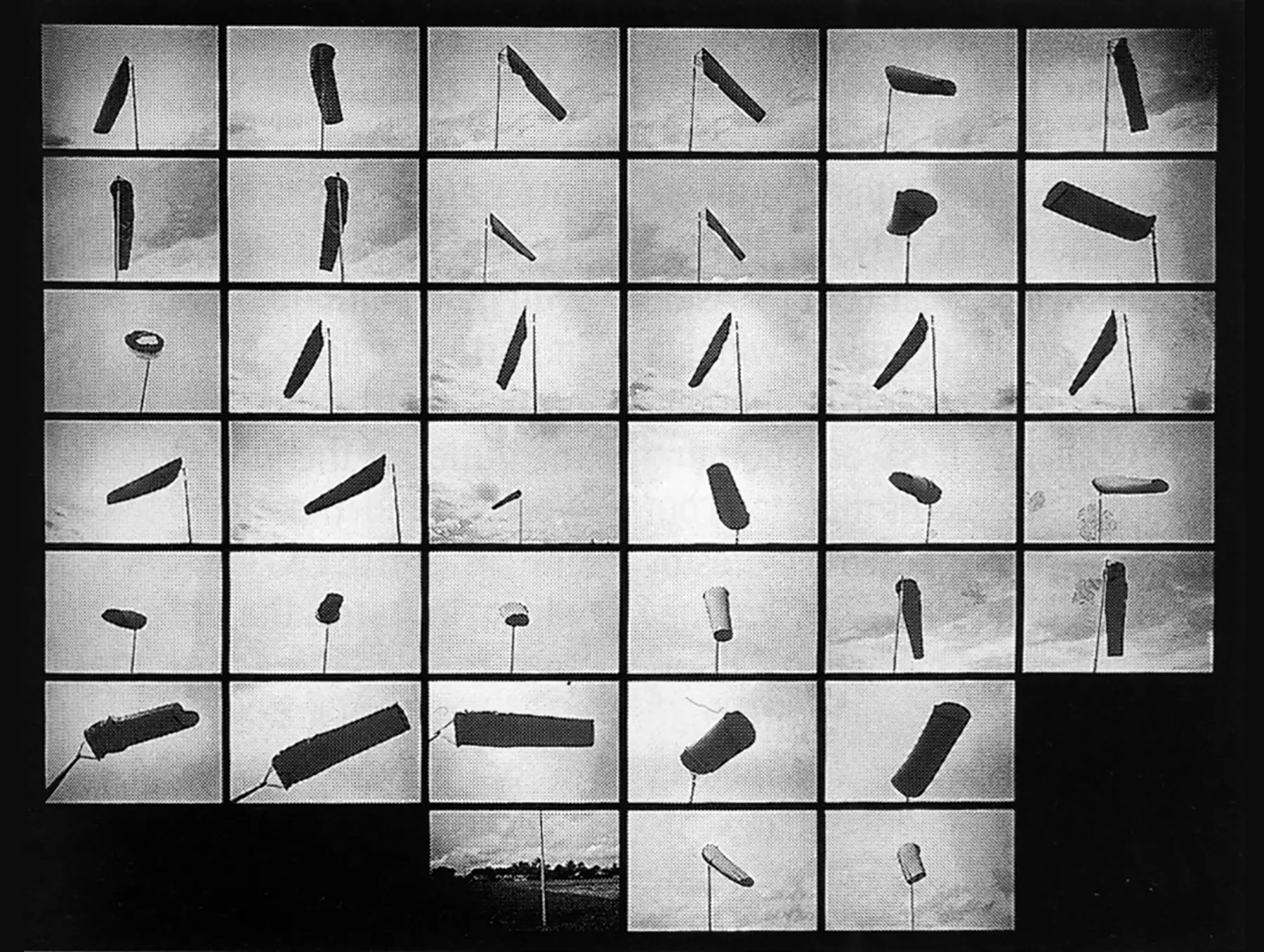
With the three prizes awarded, the judges revealed that their intention was not only to highlight quality but also to show possible positive directions for Panama’s young art scene. Examination of the winning works indicates the fact that the judges favored native manifestations, that is, those centered on local reality and traditions, without losing sight of the use of contemporary techniques and concepts that transcend borders. The first prize was won by Bocas (Mouths), a large photo billboard in a luminous casing created by Gustavo Araújo, the author of another billboard presented at the competition which also was chosen for the show. Both consist of images taken from diverse angles, juxtaposed in an interrupted series. Their intimist character and the dependence on chance (the unpredictable movements of wind and dream) are qualities that, joined with the polished precision of the supports taken from the advertising medium, reveal a will to entwine the public and private spheres. As the artist himself has said, his current goal stems from living in this city “lined with signs” and his desire to tell stories in a format that offers the visual simultaneity that cinema does not afford.
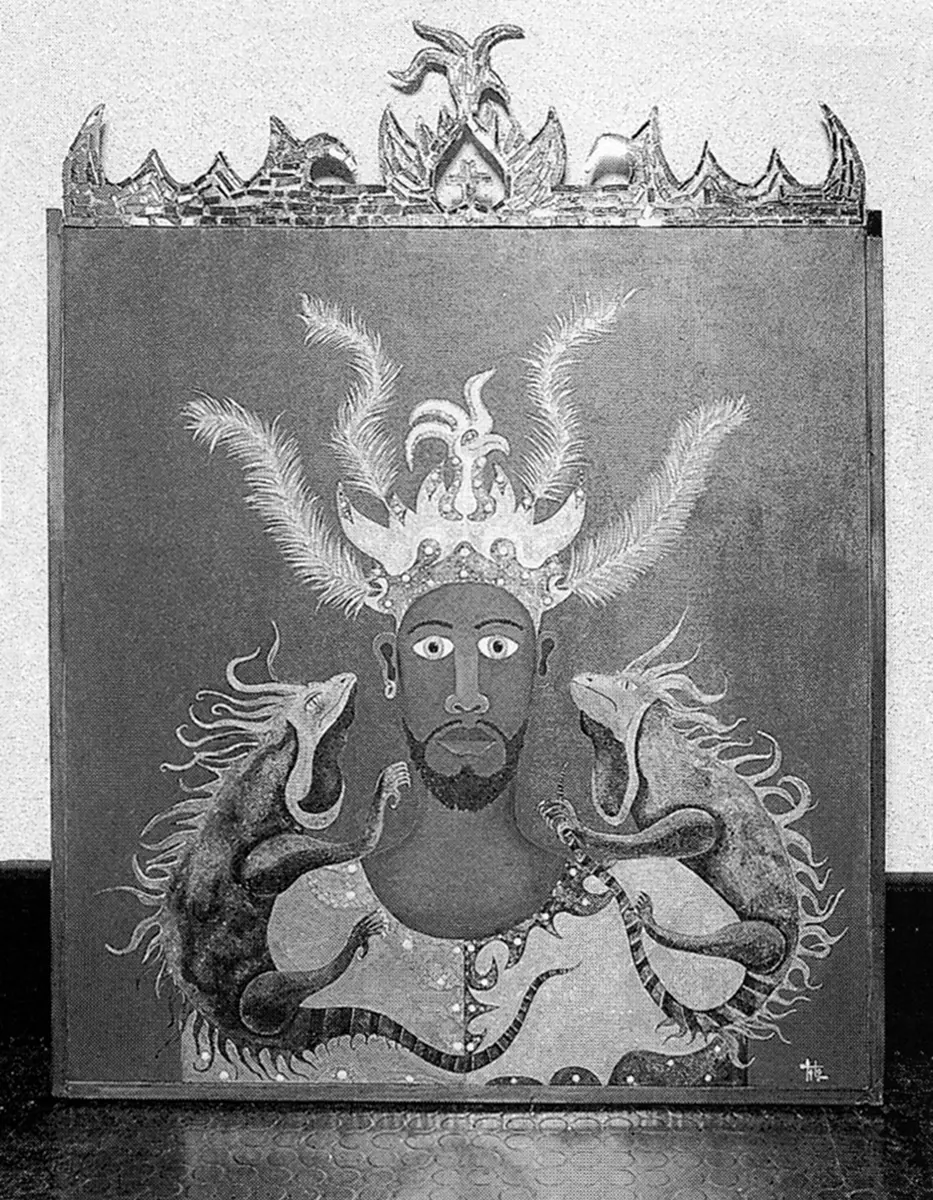
The second prize went to Secretos sagrados (Sacred secrets) byVirgilic Esquina, a picture created in the best style of Congolese art, practiced by several inhabitants of the humble fishing village of Portobelo, which draws on myths, customs, and eclectic attire of ritual dance of the Atlantic Coast. Characteristics of this art is the canes made of painted wood and the “portraits” of Congolese people or spirits that incorporate diverse objects, such as ribbons, shells, and mirror mosaics. These artists gather in a space provided by the renowned photographer Sandra Eleta, where they are periodically tutored by Arturo Lindsay, an artist from Colón, and his students from Spellman College in Atlanta. Secretos sagrados is astonishing on account of the contrast between its exuberant forms and colors, and its strict economy of elements: the intense red that covers the background, the hypnotic gaze of the Congolese Iguanero, two sinuous green iguanas and the crown of mirrors that frames the upper part of the picture, pointing out the eminent hierarchy occupied by the “portrayed.”
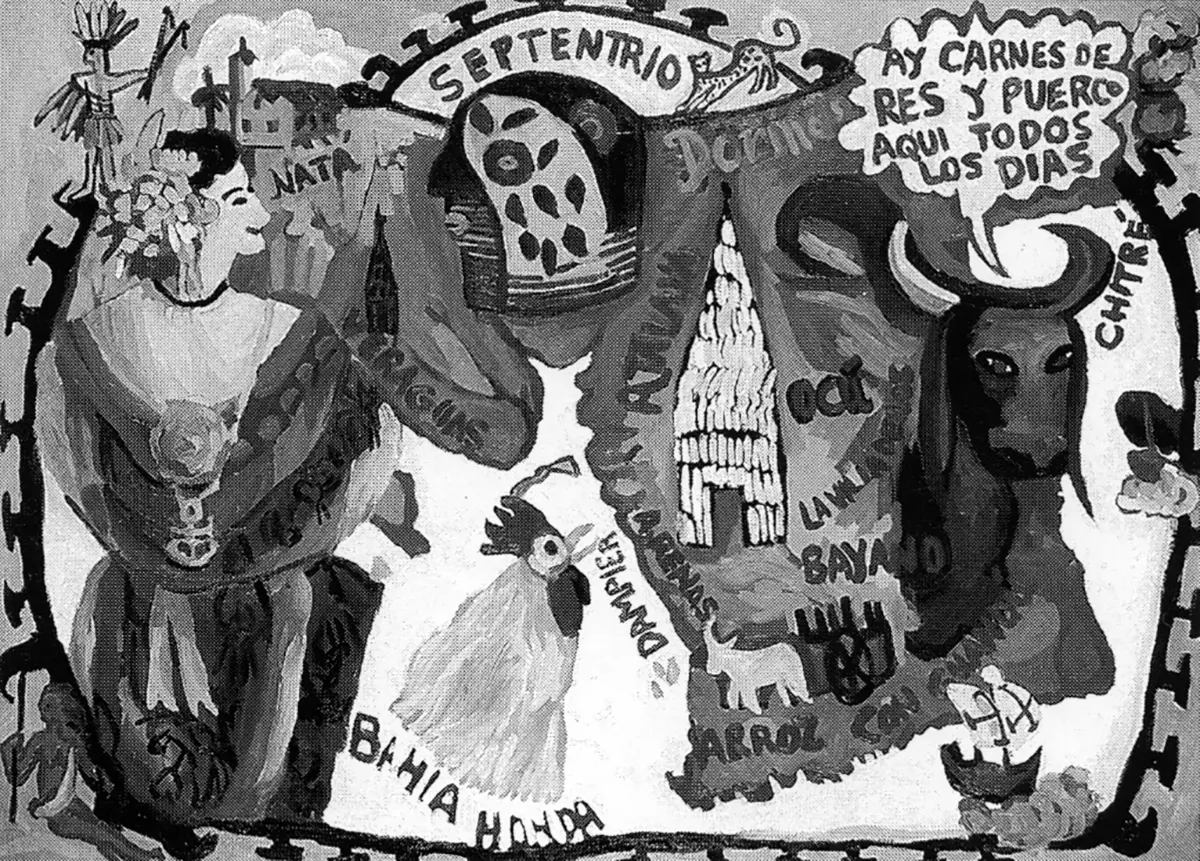
Yadira en Ia península de Azuero (Yadira on the Azuero peninsula), an oil painting by Haydeé Victoria Suescum, took third prize. Suescum, who lives in Texas, draws on vernacular Panamanian culture, especially that of the signs, signposts, and names of popular places, like the public market, different urban areas, and, most recently, the country’s hinterland. In the catalog of the fourth biennial, she explains that it is a question of “images that I have always understood and loved, and which no one had to teach me to appreciate, which is what happened in the case of the great masters.” Similar, opposing, or uneven figures face off in order to create a multiplicity of mental and visual associations in which language plays a key role. The winning canvas displays a clash of strong red and yellow tones, contrary to their usual monochromatic.
The exhibition of the seventeen works selected, open during the month of June, revealed certain intentions and diagnoses of the judges regarding the competing works. In the first place, in their judgment, better works were presented in painting and photography than in drawing, installation, and sculpture, since there were only examples of those two media. Also, the show remained exclusively within the sphere of figuration, and very closely tied to elements of local culture. Aside from the four works of the winning artists (including Araújo’s other billboard), I believe it is worth pointing out three other pieces that stood out above the rest: the two pictures by Eric Fajardo, and Lecturas urbanas (Urban readings) by Ramón Zafrani, a series of photographic transparencies superimposed and held by screws in an ingenious and delicate way, which hung from the ceiling by transparent threads. Lecturas urbanas is made up of close-up views of architectural and street details so characteristic of Panama’s capital that they are virtually invisible to its inhabitants, but which contribute to giving it its particular anarchistic and anti-aesthetic stamp. Fajardo has lived in Denmark for over two decades and is one of the few Panamanians who work in conceptual art, and his pieces are the only ones of this genre in the exhibition. For No siempre lo que brilla es oro - Artículo 2 (Not all that glitters is gold-Article 2) and No siempre lo que brilla es oro - Artículo 60 (Not all that glitters is gold-Article 60), the artist bought cheap fabric printed with the pattern of the pollera skirt —the fine, elaborate garment typical of the country— he spread it on stretchers and with gold paint he transcribed two important articles of the Pana manian Constitution that establish the duties of the State toward the workers and the citizens in general. The artist likens the fabric, which imitates the true pollera, with our Magna Carta, which has proven to be a false and merely decorative document.
As a complement to the exhibition of the selected works, the Salón Especial of invited artists, which took up the second floor of the museum, was presented for the first time. This was undoubtedly a good choice because it reinforced the show of the selected participants and it allowed the viewer to get a more precise idea of the current art in Panama. On this occasion, the eleven artists awarded in the previous versions were invited to show their recent work in hopes that the public could appreciate the creative evolution of each one. In the great hall, the most successful works were the oils by Suescum (3rd prize, 1994), which follow the thematic and formal line of Yadira en Ia península de Azuero, and those of David Solís (2nd prize, 1994), two mysterious and lyrical evocations of an imaginary blue circus. In the last five years, Solis, who has lived in France since 1975, has devoted himself to painting landscapes and still lifes that whisper the anguish that his earlier paintings, inhabited by deformed beings, screamed out. He now reincorporates the human and animal figure, but the space has been radically purged. Also noteworthy was Oasis para juegavivos (Oasis for juegavivos) by Ecuadoran artist Fernando Toledo (1st prize, 1994; 2nd prize, 1996; and 3rd prize, 1998), an eloquent commentary on the scandalous ecological and sociopolitical corruption that his adoptive country suffers. This installation consists of enormous figures (stemming from his personal iconography that fuses the human, the vegetable, and the urban) drawn on the wall, from which hung bags of dirty water from the contaminated Bay of Panama. Tubes extended down to the floor, “irrigating” small mounds of dirt (taken from the former Canal Zone). At the center of the mounds, the artist nailed flags (with hyssops as staffs) made of minute photographs of different models of bombs, thus alluding to the minefields that the United States government refuses to clean up.
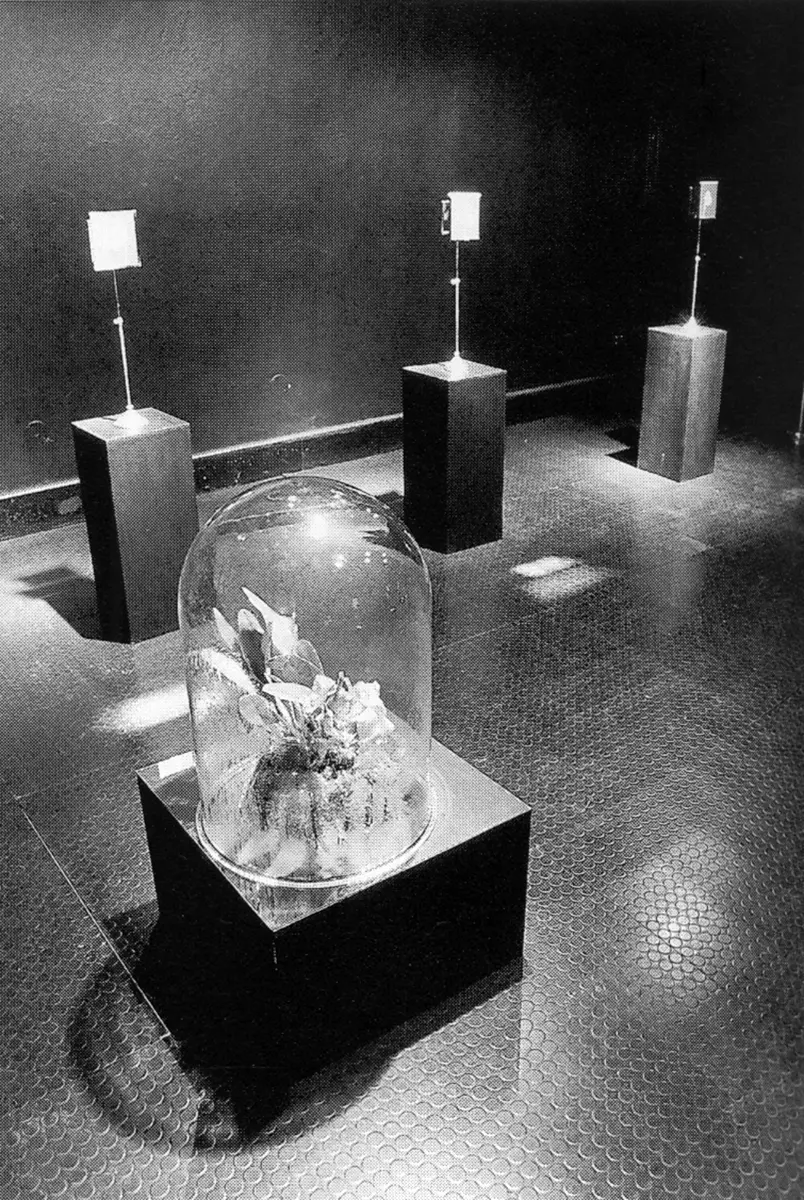
But the most captivating of these rooms was the one that housed the glass sculptures by Isabel de Obaldia (Inn Prize, 1992) and Mirabilia I-VII, a photographic installation by Iraida Icaza (special prize for sculpture, 1998). The two rigid glass men derive their strength from the enigmatic variations of light, texture, and color, and from the overwhelming forms inspired by a certain pre-Columbian sculpture. Instead of presenting the delicate and complex illuminated boxes from recent years, Icaza, who lives in New York, surprised us once more with a proposal of greater subtlety, revealing in an even more suggestive but evident manner her fascination with the scientific world: the objects that inhabit it and the concentrated, directed gaze that characterizes it. Each of the six svelte metallic pedestals (that looked like old precision instruments), placed in two parallel rows, supported two frames that stood face to face: one of the sides of the first frame showed a black-and-white photograph of a flower in a strange pose; and on the other side, the same image inverted and in color; the second frame showed a mirror on its interior side The viewer was forced to examine the delicate pieces very close-up, thoroughly, and from diverse angles, that is, like that of a scientist, since each change of position allowed us to see a different, always partial, ma ge. At one end, an exuberant orchid contained within a great glass capsule was also an object of scrutiny and astonishment.
At the awards ceremony, celebrated on June 9rh the directors of the National Brewery, the company that sponsored the biennial, announced the creation of the Irene Escoffery Award, which will be given starting in the year 2002 to persons who make a significant contribution to cultural development in Panama. The award bears the name of a woman who played a fundamental role in the cultural promotion and in the Art Biennial of Panama, which she founded and directed together with the art historian Mónica Kupfer. (Escoffery’s premature death occurred two months before the opening of this edition.)
One of the great qualities of the Art Biennial of Panama has been its will to renew itself: in each version, it has shown a new face. In fact, it does not seem coincidental that this important national competition has coincided with the shy awakening of Panamanian art to a growing experimentation that seeks to innovate and transcend the conventions of easel painting. The biennial has proven to be sensitive to the changes in the artistic panorama, incorporating them into its own format and statutes. This virtue guarantees its validity and its continuity.
ADRIENNE SAMOS