
It shouldn’t surprise anyone to find recurring coincidences in the work of otherwise diverse Uruguayan artists. Flowing from the art of Joaquín Torres-García and Pedro Figari, a strong tradition has come to be embodied, in one way or another, by hater artists. Many features of this tradition, from a palette of sober and austere colors to a figurativism that plays with the scale (diminutive beings inserted in out-of-proportion structures, intimations of childhood, and other representations bursting with subjectivity), clearly show the durability of those two masters’ influence.
Bruno Widmann, born in Montevideo in 1930, is currently exhibiting his work in Caracas. His painting signals the presence of that tradition of which it is a part, and which at the same time it reinterprets and transforms. Widmann, hikes Ignacio Iturria after him, embodies a painterly line that demarcates the current possibilities of Uruguayan art.
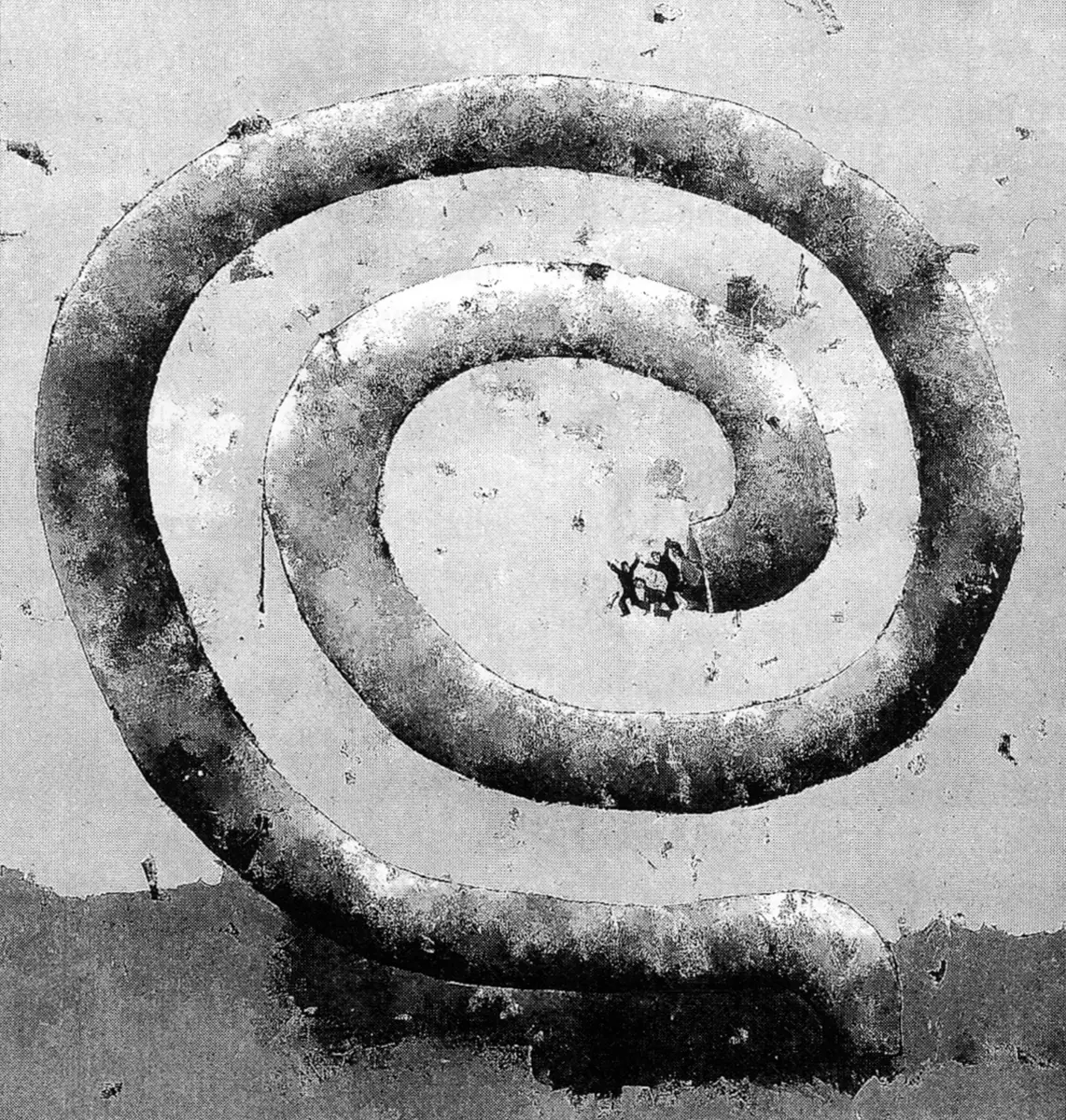
From a formal standpoint, the most noticeable characteristic of Widmann’s work is its chromatic austerity, which emphasizes chiaroscuro. With that, he works the surface of the painting —and, in consequence, the image— in an ambiguous manner. All accents of light are stain-hike, and at the same time, they are, often, small populating spaces. Categories hike abstraction and figurativism are always relative in these paintings. In truth, they coexist. Widmann’s space is at once a large abstract plane and a subterranean, sometimes suffocating scenario through which characters travel. Within these light-hess, airless spaces the artists paradoxically manipulate concepts such as freedom, subtlety, urbanism or urbanity, nature, and, of course, art and spectacle. One could say that these are Widmann’s overarching themes.
In all of them we, as spectators, are the public that visualizes ((from above» the scene depicted by the artist. From this point of view, we see in the various works a full orchestra in mid-performance, hike a multileveled structure, sort of a laterally open building where the characters coexist and interact. On other occasions, it is a cityscape (with buildings, highways, vehicles, and people), or a plant’s germinating process. What is constant is the earthen-ness, the hack of light and air; the subterranean life which we are forced into by the dense, earthen palette.
An ambiguous reading of the images drives the break with logic: outside and inside (the cityscape or the subterranean world); realism and caricature (daily scenes that are at the same time impossible, such freedom attained at the end of a tunnel that opens below the earth); the solid and the ethereal (air and hand); all of them discordant elements in permanent interaction.
All of these elements belong to Widmann’s imagined world, and they identify him amidst the constant painterly references he deploys. The artist has established an internal logic of his own, and from it, he draws his work’s richness and interest.
SUSANA BENKO