
Cuban art of recent decades has been navigating a dynamic course as the touring exhibit Contemporary Art from Cuba confirmed. Exploring social, political, and culas the touring exhibit Contempotural themes, the assembled works conversed with North American postmodern, conceptual theories, yet reflected an autonomous consciousness that appears to have become a marker of post-1980 Cuban art. Recently profiled in Los Angeles, the show presented works by seventeen emerging Cuban artists, most in their thirties or younger.
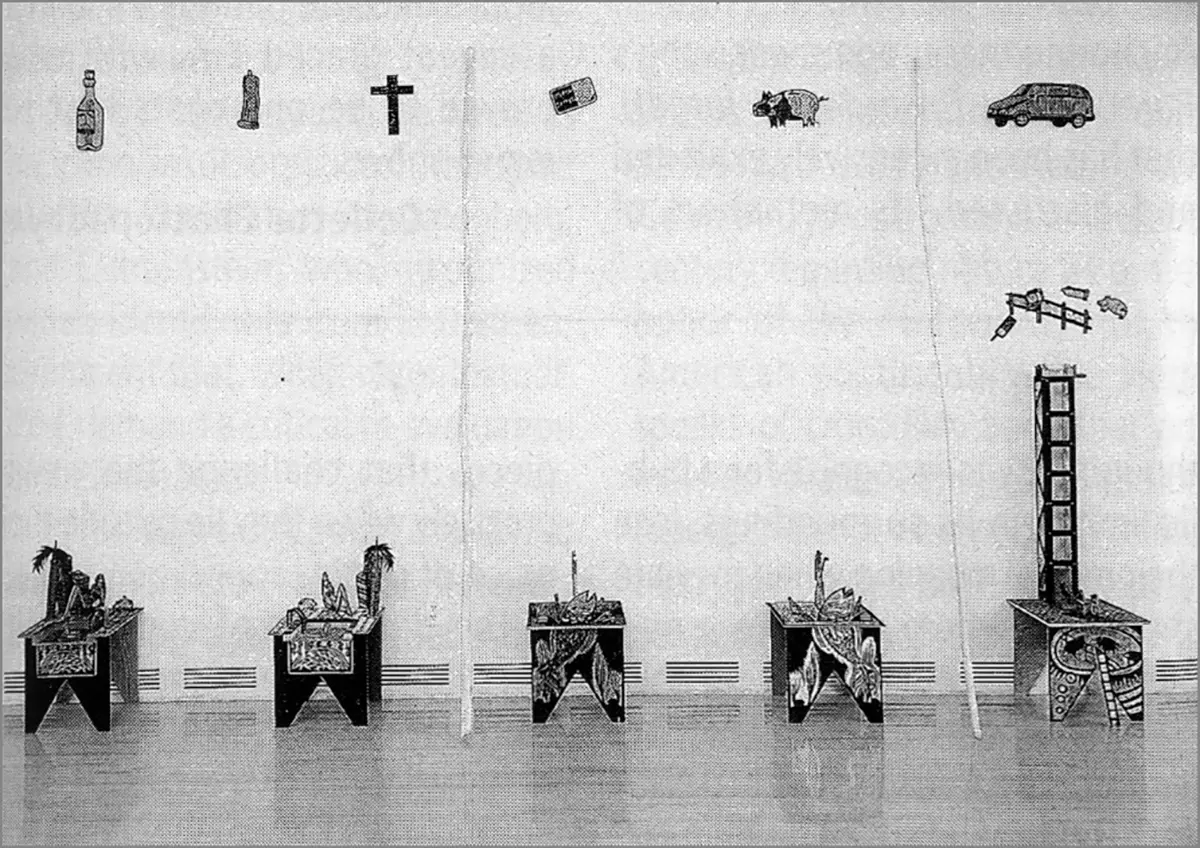
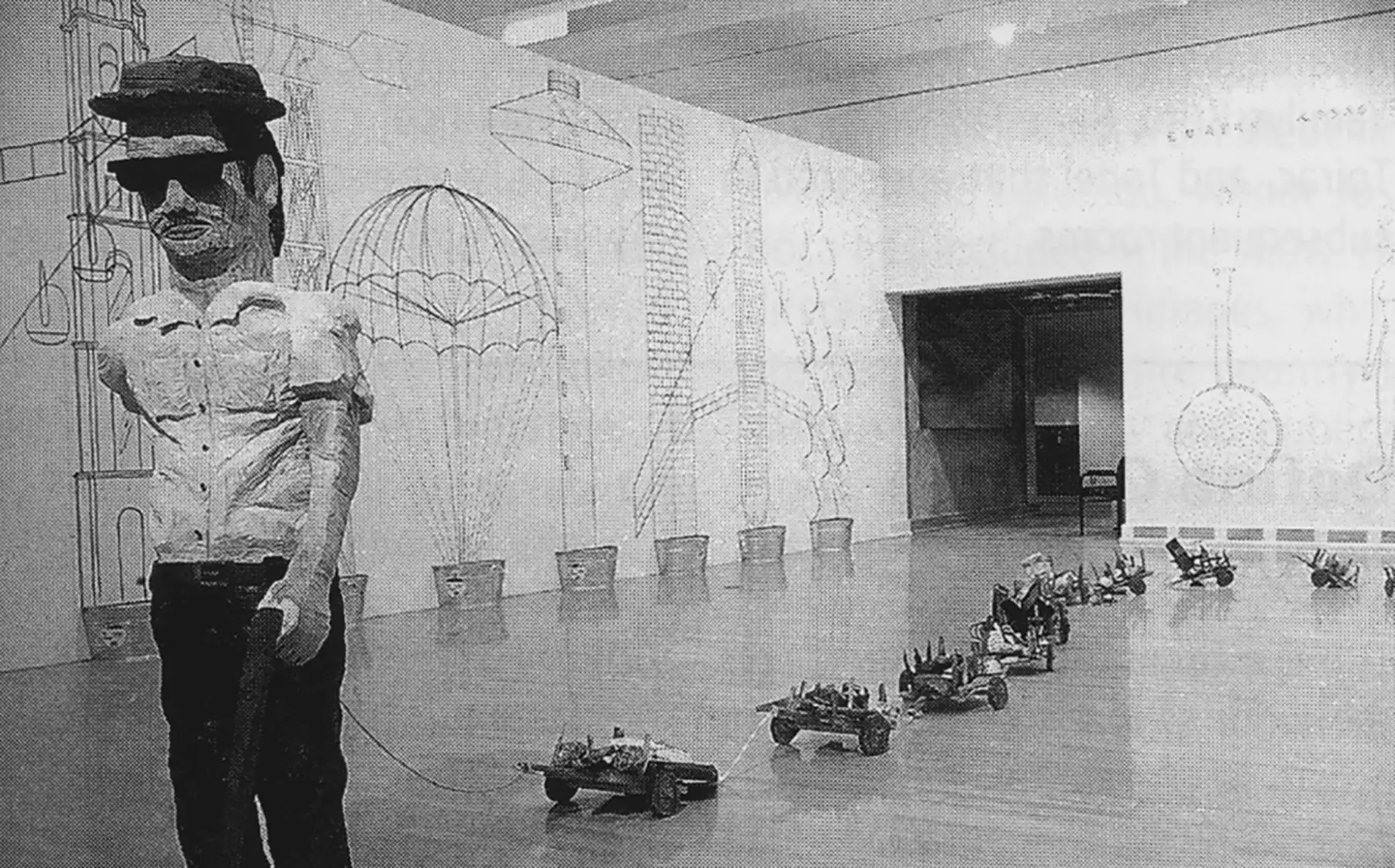
The exhibit, which traced a circular path through a suite of eight rooms, as though metaphorically traveling the parameters of an island, juxtaposed the works of Fernando Rodríguez and Jacqueline Brito in the opening gallery. Rodríguez’s rough-hewn wooden installation, Pa’ Cuba (For Cuba), introduced socio-political issues of thematic significance throughout the exhibit. Using unfinished processes as markers of artistic sincerity, this piece parodied not only Modernism, but also the failed socio-economic idealism of the Cuban Revolution. Related socio-political concerns fueled the often satirically edged works of Pedro Álvarez, Belkis Ayón, Abel Barroso, Yamilys Brito, René Francisco, José Toirac, and Tonel that appeared in subsequent rooms.
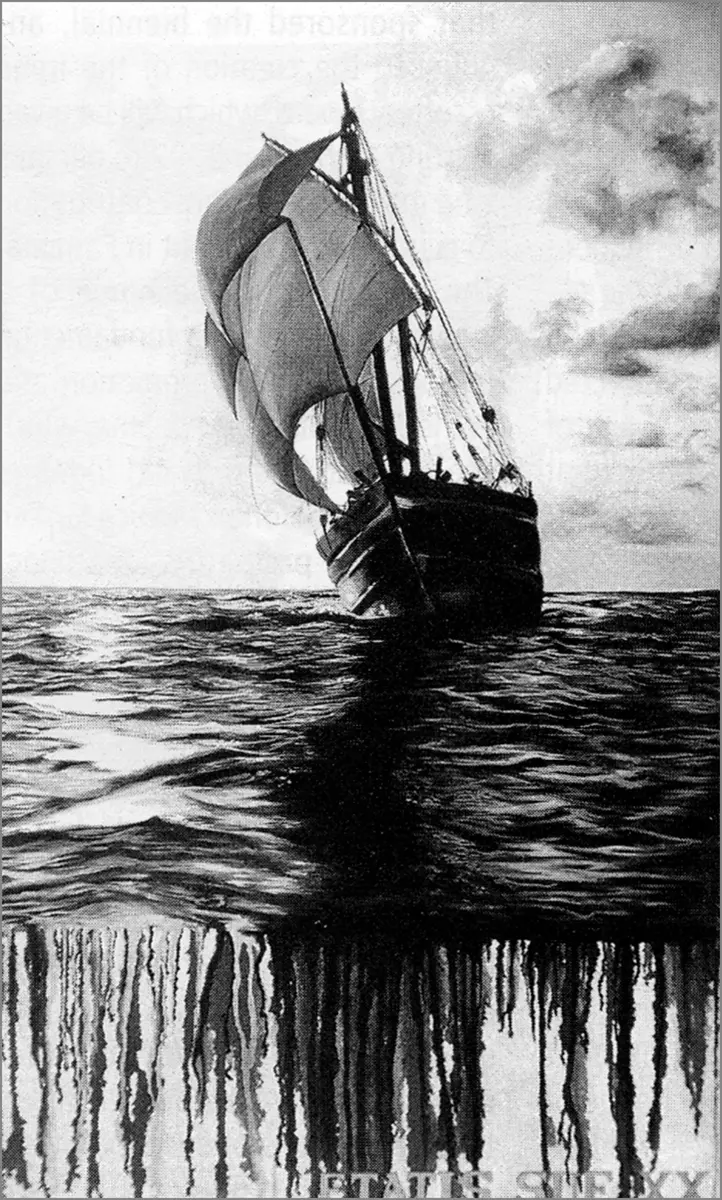
Complimenting Rodríguez’ works in the opening chamber was Brito’s small, jewel-like painting ETATIS.SUE.XX, that constructed metaphors of the sea, and raised the issue of Cuba’s geographic isolation and autonomy. These concerns rose to a crescendo in the show’s central rooms, where additional pieces by Brito, Kcho, Sandra Ramos, Los Car pinteros, and Osvaldo Yero appeared.
A number of artists adopted methods of appropriation, whether of objects, conceptual premises, or signature artistic styles to introduce socio-political concerns. This was certainly the case with Pedro Álvarez’s grandly scaled mock history paintings, including High, Low, Left and Right: Homage to the French Revolution which paid quizzical homage to the French flag with its monochromatic red, dirty white, and blue panels. Raising difficult questions regarding notions of cultural authenticity and its relation to the generally Eurocentric modeled ideals of commodity products, Alvarez hinted at the complexity of identity in the Cuban, and global, postindustrial world.
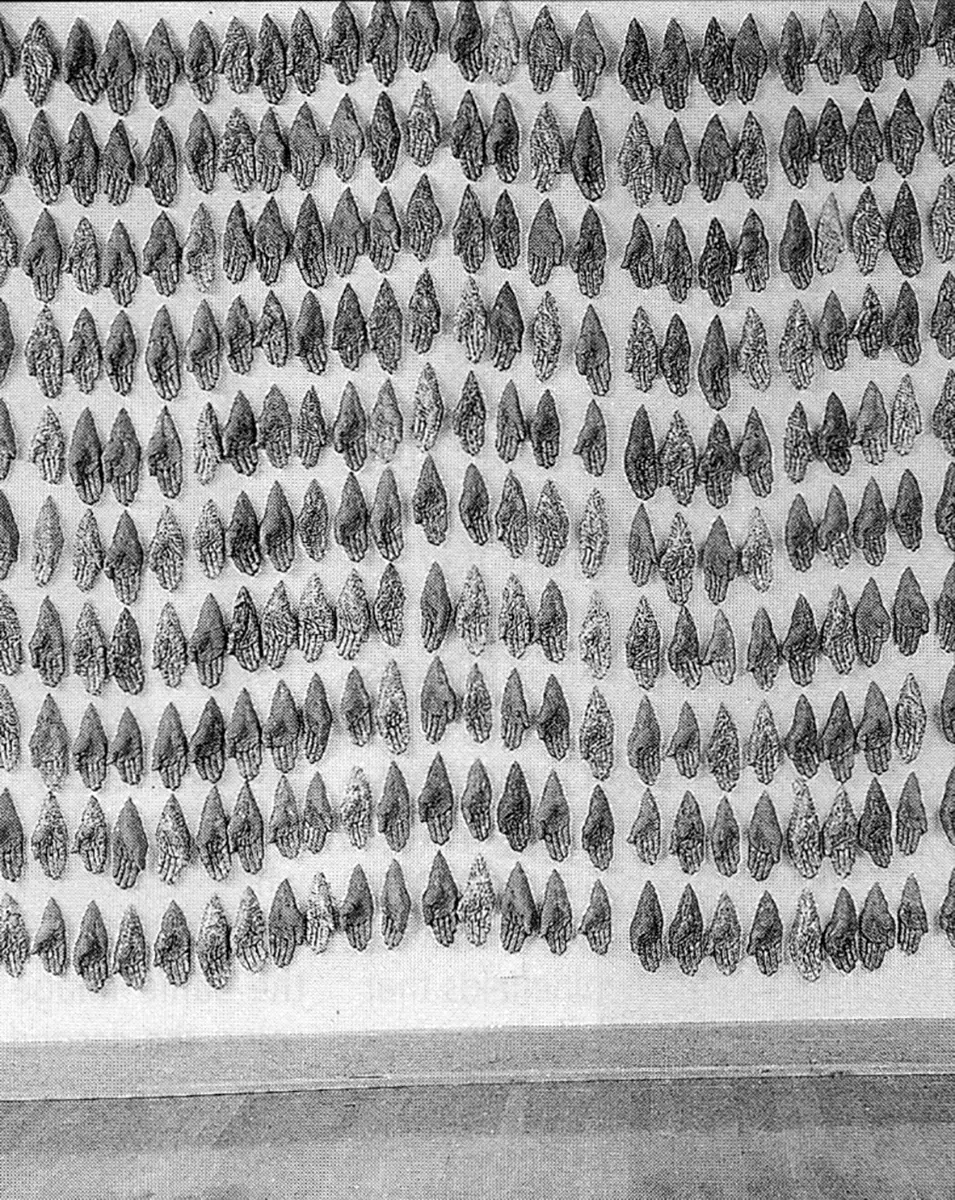
Works in the show’s inner sanctum pushed such matters further. Anchoring these rooms was Kcho’s Para olvidar (In Order to Forget), which has been extensively exhibited and discussed. Its metaphors of the voyage, both literal and conceptual, constructed compelling dialogues with other works. Ramos and Yero’s works exemplified the boldest contrasts in this narrative. Ramos's ready-made suitcase, painted with the image of two lovers Swimming Under the Stars in an intelligence-satellite-strewn landscape, harpooned the idealistic dreams of Cuban exodus to the United States. By contrast, Yero’s Sea of Tears (1998) commemorates those who have left the island. Its sweep of 750 downturned, blue porcelain cast hands, set in patterns resembling waves, carried allusions to those who have drowned in failed escape attempts, although posted gallery plaques stated the work memorialized the exodus of Cuban artists. Introducing somber tones that echoed the more serious attitudes of early ’80s Cuban art, these works conversed with Carlos Estévez’s works, shown in the concluding room.
Suggesting themes of constriction and entrapment, his large-scale drawings presented an edgy critique of industrially driven culture. While his marionette was granted spatial preeminence, it was the wall drawings, rendered with meticulous lines, that proved most memorable. Featuring isolated humans trapped in small, confining spaces, these works queried the human compromises requisite for the ongoing triumph of industrialization.
Building upon past artistic accomplishments while charting new territories, this exhibit encapsulated the vibrancy of the emerging Cuban art scene. Conversing with yet moving beyond the horizons of postmodernism, these works introduced new harmonics to the dialogues of contemporary art, and as a caveat graced L.A. with what proved to be one of its best summer shows.
COLLETTE CHATTOPADHYAY