
From March 2 to April 3, in the flawless space dedicated to photography, Galería Emma Molina (managed by Cristina Lobeira and Eva Ramírez) presented Cuaderno de Viaje (Trave/Diary), a show of works by Graciela lturbide. The exhibit was a selection of twelve pieces from a larger exhibition held last year of the same title, at the Carrillo Gil Art Museum in Mexico City and at the Álvarez Bravo Center for Photography in Oaxaca. These photographs are all from 1997 and 1 998, which left out more recent works on the Oaxaca Botanical Garden shown in the original exhibition. Nevertheless, the curatorial script allowed the public to appreciate the development of the artist’s work through the different locales she visited in those two years, and the different discourse articulated around the defining elements of each locale, intuited in her photographs.
The heliogravures and delicate prints in silver on cotton paper showed Iturbide’s distinctive perceptions through moments and scenes in her travels. The photographs were shot in different places, all very distant from each other: Florida, Louisiana, Tennessee, and Mississippi in the United States, and Bombay, India.
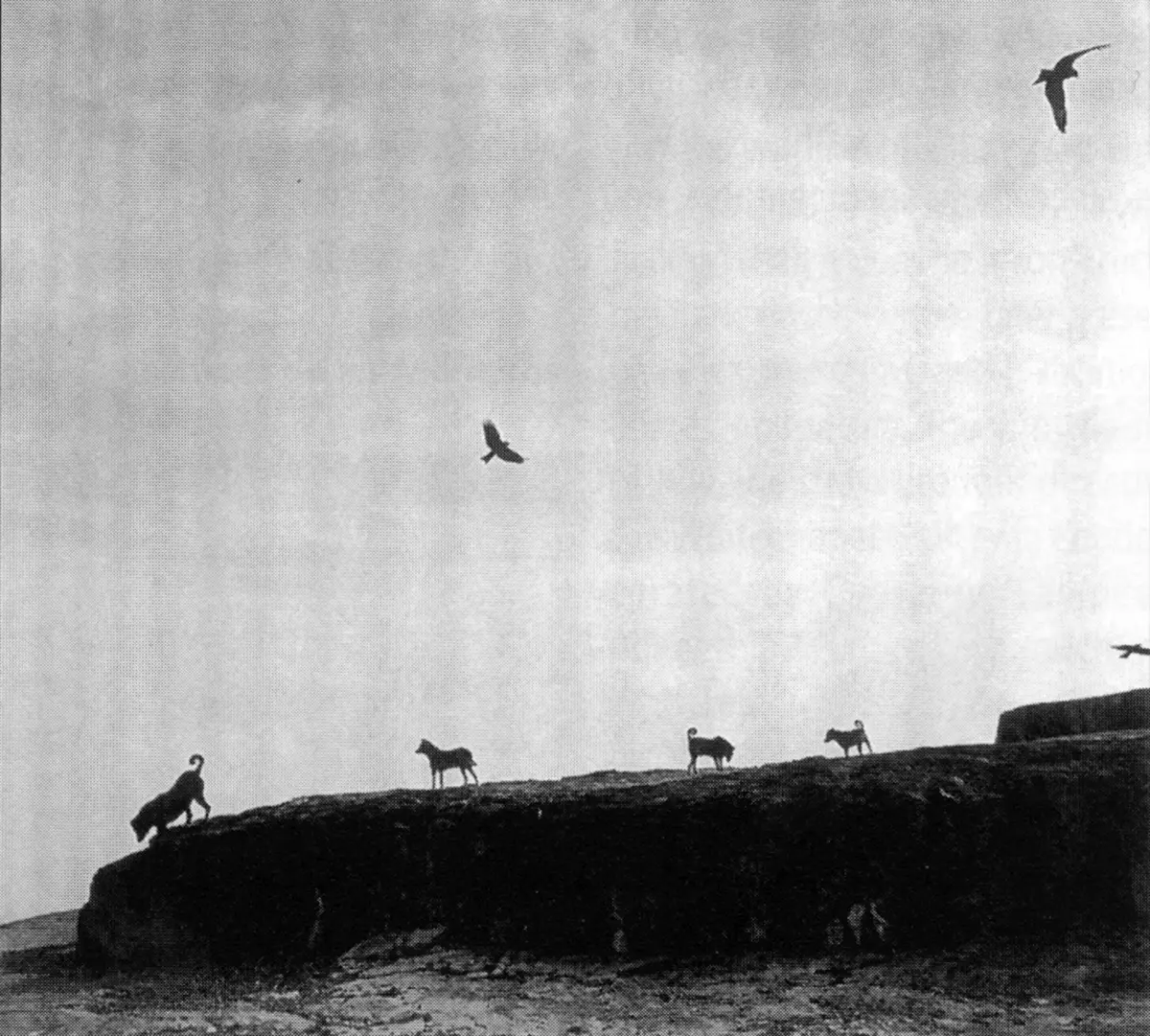
The encounter of Nature and human intervention within a landscape is a recurrent theme in these photographs, the meaning of which shifts, dramatically, from place to place. This is made evident, for instance, in a wall graffiti reading "God Save America" captured in Carretera 6: de Clarksdale an Oxford, Mississippi in the fishing services sign, barely readable thanks to the vines creeping all over it (shot in the same highway, in the return trip); in the log cabin facade thoroughly covered by vegetation of Carretera 61: de Memphis, Tennessee a Clarksdale, Mississippi, or in the serene cotton field landscape altered by a disturbing, spectacular white sign shot in the same highway. Another repeating theme of these photographs is birds in flight. Iturbide gives this element, However, a passive quality that contradicts the active connotation of flying, positing it as a sort of witness to each shot, in subtle but bold contrast like the artist herself to the inadvertent transit through a specific place or moment in time. These works are a cohesive proposition, founded on images that capture the grace of found objects, delimited landscapes, and instants made memorable by simultaneous beauty and lack of transcendence. In Carretera 82: de Abbeyville, an Intercoastal City, Louisiana, the horizon lines of a swerving highway intertwine with lamp posts and electric cables, in a parallel stroke delineated by a large flock; in formal terms, the composition is perfect. In Bombay, India, somebody’s feet coming down a staircase accentuate the enigmatic quality of an artificial leg with tennis shoes, abandoned in the middle of a path.
Iturbide has said that she doesn’t think of photography as "an objective medium of documentation, with the capacity to freeze absolute truths." This is a bold stance since the "documentary" and the most widely applauded elements in the work of Mexican photographers are inscribed in the same genre as Iturbide.
Iturbide’s photographs are coherent with her intentions. Leaving aside the purported value of documentation or direct register of reality, her attitude opens the way for the rich contributions of her work’s poetic essence. Vanesa Fernandez essence.
VANESA FERNÁNDEZ