
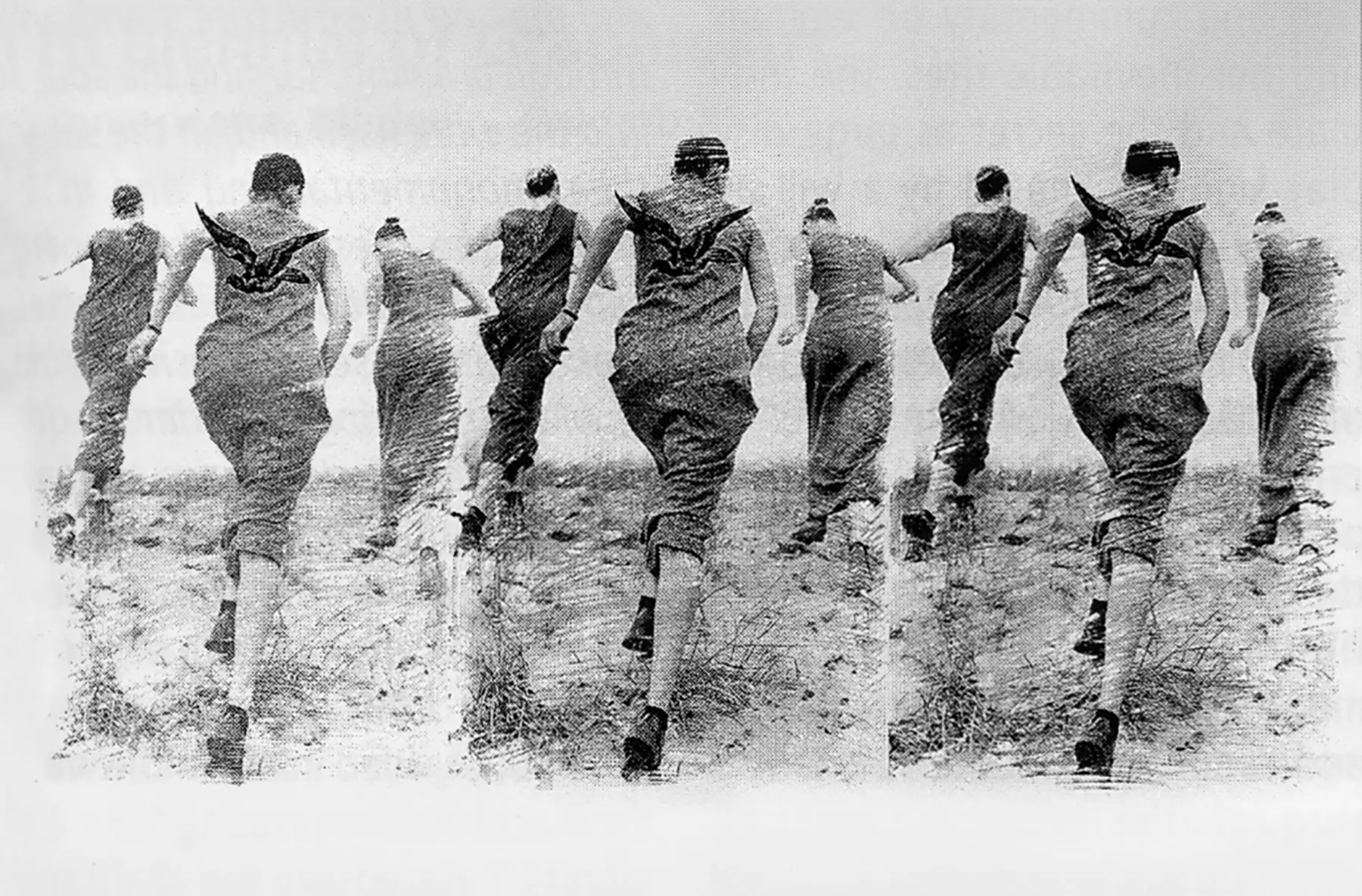
There are more than enough reasons to consider Gráfica 12 an interesting show. The twelve artists who displayed their works at the National Museum of Fine Arts of Buenos Aires are outstanding and represent different tendencies in the Argentine art of the last three decades. The wide spectrum ranges from Luis Felipe Noé (1933) to Leonardo Gotleyb (1958).
Not all engravers. But even those historically considered painters, like Noé or the representatives of the painting boom of the ‘80s—Juan Lecuona, Ana to Juanito Laguna. The recognition of contributions is still in force; for example, in Gotleyb’s work, which recently won a prize at the Biennial of Graphic Art of Ljubljana, Slovenia.
The slant in the painters’ technical choice reveals a more general situation of contemporary art: the need to move beyond the limit between disciplines fixed by tradition. In this way, free of prejudices, the techniques mix with one another, interfere with one another, or are superimposed one over another. This is how Noé the engraver never ceases to be Noé the painter As always, we find his interest in a dynamic and expressive chromatism that goes beyond the medium used.
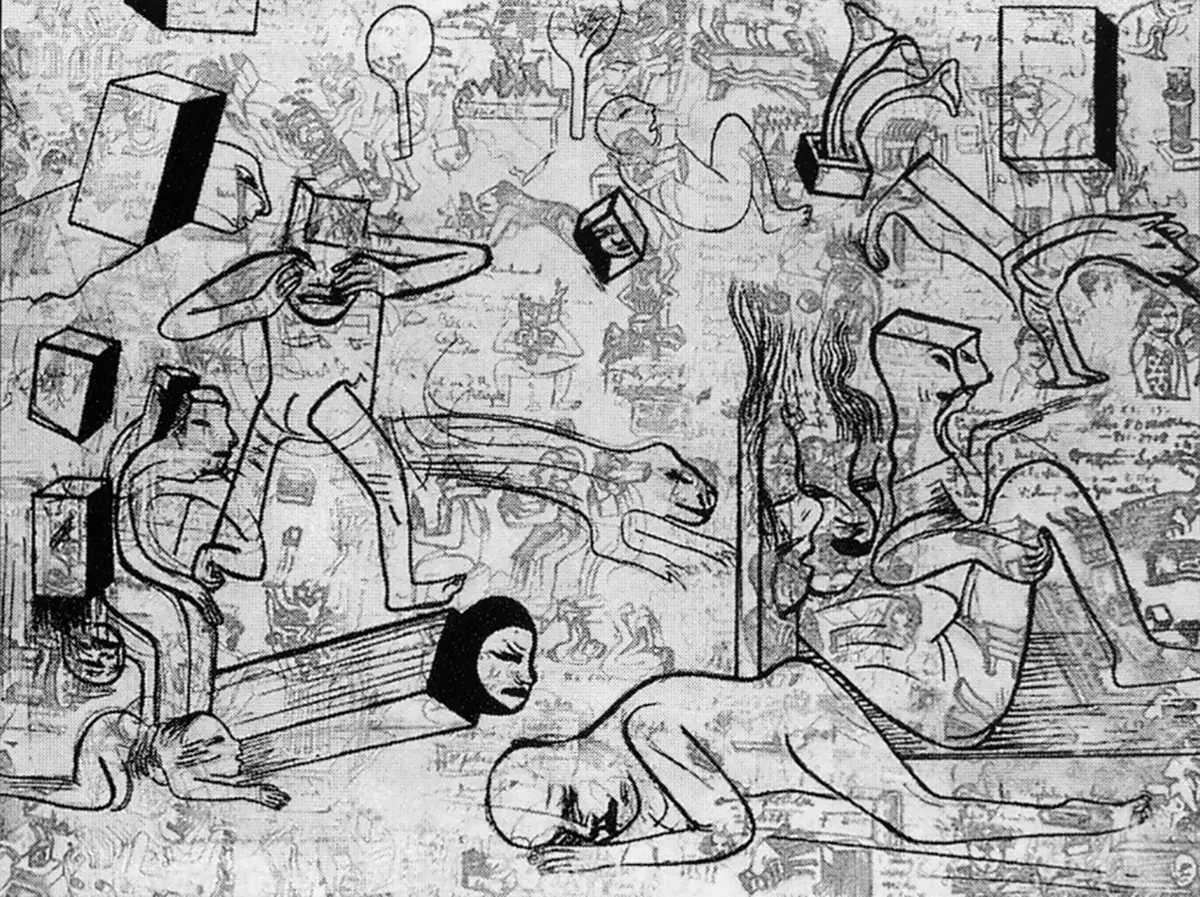
Part of the same general phenomenon of delimitation is the need for many engravers to renounce the autonomy of the graphic medium in order to breathe new life into it. The concept of engraving is extended. Its statute of a “hinge” technique connects it to painting, drawing, photography, and text Also, the inclusion of objects projects it beyond traditional planimetry. Proof of the contamination of resources is the fact that selected large-scale works take possession of a dimension typical of painting or sculpture.
Without a doubt, the generous proportions of the halls of the pavilion of the National Museum of Fine Arts allowed the unfolding of sixty collected works (five per artist) and a confrontation with the respective contributions.
Necessarily present were engravers of the caliber of Liliana Porter, Mabel Rubli, Matilde Marín, Zulema Maza, Alicia Díaz Rinaldi, Rodolfo Agüero, and Gotleyb. No prejudices concerning the antiquity or modernity of the technical resources limited their selection. Thus, ancient techniques such as xylography (Gotleyb) and etching (Díaz Rinaldi, Noé, Lecuona, Eckell), came together with more recent techniques like serigraphy (Rubli, Porter, Marín), transfer (Maza, Médici), and the digital image (López Armentía, Agüero).
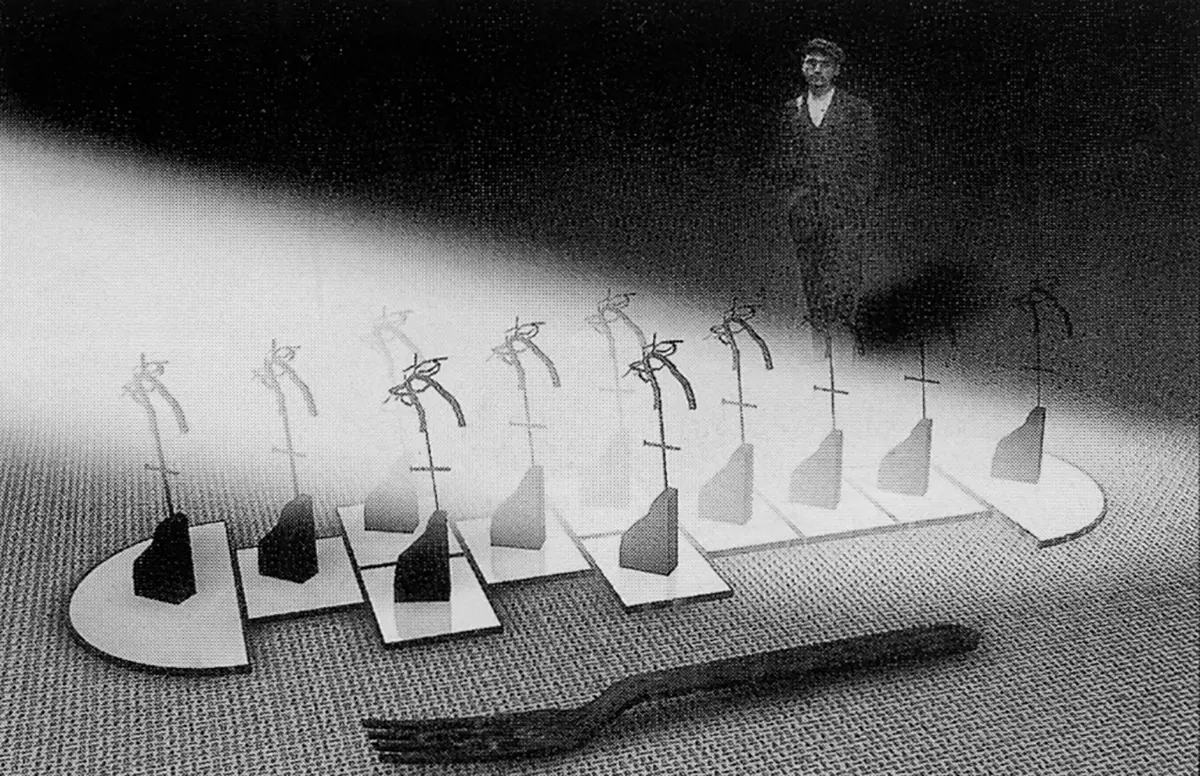
The fertilizing presence of photography in the works of Porter, Maza, Marín, López Armentia, and Rubli attracts attention. In this way, the greater incidence of that discipline in the ant of today is reinforced.
Grafica 12 speaks, without a doubt, of the vitality of engraving today. There is no tendency for a style that rejects its possibilities today. The old discipline thus becomes an effective channel of contemporary and disparate visions of the world: Agüero’s vibrantly colored cold geometry, Porter’s serial games, Marín’s ritual games based on photographing hen own hands, Díaz Rinaldi’s fragmentations, Gotleyb’s urban transpositions, on Noé’s expressionism. No less different are Eckell and Médici’s dynamic visions of the body, Lecuona’s deconstructivism, Maza’s ecological symbolism (linked to things female), and López Armentia’s social criticism that denounces, in his series dedicated to immigrants, hunger and the absence of utopia. In a similar vein, Rubli gives proof of the validity in the twentieth century of Hobbes’s motto homini lupus (man is a wolf to man), obsessively repeated next to photographs from the Holocaust.
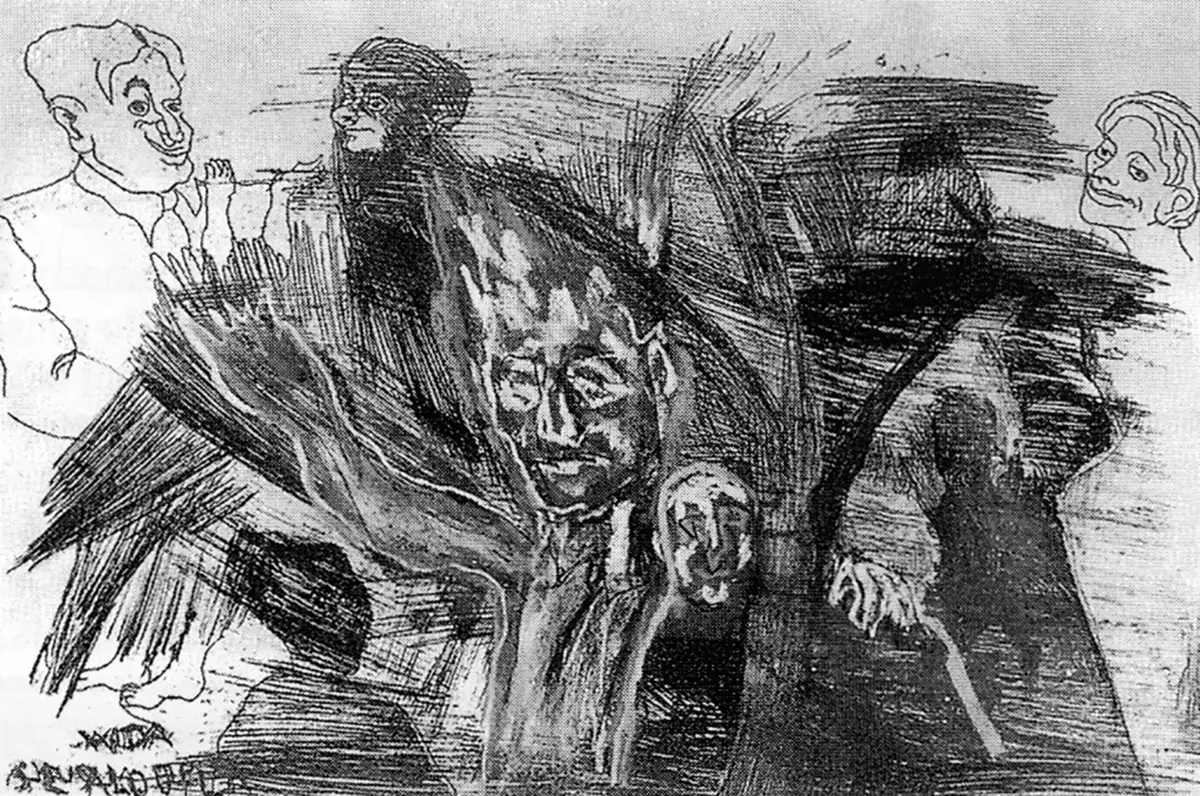
Like other contemporary engravers, Porter and Rubli surpass the distinctions between an original work and a multiple work grounded in technical reproducibility. Their engravings exist in more than one example, but at the same time, they are unique. The stone that Porter sticks to one of his works gives the note of transgressive uniqueness, just like Rubli’s unrepeatable trace of direct drawing and the incorporation of natural elements on paper.
These profound modifications show the inadequacy of the label engraving on the new forms of printed ant. Is it not perhaps time to find a new term that incorporates the produced changes? Photography theoreticians opted for the name post-photography to designate renovated manifestations of that discipline. Could we perhaps speak of post-engraving? Beyond these questions, one thing remains clear: the power of engraving in today’s ant is precisely the fruit of its move into multiple directions.
ELENA OLIVERAS