
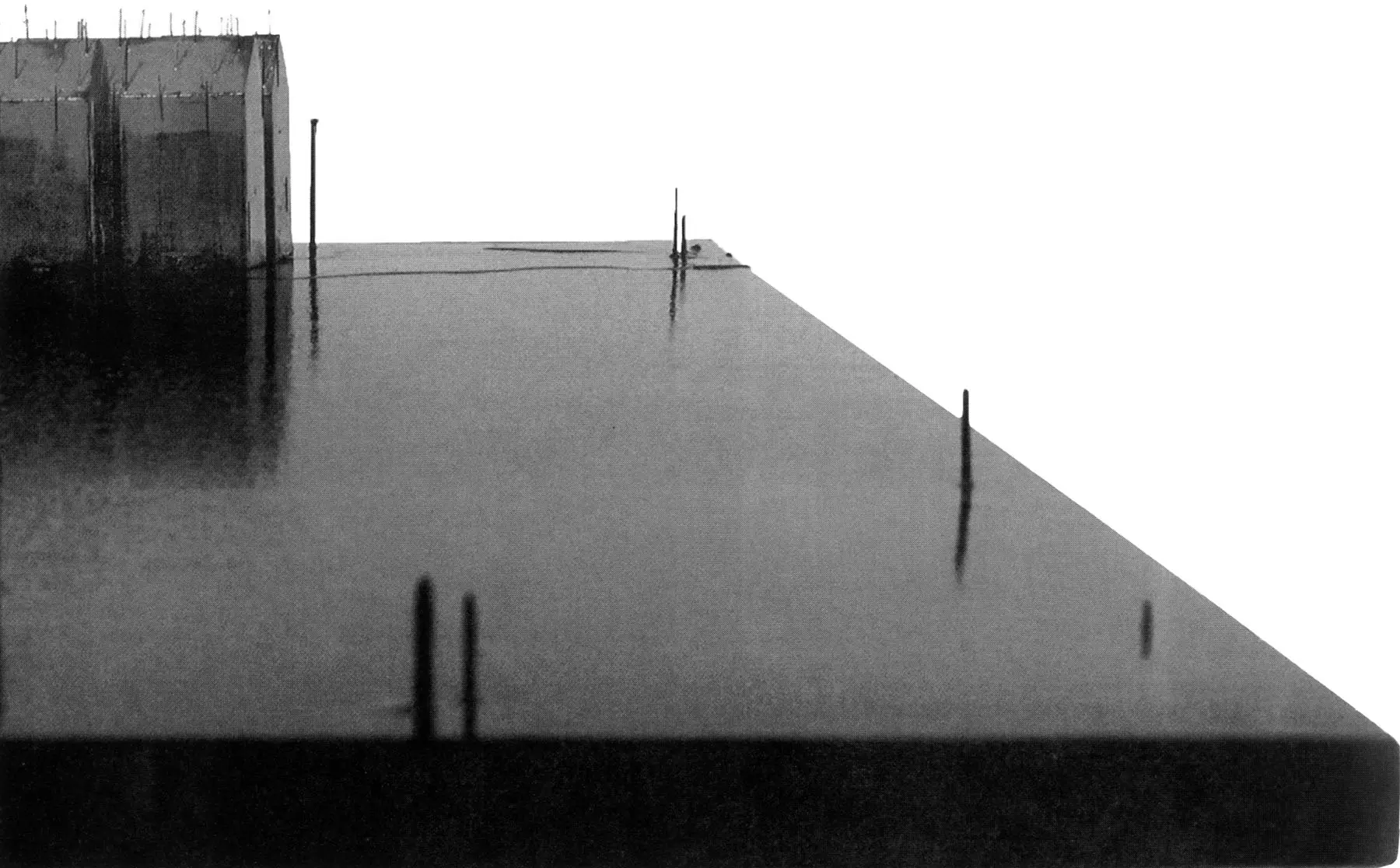
If we look at the oeuvre of Luis Fernando Peláez retrospectively, we find important variants in the size of the pieces that constitute it, ranging from the minute to the monumental. It is thus possible to observe that he has resorted to distinct media such as watercolor, drawing, collage, assemblies, sculpture, and, most recently, installations. The materials used are also diverse. On the one hand, the constant presence of metal and glass stands out, as does the recurrent use of found objects, such as small metallic figures, pieces of paper, postcards, letters, suitcases, chairs, and other such artifacts of a very different type and with very different origins. However, before the repeated presence of time and space, these differences seem to minimize notions that ground each one of his pieces and stages. This gives a particular homogeneity to his production to the point that time, understood in terms of memory, and space, assumed as landscape and place, become the coordinates that have determined the course of his work that begins in the late 1970s.
Peláez’s work is articulated around three great themes that, although they allow his production to be organized chronologically, also seem hostile to that order because, throughout their process, they dialogue, intersect, and intertwine. On the one hand, we find the stage titled Crónicas de viaje (Travel Chronicles)1 which contains the works created between 1986 and 1989. In the first half of the 1990s, the theme of the Ciudad (City)2 appears, which already had an important presence in the previous phase, which included the series titled Puertos (Ports, 1992), Instantes (Instants)3, and Ahora (Now, 1995).4 Finally, we have the works that allude to Liuvia (Rain, 1996),5 where the house takes on an unusual importance.
In 1987, at the 31st National Exhibition of Colombian Artists, Luis Fernando Peláez received first prize for a group of five small-format works that constitute part of the series titled Crónicas de viaje. These are boxes made of metal and glass in which space and time are articulated in order to allude to man’s solitude in the middle of his own landscape. Apropos of these pieces, the sculptor Eduardo Ramírez Villamizar, who acted as a judge in the event, commented: "I selected Luis Fernando Peláez for the first prize because I found that he was a mysterious and poetic world achieved with excellent technical perfection. At moments when such aggressive things are taking place, his work invites contemplation. I think that a lot of sensitivity and talent are needed in order to conceive this microcosm."6 These words of Ramírez Villamizar specify with exactness some of the principal characteristics of these pieces that can be seen in the first two stages of his work. The pieces that make up Crónicas de viaje and Ciudad point to a small world enclosed between glass and metal in which metallic figures dwell, tiny men with raincoats carrying a suitcase or holding a hat in the middle of an impetuous wind. Fragments of metallic gears are also strategically placed over the surface of glass, objects, and characters that, with their presence, inaugurate a place. This is a world that, from its small scale, speaks of the solitary existence of man, reminding us that existence has a duration in time and that it happens in space, in some definite place.
As Ramírez Villamizar says, these minute worlds of Peláez trap the viewer’s gaze, they stop so that he or she may contemplate for a long period of time these silent, transparent, and evocative boxes that remind us of that memorable work by Caspar David Friedrich, Monk by the Sea, which in its simplicity is also an invitation into contemplation. As in Friedrich’s painting, the small figure of the man in Peláez‘s boxes contrasts with the enormity of space, and it is in that contrast that a temporal notion emerges that links up with the finite and the infinite, the eternal and the perishable. And another notion also emerges, one of a spatial nature that is related to the enormous and the minute, concepts that ripped the romantic soul, but which in Peláez‘s work, perhaps by virtue of the characteristics of the figures used, invite us to imagine possible worlds, particular stories and situations that, more than ripping, provoke a smile. However, it is a somewhat disquieting smile before the attitudes of these small men dressed up with clothes that speak of the current world, common and hurried citizens who greet us from the infinity of an ocean that can also be the vastness of a desert, while a paper ship and its shadow sail on, or are pushed on by the wind, through the immensity of space.
Just as it is possible to think about romanticism in the pieces that make up Crónicas de viaje and Ciudad, there is also something of surrealist poetry, there is something absurd, disquieting in these characters of Peláez that makes us recall Magritte’s men in a work like The Meaning of Night, in which they appear dressed in their city clothes, coat, and hat in the middle of the night, standing before the ocean, facing situations in which time and space break down rational outlines through which we articulate reality. In Peláez’s case, we ask ourselves: “What is happening?” “What is that little businessman saying to us who, in the middle of a large spot, confronts his other I through a glass?” We look at the work again and it returns our question, because we find ourselves once more with that solitary, detained man, trapped in that enigmatic instant of finding himself, a moment in which the world and his own existence seem to be absolutely stopped, frozen forever in the image. The question returns and the gaze comes back, and in that cycle, we can stop for a long time without ever getting any answer. As we step away, the image with its mystery, and the man with his raincoat and briefcase, remain anchored in our memory, provoking echoes of a suspended time, of a strangely dilated space that somehow belongs to us and urgently demands some sort of answer.
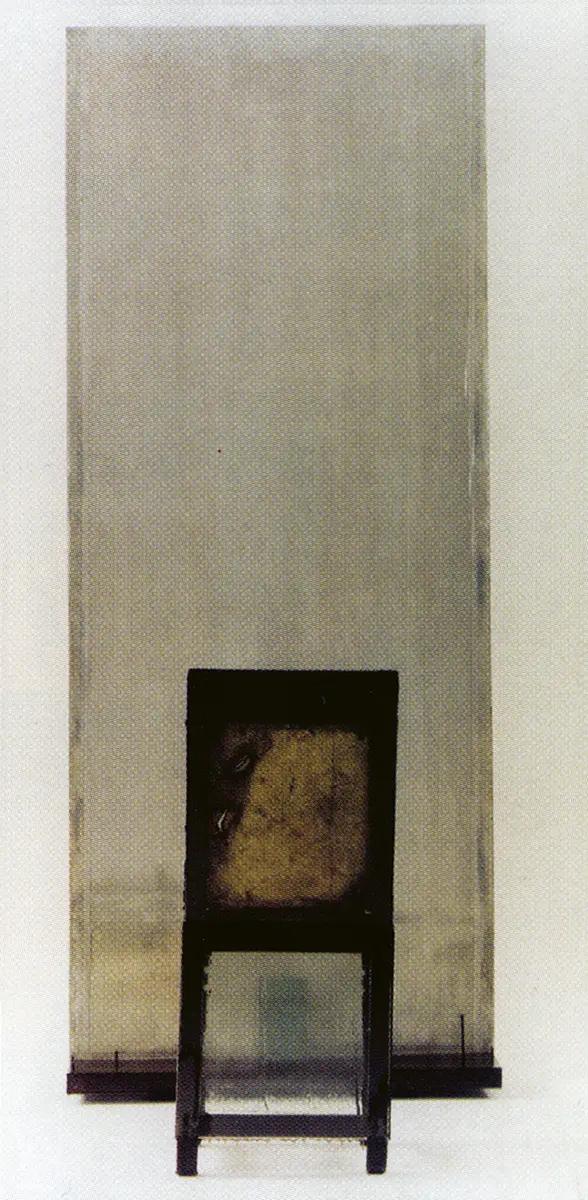
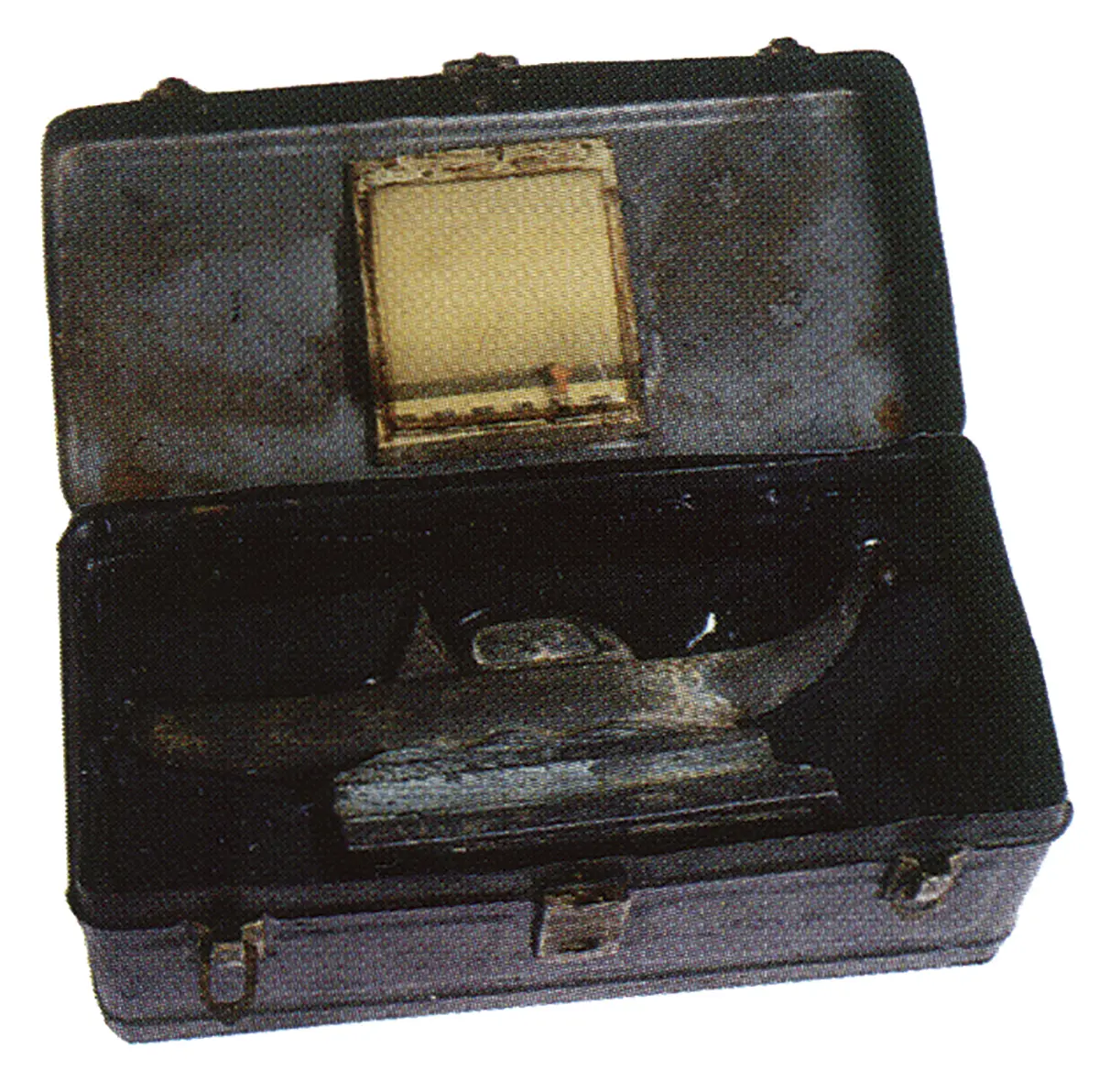
Luis Fernando Peláez’s microcosms, as well as his collages and watercolors, denote a sensitivity that places its confidence in narration in a way that maintains a certain figurative character. There is a burning interest in capturing the anecdote that emerges from the marks of memory. In these marks, Peláez seeks to suggest a story based on the objects used so that, through them, he can trap a minimal fraction of time. He places us before time in order that we may complete its mystery, in order that we may invent its before and after. In the series titled Ciudad, specifically in Puertos, the characters and their enigmatic situations begin to dwell in objects that apparently come from diverse contexts and distant times. The objects that Peláez uses have their own memory: "It is not my memory, it is the memory of things, of objects. They house their own story. Once dissolved, and broken down to almost nothing, they are reconstructed. Like an architect who gathers debris from future archeologies in order to establish new utopias and new horizons."7 These objects, sometimes stemming from the navigation trade, other times from post office boxes, possess their own aura, they bring with them the existence of a time past, experiences and stories that hermetically lie in their design of another moment, in the woods or metals employed, and upon uses that today have almost disappeared. In this way, Peláez, a connoisseur of these characteristics, adds new meanings as he assembles his poetic worlds that capture a definite time within other foreign ones that come charged with their remote and particular memory.
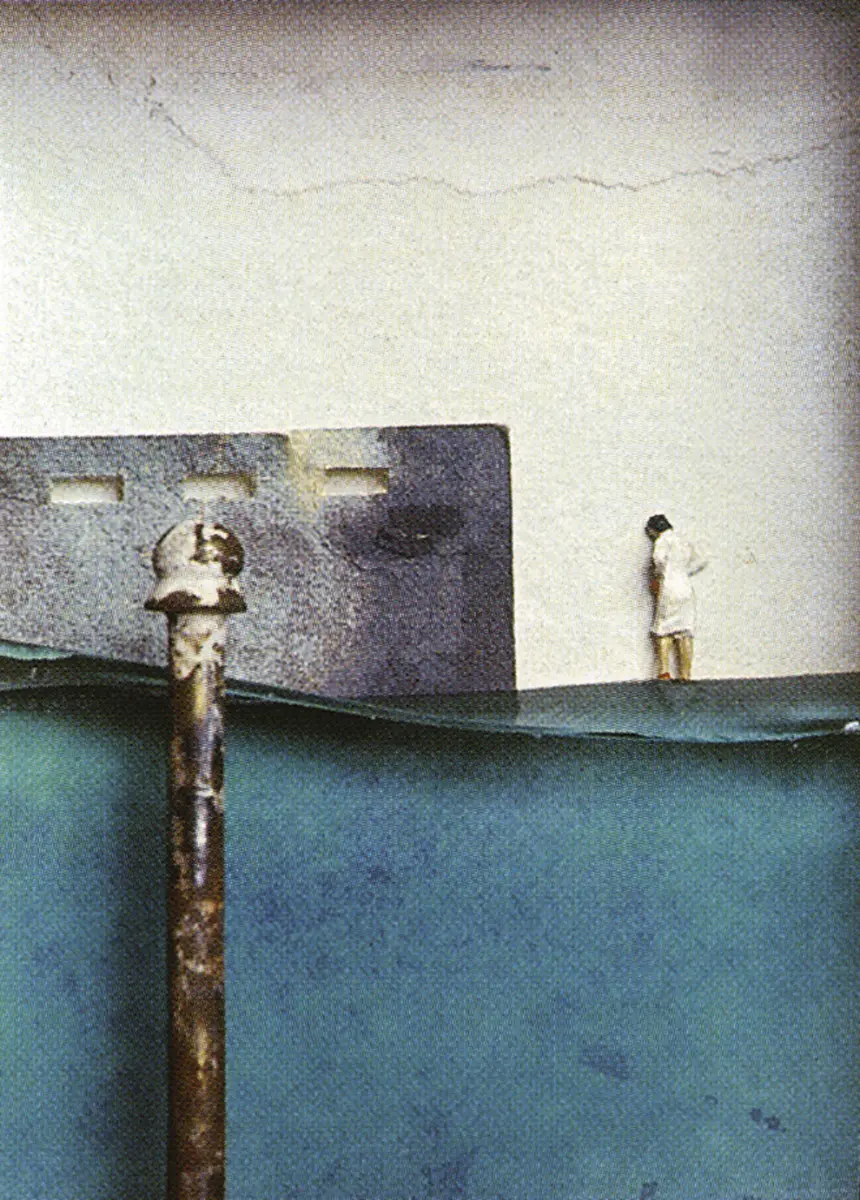
To the extent that this happens, a substantial change also takes place in Peláez’s work; these objects are mounted on iron columns that have a marked sculptural presence that also appears later on the glass and metal towers that make up his series titled Instantes. This sculptural condition determines an important orientation since attention is not centered exclusively on what happens in his magic and poetic microcosms, but rather it spreads out into a dialogue between the object and the surrounding space. Anyone who perceives his works from a distance can evoke the austere presence of a minimalist piece. As the objects and columns create a rectangular work, exempt of details and accidents, they are finished off with some hard and precise edges. But as the viewer approaches, he or she discovers that inside those unadorned, austere objects dwell stories and anecdotes that bring to mind the salty rust of the docks and ports. Or, through the glass blocks, as is the case with the series Ciudad, we perceive the hustle and bustle of the inhabitants of a large city who, through Peláez’s minute action, stop forever before our eyes.
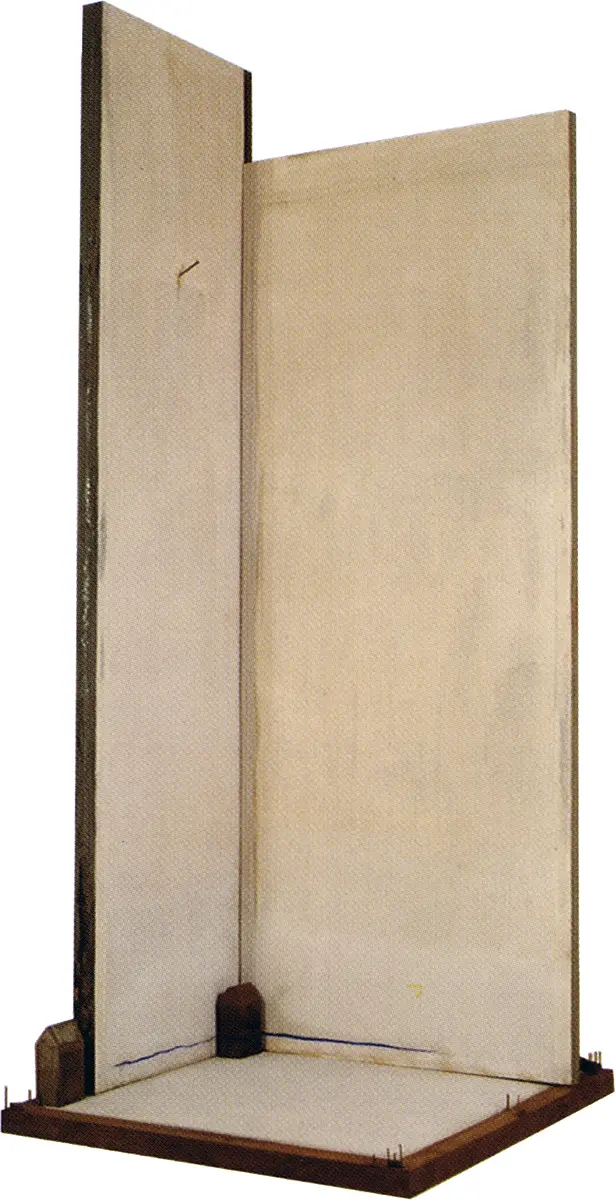
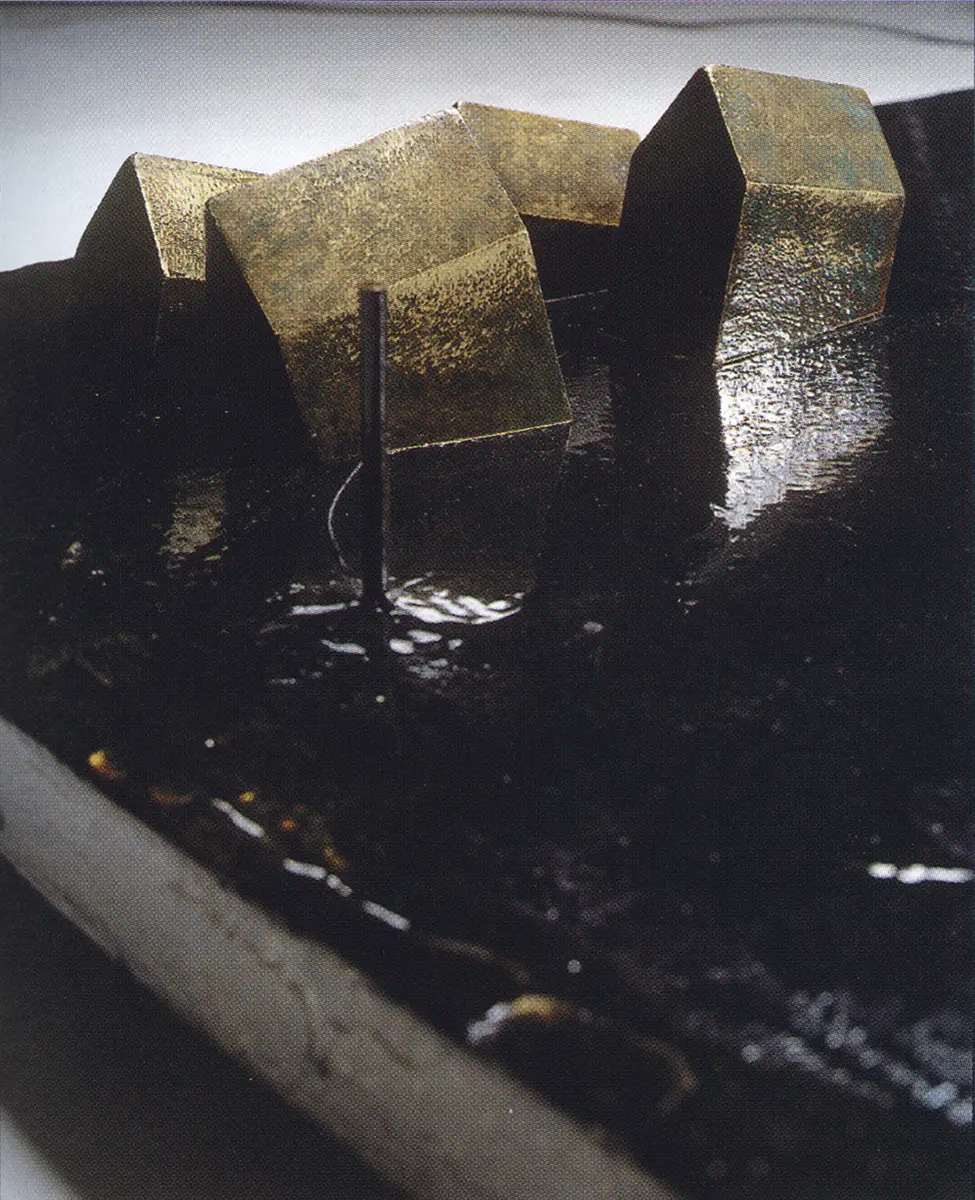
A new chapter opens with the aforementioned works in the sense that iron as a material and the object as a volumetric presence acquire a definitely sculptural character that consequently leads it toward the field of installation. This is how, around the mid-'90s, a cycle of installations was begun that are known as Lluvia. In each of the pieces, the presence of the house becomes an essential element that articulates Peláez’s interests concerning space, which at times make reference to the urban world, and other times to natural landscape. All the pieces show how the lone house is built, the inhabited, hermetic, and silent house, but always warm and cozy. With its presence, Peláez insists on continuing to erect places for memory, trapping and freezing some moments of the incessant flow of time, thus reiterating his interest in those coordinates that articulate his artistic practice.
The pieces included in these installations are made of iron, devoid of all detail, and they synthesize the essential features of a traditional house or the idea we have of a house: a closed, sheltered place that has a certain height and which is finished off with the characteristic and cozy pitched roof. In this way, Peláez, who was trained as an architect, comes to reflect on that tectonic act in order to explore dimensions of an existential and affective order that concern the memory and space in which our existence occurs. At times, these houses are mounted on iron sheets that are arranged like floor pieces. At other times, they are placed inside austere metallic frames that are hung on the wall. In either case, the house is strategically placed, giving rise to an image that evokes the moment in which it is erected, raised, a place in space with the act of inhabiting. It alludes to the appropriation of a place, an action that seems to have occurred in some remote, original, but also decisive moment since, for some strange reason, it remains detained on the metal.
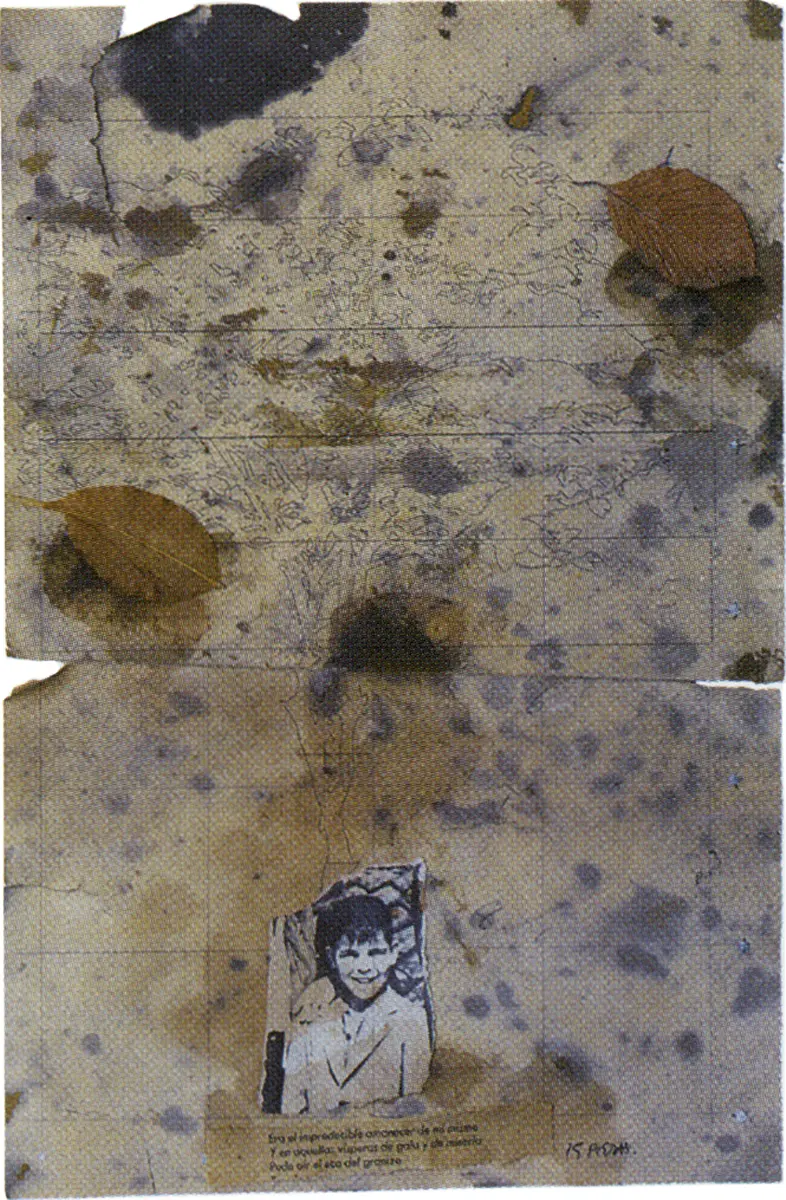
His passion for anecdote, for recovering the marks of memory, is what leads him to use resins and glasses that, beyond their transparent quality, refer to vapor, humidity, to rain as a state of landscape which is also a state of the soul, thus declaring a romantic streak that penetrates his production. Perhaps this is because Peláez is "part of a generation for which the transformation of landscape has been so dizzying, where one must nearly invent memory."8 He insists on suggesting unfinished stories in order that the viewer may, through his or her own memory, complete and finish them. His most recent production adopts a certain affiliation with abstract and minimalist art, in the sense that form reaches a total synthesis and peculiarly adopts the language of industrial production. Nonetheless, it continues to be tremendously evocative, which sets it against the rigorous principles of pure abstraction, because in these pieces, the story that was present in his first works now adopts a different, more sculptural appearance. But, as in those pieces, stopped time forces memory to activate itself irremediably before the presence of those landscapes installed in a corner of the gallery, or arranged within a peculiar order occupying a large extension of it. In their distinct dispositions, these pieces are expectant, demanding an interpretation.
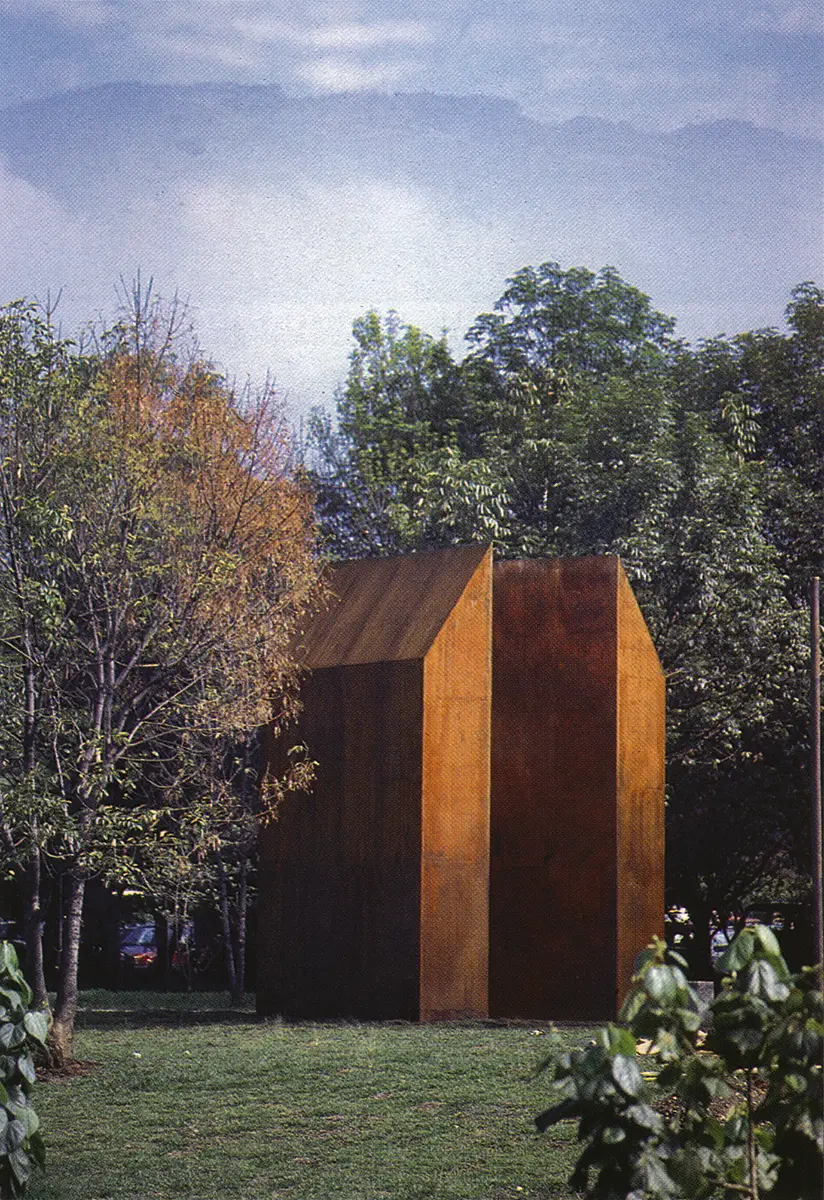
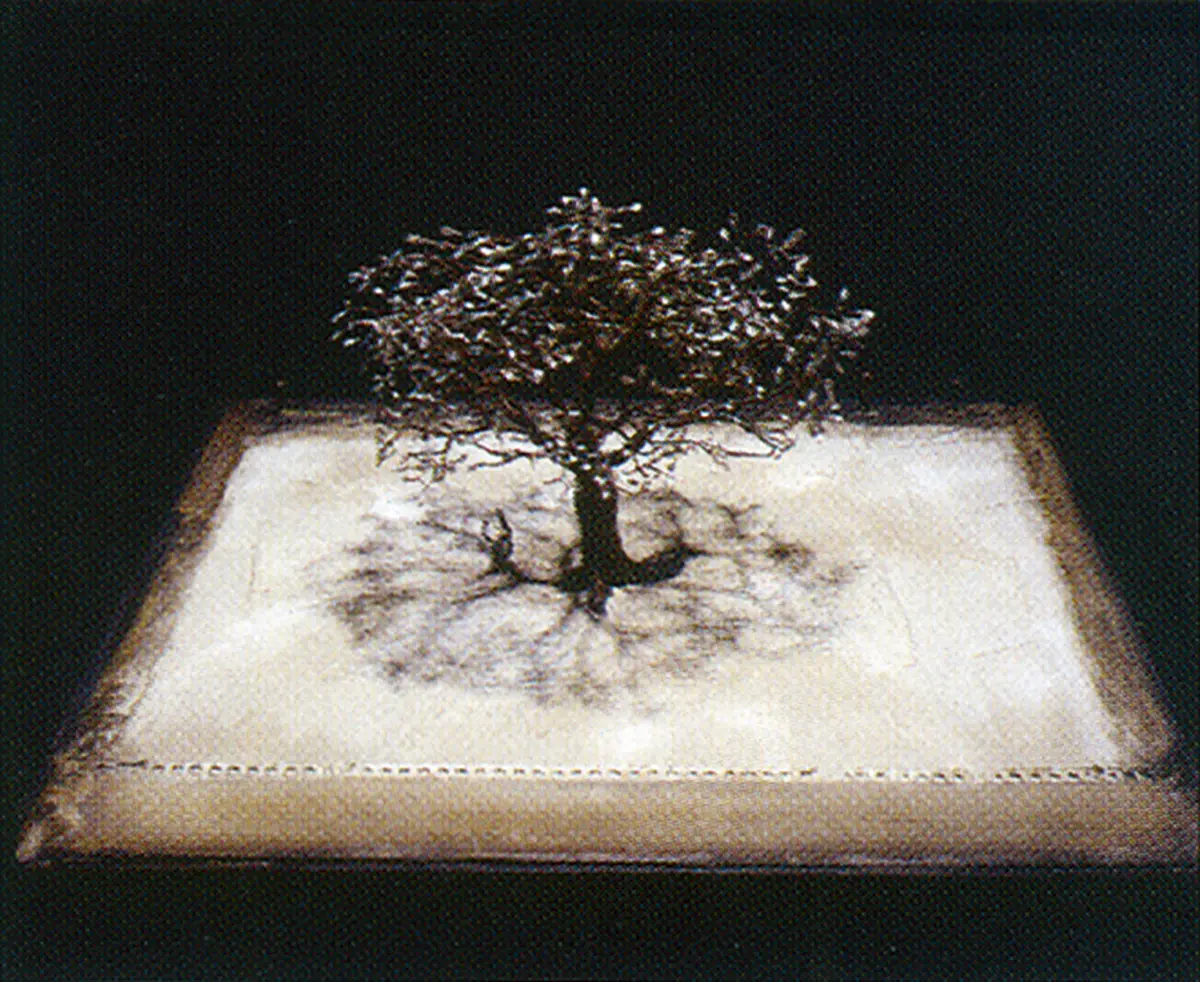
One of his recent works, Casa amarilla (Yellow House, 1997),9 attains monumental proportions of 6.5 meters in height and is erected as a powerful iron sculpture in a public space. The iron surfaces that constitute it display a precise and monumental geometry that contrasts with the surrounding vegetation. It stands before the landscape as a man-made construction, as an unadorned and austere architecture, as an enormous and refined piece of metal that does not hide its industrial origin. But once again, the traces of memory emerge, the shadow of the ancestral landscape emerges, and anecdote as a mark of memory emerges. In its interior, on two sheets of bronze, an enormous tree etched like a shadow resists the muteness of the minimalism in order to speak of its origins, which are the same as those of Peláez. This piece thus carries the trace of infancy that now exists only in memory. And it flows from memory and is etched through the act of acid on bronze: "Everything begins in Canaima, where the astonishment of the landscape, heaven, and earth become one single thing: air, time, and rain dissolve, separate, and meet again in a light, eternal cycle."10
NOTES
1. Crónicas de viaje was the title of Luis Fernando Peláez’s show at the Sala de Arte Suramericana in Medellin, April 1989.
2. This show took place at the Museum of Modern Art LaTertulia of Call in 1992.
3. Instantes corresponds to the shows that took place in 1994 at the Galeria Garcés Velásquez in Bogotá, at the gallery La Oficina in Medellin, and at the Galerie Ruta Correa in Freiburg, Germany.
4. Ahora was the title of Luis Fernando Peláez’s show that took place at the FES Foundation in Cali, in 1995.
5. Lluvia was Luis Fernando Peláez’s show at the Museum of Antioquia from August to October 1996.
6. Eduardo Ramírez Villamizar, press text from 1987 that is included, as anonymous, in the catalog Crónicas de viaje (Medellin: Sala de Exposiciones Suramericana de Seguros, 1989).
7. Luis Fernando Peláez, Peláez memoria y paisaje, Colección del arte deAntioquía ayer y hoy (Medellin: Fondo Editorial Universidad Eafit, 2000) 20.
8. Luis Fernando Peláez, Peláez memoria y paisaje, 48.
9. La Casa amarilla (1997), public sculpture for the First International Festival of Art of the City of Medellin.
10. Luis Fernando Peláez, Peláez memoria y paisaje, 35.
MARTA RODRÍGUEZ