
Minerva Cuevas (Mexico City, 1975) presents in Museo Rufino Tamayo a project titled Mejor Vida Corp. (Better Life Corp.), which combines activism and social critique with the visual arts. Minerva attempts to enter into a dialogue with her spectators participants, who shall direct the realization of the work of art and define the development of the concept within the initial parameters set by the artist. It is not a matter of aesthetically embellishing reality, but to expand the aesthetic experience through the incorporation of elements taken from the street, the metro, the ATM machine, or our daily environment, usually encountered outside of any conscious artistic structuring.
During the 1960s, many artists developed an interest in showing their work in non-traditional spaces. They decided to forgo galleries, museums, promoters, and all other instances for the exhibition of art and, instead, took over the streets and presented acts and art shows able to reach a wider public. Among these manifestations are performance art, happenings, interactive art, and liver art, where very often the public’s participation was encouraged.
The Spanish critic Simón Marchán Fiz explains the origins of these explorations: "When the written word and the static media became materially limiting, some conceptual artists opted for street art, which transformed narrative into performance. Action art promised to free artists from the object, and at the same time, it gave them the freedom to adopt any medium, material, or theme in order to achieve their goals.
Also, —the critic continues—, action art allowed artists to show their work at any time, anywhere, for as long as they chose, and in close contact with the public. "
Thus, artists made their work more accessible and gained greater control over its development and reception, bypassing the mediation of critics, curators, and dealers.
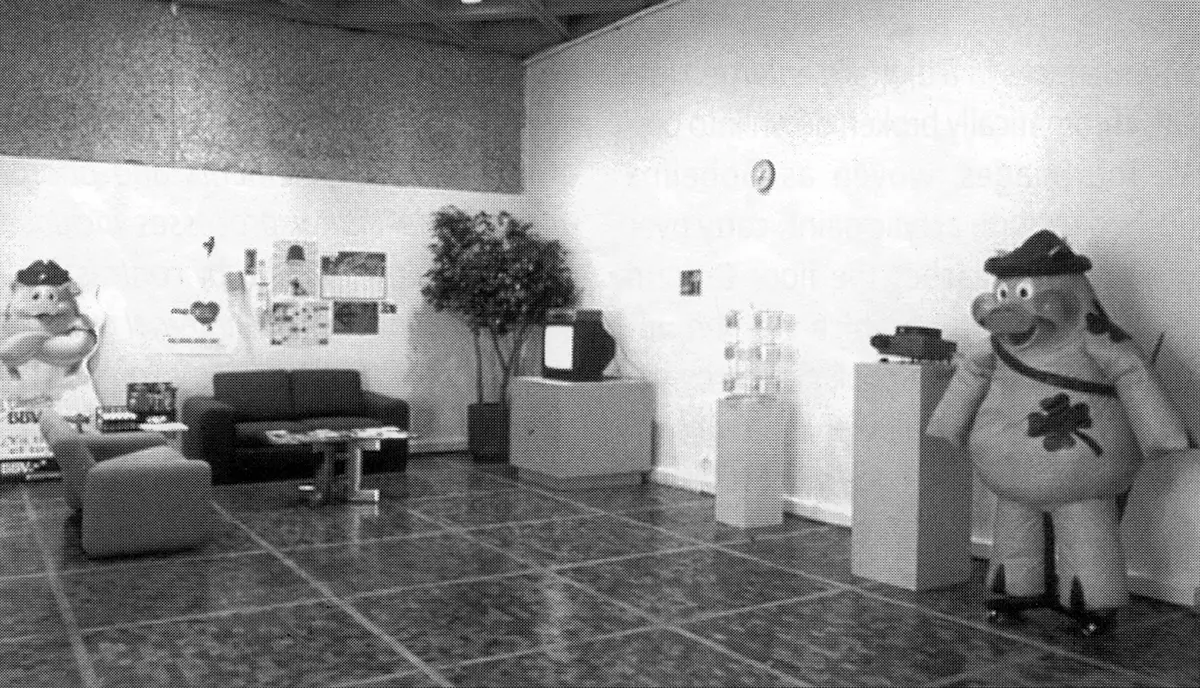
Minerva Cuevas is intent in promoting her project’s campaigns, which include the free distribution of metro tickets inside stations, planting seeds in public spaces, and student IDs for discounted admission to some events. It is difficult to record the public’s response since no documentation or rigorous follow-up for the happenings is provided. The artist, however, dedicates part of her work to researching the ways in which the resources offered are used. Often, her premises are highly risky, since they interfere with the authorities and with the users of a given public service. Indeed, Minerva’s original intention was to grant free admission to the Museum while her show was on, but the proposal failed.
The artist works with electronic and print media, as well as on the street and other spaces that should open, as she says, beyond museums. Her main commentary towards a critique of Capitalism is grounded in irony (as in her work with the models of BBV’s Libretón). The very inclusion of the "Corp." Moniker in her title signals the satirical edge of Minerva’s interventions, installations, and process pieces. At a time when artists in general seem more interested in finding a niche and gaining acceptance within the sacred circuit of the art world, Minerva Cuevas comes to us bravely defying more conservative lines of work that would easily position her in the international arena of art commerce, but that would also betray the fundamental principles of her art.
Minerva Cuevas's exhibit can be viewed online at: www.irational.org/mvc, and she can be reached at mvc@irational.org
LUZ MARÍA SEPÚLVEDA