
Sharing exoticism is the theme that the directors of the Lyon Biennial, Thierry Raspail and Thierry Prat, chose for their fifth competition taking place in 2000.
The biennial was opened to the public on 27 June in the Halle Tony-Garnier, which was built in 1928 for industrial use, and was later restored as a space for large exhibitions.
To curate this international event, the artistic directors invited Jean Hurbert Martin, who was in charge of the famous exhibition The Magicians of the Earth, held at the National Museum of Modern Art of Paris (Beaubourg). In that show, Martin gathered not only modern and contemporary works from the artistic circuit, but also pieces that revealed the aesthetic creation of the entire world, taking on the popular and even other cultures. The exhibition received much criticism in its time, in spite of the fact that the process of globalization was already underway. The intentions of this new proposal were not understood.
Thierry Raspail states that, on that occasion, “the confrontation of works of different continents, the opening up to new territories, gave birth to an unknown poetic universe. “The introduction of spirituality and craftsmanship into a show carried out in the space of a museum dedicated to modern and contemporary art was the core of the controversy. Raspail said: “He thus created, in the exhibition of an art museum, a space that not only dealt with art history, with its theory and its chronology but which also proposed a new language beyond the normal classifications.”
It is for this reason that now, “when the phenomenon of globalization is effectively in place,” the biennial’s artistic management considered the retaking of the open reflection in The Magicians of the Earth to be of interest for this 5th edition.
In support of the curatorial work, a group of studies was created, shaped by anthropologists and sociologists: Alban Bensa, Carlo Severi, Jacques Leenhardt, Marc Augé, and Philippe Peltier. Based on the proposals of the artists, this group of specialists elaborated 22 concepts that served as a direction for the show’s segments. Placed in each one of these segments was an aesthetic object alien to the conventional artistic circuit, civilizing objects from other times or cultural territories, thus allowing an aesthetic dialogue to be established between the contemporary and cultural legacies. For example, in the segment “Tatuar” (To tattoo), the cultural object of reference is a piece by Benin; in the segment “Territorios” (Territories), the reference is aboriginal pictures; in the segment “Combatir” (To combat), we find Afghani rugs; in the segment on sex, a little statue of Easter Island appears, and so on.
As has been happening in other biennials and international exhibitions of contemporary art, so too in the general context of the 5th Lyon Biennial the question of subjectivity, the question of the body as a permanent inquiry into personal and social identity, stands out.
The 5th Lyon Biennial gathers 120 artists from the entire world, invited to share their exoticisms. There are three representatives from South America: Tunga, from Brazil; Nadín Ospina, from Colombia; and Eduardo Tokeshi, from Peru.
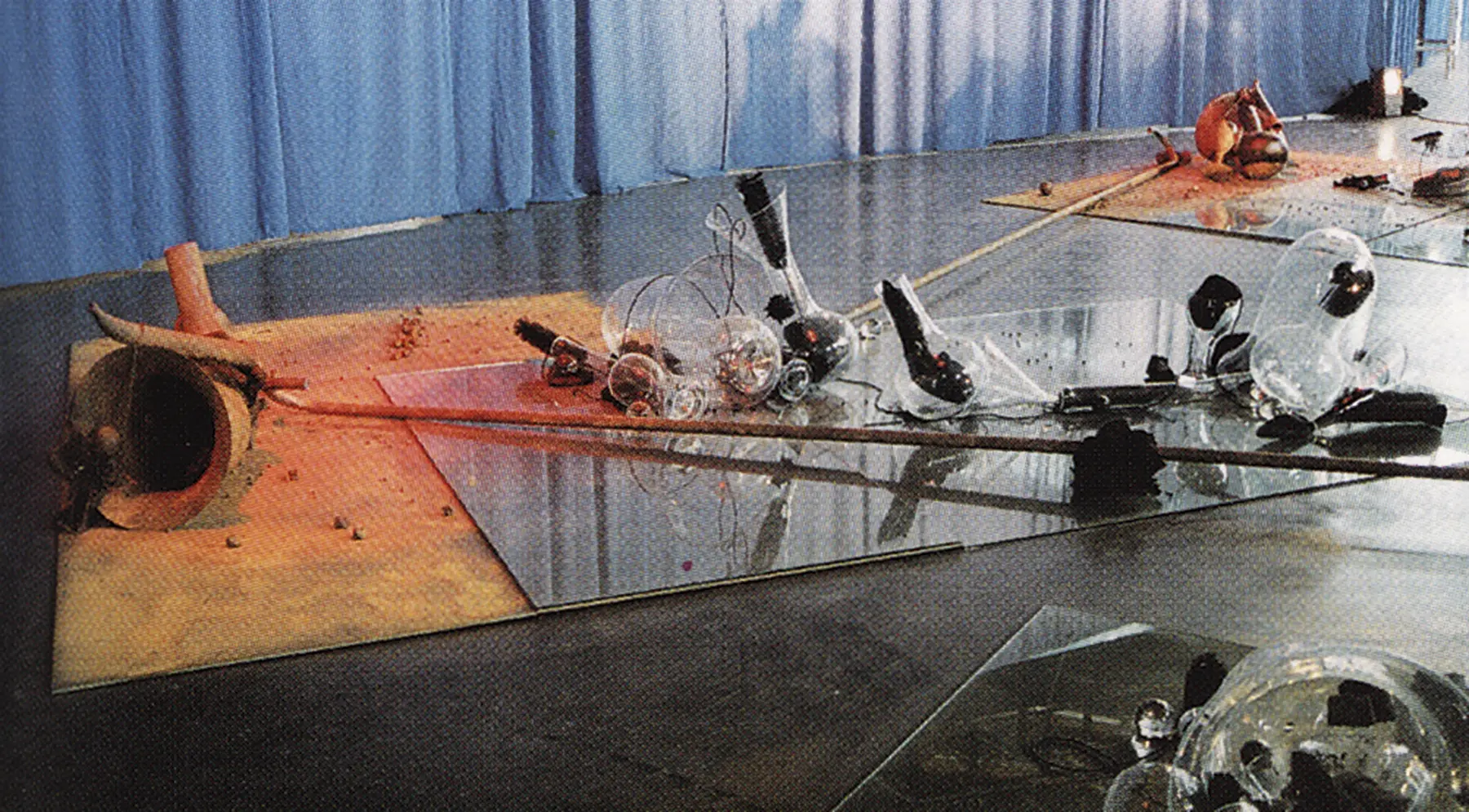
Tunga’s work is inserted into the search that he has been developing with materials like glass and resin. His installation in Lyon explores the contrast between forms created with glass containers and with resin, a deformable material.
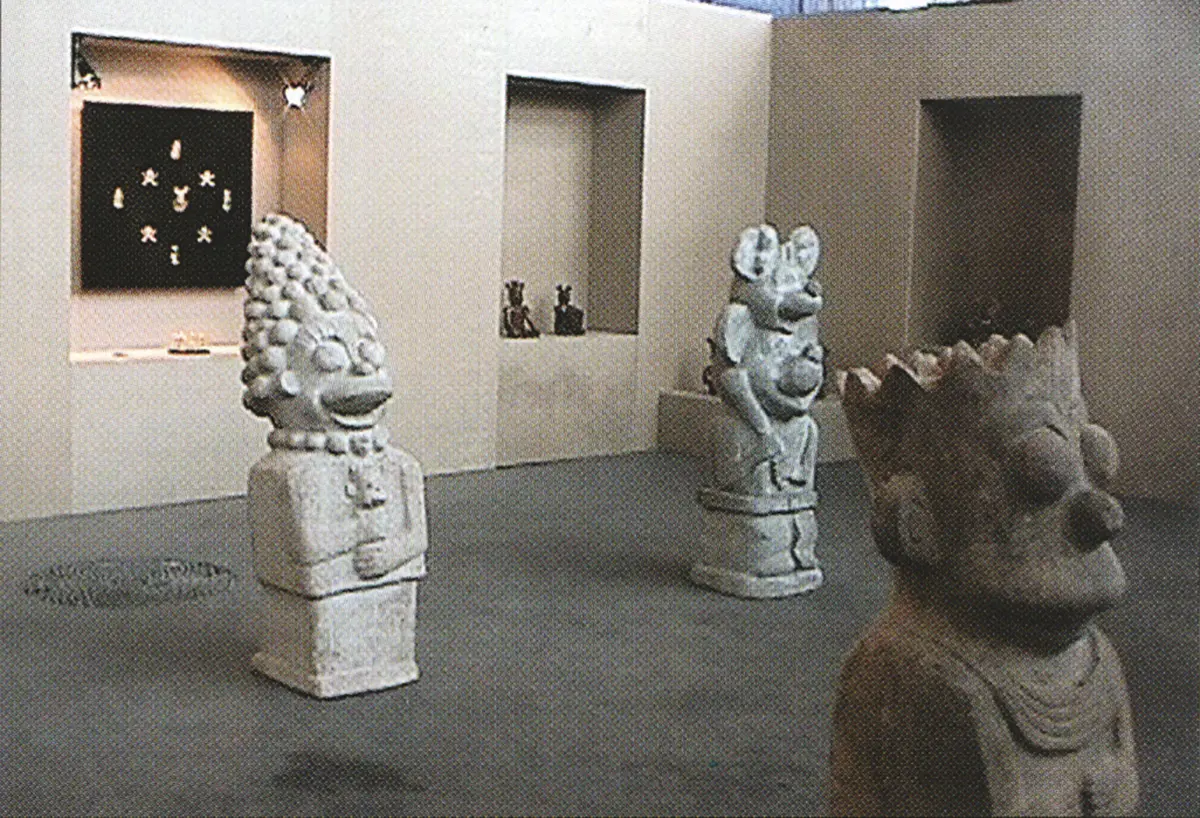
In the installation presented by Nadín Ospina, we find an environment arranged as a room in an ethnography museum where the ceramic statuary stylistically alludes to pre-Columbian production. The sculptures, however, have heads of characters present in comic strips.
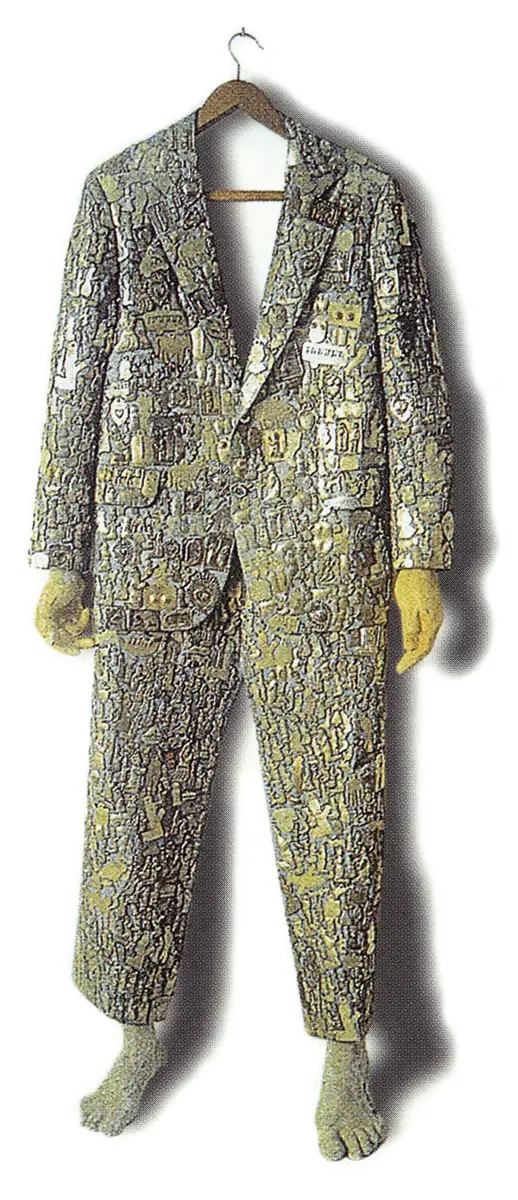
Eduardo Tokeshi creates an installation where the body is thematicized through clothing. The sense of protection against all evils is made present here in the clothing that is overlaid with small, symbolic icons created with this aim.
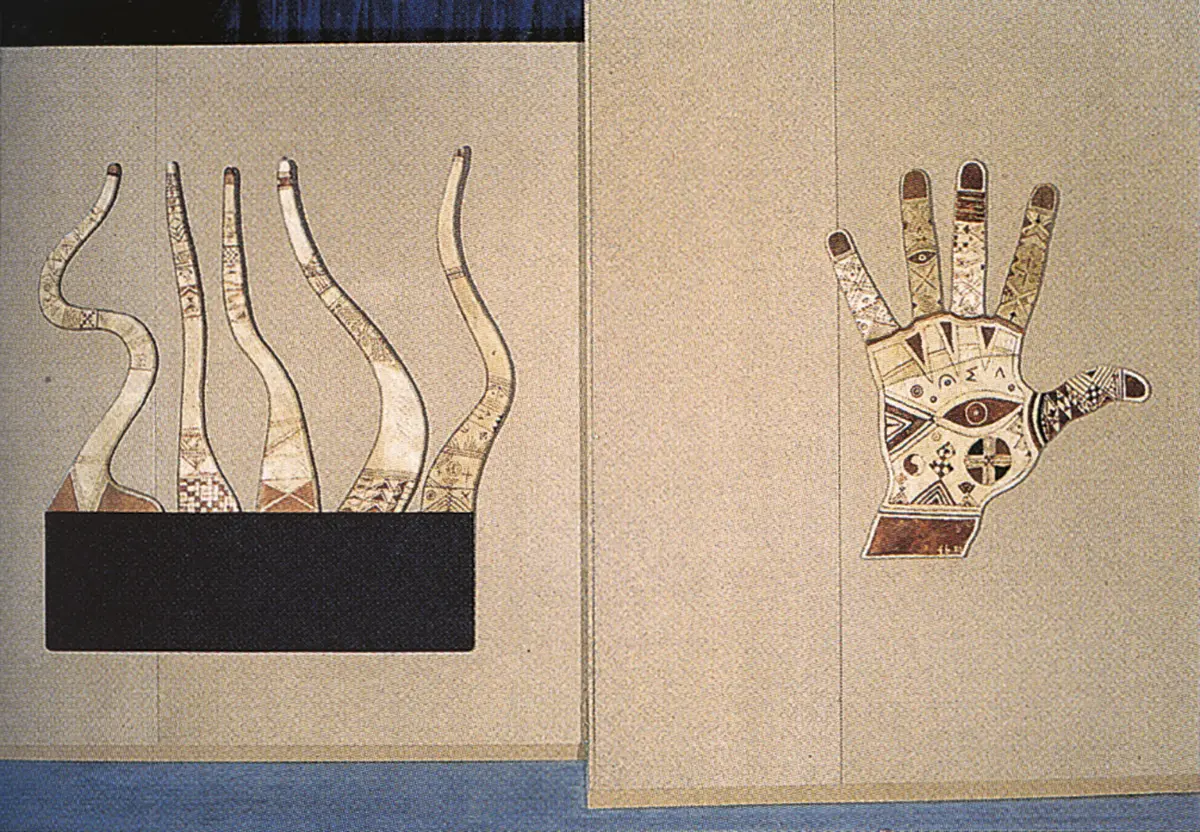
The question of the body and of spiritual protection against evil is made strongly evident in the segment organized around the concept of “Tattooing.” Farid Belkahia, from Morocco, presents the hand as a basic symbol of the power of protection.
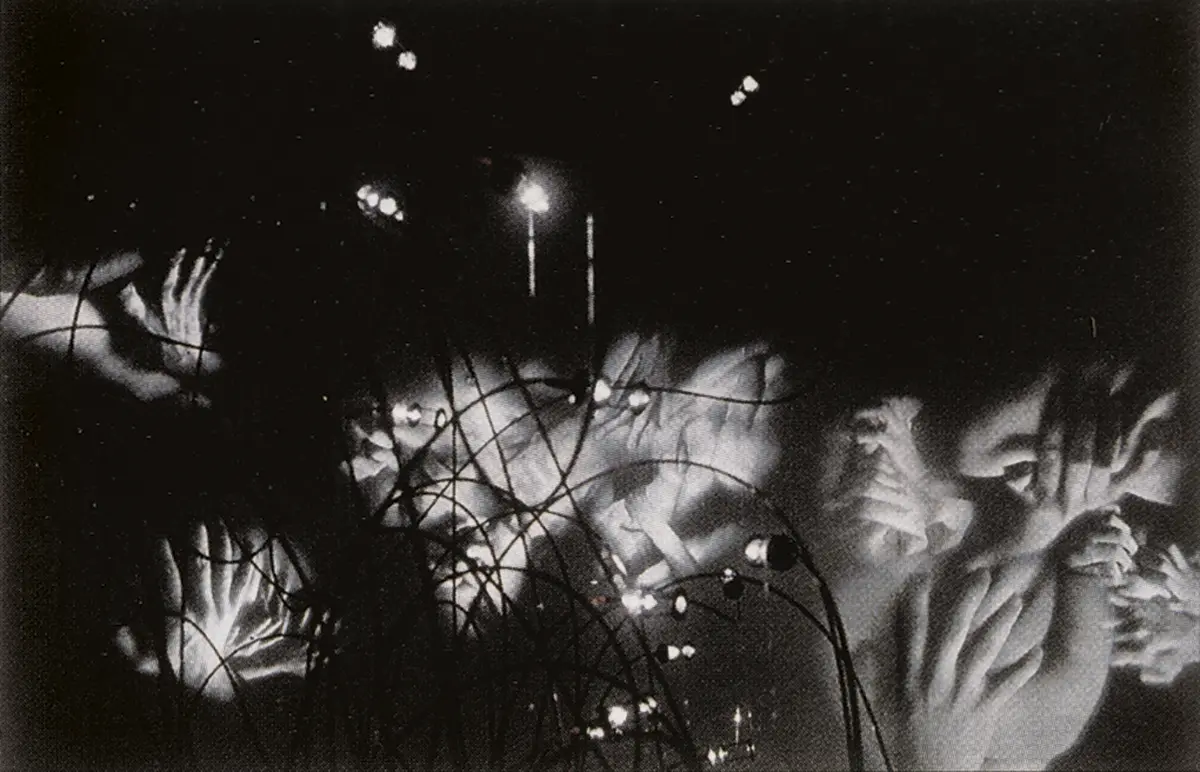
This same theme reappears in other segments of the show. Daniel Canogar —who shows his work in the segment “Encarnar” (To incarnate)— projects, through optical fibers, images of human skins. With an eminently human project, advanced technology is used, thus creating a disquieting atmosphere.
In the part of the exhibition conceived as “Usar máscara” (To use a mask), Orlan (France) —who transforms his face with aesthetic surgeries in order to create “self-hybridizations”— exhibits a series of photographs with his own image. In this way, he demonstrates the action of the human being who molds his appearance. Through photographic resources, Orlan works a metamorphosis of his face, giving the impression of having suffered cranial deformations.
It is also worth pointing out the show’s scenography. The space of 17,000 square meters of the Halle Tony-Garnier occupied by the 5th Lyon Biennial —210 meters long, with no support columns— was arranged in sectors separated by curtains of a light fabric of a dark blue color. Each sector housed a segment. The visitor, upon entering these spaces, finds an object from another culture, meant to be indicative of the problem taken up in the segment in question. In order to circulate, it is necessary to go around opening curtains, thus producing a play of surprises and discoveries.
LISBETH REBOLLO GONÇALVES
Professor at the University of São Paulo and member of the Brazilian and International Associations of Art Critics (ABCA/AICA).