
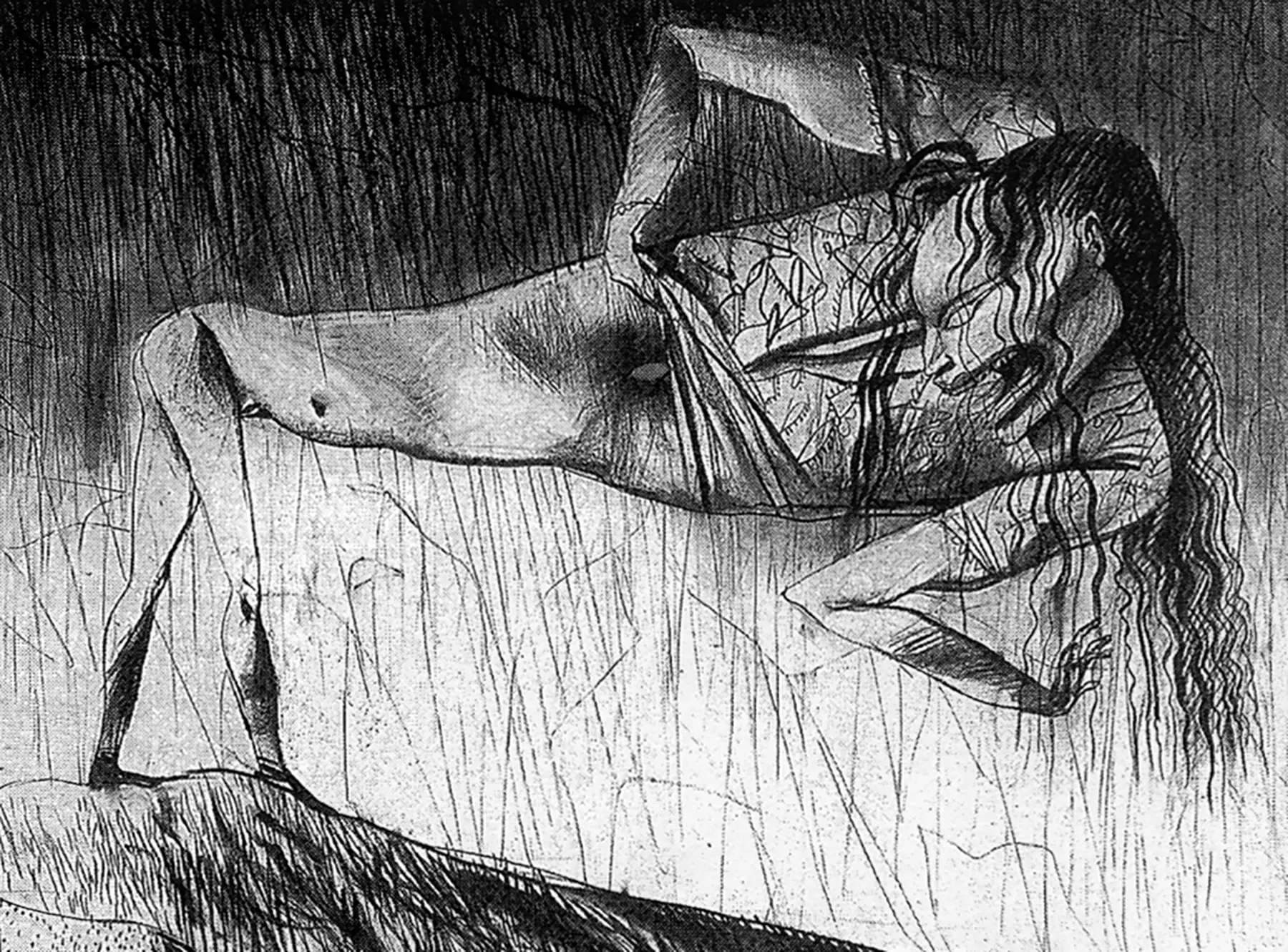
If there is still something about technical drawing present in this important exhibition, it is that this technique is now justified, it exists aesthetically as a completely autonomous mode of expression, free of all the burdens, such as its dependence on figuration. The cuneiform stroke was, essentially, already a drawing, as are Le Corbusier’s and De Byffet’s garabats. Because the drawing conceived as a sketch, that is, as a transition toward oil or sculpture, is no longer seen here. In this case, that methodological dependence has been erased, and what counts plastically is that which is impossible to define: that spontaneous stroke, a warning or call to an interlocutor, a line that seeks to delve, yes, into the lost realms of the symbolic.
"Instead of arriving at a mastery—as Ramón Goya recalls—what we need is to arrive at a beginning." This is where the autonomy of a means of expression resides, in arriving at an inquiry into its hidden norms, into that which governs as a creative beginning. This self-reflection, I hasten to clarify it, does not consist, as some naively believe, in a remake of a figure by Velázquez, for example, but rather in knowing how to discover the internal rules that were forgotten and without which it is impossible to think about a formal autonomy, in setting new limits.
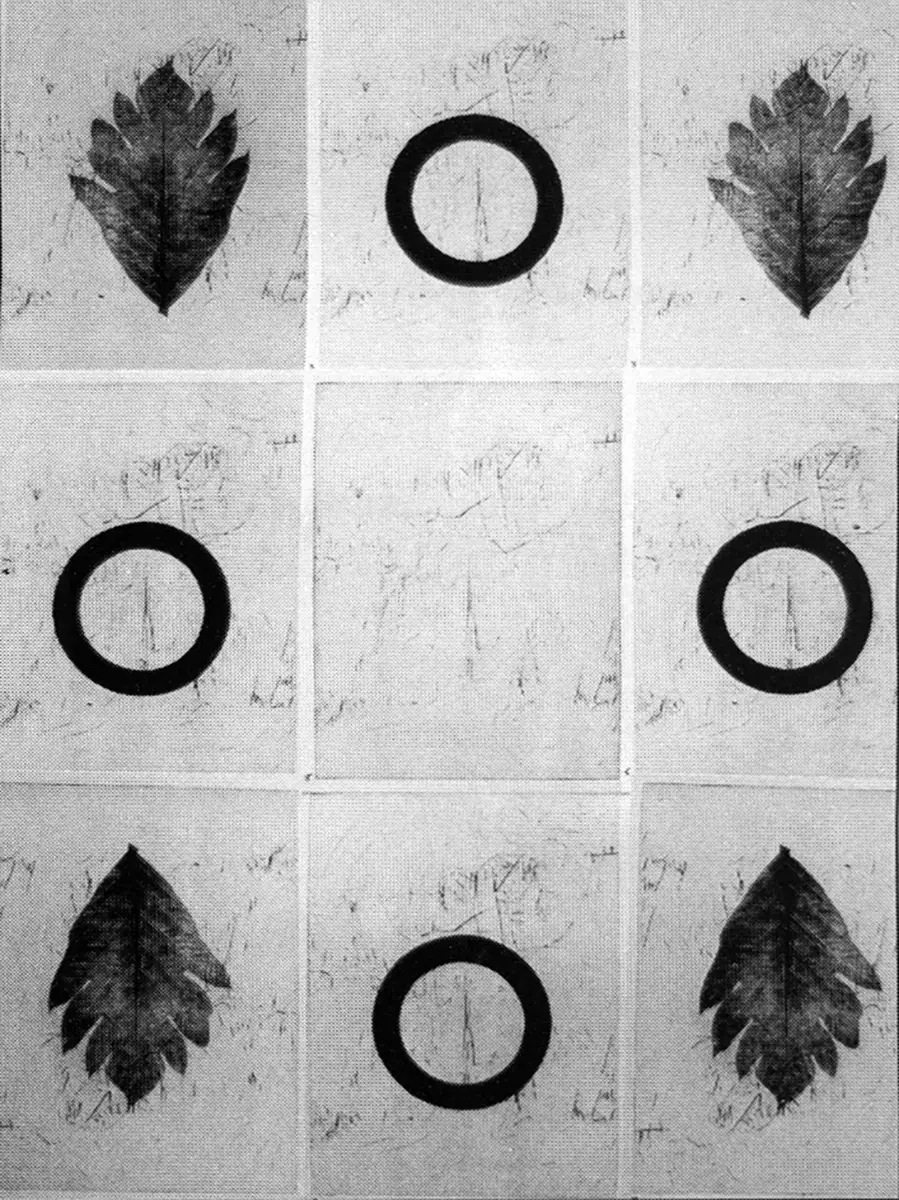
That beginning thus signals a freedom of paths which is what is present in this exhibition. The works of Óscar Jaramillo from five years ago seemed to have entered into a routine drawing where the hand’s ability seemed not to know how to profit from certain premises present in the textures of the objects, in the shadows of the spheres of his characters. And he seemed to approach the gravest danger: hyperrealism.
What he has done is the most difficult thing: to delve into the psychology of his characters, strengthening the meaning of some eyes, the gesture of some hands, in order to overcome that hyperrealism and to lead into other plastic formulations: hence the irreality that is not sublimation nor idealization, but rather the presence of the intangible.
As he turns the drawing into archeology, Juan Cárdenas eludes the easy remake, and if he chooses a line of work—Ingres—he does so to ask questions of a legacy that is in danger, in order to try to reestablish as a method of knowledge that which is hidden in those premises; that is, that which must be renovated in order to remain. Jorge Julián Aristizá ha I did not have the critical recognition of Germán Londoño, a companion from his generation, in spite of already having a solid, conceptually rigorous work that leaves room for a challenging, terse humor. With technical reliability, his drawings show the autonomy of the drawing and the possibilities that it has in internally coming to develop images that form part of unsuspected associations: trivial objects, and street scenes.
Germán Londoño presents a drawing in which his known iconography is placed in the lines proposed by the drawing, in the lines established as an expressive possibility. And this is what Jorge Gómez does very reliably in the two excellent drawings that he presents.
José Suárez has chosen a series of characters situated in a precise period, removed from the photographic pose where they gave proof of their own nobility in ideological and cultural terms, and he placed them in a neutral setting in order to objectify the gestures, clothes, and tics. Drawing, when we continue to talk about the death of art? The healthy impression that this show leaves is that of the gesture, not of someone who romantically insists on a hopeless means of expression, but rather of someone who affirms spaces and images that have no reason to disappear. Visual proof through which Beatriz González seeks a moral reflection on the present.
We have this same impression after seeing the 4th Biennial of Graphic Art. If we assume that the virtual, the digital image, and the cyborg have categorically supplanted that which the hand has configured as a trace of decisive, iconographic images, as the presence of man in his daily setting or in the middle of the conflict of history, this biennial would demonstrate the opposite. And there we are, once again asking ourselves if the so-called technological advances are those which modify the cultural contents of art, or if these advances should, in order to achieve their aesthetic legitimacy, outline their formal proposals precisely through these new contents and viewpoints of life.
This exercise in anachronisms, practically turned into secret chapels in Colombia, reaches the vigor that the discarded usually attains as a replica before that which contests it. One important factor already in its favor is the fact that what is visually outlined here has nothing to do with what the generation of Quijano, Rendón, Alcántara, and Dioscórides instituted in their day as an exclusive task of engraving. In fact, the excessive dependence on the presumed political message led this type of engraving to a dead-end street.
In the proposals by Guillermo León Taborda, Ana Cristina Zuleta, Harold Miranda, and Ruben Darío Yepes, another aesthetic of the image is seen, the fragmentation of discourses, the public and the intimate, opened onto infinite formal possibilities. And this is what is important because, until now, the personal search does not appear constrained by any factor alien to and different from the task of translating a personal world into images.
DARÍO RUIZ GÓMEZ