
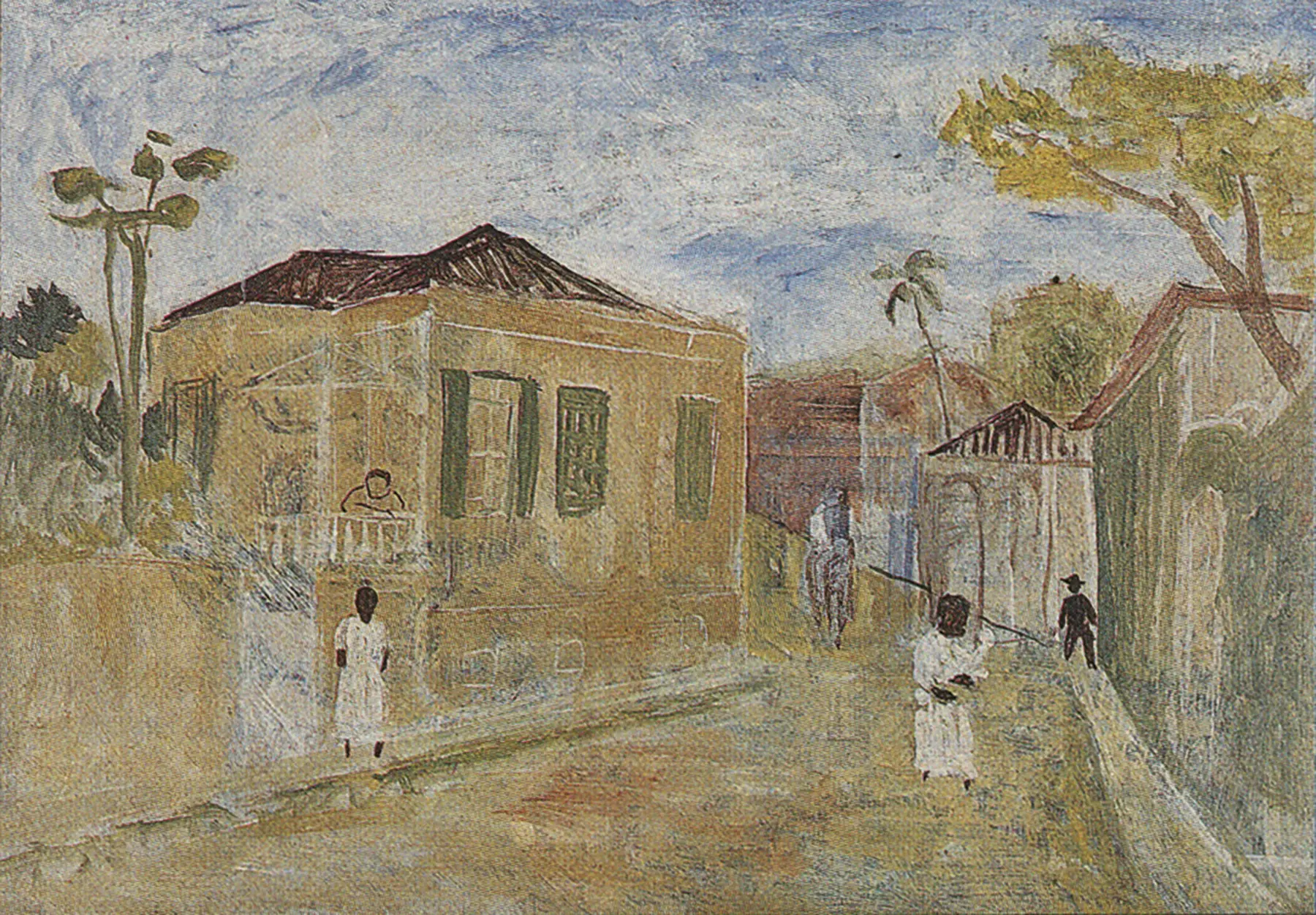
The 1930s witnessed important events in the history of Brazilian art, giving continuity to the aims of the plastic innovation launched in 1922 with the Week of Modern Art.1 São Paulo was the center of such happenings. At that time, it was a city that was becoming a metropolis in the face of the advance of the processes of industrialization and the consequent economic and social development that would lead it, in the following decades, to become the country’s principal economic pole.
While in the 1920s a dialogue with the vanguards was sought out, along with the construction of the cultural identity, the plastic arts in the ‘30s gave rise to the surge of young artists whose production was taking in information from French postimpressionism, from the Italian Macchiaioli, and from the experience of early Renaissance painters like Giotto. This new generation, most notably the Santa Helena Group, created a painting open to plastic investigation, dedicating themselves particularly to landscape, but also producing in the studio, where still lifes were born along with portraits and studies of human figures in compositions of different kinds.
The artists of the Group also joined the struggle to open spaces that would exhibit modern art in the cultural milieu of the period. There were no museums, art galleries, or cultural centers geared toward modern art. Academicism dominated the public taste, accustomed to the Halls of Fine Art and to a cultural market marked by this aesthetic.
The generation of painters to which the Santa Helena Group belongs was responsible, in that decade, for a significant fact: it collaborated intensely in order to facilitate contact between the public and the art of the time. These artists participated in the organization of group shows, in spaces that were rented to carry out such events. Through these collective exhibitions, a criticism of modernist art emerged, collaborating with the consolidation of a new circuit in the artistic system.
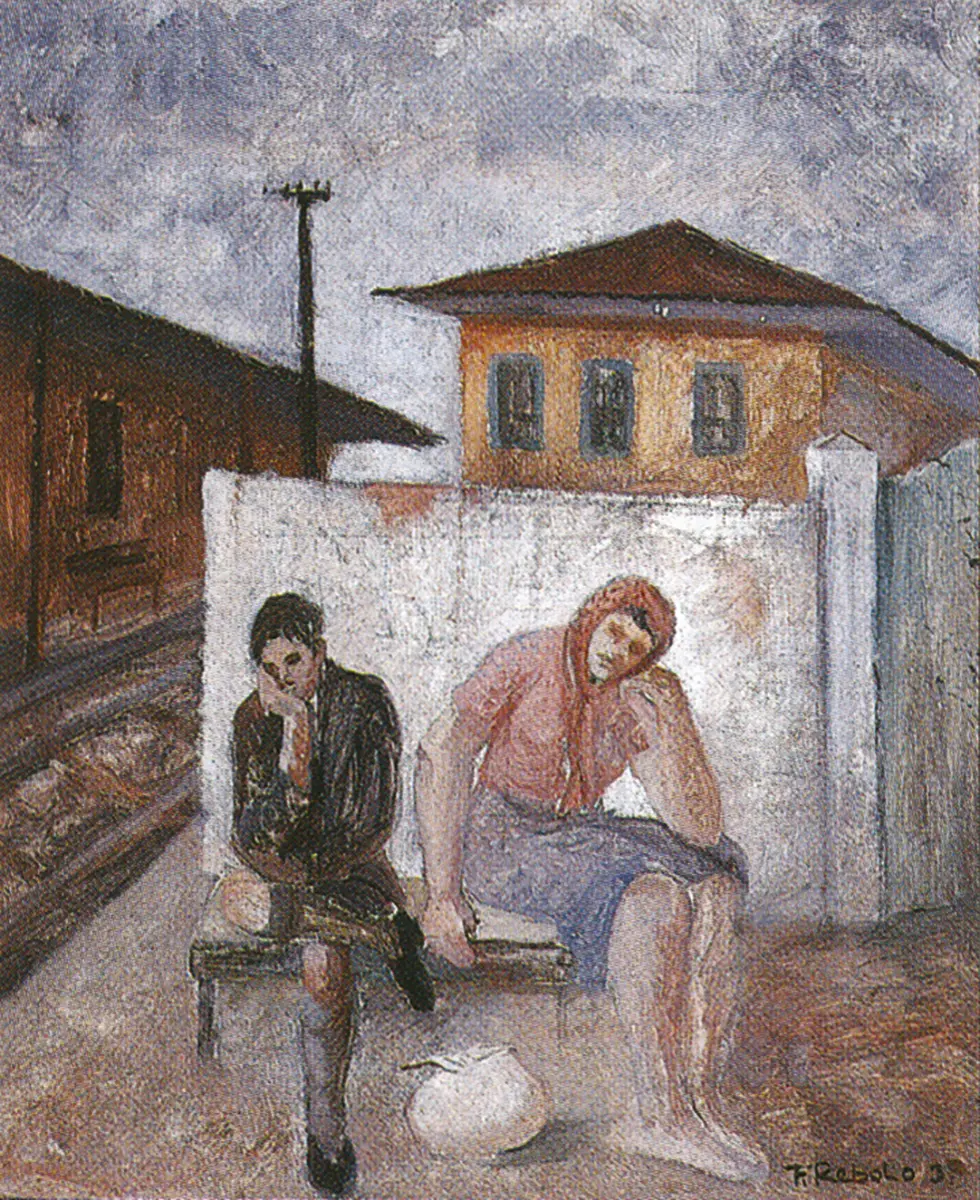
In this way, the Santa Helena Group was present in the process of affirming modern art in the context of Brazilian society, hitherto accustomed to the patterns of the Academy. It is possible to assert that the young artists of Santa Helena formed part of the human base that solidified the effective introduction of artistic modernity onto the Brazilian cultural scene. In that process, institutions like the Pro Modern Art Society (SPAM) and the Modern Artists’ Club (CAM), toward the end of 1932,2 as well as the Salones de Mayo and the Paulist Artistic Family, which promoted group shows in 1937 as well as the following two years, facilitated a gathering among plastic artists who had emerged in the first moments of modernism and the young talents that had been appearing and making themselves permeable to modern influences.3 The Santa Helena Group never carried out an exhibition as such during the period in which it remained established, but it did collaborate effectively on the general scene. It created the nucleus of the Paulist Artistic Family, and some of its members participated in the 1st and 2nd Salones de Mayo4 and in the Exhibitions of the Union of Plastic Artists,5 as well as in the Salón de Arte and the National Fair of Industries and other group shows in the 1940s.
The Group was made up of the following artists (in alphabetical order): Aldo Bonadei (1906-1974), Alfredo Rullo Rizzotti (1909-1972), Alfredo Volpi (1896-1988), Clóvis (1907-1988), Francisco Rebolo Gonsales (1902-1980), Fulvio Pennacchi (1905-1992), Humberto Rosa (1908-1948), Manoel Martins (1911-1979), and Mário Zanini (1907-1971). Their training began in 1935 around the studio of Rebolo Gonsales, a strong, binding figure, in the Santa Helena Building in the Praca da Sé, São Paulo’s city center. This building housed liberal professionals and had a cinema on its first floor known as the Cine Santa Helena. The artists later rented a second workspace that neighbored the first, thus coming to occupy rooms 231 and 232. This same building also housed the Union of Plastic Artists, born in 1937, as well as the Musical Culture Group,6 formed at the end of that decade.
The artists of Santa Helena were immigrants or descendants of immigrants7 and their education took place, in the majority of these cases, through courses in professional schools, like the School of Arts and Trades and the Boys’ Professional School, located in the Brás neighborhood, precisely where the Italian and Spanish immigrants lived.
There were no cultural institutions in São Paulo open to modern art that could have fostered contact between the young artists and contemporary art. Moreover, the artists of the Santa Helena Group were workers or belonged to the “lower middle” class. There was not even the slightest possibility for them to travel to Europe to study art as the modernists of the previous decade had done. Since the teaching at the School of Fine Arts was merely academic, they would find themselves equally cut off in terms of the possibilities of obtaining scholarships. Thus, the united exchange that sprang from work in shared studios inspired the exchange of information that they had on art and their knowledge and techniques of painting.
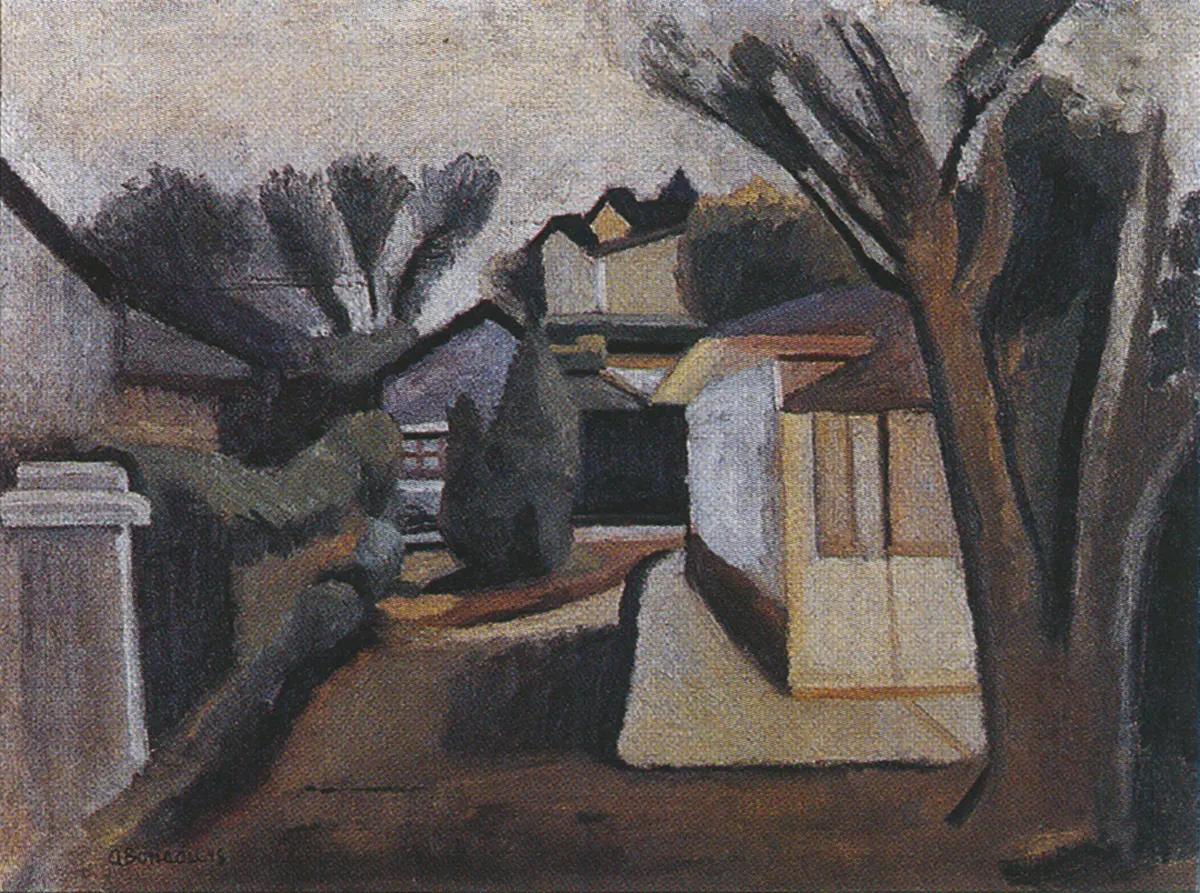
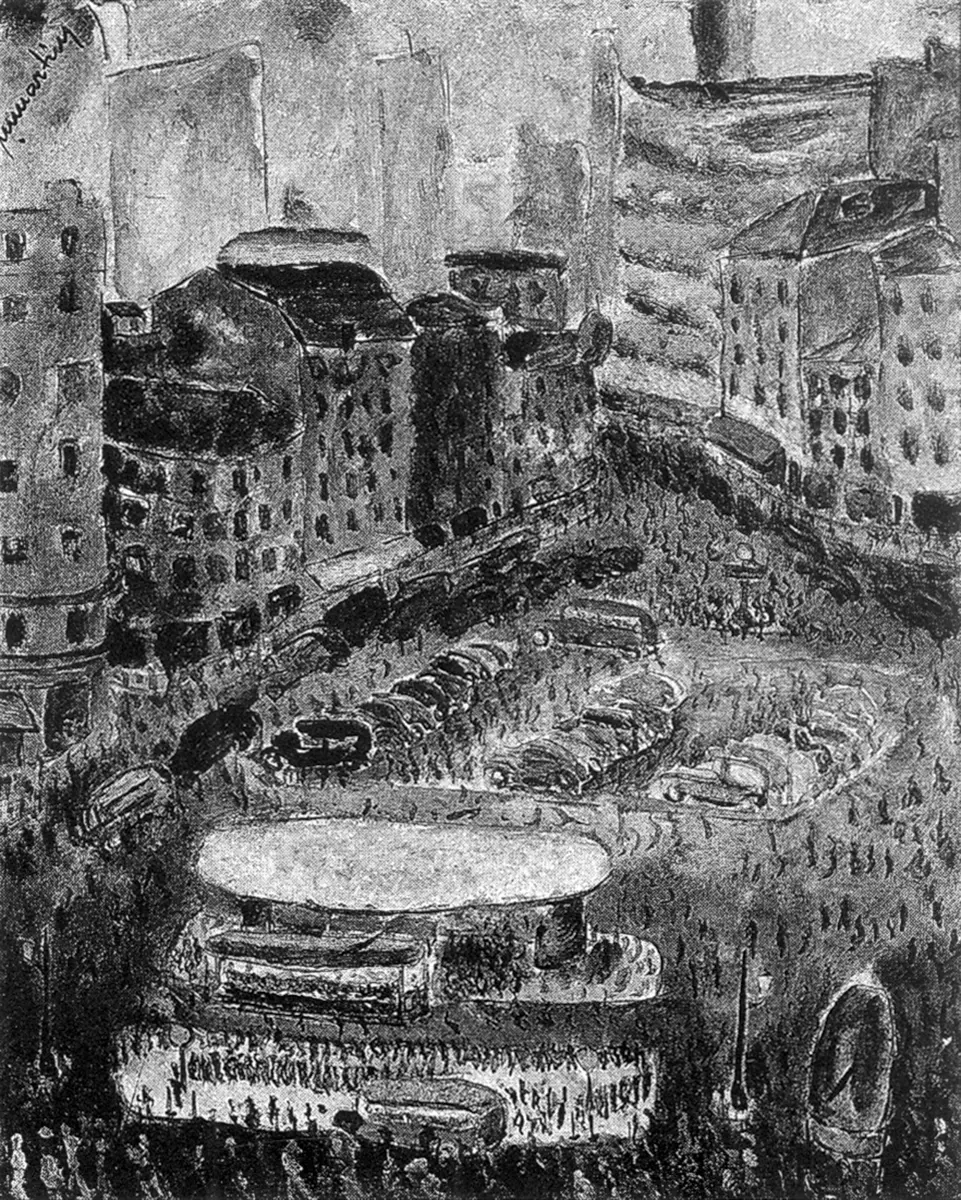
The production of the artists of the Santa Helena Group was characterized by the freedom of search in plastic work and by open-air painting, in addition to studio work. They used to get together on the weekends in order to go out and paint around the city, capturing the changing city with their aesthetic gaze. They recorded the daily life of simple man, the agricultural work that guaranteed survival, but they also portrayed aspects of urban life, in some cases even printing a social tonic. They also painted still lifes and flowers, current themes in modern art.
As mentioned, they absorbed influences from postimpressionism. They especially admired Cézanne and Van Gogh. They also drew on the Italian Macchiaiolli in their technique of painting, and they admired the simple expression of the pre-Renaissance masters, like Giotto and Cimabue.
These artists largely made their living through artisanship, generally linked to the use of dyes or design. They were house painters, interior decorators, and specialists in the execution of friezes, typography, and other manual tasks. Some had been trained within the tradition of Italian painting. Whether because they had emigrated from Italy or because they were descendants of Italians, they had contact with that painting, and their first apprenticeships took the form of a dialogue with that tradition.
They were aware of the need to create a painting with a craftsman’s emphasis, beyond the academic patterns prevalent in their day, This is what led them to insist on the supremacy of free drawing, rejecting the resource of the limiting orientation of the painting professor within the academies. With this aim, they organized free drawing sessions in the group workshops that they rented, paying models to pose for them.
The search for technical mastery was also revealed in the exercise of “natural painting.” That is, when they went into the suburban areas of São Paulo, to the small hinterland cities, or to the coast, in order to create pictorial work.
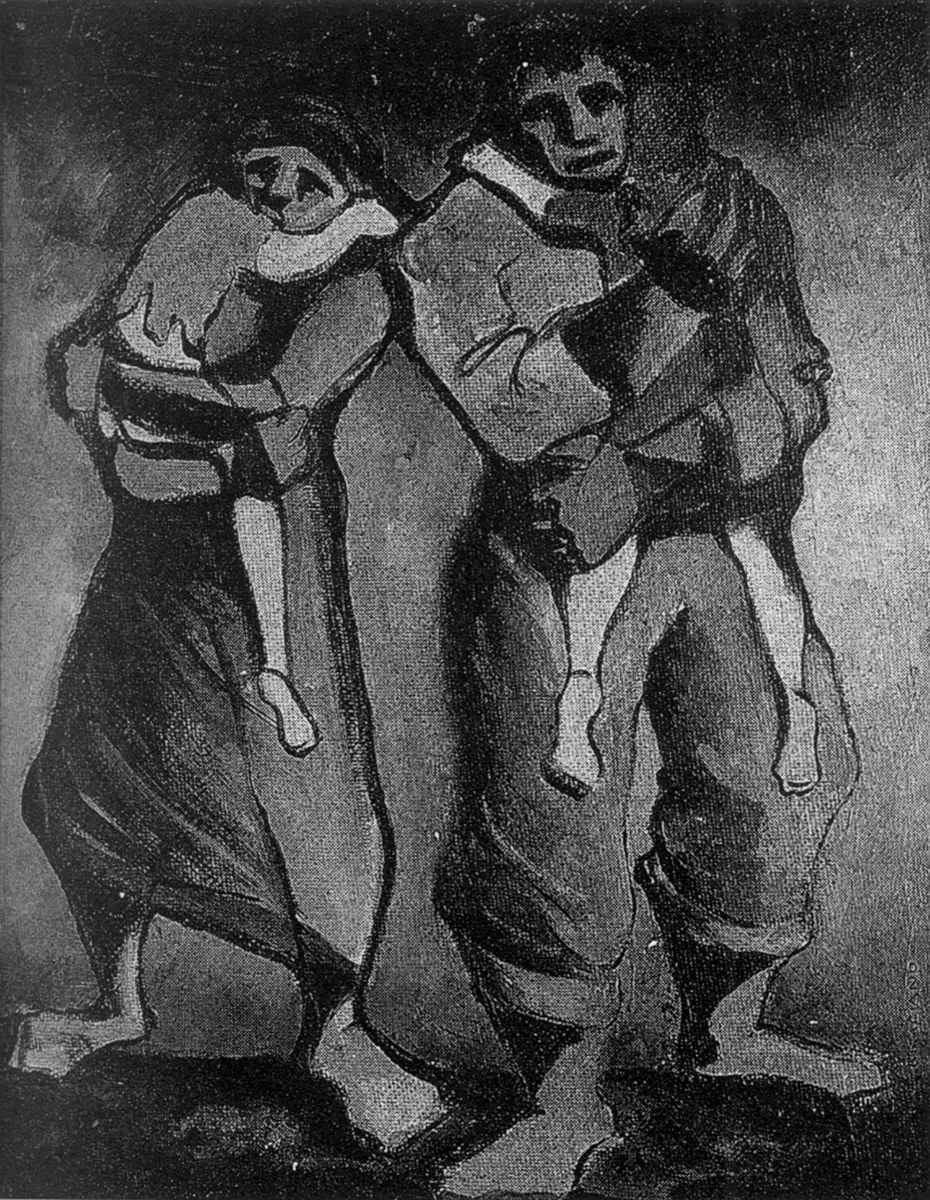
That experience of search and experimentation, free of patterns grounded in society’s taste, was also projected in nudes, figure drawings, landscapes of urban views, and in the famous landscapes of the outskirts of São Paulo. They developed their own subject matter within Brazilian reality, making themselves known as creators of a “Paulist painting.” They developed modern pictorial solutions.
These artists created an oeuvre that quickly attracted the attention of critics and intellectuals. In 1939, the writer and critic Mário de Andrade dedicated the article “This Paulist Family” to them. In a broader study from 1944, he took up once more the work of the Santa Helena Group. During the ‘40s, the members of the group were studied with special interest by Sérgio Milliet and other important critics of the period and came to figure decisively from that point forward on the national art scene.
The Santa Helena Group has become a theme of exhibitions and historical revisionism. Shows were realized to commemorate the 30th, 40th, and 50th anniversaries of their formation. The last of these was an important retrospective accompanied by a book and a catalog.
In spite of the fact that some of their members were not aware of the role that they played, such investigations allow us to maintain that the “Santa Helena Group” was not only a casual and ephemeral conglomerate, but rather a “community of interests” in time and space, under the external impulse of a common state of consciousness that socio-cultural life allowed. Sociologically, “Santa Helena” can be seen as a primary group of face-to-face contacts, the members of which initially participated informally but gradually began to assume a formalization and more clearly defined outlines. This is a group that internally marked its interaction through a frankly cooperative process of encouragement and reciprocal support, that survived even after the break in their daily cohabitation and their work in the two shared studios.
Moreover, the group can be defined as one whose work is reflected as a social action on itself, based on the contact with the intellectual public (writers, poets, journalists, professors) that perceives in the work of these artists a possibility of configuration in plastic terms, of cultural identity already extensively manifested in literature since the 1920s, and constituting a solid ideology in the 1930s.
The artist/work/public contact —also understood in the aspect of face-to-face contact— gave rise to awareness and opened a reorganization of the aesthetic concerns that assume different directions in each of the painters through the years. But in all of these creative personalities, in some form or other, the important mark of experience from their period of living together in Santa Helena remains intact. Although, naturally, the presence of each one of them displays, in aesthetic and historical terms, highly differentiated levels throughout their careers.
Aldo Bonadei set out on an uninterrupted artistic path marked by an inquiry into materials, supports, and plastic languages. When he was young, he traveled to Italy (Florence) to study, He developed the abstract facet in his work, later producing an intense dialogue between figuration and abstraction in his compositions. Alfredo Rizzoti also studied in Italy when he was young. In addition to painting, he created murals and devoted himself to drawing. For a while, his pictorial production was interrupted due to health problems.
Alfredo Volpi was Italian by birth. He developed as a painter beginning in the decade of the 1910s, absorbing aspects of impressionist aesthetics. Following his involvement with the Santa Helena Group, at the end of the ‘40s, he approached the concrete painters and poets, to create paintings that absorbed constructive information, but presented peculiarities that distinguished them on the national art scene.
Clóvis Graciano was a painter, drawer, and muralist who privileged the human figure in his work, along with still life. He created countless canvases in public and private buildings, and projects of important Brazilian architects. He illustrated newspapers and books, most notably the novels of Jorge Amado. He also worked as a scenographer and costume designer. He lived for two years in France, thanks to the Prize for Travel Abroad of the National Hall of Modern Art.
Fulvio Pennacchi, like Volpi, is Italian by birth. He began his training as a painter in his country of origin. He settled in Brazil in 1929. His work is marked by Renaissance painting in technique and its religious subject matter. He dedicated himself to landscape and to popular themes, recording festivals and customs in his compositions.
Francisco Rebolo Gonsales was the lone Spanish artist in the Group. He developed his career as a painter with no interruptions, and stood out as one of the most representative landscape artists of the Group, in addition to producing an important gallery of portraits, still-lifes, and flowers. He also devoted himself to drawing and etching. He created murals on residences and buildings. He lived for two years in Italy, making study trips through various European countries, thanks to the Prize for Travel Abroad of the National Hall of Modern Art. It is worth pointing out the curious fact that, before becoming an artist, he was a soccer player on the Corinthians Paulista team, who were champions in 1922.
Humberto Rosa was a high school drawing teacher, as well as a draftsman and painter. He suffered health problems that prevented him from continuing to paint. Landscape and the human figure were his favorite themes. Part of his work was lost after his death.
Manoel Martins dedicated himself to etching and he worked as an illustrator and also created paintings. His work approaches expressionism and bears a social mark.
Mario Zanini was a painter, drawer, and tiler, devoting himself also to ceramics and etching. He created murals on buildings, he was an extraordinary landscape artist, and he later developed an abstract phase in his work.
In sum, it is worth noting that throughout history, the work of the artists of the Santa Helena Group aroused the interest of art criticism within the context of the national press in the same period in which the production of these artists emerged onto the art scene.
From a sociological perspective, the Group attracted special attention on account of the fact that its artists belonged to a social base of workers and they were immigrants or descendants of immigrants.
As the twentieth century draws to an end, it is important to initiate a revision of the path and history of the art of this period, and to take up once more the study of this generation of painters and to put their work on public display.
NOTES
1. In Brazil, the moment of approaching the artistic vanguards was called “Modernism,” and the art tied to this movement, was “modern art.”
2. SPAM and CAM were institutions open to a members-only art public. Their main aim was the realization of exhibitions, conferences, and social reunions. SPAM held a carnival dance with decorations created by artist Lasar Segall, who had lived in Brazil since the mid-'20s. CAM found its principal cultural animator in Flávio de Carvalho. It presented theatrical pieces with great repercussions, like O Bailado do Deus Morto, created by this artist.
3. In the mid-1940s, the artists of the Santa Helena Group approached the artistic avant-gardes from the beginning of the twentieth century. Their works received information from cubism, expressionism, and, later on, in some cases and moments, even from abstractionism.
4. The Paulist Artistic Family and the Salón de Mayo were ephemeral exhibitions that grouped together the artists who sought a renovation in plastic language. Each of these institutions carried out three annual shows. The Family in 1937, 1938, and 1940, and the Salón de Mayo in 1936, 1937, and 1939.
5. The Union of Plastic Artists was created in 1937 as a result of the new unionist legislation established in the country by President Getúlio Vargas.
6. The Musical Culture Group emerged around the physician and collector Adolfo Jagle, who was a great connoisseur of music. He realized concerts and presentations of modern ballet. Several artists of the Santa Helena Group participated in the meetings of this group.
7. The presence of immigrants and their descendants was pronounced on the art scene of the 1930s, 1940s, and even the 1950s. In addition to Italians and Spaniards and their direct descendants, the Japanese and their descendants also formed an important group: the Seibi Group. There were also other groups of young artists in the 1940s that had the role of reinforcing the new values that emerged on the art scene.
*Photo: Romulo Fialdini.
LISBETH REBOLLO GONÇALVES