
The works of Yolanda Gutiérez were shown simultaneously in the Museo Amparo of Puebla and in several open spaces around the same city. Water is their central theme, and the whole show is rightly named Atl/Agua (Atl/Water).
Curated in its majority by Jaime Contreras, the exhibition displayed some of the works that Yolanda Gutiérrez has been working on consistently for some years now, but it also features some pieces made specially for the event. The Casa de Ia Cultura housed an installation and one piece, and both the lake of the Benemérita Universidad Autónoma de Puebla and the ecological park displayed works done specifically for their locations.
Since 1992, the year of her first exhibition, Yolanda Gutiérrez’s work has been clearly inscribed in Ambientalismo or LandArt, basing her work largely on her research on water and its meaning in Mexican prehispanic, Chinese, and Indian cultures.
Yolanda Gutiérrez's investigations have placed her as one of the most vigorous representatives of this line of thought uniting with such precision the natural with the divine. The show opened the path to follow in order to understand its true dimension within reality, which is part of nature while it also has a dimension of divinity. Wrote Gutiérrez in the introduction to her show: "[In this divine dimension] one walks hand in hand with natural entities that oftentimes are benefactors, but in other times they become demanding repositories of tributes needed for the continuation of life. "
In an intimate sense, her work has a profound, religious faith in a conscientious ritual activity. That is why each of the parts making up her installations has a precise meaning and an exact connotation, making us witness a sort of celebration of nature imbued with the artist’s particular reading through her eyes and hands. Yolanda Gutiérrez tells us of the unforgivable sin of not paying heed to a primeval sense of life and turning into some sort of mutant treading a planet that is tired of yelling its agony and history while at the same time, we sojourn on it without glancing at it with compassion, much less with understanding.
Her work forces us to be clearly present here and now. Seemingly atemporal or linked to prehispanic customs thought to be extinct, her installations become valid and contemporary in pieces such as A la memoria (To the memory), where she pays tribute to those who lost loved ones and property in past floodings around the world.
This reference is only one among all those linking her work to the daily life that many times, even without us knowing it, inhabits us and we succumb to it when we fully realize its magnitude. In part, it can be considered an exercise in memory evocation; each of Gutiérrez’s installations refers us to our origins, both spiritual and cultural. The prehispanic myths and legends cease to exist and turn into truth and certainty. Here their water and blood irrigate the seed, making the corn grow as ants and movement, ancestral precision that since many centuries ago has known where to go, where to come, how to die, and how to return among the living.
That’s why, in some areas of the show, she has placed on the ground and walls hundreds of ants made out of corn kernels and copper wire. They represent order precision, dry work, and the collective organization taken to its purest expression. In order to survive, the ants today made out of corn have transported the kernels for centuries to their chambers. ((Where there is not intelligence, there cannot be stupidity.»
In Atl/Agua, it seems as if Yolanda has emptied a cask of water over us as if we were the chosen ones entering a ceremony of purification, actors in a ritual in which we have been involved since our first origins while exercising simultaneously our life and death.
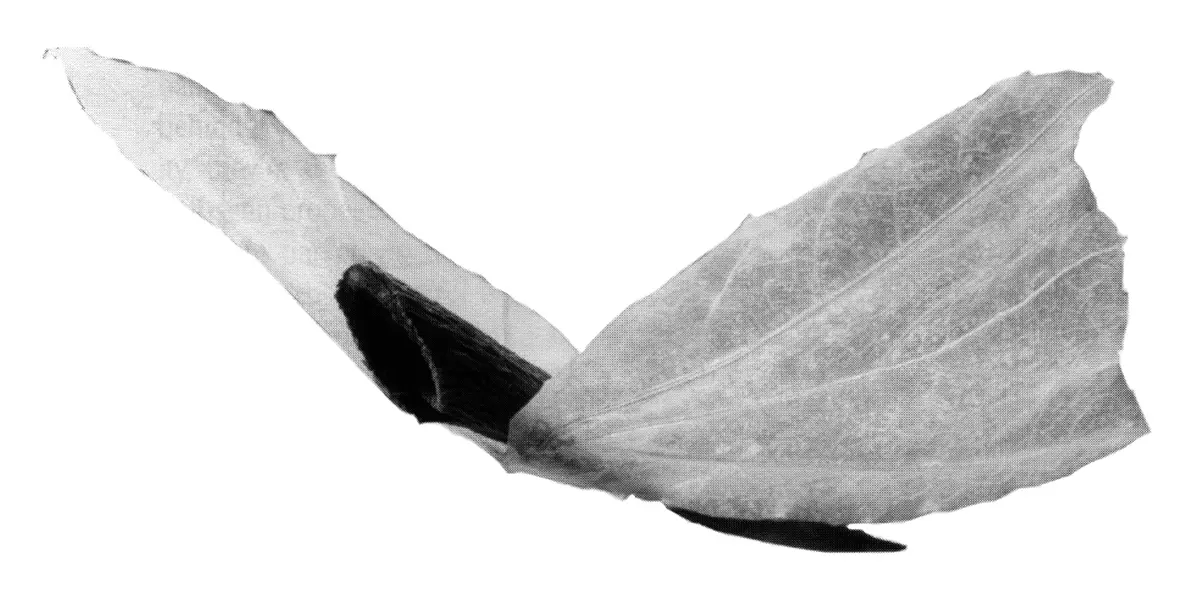
The presence of hundreds of butterflies constructed with the tip of the Maguey plant, with leaf skeletons as bodies and wings, is key in this exhibition. These flying creatures linking the installations through different rooms have several meanings: for the ancient Méxicas, they were, according to Gutiérrez, a representation of fire. That’s why they enter as the symbol of war: the atl-tlachinolli (from atl, water, and tlachinolli, burnt thing), which represents the union between the opposites water and fire.
And they represent the souls of the dead. For the Chichimecas, they were the mother goddesses of human sacrifices, war, and travelers. They also symbolized movement. That’s why Gutiérrez arranged the butterflies in large groups, so spectators could see, projected against the wall, their own shadow fusing with the shadows of the fragile creatures suspended by fine nylon threads.
Accompanied by these clouds of butterflies fluttering delicately with the visitors’ movements, we reach one of her most beautiful installations: El espejo (The mirror). There, 1,718 small crystal balls with a diameter of only 3 centimeters, have been filled with water. They hang from the ceiling at a height of 160 centimeters from the floor. To walk under this rain that always travels down but never reaches the ground, forces the spectator to stoop down and adopt a posture of humility, calmness, and contemplation before water, the show’s key element.
Sliced cala lilies ooze blood onto the dust on the marble; water-filled acrylic cones pinned on a white mountain made out of salt; a serpent (Ma laire) made out of thin wooden rods covered with amaranth seeds; a nautilus cut in half and dyed with Gutiérrez’s blood; an ancient, rusted iron ball filled with crystal tears that act as collaborators in the unstoppable deterioration process; small boats made out of bamboo leaves sailing in circles as if they were following each other: All this is part of the great homage that Yolanda Gutiérrez has paid to water. She has done it as an offering, delicate in some instances and violent in others, but always tied to ancient knowledge and myths explaining the presence of the precious fluid on Earth.
SANTIAGO ESPINOSA DE LOS MONTEROS