
This past July 20, Galería Praxis of Mexico City opened the exposition named El fondo desecado del lago (The Dry Lake Bottom) with works by Antonio Luquín, a painter with a consistent trajectory who has again given more visual “data” to a megalopolis which seems not to require any new examinations. The show places us on the other side of that huge city that at times hides from us and passes by quietly, inadvertently, but also taking, slowly and silently, new and surprising forms.
If it is true that cities and urban sprawls have been a topic tackled by painters and photographers, it is also true that the emphasis is placed more on the bucolic reconstruction of the environment or on the mere exaltation as an ideal space. With its shapes and colors, its order, and its chaos, it tells us a fragment of the story complementing, effortlessly, the personal urban experiences we all have lived.
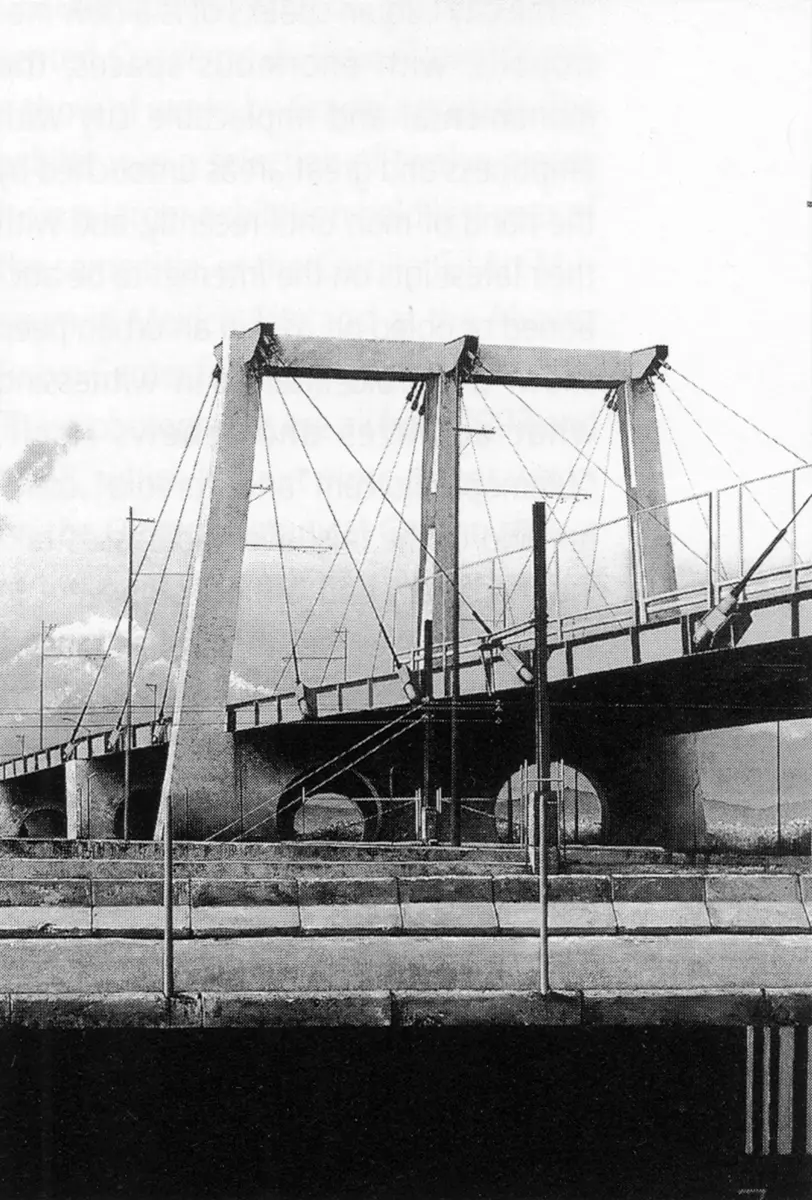
The last of Luquín’s production shows us a city we rarely stop to see. Before he invented urban spaces from realities he deformed into chaos a recognizable chaos, nevertheless, now he confronts us with a part of the city that, in its vastness, amplitude, and involuntary irony, tells us about those extensions we have been gaining or shall we say losing?
In this regard, we cannot ignore Luquín’s great sense of humor or his critical vein. The work titles are proof of this sarcasm. The Transfer series evokes directly Manhattan Transfer, John Dos Passos’ novel, as it does the musical group with that same name, or the huge New York bridges, famous for being feats of engineering and for the stories they have created.
These “transfers” are not books nor songs nor are they in New York. To be sure, they’re the Pantitlán Transfer referring to a certain densely populated and contaminated metropolitan area in Mexico. In them, Luquín captures the car bridges that have so perturbed the areas with their huge structures. In some cases, he has captured them searching for a more engineer-like esthetic than an architectonic one, denouncing the eyes of those who built them. An example of this is Pantitlán Transfer 3, where Luquín reveals a huge perforation going from one structure to another, crossing the bridge end to end from the bottom part. The bridge is there, yes, but it is Luquín who rescues it and proposes it again in his painting.
We no longer dwell in the lacustrian city that Bernal Díaz del Castillo described so beautifully. Five centuries later, some architects still long for her and search tirelessly to return to her as the only solution to the drought problem. That’s why the show is named El fondo desecado del lago a direct reference to the lacustrian life that Mexico City once enjoyed and does not exist any longer.
The city Luquín speaks of is a new metropolis, with enormous spaces, the monumental and implacable city with emptiness and great areas untouched by the hand of man until recently, and with their latest lots on the Internet to be auctioned or ogled on as if in an urban peep show: a morbid interest in witnessing what agonizes and renews itself: ultimopredio.com and prediol.com are two of the false web addresses taking us, directly and without stopovers, to the strange city that most times passes inadvertently before our own very eyes.
Accustomed for years to a life made out of disposable things, we have decided to set aside the huge tank trailer remains to recycle them later in the future, sell them as scrap by the kilogram, or perhaps we can just leave them for Luquín to paint them with his impeccable style. Tens, hundreds of times we have walked or driven by the abandoned truck beds or the old Volvo from the 60s whose owners insist on keeping it in the empty lot across the street. In Luquín's hands, the esthetic rescued from the cemeteries of reservoir tanks ("pipas”) conveys a particular meaning, turning them into the object recently rescued while at the same time marking its irremediable destiny: "Texcoco-Chernobyl Highway."
This collection of useless objects, signals of movement stopped, are the objects narrating the new megalopolis in which we live. “Obey your signals” is the harrowing prophecy, next to the highway getting us in or out of the monstrous city. Those signals are the “transfer” bridges and the reservoir tanks are the minarets from which modern fundamentalists call upon the faithful; the newly inhabited areas with social interest, hidden behind a group of solitary trees. In reality, they’re the signals that the small, half-seen propeller plane and the huge Delta jet parked on the runway must obey. The absent graffiti and the cars that didn’t want to pose for Luquín; the owners of the abandoned trailer are evidence of the “New Sarajevo” that our environment has turned into.
It is the new city that we, surprised, inaugurate little by little every day, “without hurrying but also without stopping,” until the landscape becomes silent, deforms itself, and flat planes settle in. LTO whom do these lands belong? We devour ourselves and we eat the entrails of a landscape reflecting us in its altered stillness.
I ask those going to the show to make memories, list all the urban fragrances they’ve felt in the last few years, and use them to complete the show’s visions. That way, the bridges of Pantitlán, the abandoned reservoir tanks, the dry lake, and the airport, will smell of diesel, of chemical products but mainly of the sickly sweet aroma of gas; jet fuel mixed with cow dung from the four or five cattle ranches trapped in the vastness of the megalopolis. That is only the visual part of this thing called The Dry Lake Bottom. For the rest, I insist, just follow the signs.
SANTIAGO ESPINOSA DE LOS MONTEROS