
How does one approach paintings created in São Paulo by a Brazilian when they are exhibited in Chicago? How about when a Japanese sculptor, educated in London, shows in Mexico City? Such complex scenarios are becoming more and more prevalent as artists exhibit internationally and viewers try to avoid the all too common approach of looking at art from a one-sided (often Eurocentric) perspective. On the one hand, one does not want to recast art made in another culture or for another culture to function in the mold of one’s own experience. On the other hand, when artists have for centuries been subjected to mixed cultural experiences, and when influences from around the world now constantly weave together, how might a viewer determine the ideal perspective from which to view any work of art? Can a French viewer, for instance, have any guarantee of better understanding a Russian’s photos by learning more about Russia? For that matter, can a viewer in Bogotá be assured that she fathoms the paintings made by her next-door neighbor simply because they share the same urban experience? Though I’ve tossed around plenty of hypothetical situations in my head and have come across a smattering of actual scenarios where viewers have to deal with the problem of relating to work produced out of varied and different circumstances, nothing has hit me as square in the face with it as the current mid-career survey of Gabriel Orozco, an artist who doesn’t just exemplify the issue but works every angle of it.
A bit of background might prove helpful (if only to make things more complicated). The Orozco exhibition spans ten years of the artist’s work and includes over one hundred examples of drawing, photography, video, and sculpture, though such general categories fail to grasp the actual breadth of media. The works were produced in England, France, Germany, Holland, Korea, Mexico, and the United States, and in many cases were made specifically for their locations. Born in Jalapa, Veracruz, Mexico, Orozco studied at the Escuela Nacional de Artes Plásticas (UNAM) in Xochimilco (Mexico City) and at the Círculo de Bellas Artes in Madrid. He now maintains residences in New York and Mexico City. The Gabriel Orozco exhibition began at the Museum of Contemporary Art in Los Angeles and will travel to the Museo de Arte Contemporáneo Internacional Rufino Tamayo in Mexico City from September 28, 2000 through February 4, 2001, and then on to the Museo de Arte Contemporáneo de Monterrey (MARCO) from February 22 to May 27, 2001.
Orozco makes the very problem of understanding and interpreting art across borders a primary subject of his work. His every act of personal expression, reaction to a particular environment, and movement from one medium, language, place or approach to another, seems to feed directly into this core problem. His work is always out of place and in place, foreign and familiar.
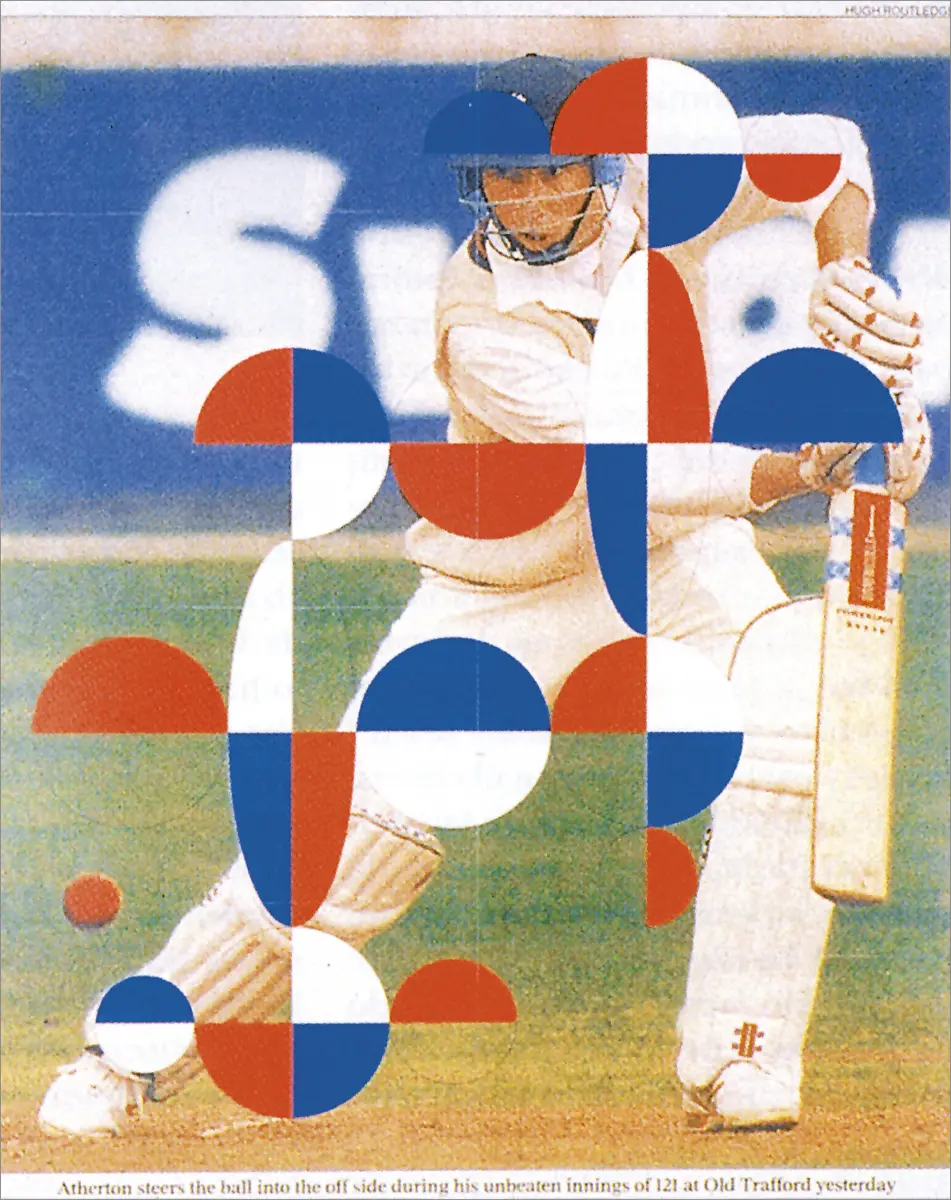
Orozco’s Atomists series —in which the artist photographically enlarged sporting images from British newspapers and magnified individual Ben Day dots from the printing to create compositions of massive circular and elliptical areas of solid color atop the images— precisely illustrates the ways in which his work both encourages and problematizes cross-cultural understanding. The works were created for an exhibition in a Piccadilly gentlemen’s club, a location for power exchanges among men where the images of triumphant/heroic moments in the sports of cricket, crew, and soccer have particular resonance and breed familiarity. The magnified bits overlaid on the photos clarify and sharpen the color and reinforce the movement of the composition while simultaneously obscuring the image and pushing the representation toward the edge of abstraction. They question the notion of the freeze-frame or fixed view and expand the idea of constant flux, a core belief of atomism, as a metaphor for cultural and political exchange.
The flux continues as the images shift context from a men’s club to a different type of club, a museum, where the overlaid compositions suddenly resemble constructivist designs, where the merging of geometry and men in motion hearkens back to Futurism, and where the political baggage connected to both suddenly comes into play. Take these images to an American museum, and the fluxing continues as viewers more than likely unfamiliar with cricket read English like they’ve never seen before in captions beneath some of the photos bearing statements like "Damage witness...Ganguly turns to see Stewart end his innings of 46 with a neat legside stumping off the occasional medium pace of Thorpe". That’s a foreign language if I’ve ever seen one. Even the soccer and crew images seem instantly foreign in an American context, but when the exhibition arrives in Mexico, the flux will flow perhaps towards more familiarity. Orozco seems keenly aware of how strangely this work will move from one context to the next, and rather than trying to build in so much contextual information so that the viewer is always educated in how to understand the work, or attempting to make “universal” or “international” work positioned as if it is understandable to everyone (though more likely clear only to a group of initiates), he uses the locations in which he makes his works as sites for developing specificity that leads to generalities and ambiguities.
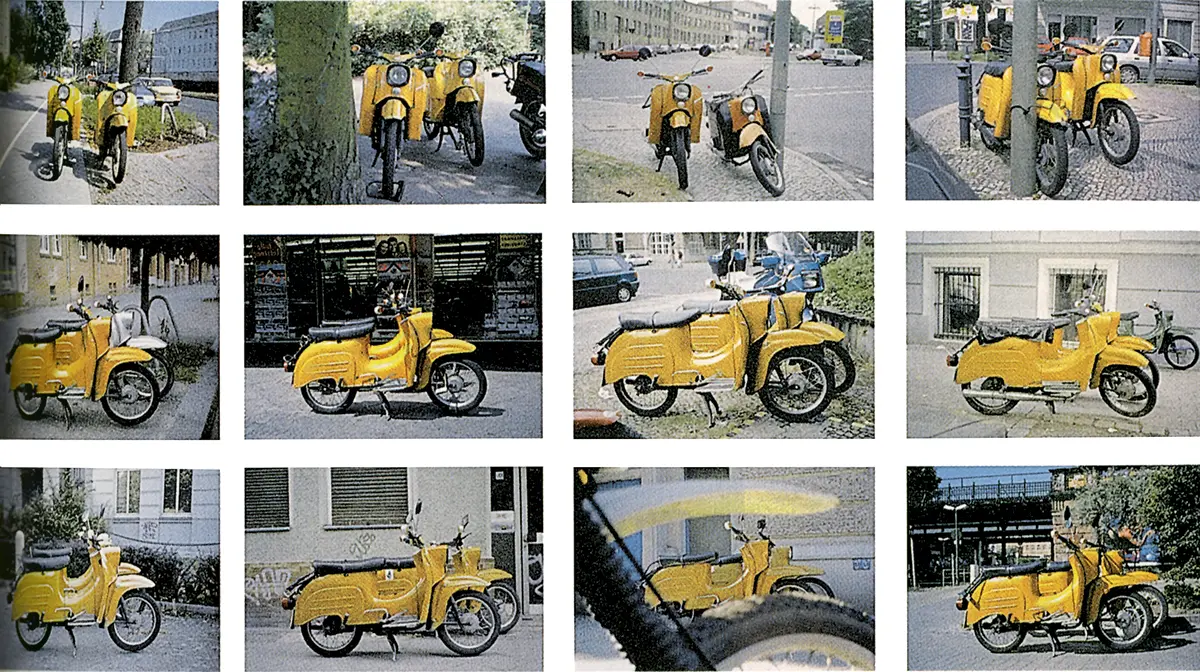
The strangeness of bringing icons of one culture or nation into another carries over in Until You Find Another Yellow Schwalbe, a series of photos Orozco shot while living in Berlin. While zipping around on his yellow Schwalbe (Swallow) motor scooter, when Orozco came upon a scooter of the same model and color, he would park his next to it and photograph the pair, once cheating with a silver Schwalbe, and once getting lucky and coming across a pair that allowed for a trio. To an American audience, the scooters look unfamiliar, foreign, and perhaps quaint, and the series becomes a comical study in typology. But in Germany, where the scooter was designed and produced in the former German Democratic Republic, the Schwalbe, which looks as though it was behind the times from the moment it first rolled off the assembly line, is a signifier of a fading history, and as the once state-designed embodiment of an ideal, it is an obsolete signifier, with its demise seeming all the more immanent in the photos where the scooters are parked beside Western European cars whose technology mocks the Schwalbe, modern motorcycles and scooters that have left the Schwalbe behind, and old bicycles from which the Schwalbe barely took an evolutionary leap. Finding a like model, a similar signifier, next to which one might park one’s own, in this context becomes a sad attempt at gaining strength in numbers or identity in a group, like searching for an old friend who remembers the same stories and perhaps held similar beliefs as one’s generation ages and slowly dies off.
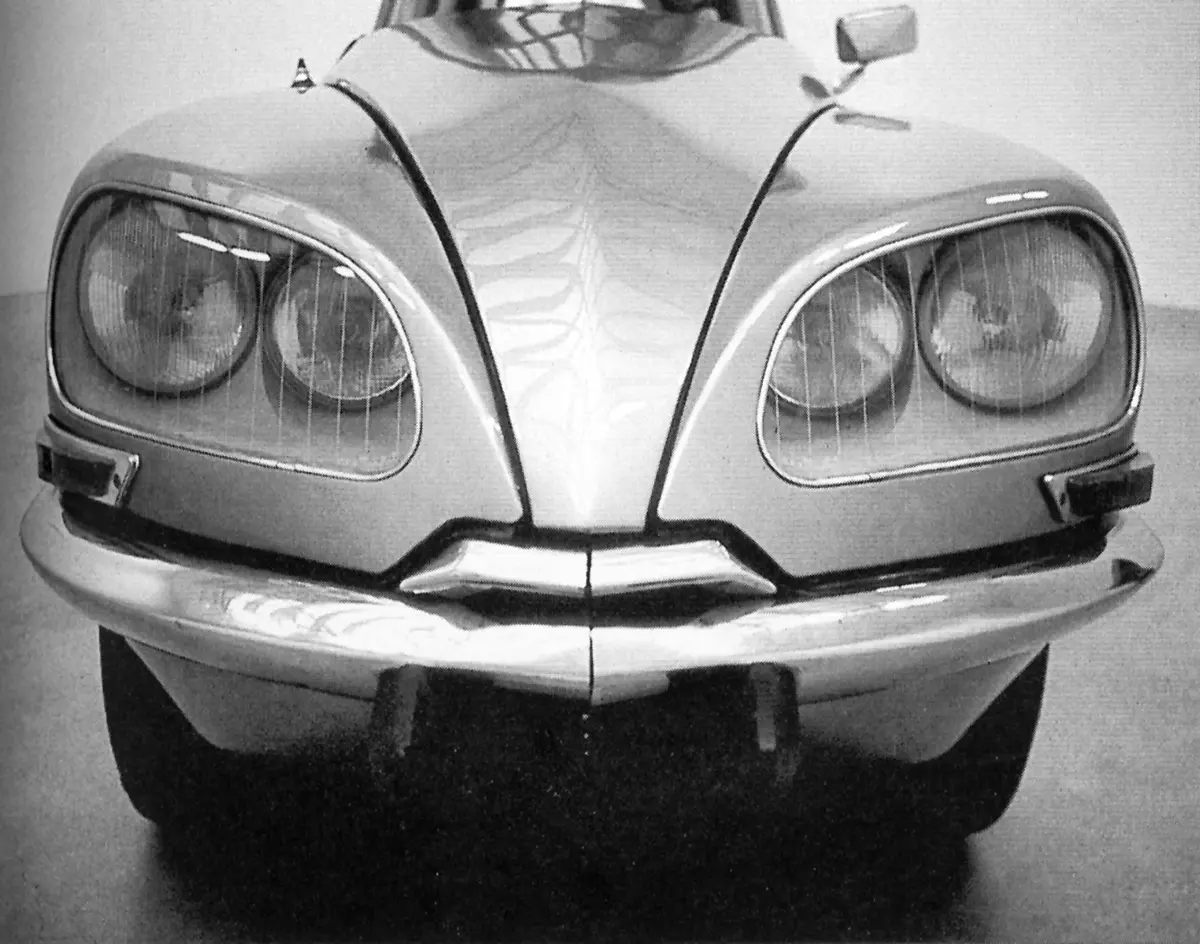
In almost all cases, Orozco pushes to make works that are not universal or regional, but that might engage multiple contexts and multiple readings. My Hands Are My Heart, in which the artist squeezed a lump of terra cotta into a heart-like form, makes sense as a metaphor for a connection to the earth specifically in Mexico (or more generally in any place), has a particular connection to Roman Catholicism, and also falls in an established line of performance art from east and west, north and south. Ping Pong, a reconfigured Ping-Pong table that begs viewers to play the game around a lily pond set in the middle of the table, gets a charge from a pun that only works in English, but the comedy of the scenario translates easily as a metaphor for any number of political or social situations one might pick from around the planet, and would likely take on even greater significance in locations where PingPong is a major sport. La DS, a Citroen DS of which Orozco sliced out the middle and then reattached the two sides, a work originally exhibited in France, is a symbolic gutting of style. It seems particularly relevant in a French context, where it speaks of the failure to root national pride in design at a time when the country that gave us Champagne, the Eiffel Tower, and Impressionism was struggling to shake stigma and regain prominence in postwar Europe. Outside of France, the sleek lines of Orozco’s Citroen remain intact, though their guts are gone, and the work of empty style speaks to a world of nations that have tried to heap varied ideologies and agendas on stylish forms. It looks like a phallus, a missile, a rocket, a fighter plane, a bullet train, and a monument laid on its side.

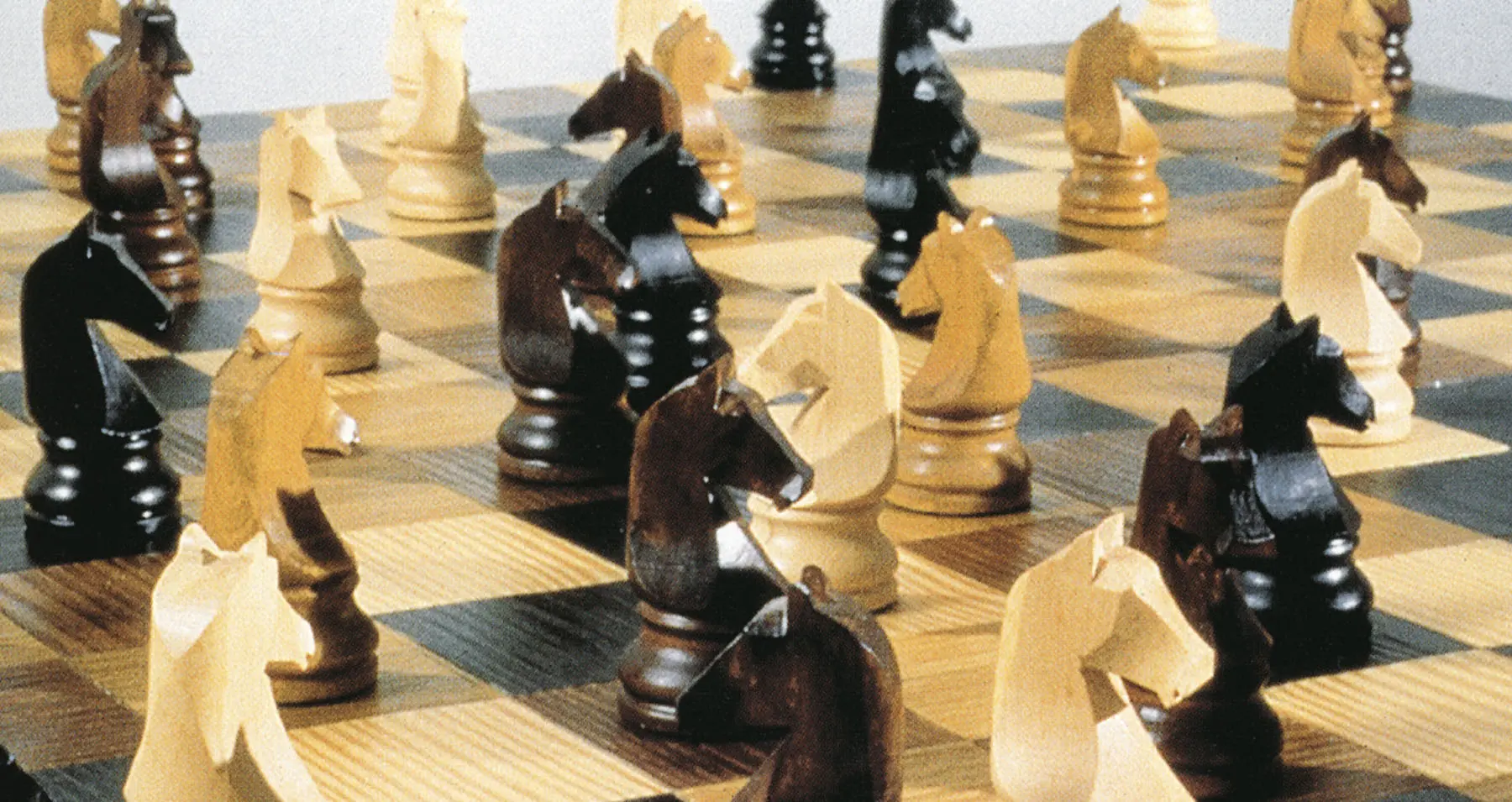
In a variety of other works, Orozco plays familiar and foreign against one another as a simple operative strategy of observing phenomena and presenting objects. In a series of videos that document strings of experiences, he shows a bicycle seat floating in the water, a glass in the middle of a place setting, and a soap bubble hovering in the air. Photos document both chance sightings (a dog sleeping, modern chairs in a decrepit waiting room) and the artist’s impromptu interventions in assorted settings (moving items from one section to another at the grocery store, spreading water between puddles with the tracks of a bicycle tire). Recontextualized, reconfigured, and manipulated found objects include toilet-paper streamers that mock pageantry as they whirl from the blades of ceiling fans, an elevator car deposited on the gallery floor with no place to go, a group of four intertwined bicycles, a chess board with only knights to play with and an array of cans, most of which never held beer, all bearing Carta Blanca labels—a sight that is at once strange in its mixing of objects and identities, and yet reminiscent of back-road drives through Baja, where Boulders, wrecked cars and just about anything else that doesn’t move is fair game for a beer logo. One might be tempted to think of Orozco as a kind of nomad who takes his own self-contained existence and moves from place to place physically, culturally, and intellectually, always maintaining a certain detachment or distance, but Orozco seems much too consistently engaged. Or one might think of Orozco as an international figure, part of a new global culture that hovers above regional distinctions, but internationalism, to me, has always seemed like a way of saying Eurocentricism without saying it, and while Orozco has often engaged European audiences and mined both cultures of Europe and cultures influenced by Europe for raw material, his work clearly is not bound to the continent either in affirmation or negation and regional distinctions seem less like things Orozco wants to fly over than to dive into. I prefer to think of Orozco as a kind of transnational individual. Such a description, which often is used to describe corporations and organizations, might seem strange when applied to an artist, but for Orozco, it seems to fit.
Like a nomad, Orozco doesn’t seem to claim a home or fidelity to a particular culture or nationality, but he is not removed or positioned above all of them. Rather, he engages himself with multiple cultures and nationalities.
He has his fingers in many places, and thus, he himself becomes a transnational, which is both intriguing and problematic. Orozco is intriguing because the very nature of his activity suggests that whole new ways of looking at art are coming because they must, and he is without question a problem because he and other artists like him make all of our jobs as viewers much more difficult. It’s tough enough trying to understand work made by an artist and for an audience with whom one has a very direct common experience, but those days seem over. How am I (born, raised, and educated in Southern California) to address a Los Angeles exhibition of work by a Mexican-born artist living between Mexico City and New York, and delving into every possible medium while working all over Europe and the Americas? Then how do I write in English about this exhibition for a journal like ArtNexus, where my writing will be read both in English and Spanish translation by readers in Caracas, Miami, and New York? I know that Orozco loves the fact that I’m in this position.
My only disappointment with this exhibition is that it isn’t traveling to more venues. It’s only logical that a survey of Orozco’s work should warrant two venues in his country of birth, and exhibiting the survey in Los Angeles, which has its own complex relationship with Mexico, but which has not been a center of activity for Orozco, makes for another interesting culture crossing. To show the survey only in the two nations where the artist resides, however, seems to close down some of the channels Orozco is opening. I’d like to read the reviews from Tokyo and Tel Aviv.
CHRISTOPHER MILES
Christopher Miles is an artist and writer living in Los Angeles. He presently writes for Artforum, ArtNexus, Artweek, dART, and Flaunt, and he teaches at California State University Long Beach, and Claremont Graduate University.