
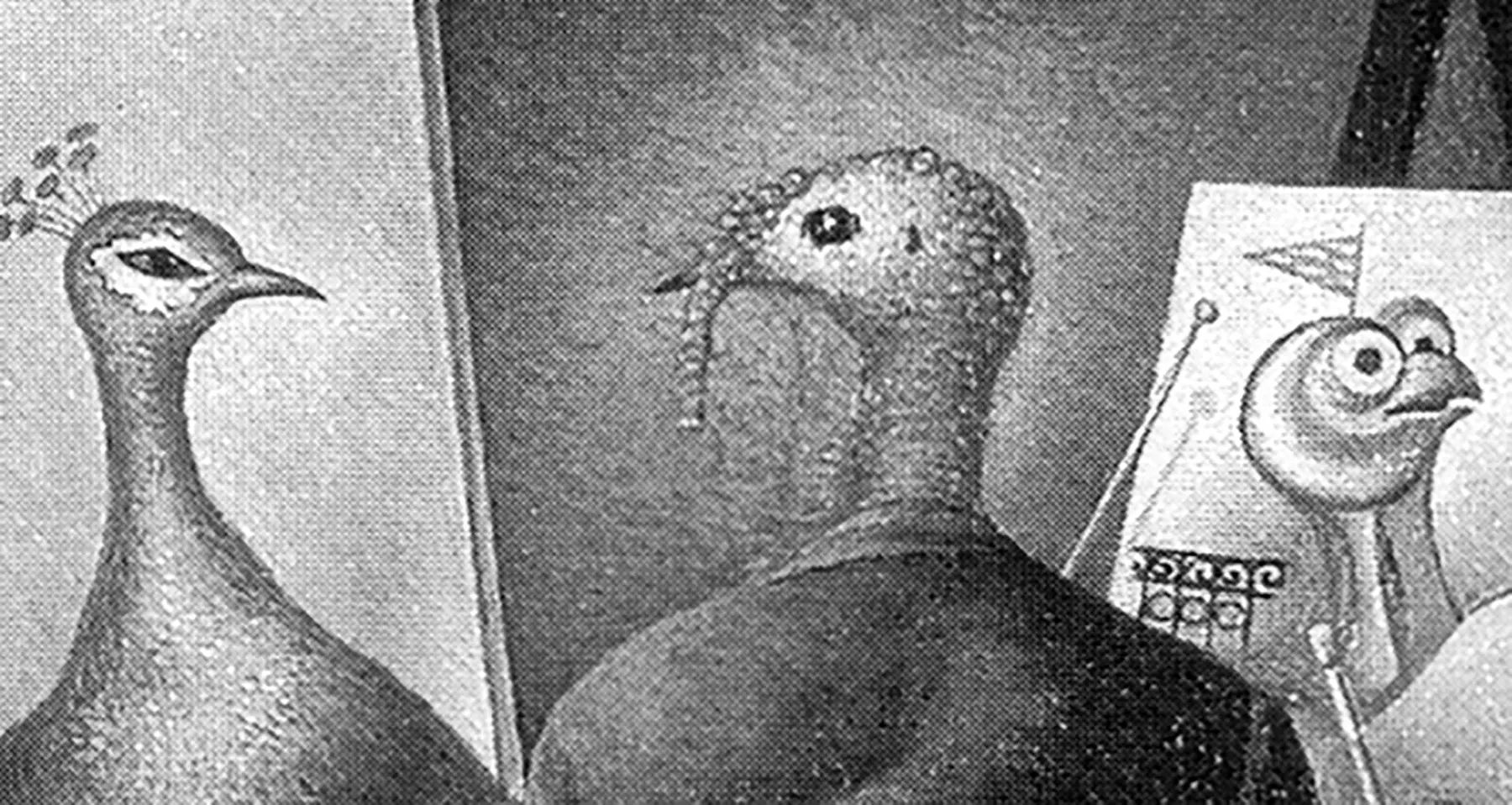
Under the title Mexican Suns, the Petit Palais recently presented a multidisciplinary exhibition that offered Parisians an expurgated version of the exhibition shown a few months ago at the Palace of Fine Arts of Mexico. Although the title makes reference to the Aztec legend of the five suns (the museography proposed an explanation of this legend in the third room), its binding dimension of times and arts was perhaps not sufficiently explicit for a museographically ambitious proposal that gathered works of different periods.
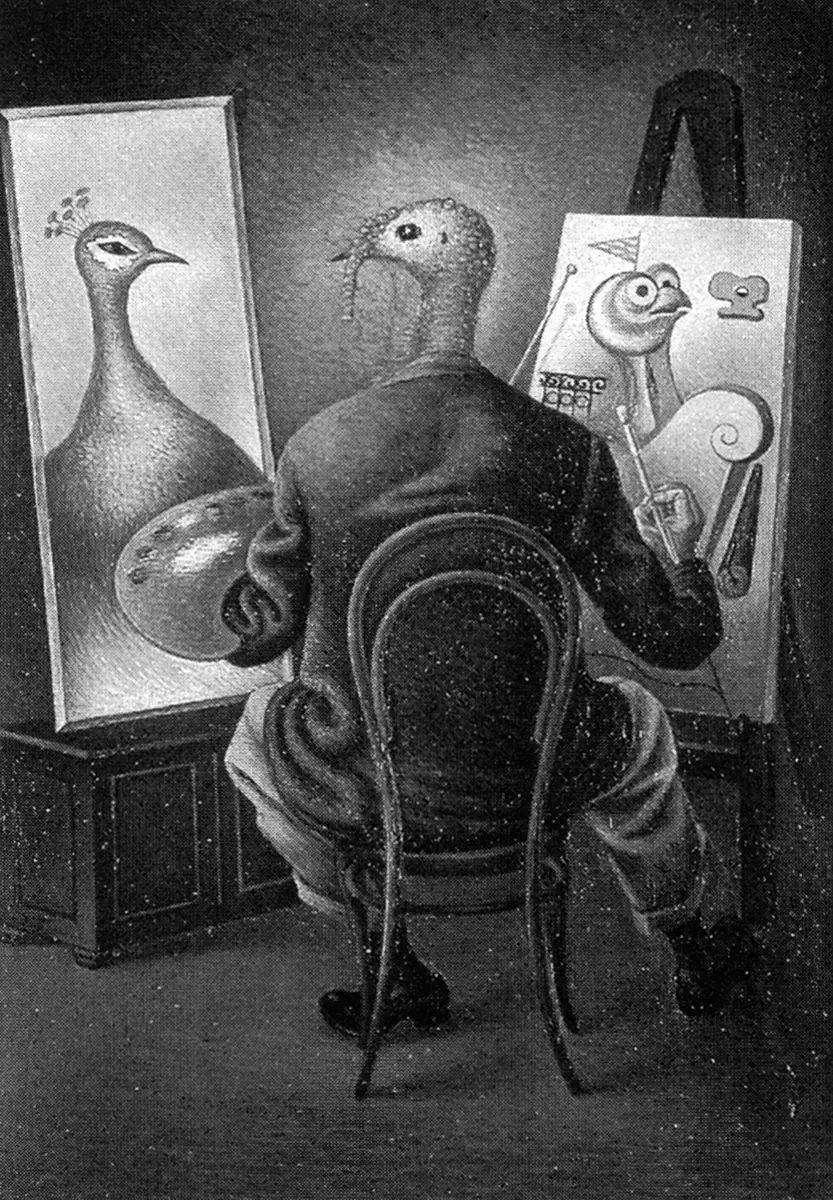
The concept of this exhibition aspired to be innovative because it wished to gather in one single project diverse axes of reading and different eras. As the President of Conaculta (National Council for Culture and the Arts) writes in the catalog: "this retrospective of Mexican art offers the visitor three great meeting centers, like mirrors of the cosmos and the endless flow of time . . . A juxtaposition of Mexican societies whose more exact reflection is precisely the juxtaposition of its works of art . . . It is the first exhibition oriented according to this idea, whose ambition is to propose a new reading of Mexican art, opening an infinity of perspectives and associations, as well as various interpretations." This point of departure is very interesting, but the museographical realization does not appear as convincing as we could have hoped. In effect, from the catalog to the scenography, from the selection of works to the concept of the curator, each element was at the service of a whole, and the exhibition’s success depended on this unity. Later on, we shall have the opportunity to return to this point.
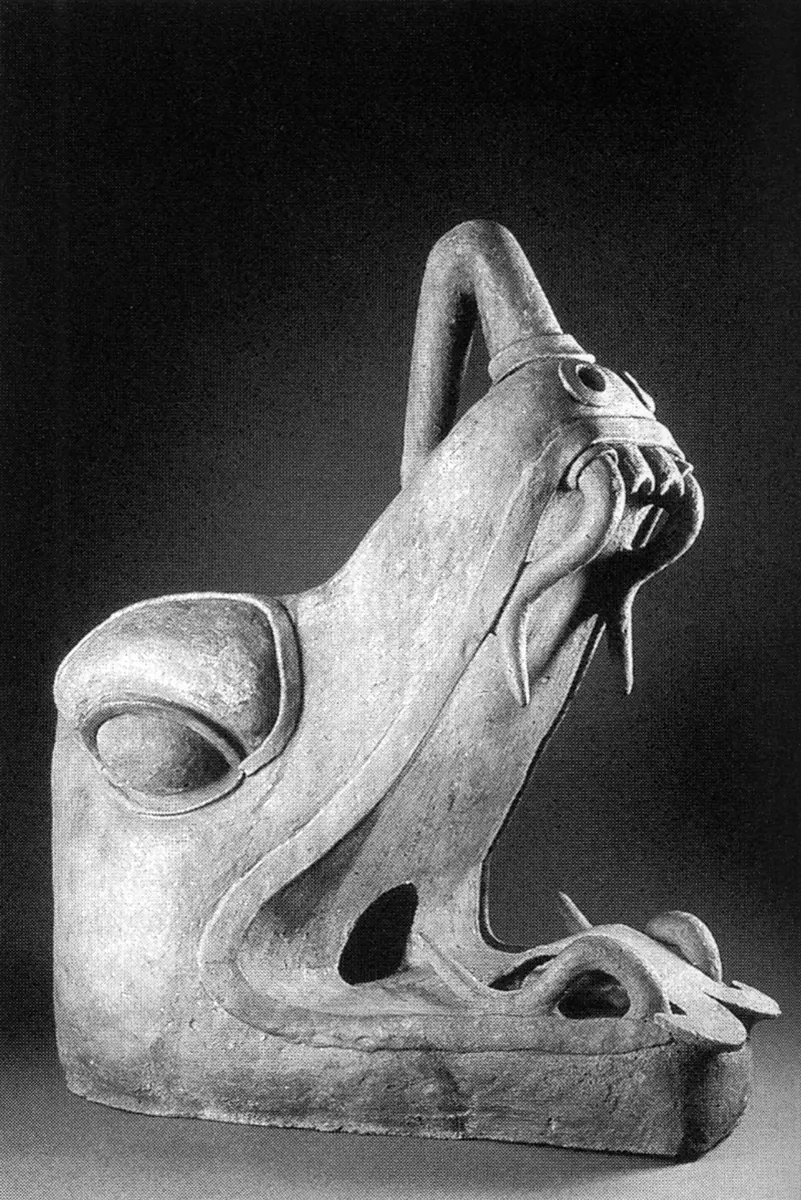
Two-hundred and fifty paintings, sculptures, engravings, photographs, and objects of art follow one another and are interwoven from the Olmec period to the latest contemporary creations, passing through some works that represent baroque art. They should respond to each other in a scenography that is extremely theatricalized and dominated by violent polychromy (green, bright pink, yellow, sustained reds, beiges), and spotlights over some archeological and contemporary pieces. However, the spatial construction of the horseshoe-shaped visit brought about a linear itinerary through the rooms conceived as conceptual spaces, which combined works of different periods. Some of them were magnificent, such as the two serpent heads, postclassical pieces of the Totonac culture from the south of Veracruz (clay, 82 x 70 x 51cm), and the very beautiful Serpiente (Serpent, 1991) by Gabriel Orozco (iron, 460 x 50 x 10 cm), placed in the first room, which was one of the most successful.
Around some universal concepts like water, fire, sexuality, family, and death and its representations, the museography initially brought preColumbian and contemporary works to face to face in order to mix, later on, works ranging from the pre-Hispanic to the contemporary, passing through the baroque. Renowned and less renowned modern works: Rufino Tamayo (La gran galaxia [The great galaxy], 1978), Francisco Toledo (La nadadora [The swimmer], ceramic), Francisco Goitia (Paisaje de Zacatecas con colgado [Landscape of Zacatecas with hanged man], 1914); contemporary works: Yolanda Gutiérrez (La tempestad [The tempest], 1997, agave thorns), Julio Galán, and Yishai Jusidman. Also noteworthy is Humberto Spíndola’s paper architecture and the postclassical phallus of Aztec culture, as well as Tomás Mondragón’s surprising Alegoría de Ia muerte (Allegory of death, 1856, oil on canvas), the Mayan braziers and the magnificent funeral monument of El Carmen (18th century, painted wood).
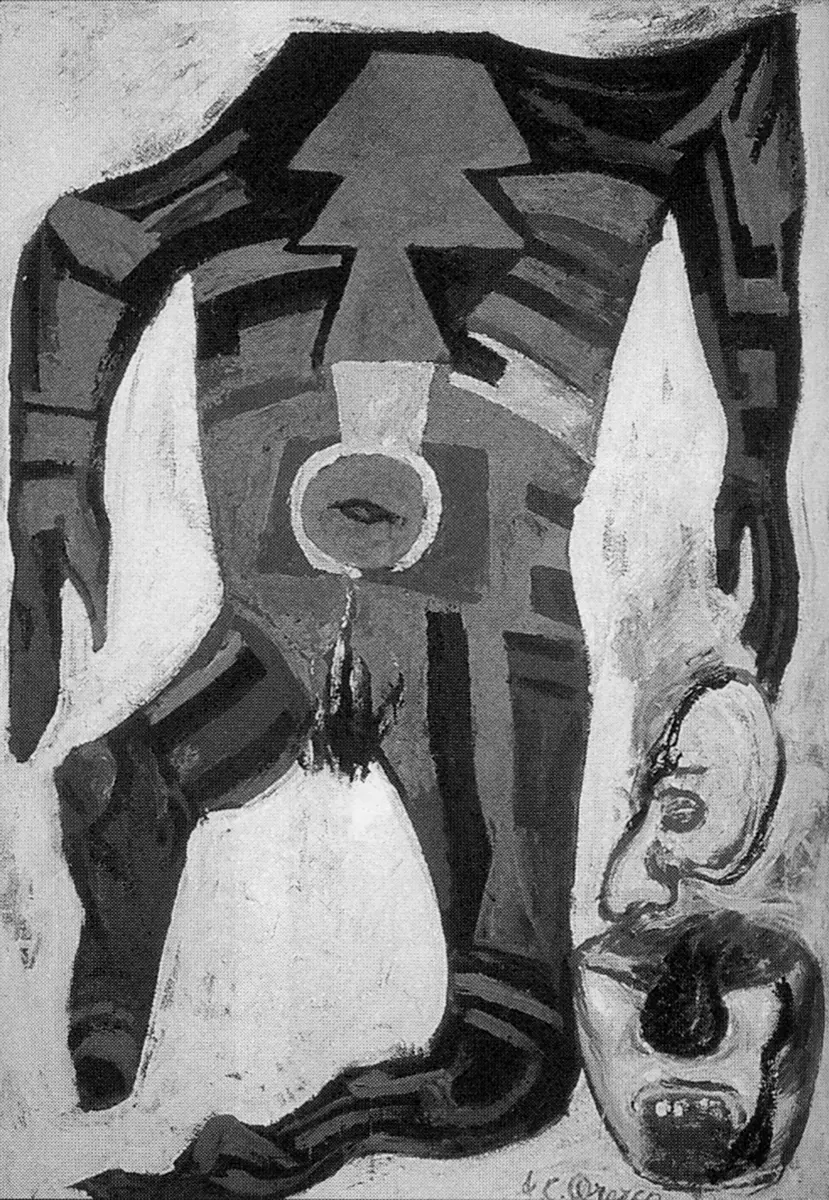
However, after having visited several centuries of artistic production and ritual with a certain happiness of aesthetic enjoyment, one feels the double sensation of excess and frustration. The accumulation of works is at times very disturbing for the tranquillity of vision, which happens for example in the second room, where the volcanoes of AtI coexist with a very realistic Siqueiros and two golden, mystical Goeritzs, and where Jorge Yazpik’s abstract culture is surrounded by four Toltecan atlantes. The symbols become confusing on account of the visual commotion of intense colors which vary according to the room, and whose impregnation has a negative influence on the perception and contemplation of the works.
Without a doubt, the choice of a succession of thematic entrances to cover ten centuries of artistic production posed, from the very beginning, a true challenge to the conceptual and museographical undertaking of the exhibition. However, we can highlight the fact that the generalist cultural exhibitions currently respond less to the demand of a more exigent French public. The French audience would probably have preferred a presentation of “Mexico on three floors,” in different periods, according to its development in time. This would have given pre-His panic art, baroque art, modern art, and contemporary art their proper place. The public success and the recent Parisian exhibitions of Brazilian and Ecuadorian baroque, or the Musec de Oro of Bogotá, presented at the same time as Mexican Suns, confirm the desire for specialized knowledge that the visitors show as they respond very favorably to these latest manifestations.
CHRISTINE FRÉROT