
"If I had to choose an artifact that synthesizes this type of conflict in the zigzag of Cuba’s ups and downs, I would opt for American cars of the ‘30s, ‘40s, and ‘50s. Today, these machines are the subject of dozens of coffee-table books published about Havana and Cuba, not to mention their presence on the covers of CDs and in art catalogs. They are, without a doubt, infallible accomplices of something that we could define as "The Buenavista Social Club Syndrome": the hyper nostalgic image of an ambiguously defined past that (supposedly) films, sings, and lives in the Cuban present. Not too long ago —let’s say the ‘70s— those same machines, fatigued survivors of the forges of Detroit, fell to the depths of the nation’s junkyard. After relinquishing all of their symbolic capital to vehicles that assumed the right to establish themselves as "modern Cuban" · that is, Ladas, Volgas, Moscoviches, the old Edsels, Desotos, Bel Airs, and company had to wait patiently for those newcomers to arrive at the not-at-all-surprising condition of pieces of junk with which they are decorated today. Only then (with a lot of tourism and with Ry Cooder involved) could those old cars come out to swagger once more, to dare to be what they already are: owners of the street, emblems, now invested with the ability to represent Cuba by themselves."1
"Impossible," says Tonel, "to synthesize in a few pages the flips of history." Yet this is just what the Biennial de La Habana does, encapsulating the logic, progressions, reversals, and perversities of the Cuban reality as it has unfolded in the last 15 years. Inaugurated under the banner of Cuba’s forceful idealism and anti-imperialism, the biennial is lately more like a palimpsest of globalization, ripping apart at the seams where solidarity and commerce intersect, where the mixture of socialism, blockade, and bureaucracy yields continuing decay and dire need on one side (of town), and resplendent, dazzled tourism on another.
This biennial, like the three others that have been inaugurated since the collapse of European socialism in 1989, represents a Cuba even more unaccompanied than ever in its political position in the world. The demeanor of the event seems to reflect these circumstances—no longer able to muster the optimism and fierce determination that was its early signature, and suffering a steady erosion in resources and independence, attesting to the discouraging undercurrents that have become so central to the Cuban predicament. While the biennial launched itself with defiant themes such as "A Challenge to Colonialization" that sought to draw a new world map of influence and representation, it now inscribes a sphere in which the colonial footprint is affirmed. This year’s theme —"Communication in Difficult Times: One Closer to the Other"— accepts from the outset that "communication," as defined in wealthy nations, has no corollary in the poor and that, in place of the vast and vastly powerful techno-apparatus of the north, the south’s means of communication must rely on the power of individual bonds.
Cuba is a place in which the "totalizing wish" of global impositions2 has been deeply felt, a reality which configures the biennial’s desire to counter the apparent normalization and hegemony of the market, to rescue difference and specificity, to act against the increasing dominance of "somebody else’s wish." In his catalog essay, biennial director Nelson Herrera Ysla elaborates on the situation in which he sees Cuba and much of the "underdeveloped" world —the primary orbit of the biennial— which "suffer[s] and will keep suffering the worst part of history." The biennial project in Havana was part of the broader ambition to build "an economic system where social justice would rule as well as equal opportunities, in a framework of solidarity amongst nations," an ambition now cast in a tragic light by the implosion of the socialist project which propelled this vision. By Herrera’s account, Cuba was left brokenhearted, directionless, "depend[ent] more than any other previous time on our survival capacity, on our acquired abilities that have been passed down from generation to generation, on an unblemished instinctive optimism and on a great wish for living and life." Thus looking backward and inward, Herrera defines a role for art, and for the biennial, resting on "the incorruptible power of human relations par excellence. It is on these direct relations, without any mediation, that the Biennial in Havana stakes its bets."
If this pre-technological assertion defines "communication" for the biennial, Herrera’s well-rehearsed condemnation of the alienation produced by media and spectacle society is framed from the perspective of a landscape in which "prehistory and Internet coexist." It is the confluence of three large factors, defined by Herrera as the alienating character of "digital relationships," the "coldness and asceticism that go hand-in-hand with the conceptual and minimal proposals," and the declining traditions of public space in architectural terms, that forms the central problematic of the biennial. The exhibition is, consequently, relatively free of works making use of technology (and those that did use it suffered, as the power supply at exhibition venues was not able to run video projectors and other equipment reliably), full of works that stress evocative materiality, and major sections devoted to plans for the architectural redevelopment of the city.
Building on a tendency that has been growing since at least the 5th biennial in 1994, this year’s installment attracted a large contingent of collectors, dealers, and curators from the global art world (according to director Nelson Herrera Ysla, there were about 2,000 foreign visitors this time, and according to rumor, 1,500 of them were from the US, mostly in groups organized by powerhouse museums like MoMA, LA MoCA and SF MoMA). The ambiance of the first few biennials, characterized by earnest discussions among artists and delighted reunions in the lobby of the down-at-the-heels Habana Libre Hotel, has been superseded by an accent on purchase and the event’s first-ever auction of contemporary art,3 and the newly-renovated Habana Libre Tryp was one of various luxury sites inhabited by the biennial new public.
This contingent joined the thousands of tourists who now crowd Havana’s streets and congregate especially in the old part of the city, where extensive restorations have been undertaken. But Old Havana’s return to its former architectural glory is a bitter victory since the process of decay and deep, chronic shortages continue apace outside of the tourist arena. This other Havana is a place where the daily level of difficulty and frustration is extremely high. While this is no longer the blacked-out tomb city of 1993, it has evolved into a place in which class divisions read clearly —between Cubans and foreigners, and between those who are inside and those left out of the new dollar economy. In 1988, as Cuban art was beginning to be commodified on the international market, a group of artists calling themselves Rock Campesino strolled through the crowds at a Havana gallery opening one night playing an incredibly grating version of Guantanamera over and over and over, mocking the newly developing appetite for exotic Cubanía. Havana today is full of people who know all the tunes from the Buena Vista Social Club, and the end stage of Rock Campesino’s performance has been attained in the ubiquitous sounds of that recording playing in all the city’s restaurants.
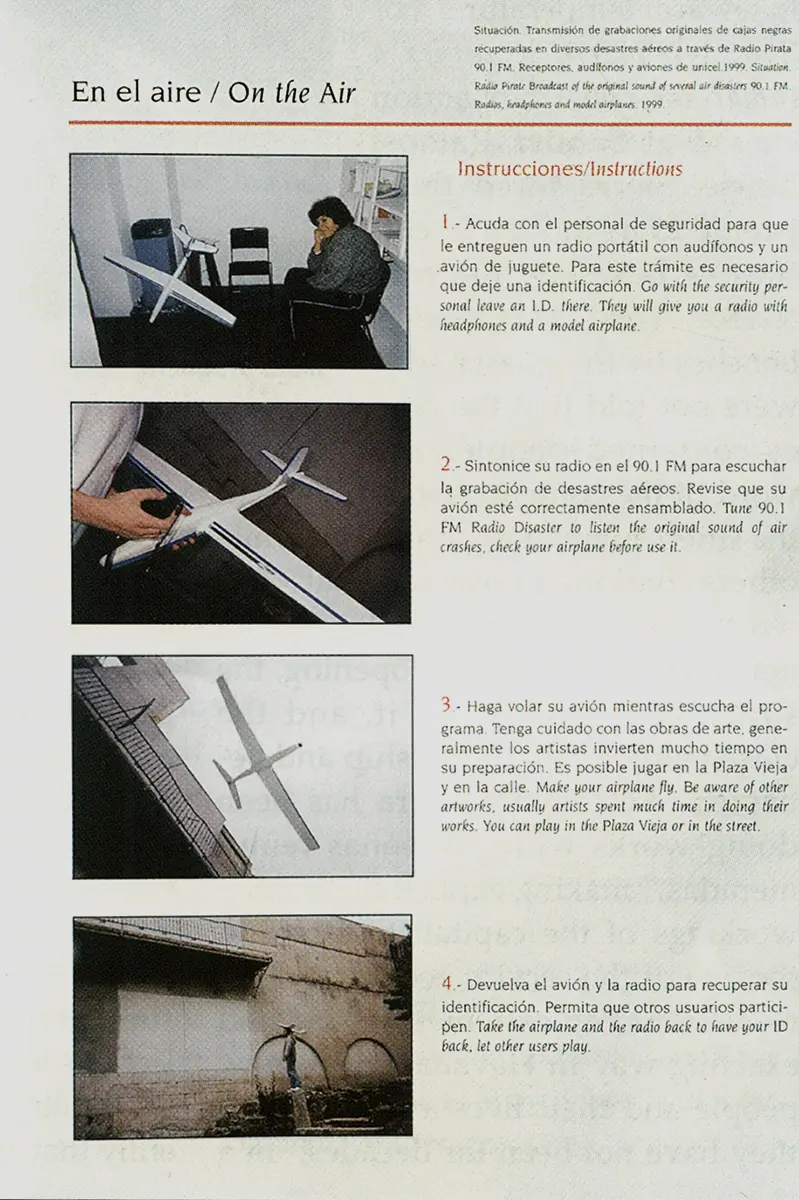
The moment that the biennial was inaugurated, Mexican artist Gustavo Artigas unleashed his project On the Air, resulting in a flurry of styrofoam toy airplanes floated through the newly restored space of the city’s Plaza Vieja by small children. The occupation of the old square, and the recruitment of children into the work, all harmonized with the biennial theme of breaking through the barriers that surround contemporary art, but took the idea one step further into a problematizing of the basic idea of access— in order to get one of the planes, and the accompanying headsets playing "the original sound of air crashes," the children —or their parents— had to leave an official ID as a deposit. Participation in the work, though open to all, was contingent on a self-conscious decision to play along. The curatorial emphasis on interpersonal communication was played out in various ways in the biennial, perhaps most directly in the large number of works that took the form of "urban interventions." These projects, which often consisted of simply placing works in "public" spaces, were subject to the same difficulties that community-based art faces elsewhere —the need to not only devote significant periods of time to interaction but also to enter genuinely into the situation, without treating it as raw material for the artwork— are daunting, especially in light of a biennial’s temporary presence in the city and the unfamiliarity of most of its artists with the local communities.
In a related vein, the biennial also included a special exhibition of work by Hélio Oiticica, Más allá del espacio. This was the first time that this artist’s work had been seen in Havana —an important event on that account and also interesting in relation to the biennial’s theme. Oiticica was the practitioner par excellence in this regard, and his bólides, parangolés, and other works dealing with the intensity and politics of quotidian experience featured prominently in the selection. An attempt by the exhibition organizers to activate the meaning of the parangolés by arranging for dancing in the street was unfortunate, however, dutiful and desultory rather than the kind of true engagement that was so important to Oiticica.
It is ironic, given the mandate for inclusion at the heart of the biennial's theme, that Cuba's own considerable critical community was not well represented in the Theoretical Conference organized to coincide with the biennial. Prominently absent were Gerardo Mosquera, Orlando Hernández, and Desiderio Navarro, all of whom have been indispensable not only to the ongoing development of the discourse about contemporary art within the country but also have been central to the international recognition and dissemination of Cuban art. Noting Mosquera's exclusion in a protest read on both the first and second days of the conference, Cuauhtémoc Medina, Virginia Pérez Rattón, José Luis Brea, and Santiago Olmo were answered by Herrera only with the comment that, since all the signers were friends of the Lam Center, their concerns should have been voiced in private rather than declaimed publicly. This distaste for a candid public airing seems at odds with the biennial's stated ethic of engaging the public realm in a direct exchange of ideas and expressions. The notion of communication that is put forward in the biennial's platform seems to disallow debate or disagreement, in favor of an idealized and cementing harmony. It would seem that, especially given the strong disagreements that exist among key members of the Cuban intellectual community, and which reflect not only personal differences of opinion but also conflicting views of contemporaneity that exist among intellectuals globally, the biennial would be an essential platform for the furthering of those interchanges.
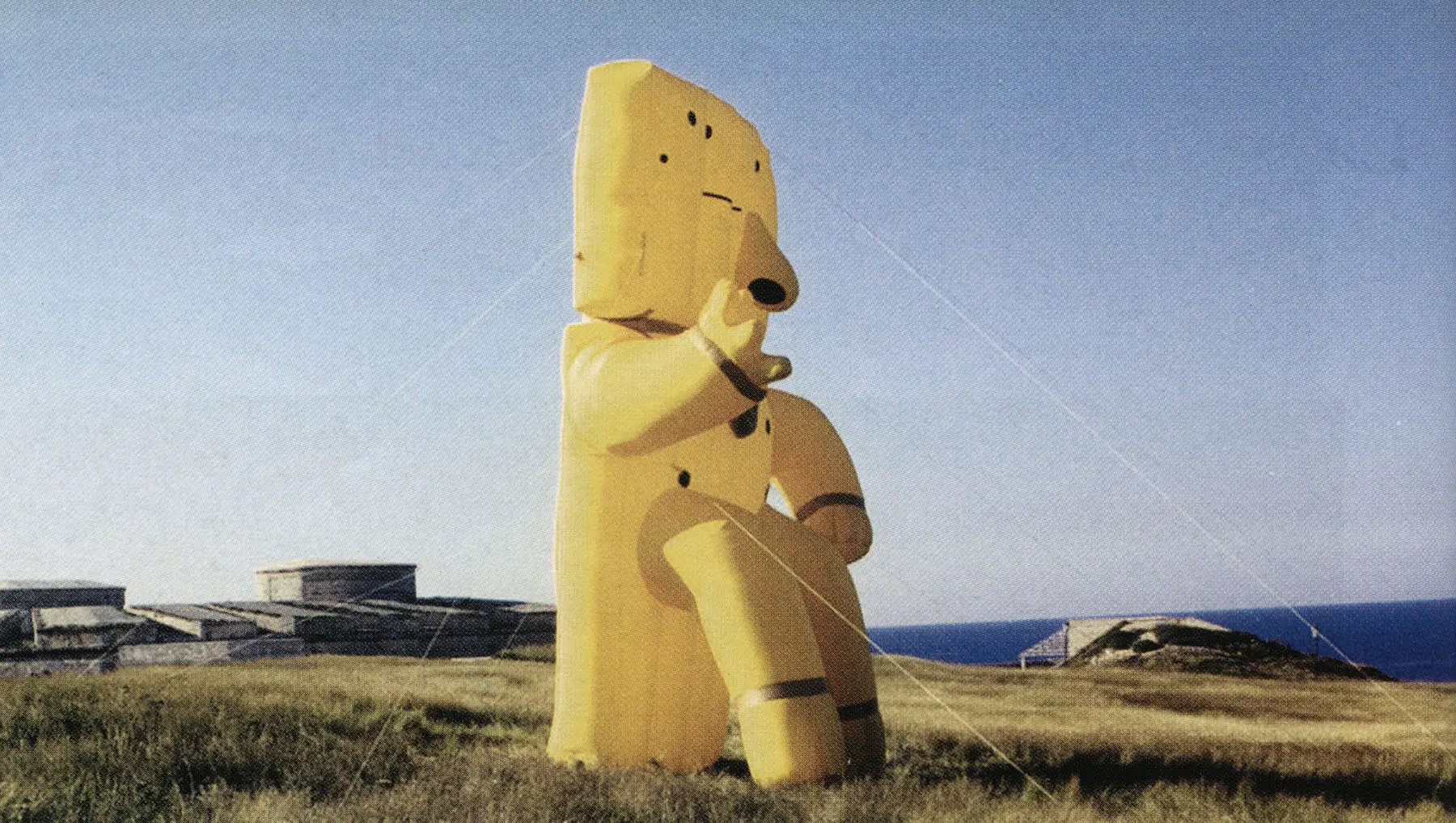
The biennial's skepticism about contemporary commodity culture greeted visitors to el Morro (a colonial-era castle that served as one of the main exhibition sites) in the form of Nadín Ospina's (Colombia) giant yellow inflatable El paseante, whose Pokémonesque shape made a hilarious echo of the castle's own contour. Ricardo Lanzarini (Uruguay) took up questions of the everyday differently in Diálogo intergluteal, an installation suffused with a gentle aroma rising from the kettles of boiling broth placed around the floor; the work's "dialogue" was voiced by small speakers which amplified the gurgling sound of the boiling liquids.
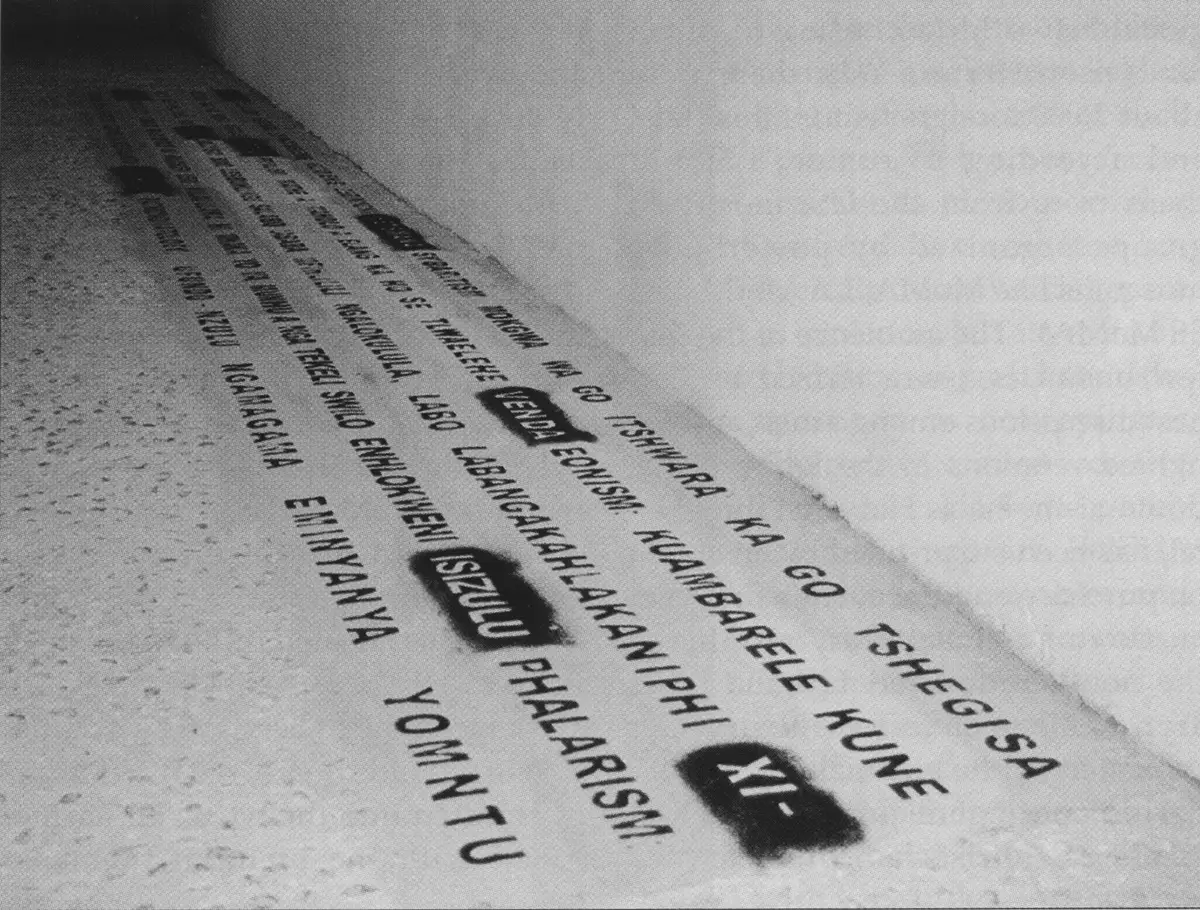
In Writing in the Sand, one of the most powerful works in the biennial, Willem Boshoff (S. Africa) covered large areas of the floor with a bed of sand, onto which were stencilled words in all of the newly recognized official languages of South Africa —Sesothosa Leboa, Sesotho, Setswana, siSwati, Tshivenda, Xitsonga, isiNdebele, isiXhosa, and isiZulu. Boshoff has a deftness with symbolic imagery that was manifest in this work's use of sand— simultaneously the unstable medium in which structures and messages are easily wiped or washed away, and the principal substance of the computer chip (silicon). In a State-sponsored project announcing a theme of "communication," there is an inevitable subtext of official discourse, of that which is spoken by the State, or silenced by it, through all the many mechanisms of attention and neglect that governments have at their disposal. In an accompanying statement, Boshoff writes that "today, in post-apartheid South Africa, we believe mistakenly that these languages are no longer under siege" —that their place in the new Constitution is enough to guarantee their survival. Going much further than simply discrediting censorship, Boshoff raises the implication that the more serious damage to the space for expression happens not by State decree but by the habituations and continuing complicities of populations.
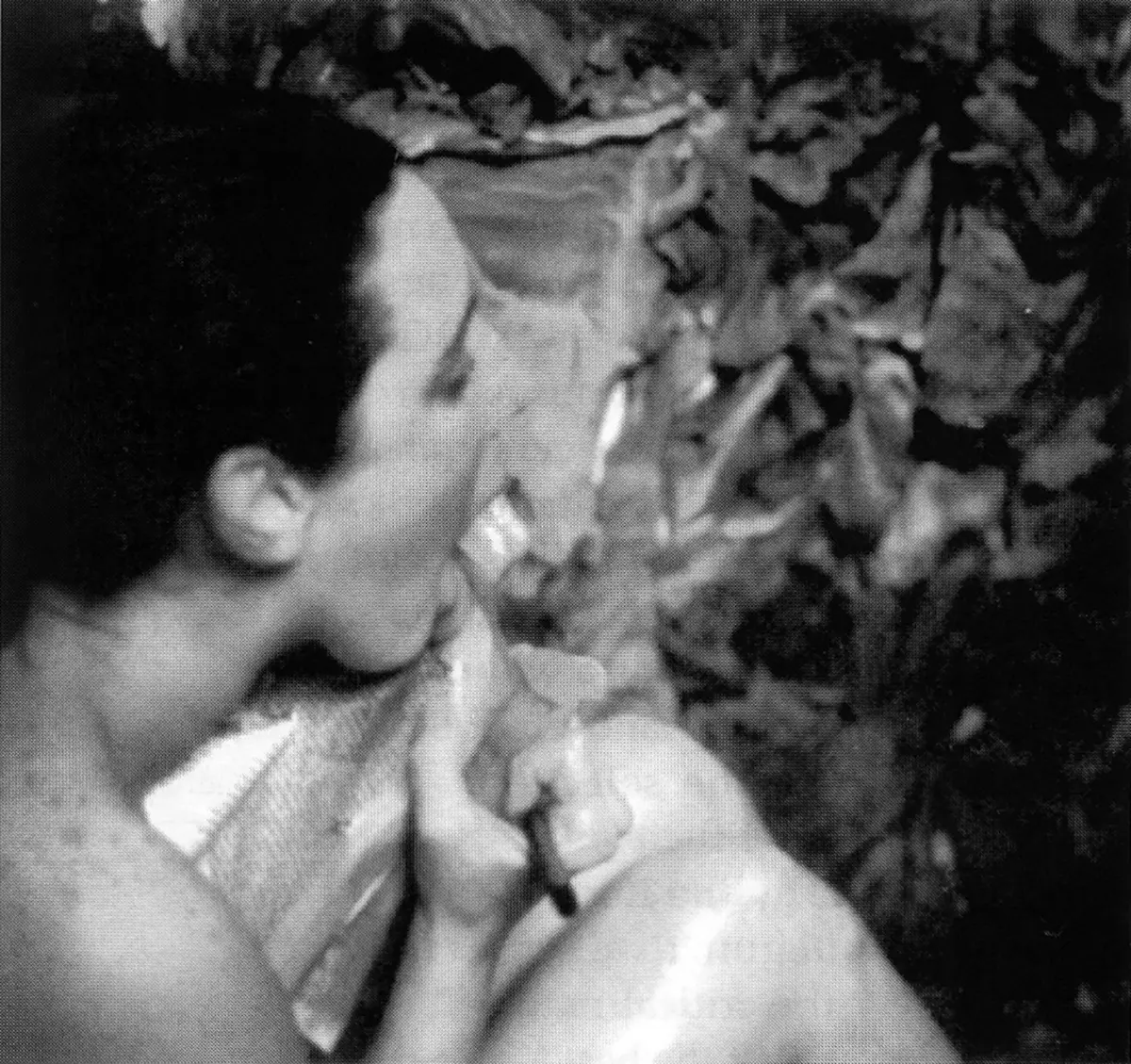
At la Cabaña fortress, Graciela Sacco's (Argentina), Sombras del sur y del norte (from the Bocanada series) was a point-blank reminder of the exhibition space's history (the work begins with a black and white photo mural of a gun pointing at you as you walk up the ramp). In a nearby room, a flashlight filtered with the same photo shines through images of mouths etched into glass slides hanging from threads, causing ominous double images to hover faintly in the darkened space. Sacco's use of such "images of memory" creates, on an obvious level, a confrontation with the image culture and social space of violence, but its near invisibility suggests that the space she is occupying is also a private, even secretive one —the critical and political meanings are held in suspension, unstable, and the crisis that they announce is therefore understood to have the same qualities.
It is a time-honored tradition intrinsic to the nature of the biennial to make much with very little. Such works often function as potent evocations of lack and loss, as in those by Nelbia Romero (Uruguay; Lunfardías) and María Elena González (Cuba-US; Arquitectura Mnemónica), both of which described that which was not present or possible in a visual language of extreme spareness.
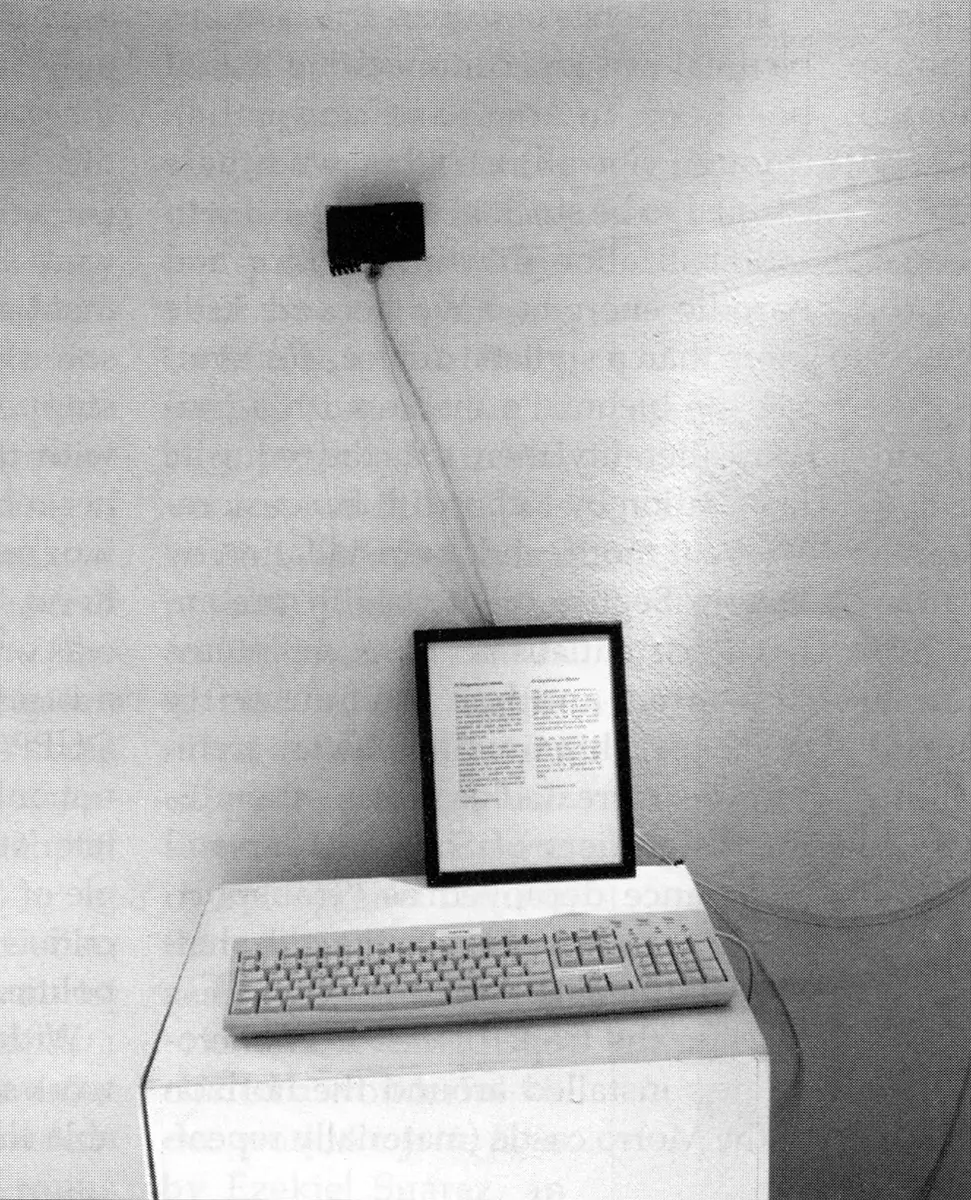
While Francis Alÿs' video projectors blew out during installation due to the problems with electricity, a few works did manage not only to survive but also to engage in an interesting questioning of what it may mean, in conditions such as those of Cuba, to communicate electronically. Rafael Lozano Hemmer (México-Canada) installed 33 Preguntas por minuto: Arquitectura relacional No. 5, around the central courtyard of the Lam Center, small LCD screens connected to a keyboard at which visitors were invited to enter any question of their own devising. A computer program then subjected those words to a random sequencing and selection process, in which the question format was kept intact, resulting in a steady stream of Dadaesque poetry filling the space with imponderables. You could only wonder at the original queries when words such as prohibido and, yes, Buenavista popped up on the screens.
The intersection of media culture and belief was one of many complex problems suggested by the two-channel video work by José Alejandro Restrepo Hernández (Colombia), Iconophilia (Proyecto Iconomía), installed on two floors of the Fototeca. While one tape focused on iconophilia —adoration of the image— as both a political and religious force, the other suggested iconoclasm as a potential deconstructive tool as well as a violent response to the image-making apparatus.
The presence of Cuban artists in this biennial was less commanding than it has been in the past, and much (though not all) of what was there seemed to be stuck in a process of self-cannibalization, in which political and parodic energies have become little more than a stylistic device. Reiterating the biennial's theme with a tiresome literality, there was the requisite installation by Kcho with his customary boat motif and an installation by Esterio Segura bloated with pretentious existentialism. Los Carpinteros presented another of their witty send-ups, this time of official architectures recreated as tents —the ultimate signifiers of State history and endurance deployed as "transportable," in a clever slap at the glib rhetoric of globalization.
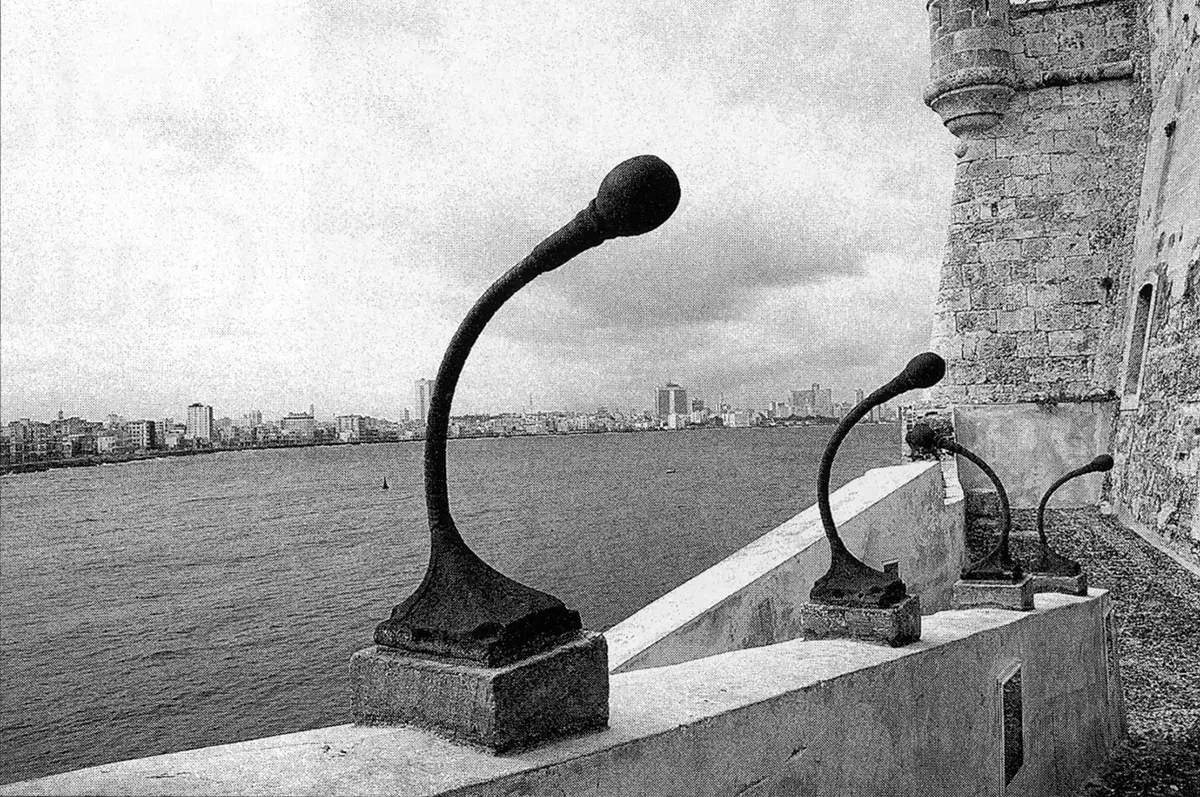
Using the trope of cast-iron microphones installed around the horizon of the Morro castle (materially repeating the cannons which also ring the site), Galería DUPP's (Desde una Pragmática Pedagógica) 1,2,3, Probando raised the issue of communication from a perspective of both geographic and psychological isolation. While encouraging ambiguity by pointing the microphones in opposing directions —in conversation with the sea— the work was accompanied by an essay written in Miami; the work's "horizon" becomes both a barrier and an aspiration. In a reference that was only made explicit in conversation, the work also echoes images from the 1960s paintings of Antonia Eiriz (in whose case the microphones were interpreted by officials as a statement against demagoguery, and censored).4 Importantly, while Eiriz stopped painting out of frustration with this closure, she did not sever her relations with the revolution and worked thereafter on a neighborhood-based puppetry project that was organized through the CDR (Committees in Defense of the Revolution). DUPP's microphones therefore recall not only the ideological closure of the late '60s in Cuba but also the struggle of artists there since 1959 to voice criticisms from within the country's political process.
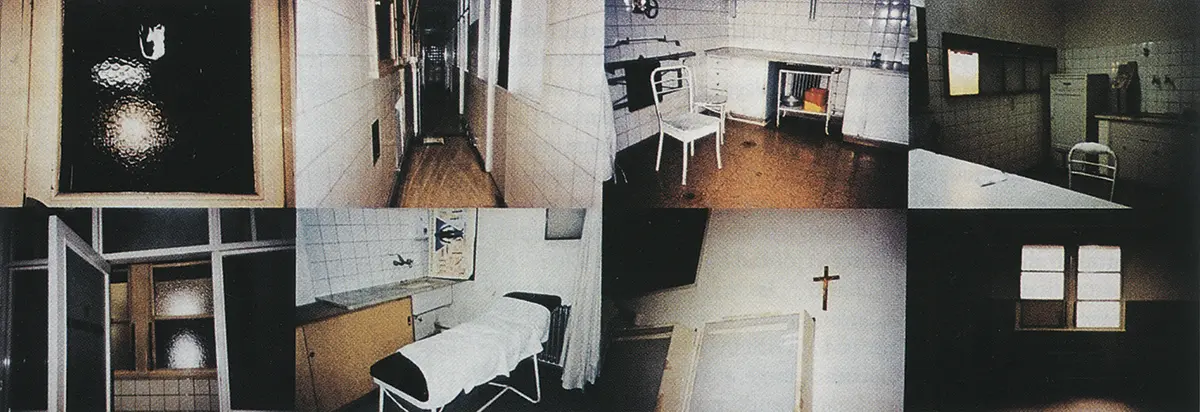
With its reference to Eiriz, DUPP's work seemed a clear test of the allowable limits of expression, and in that sense is similar to the installation/performance presented by Tania Bruguera. Bruguera, however, seems to have touched a nerve, since her work was closed down after the opening day. In the highly evocative setting of a long, narrow chamber used previously for executions in the Cabaña fort, Bruguera asked four neighbors to stand, naked, and perform a series of small gestures that suggested a banal and also private space. The men were nearly impossible to see since the room was extremely dark, lit only by the daylight coming in at the entrance and by a small video monitor hanging from the ceiling which played images of Fidel. The footage, all of it taken from Cuban TV, was a collection quite different from the usual public portrayal of Cuba's president —this was not the haranguing, mesmerizing orator, nor the military commander, but rather was a man often seen alone, even sad at some moments— a portrayal that was meant, according to Bruguera, as more "human," mortal, almost romantic in a sentimental way. While the installation was open, people were emerging from it visibly moved, some even in tears. Fidel is a figure onto whom many intense and conflicting feelings are projected, and it was plausible to assume that, while some visitors may have been moved by the affection of the images, others may have seen in the iconicization of him the tragedy of the Cuban process. The impossibility of "reading" the video simply made it unsettling and provocative. However, perhaps the mise-enscène of the installation emphasized the "mortal" too much, as the space felt very much like a metaphor for the passage to death (long, dark tunnel, with light at the end); there is some ambiguity about exactly what happened, but the work did not reopen for a second day.
Like these other works by Cuban participants, Gabinete Ordo Amoris' installation Un día como otro cualquiera also used an iconography of communication, squeezing enormous antennae into one of Morro's cavernous spaces. Again it was impossible not to think of the island's isolation, both with regard to the blockade imposed against it and also the restrictions placed on the availability of information. The piece has a more interesting connotation, however, which derives from the constant habit of ingenious readaptation and invention of homemade technologies, of spare parts —which has kept Cuba afloat in the face of permanent scarcity. Ordo Amoris' perfect replicas of the "facts" of Cuba during the "Special Period" (the official name for the period of economic disintegration in Cuba following the demise of European socialism) —their antennae, limousines, and bicycle racks— thus perform a doubling circuit of meaning in which their gestures in art institutions reverberate into the much larger universe of what needs to be expressed in Cuba now.
As has become usual for the biennial, there were several "alternative" exhibitions organized by artists around the city. This practice arose as a way of protesting and endrunning the selection process of the biennial, which by the mid-90s had begun to downplay the critical nature of much of the best Cuban production. This year, however, the alternative exhibitions seemed in most cases to be simply additional venues, rather than presenting an alternative position. This was true, for instance, of Esta es su casa, Vicenta, organized in the home of an elderly woman, which seemed founded more in entrepreneurialism than in any particular aesthetic or intellectual orientation. Still, it included a wonderful video work, Proyecto Egis, by Ezekiel Suárez, an important Cuban artist not included in the biennial's official program.
Other unofficial venues however did in fact function as an alternative voice, including Espacio Aglutinador which has been operating since 1994 as an artist-run space and crucial element of the Havana visual art scene. Permanecer nuestra colectiva, the modest exhibition organized to coincide with the biennial, was extraordinarily succinct in exposing the dilemma of Cuban art and, by extension, Cuban society, in this moment of extreme radical chic. "Estos son objetos, proyectos, bocetos, invitaciones, cartas, regalos, compromisos, amuletos, fragmentos de instalaciones," writes Sandra Ceballos in her introduction. "Modestas e inusuales obras realizadas sin cálculo ni pretensiones. Enigmáticas construcciones fabricadas con desenfado por un grupo de artistas, vivos y muertos, viejos, jóvenes, cubanos (de adentro y de afuera) y extranjeros, coleccionadas minuciosamente por celosos acumuladores de fetiches y recuerdos." Aglutinador's tiny space was packed with these bits of history, accumulating into a kind of internal and residual portrait of the movement of "new Cuban art," ephemeral testimony to its passing and also acerbically conceding to the fetishization of the movement by those who now seek to collect it.
Extramuros, a series organized by Taiyana Pimentel, interjected projects into Havana which worked as both a general commentary on the mechanisms of art and ideology and also a very pointed intervention into this particular biennial and ideological climate. Minerva Cuevas plastered walls around the biennial's many sites with posters declaring Nada con exceso, todo con medida, ironically deploying a classic agitprop communication tool to remind visitors of the biennial's mostly lukewarm temperature. For Santiago Sierra le invita a tomar un trago, an action staged at Sandra Ramos' house, Sierra hired three people to lie hidden in coffin-like boxes on the roof terrace. These were used as benches by the guests, who were not told that the boxes contained people. As word of the contents spread, some of the sitters jumped up, horrified, while others continued to sit and chat. The work was thus a barbed play on the ambiance of an art world opening, the superficial sociality of it, and the closed circuit of membership and behavior. Since 1999 Sierra has been doing works with "personas remumeradas," making explicit the hidden workings of the capitalist system in the age of the service economy. This resonates in an extremely strong and exacting way in Havana, where now people and their lives are for sale as they have not been for decades; in a situation in which the ration system is far from adequate, the average worker makes somewhere between $10-15 per month, and a liter of cooking oil costs $2.50, survival depends on getting dollars. Meanwhile, across the street and visible from the terrace, Teresa Margolles was spreading human fat (or at least that was what it was rumored to be) on the pavement —an action cut short by the arrival of the police.
"Employing workers" is a practice that was used as early as 1968 by Oscar Bony in his work La familia obrera, for which he hired a proletarian family, at a rate double that of the father's usual salary, to sit in a gallery for the duration of the exhibition. The piece, a scathing indictment of the class-specificity of the art world and of Argentina's economic inequities, caused a scandal in Buenos Aires. Bony's proposal to remake this earlier piece in the context of the biennial, and as a reflection on the new economic situation of Cuba, was initially approved but later amended by the biennial staff. At issue was the question of who would select the family to be hired for the work; while the initial agreement was apparently that Bony would make the selection (since it was the crux of the work), eventually it was decided by the biennial that they should be the selectors. In a press release issued a few days before the biennial opening, Bony therefore withdrew the work, declaring it "finished."
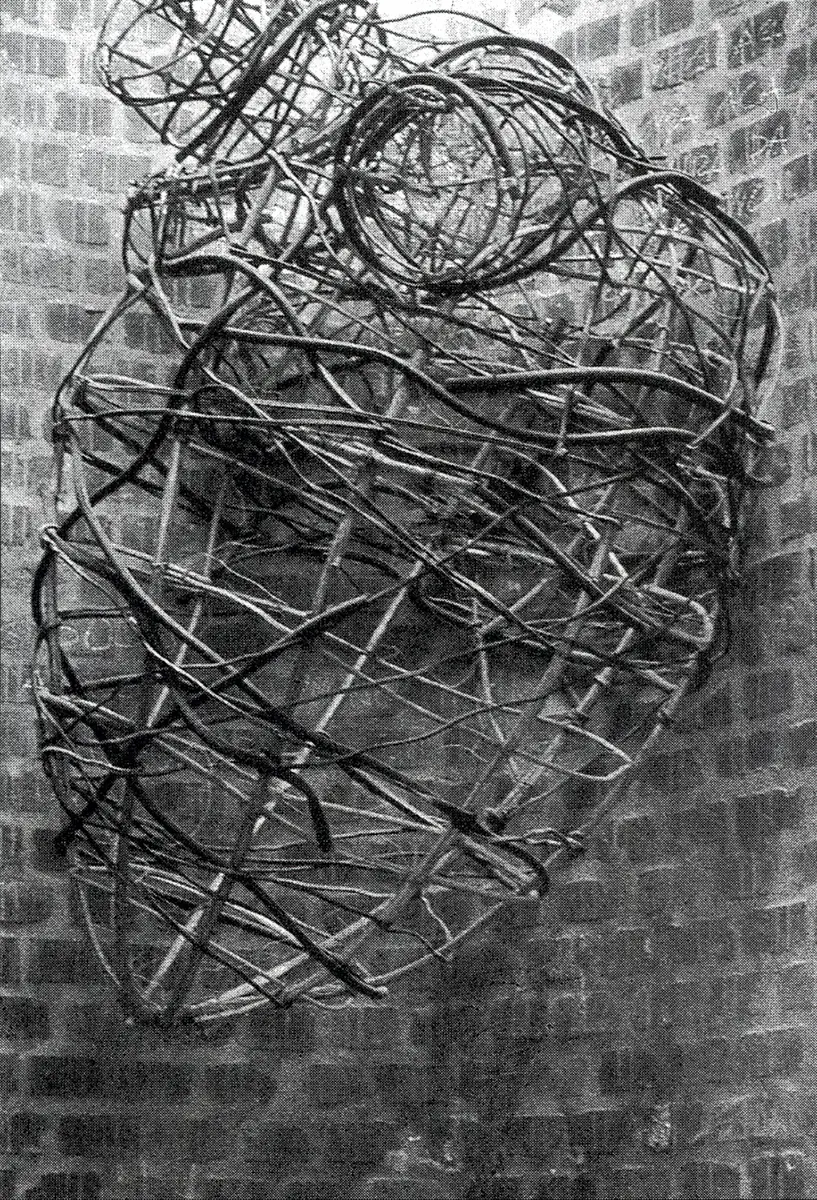
Lester Terry, a student at the Instituto Superior de Arte, has a work hanging in his studio that looks at first glance like Juan Francisco Elso's iconic Corazón de América —a work which, like all of Elso's production, is known about in Cuba but primarily in the form of legend. Terry's piece, however, turns out to be quite different— its large, open-work heart form is made of roots (similar to the branches that Elso used) and also electric cables. The roots in Terry's piece will disintegrate within a year, leaving only the wires —"the symbolism of my own time," as he put it, a renovation, a new proposition. In the restoration-crazy Havana of today, where even a derelict firehouse comes back to life as the Museo de Bomberos, it might make sense to insist on the difference between renovation and restoration. The former, a close cousin of innovation, was the early marker of the Havana Biennial, reflecting the project's restless desire, and its recognition that it was always an unfinished proposition.
The economics of the biennial are stark. This year's budget (that is, the amount provided by the Cuban state) was reportedly USD121,000, a minuscule amount by international standards but hefty by Cuban ones. The rest of the costs incurred in bringing together 172 artists (or groups) from 43 countries and displaying their works in 70 exhibition sites were met by a constellation of embassies, international foundations, the artists themselves, and other contributors such as TEOR/éTica, the tiny non-profit in San José which supported the participation of the Costa Rican contingent. This precarious financial situation must take at least part of the blame for the chaotic nature of this biennial, and especially its technical problems. Other problems, however, seemed simply the product of disorganization —incorrect site maps, missing or uninformative labels, less than rudimentary museology, and works by the same artist scattered across multiple sites, with no apparent logic and an uneven curatorial vision. The infrastructure in Havana has always been a challenge, but as the biennial grows in scale and complexity, and as it increasingly positions itself within the circuit of more mainstream biennials (which mostly have much greater access to resources), these deficiencies become more significant.
What would constitute success for the Havana biennial at this point? Over the years there have been various incidents such as those with Bruguera and Bony, which invariably lead to blizzards of rumors circulating around the biennial and, over time, creating a climate of suspicion and mistrust. It would be a shame if this cycle of response were to eclipse the other serious questions that could be asked about what a project such as the Havana Biennial can stand for that is unique, and necessary to the communities of artists, critics, curators, and others who have depended on it in the past. It was the biennial's early promise to generate an alternative global conversation about the nature of contemporary art and culture —its production, meaning, circulation, theorization, and, most importantly, its relation to the realities of peoples' lives amidst dynamics of political and social change. Implicit in this promise, the biennial recognized the need for a place to confront openly the panoply of its participants' ideas and ideologies, circumstances, dreams, doubts, enthusiasms, histories, strategies, shortcomings, and even failures, in determination to proceed, and in belief that in that honest interchange lies the possibility —the resource— for accomplishing something more than can be done in isolation. Such a dialogue is no less necessary now than it was in 1984.
Making a biennial in Havana is basically walking a tightrope, balancing between extremely tricky and constantly shifting political circumstances and a dire economic picture. The biennial shares with all activism the urgent imperative to constantly gauge how hard to push, and to measure its own wish for longevity against the demand to exert force in the present moment. Because the situation in Cuba is now even more complicated than it has been in the past, such calculations must be very difficult to make. The biennial's success over the years has placed it amidst apparently irreconcilable tensions; although at its inception the biennial was explicitly positioned in opposition to mainstream and hegemonic systems of art, it now finds itself searching for a way to exist as an oppositional force and still attract the attention of the art world elite. This uncomfortable position has prefigured at least the last two biennials and this year, for the seventh manifestation, the question of how to define the ethics of the biennial has only become more urgent.
NOTES
1. Antonio Eligio (Tonel), "Gabinete Ordo Amoris: por La Habana en Limosina," in Esta cerca es provisional: evite ser requerido, Centro de Desarrollo de las Artes Visuales, La Habana, 1999, unpaginated.
2. All quotes are from Nelson Herrera Ysla, "Communication in Difficult Times: One Closer to the Other," in Septima Biennial de La Habana, Centro de Arte Contemporáneo Wifredo Lam/Consejo Nacional de las Artes Plásticas, Havana, 2000.
3. This auction sponsored by the Fundación Ludwig and Casa de las Américas, was to benefit the pediatric cancer ward of a Havana hospital.
4. Eiriz was a neo-figurative Cuban painter.
RACHEL WEISS
Independent curator and writer, and Chair of Exhibition Studies at the School of the Art Institute of Chicago.